What Are the Best Team Collaboration Tools in 2026?
Scr0ll d0wn to D0VVNL0AD
The best team collaboration tools in 2026 help teams communicate, manage tasks, share files, and automate work — all in one place. Here’s a quick overview of the top options:
| Tool | Best For | Free Plan | Starting Price |
|---|---|---|---|
| Slack | Team messaging & async comms | Yes | $7.25/user/mo |
| monday.com | Visual project management | Yes (2 seats) | ~$9/user/mo |
| Zoom | Video meetings & webinars | Yes (40-min limit) | Custom |
| Asana | Task tracking & workflows | Yes | ~$10/user/mo |
| ClickUp | All-in-one workspace | Yes | ~$7/user/mo |
| Google Workspace | Docs, email & AI tools | No | $7/user/mo |
| Trello | Simple Kanban boards | Yes (10 boards) | ~$5/user/mo |
| Microsoft Teams | Enterprise communication | Yes | Included w/ M365 |
| Miro | Visual brainstorming | Yes (3 boards) | Custom |
| Notion | Docs & knowledge base | Yes | ~$10/user/mo |
Picture this: your team is scattered across three time zones, juggling a dozen projects, and still somehow missing deadlines. Sound familiar?
For small business owners, this is the daily reality. And it’s not a people problem — it’s a tools problem.
The good news? The right collaboration platform can change everything. Teams using these tools report up to 30% higher productivity compared to those relying on email and spreadsheets alone. Companies with strong collaboration cultures are 5x more likely to be high-performing.
But with hundreds of options available, picking the right one feels overwhelming — especially without a dedicated IT team or hours to spare for research and training.
That’s exactly what this guide cuts through. We’ve broken down the top tools by use case, price, and features so you can find the right fit fast.
Why Your Business Needs the Best Team Collaboration Tools in 2026
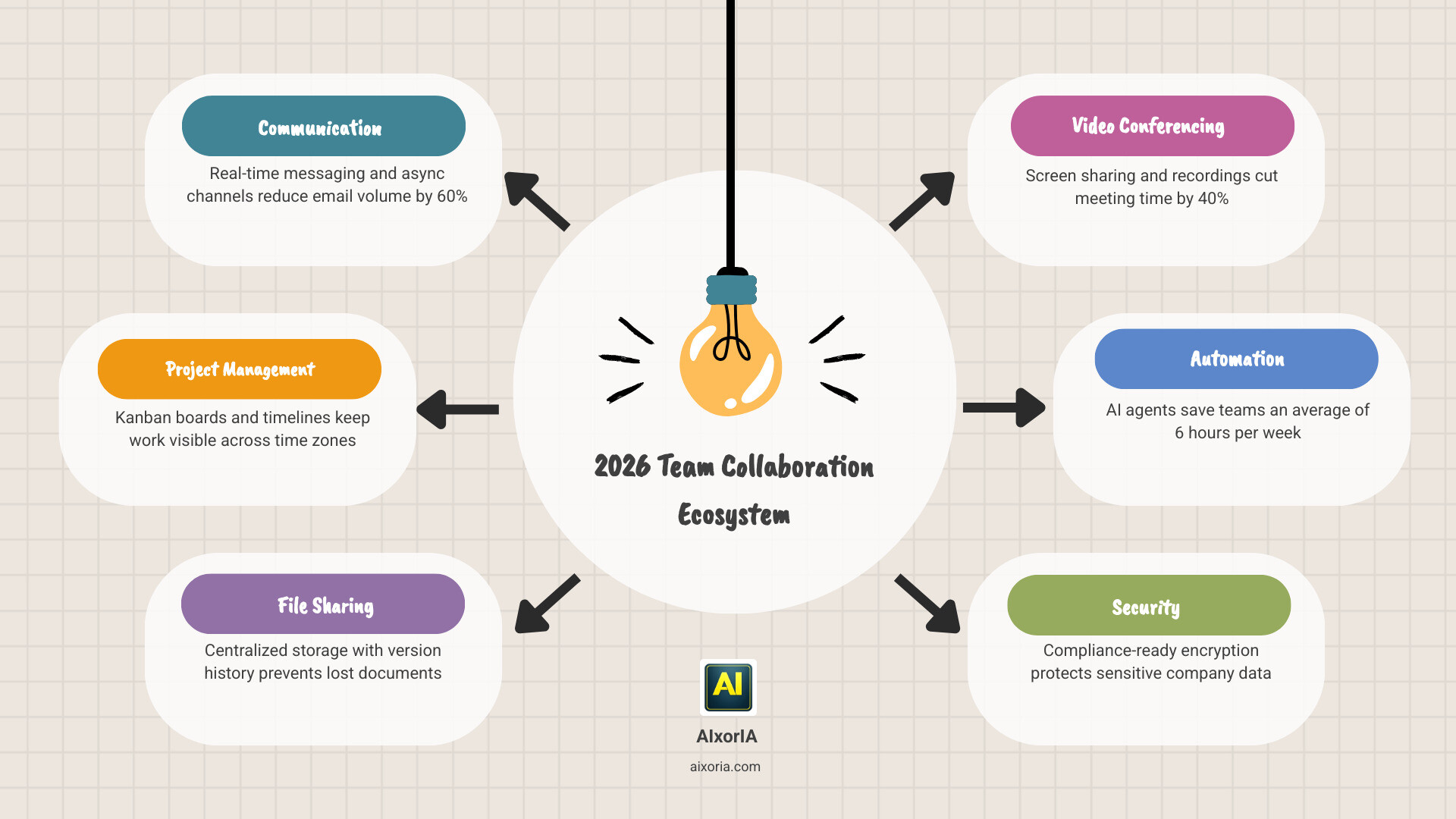
In 2026, the digital workspace isn’t just a luxury; it’s the backbone of your business. We have seen that companies shifting away from “email-only” workflows experience a massive 30% boost in productivity. Why? Because information is no longer buried in someone’s inbox. Instead, it lives in a searchable, transparent hub.
High-performing teams are 5x more likely to prioritize collaboration. For remote and hybrid teams, these tools bridge the “visibility gap.” When you can see who is working on what in real-time, you eliminate the need for those “just checking in” meetings that eat up your afternoon. Using the Best Team Communication Tools in 2026 ensures that your staff stays aligned, regardless of their physical location.
Furthermore, remote teams utilizing integrated platforms report a 25% reduction in project delays. By centralizing communication, you ensure that hybrid flexibility doesn’t come at the cost of execution. To dive deeper into how these platforms help distributed workers, check out our guide on the Best Communication Tools for Remote Teams in 2026.
Key Features to Look for in Modern Collaboration Platforms
When we evaluate software for our clients, we look beyond the flashy marketing. The Best Team Collaboration Tools must offer a specific set of core functionalities to be worth your investment:
- Real-Time Messaging & Asynchronous Options: You need a mix of instant chat (for quick questions) and organized threads (for deep work).
- Robust Task Management: Can you assign a task, set a deadline, and track its progress visually?
- Security and Compliance: In an era of increasing cyber threats, look for platforms with SSO (Single Sign-On), data loss prevention, and compliance with standards like GDPR or HIPAA.
- Deep Integrations: Your collaboration tool shouldn’t be an island. It needs to talk to your CRM, your cloud storage, and your calendar.
Google Workspace: Secure Online Productivity & Collaboration Tools is a gold standard for security, providing AI-powered protection and encrypted cloud storage. If you are looking to take efficiency a step further, combining these features with the Best Workflow Automation Software in 2026 Tested can help you remove repetitive manual tasks from your team’s plate.
Top Categories of Collaboration Software
Not all collaboration tools are built for the same purpose. We categorize them into four main buckets to help you identify where your biggest pain point lies:
- Project Management: Focuses on timelines, dependencies, and deliverables (e.g., Asana, monday.com).
- Video Conferencing: Essential for face-to-face rapport and large-scale webinars (e.g., Zoom, Microsoft Teams).
- File Sharing & Co-authoring: Allows multiple people to edit the same document simultaneously (e.g., Google Workspace).
- Visual Brainstorming: Digital whiteboards that replicate the “sticky note” experience of an office (e.g., Miro).
Evaluating the Best Team Collaboration Tools for Remote Teams
For remote teams, the biggest challenge is “context loss.” Without the ability to tap a colleague on the shoulder, information needs to be easily accessible. Slack | AI Work Platform & Productivity Tools excels here by organizing work into searchable channels rather than fragmented email chains.
However, Slack isn’t the only player in the game. Many businesses are looking for specialized features or different pricing structures. If you are exploring your options, we have compiled a list of the Best Slack Alternatives for Businesses in 2026 to help you find a hub that fits your specific culture.
Visual Collaboration and Project Management
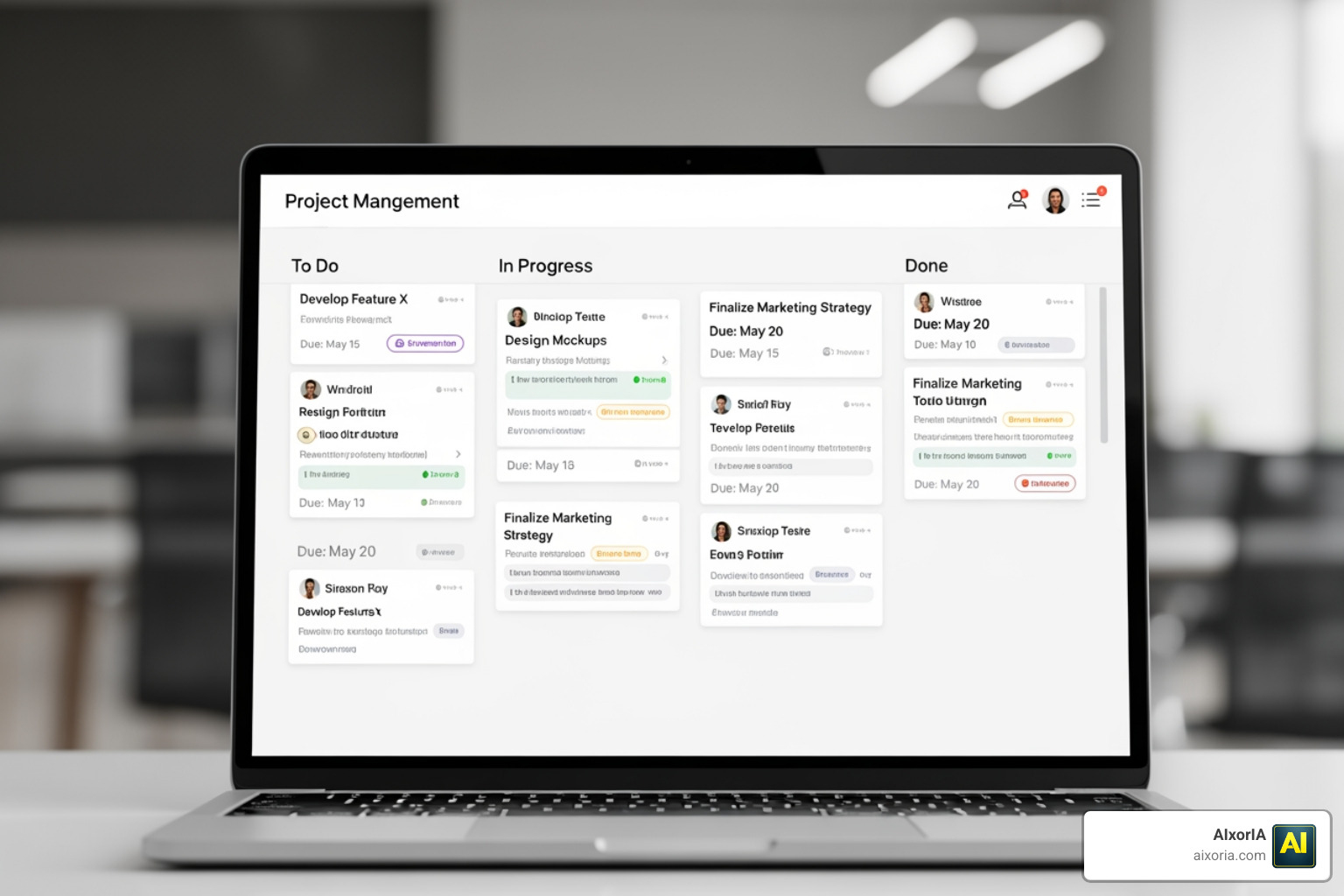
Sometimes, a list of tasks isn’t enough. You need to see the workflow. Kanban boards, popularized by tools like Trello, allow you to drag and drop tasks through different stages of completion. This visual clarity is why many creative and development teams rank Trello and monday.com among The 7 Best Team Collaboration Tools in 2026.
For teams that need a “single source of truth” for documentation, Confluence | AI Workspace for Knowledge & Collaboration offers a powerful way to build internal wikis and project plans that link directly to your technical tasks.

The Impact of AI on Team Productivity and Workflow Automation
The most significant shift we’ve seen recently is the integration of AI. In 2026, AI isn’t just a chatbot; it’s a “Super Agent” that lives inside your collaboration tools. Organizations adopting these features report saving an average of 6 hours per employee per week on repetitive tasks.
Imagine an AI that can:
- Summarize a 30-minute meeting you missed.
- Draft a project brief based on a few Slack messages.
- Automatically assign tasks to the right team member based on their current capacity.
Whether you are a solo founder looking for the Best AI Productivity Tools for Entrepreneurs 2026 or a large department seeking the Best AI Productivity Tools for Enterprise in 2026, the goal is the same: let the machine handle the “work about work” so your humans can focus on strategy and creativity.
Strategies for Successful Tool Adoption and Integration
Buying the tool is the easy part; getting your team to use it is where most businesses fail. Successful adoption requires clear “rules of the road.” For example, you might decide that “Slack is for quick updates, while Asana is for final decisions and task tracking.”
To minimize “context switching”—the productivity killer that happens when you jump between 20 different tabs—you must prioritize integrations. A streamlined stack should allow you to see your HubSpot leads inside your chat app and attach Google Drive files to your project boards without ever hitting “download.”
Maximizing ROI with the Best Team Collaboration Tools
While free plans are a great way to start, they often come with limitations that can hinder a growing business. Here is how the tiers generally break down:
| Feature | Free Plans | Paid Plans |
|---|---|---|
| User Limits | Often capped at 5-10 users | Unlimited users |
| History/Storage | Limited (e.g., 90 days of chat) | Unlimited history & GBs of storage |
| Automation | Basic or none | Advanced AI workflows |
| Security | Standard encryption | SSO, SCIM, and Compliance audits |
For those in design or marketing, choosing the Best Tools for Streamlined Creative Workflows in 2026 often means paying for the “Pro” tiers to unlock higher file storage and client-sharing permissions.
Frequently Asked Questions about Best Team Collaboration Tools
What are the best free collaboration tools for small teams?
For teams under 10 people, we recommend starting with the “Freemium” versions of Slack (for chat), Trello (for tasks), and the free tier of Miro (for brainstorming). Just keep an eye on storage limits—Dropbox, for example, only offers 2GB on its free plan, which fills up quickly with video files.
How do I choose the right tool for my specific industry?
It comes down to your primary “output.” If you are a software team, Jira and Confluence are industry standards. If you are a lean B2B marketing team, you likely need a tool that integrates deeply with HubSpot, such as monday.com or ClickUp. Always weigh your decision: 25% on core functionality, 25% on unique features, and 50% on ease of use.
Why are integrations essential for modern productivity?
Over 70% of B2B marketing teams say cross-functional visibility is their top challenge. Integrations with HubSpot, Google Workspace, and Microsoft 365 ensure that data flows automatically between departments. This prevents “data silos” where sales doesn’t know what marketing is doing, and vice versa.
Conclusion
Finding the Best Team Collaboration Tools is about more than just software—it’s about building a culture of transparency and efficiency. At AIxorIA, we specialize in helping businesses navigate this complex landscape. Whether you need custom AI solutions to automate your workflows, tool training workshops for your staff, or a performance audit to see where your current stack is failing you, we are here to help.
Our mission is to provide simple, affordable, and fast support to empower your team. Ready to stop the “context switching” and start scaling? Explore our More info about AI productivity services to see how we can transform your workflow today.