The Best CRM Software for Restaurants in 2026: What Actually Works
Scr0ll d0wn to D0VVNL0AD
If you’re looking for the top CRM software for restaurants right now, here’s a quick answer before we dive deeper:
Top Restaurant CRM Software at a Glance (2026):
| CRM | Best For | Starting Price |
|---|---|---|
| SevenRooms | Data-driven personalization & marketing | Custom pricing |
| OpenTable | Guest discovery & network reach | $149/month |
| Eat App | Budget-friendly full-service tools | Free / $49/month |
| Thanx | Loyalty & profitable frequency | Custom pricing |
| Sapaad | POS-integrated CRM for all sizes | 14-day free trial |
Running a restaurant is already a juggling act. Staffing, inventory, service — and somewhere in the middle of all that, keeping guests coming back.
Most restaurants rely on discounts and one-off promotions to drive repeat visits. Those get attention. But they don’t build loyalty.
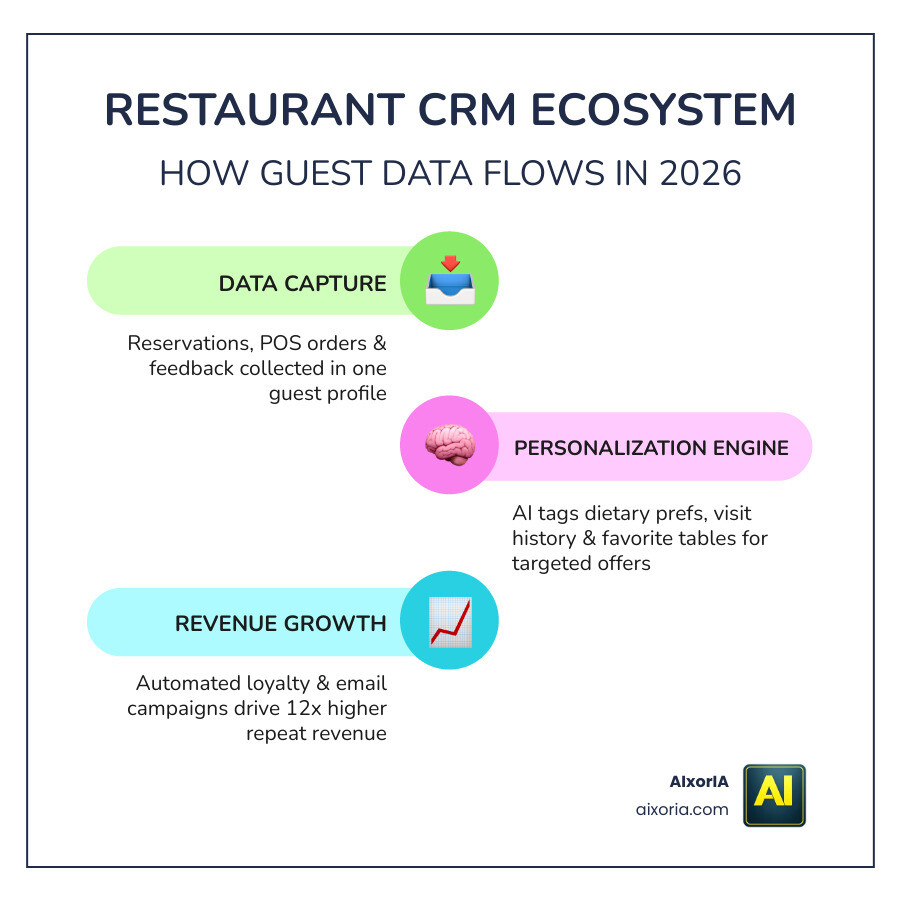
The difference? Knowing your customers. A restaurant CRM collects guest data across every touchpoint — reservations, orders, feedback — and turns it into personalized experiences that make people feel remembered.
And the numbers back this up. According to the National Restaurant Association’s 2025 report, 41% of customers choose where to eat based on loyalty or rewards programs. Targeted, automated emails can generate up to 12 times more revenue than generic mass emails.
In 2026, the right CRM isn’t a luxury for big restaurant groups. It’s one of the most practical tools a small operator can use to compete smarter — without needing a tech team.
Understanding Restaurant CRM vs. General CRM
When we talk about Customer Relationship Management (CRM), many people immediately think of giants like Salesforce or HubSpot. While these are fantastic for B2B sales, they often struggle with the “dinner rush” reality of the hospitality world.
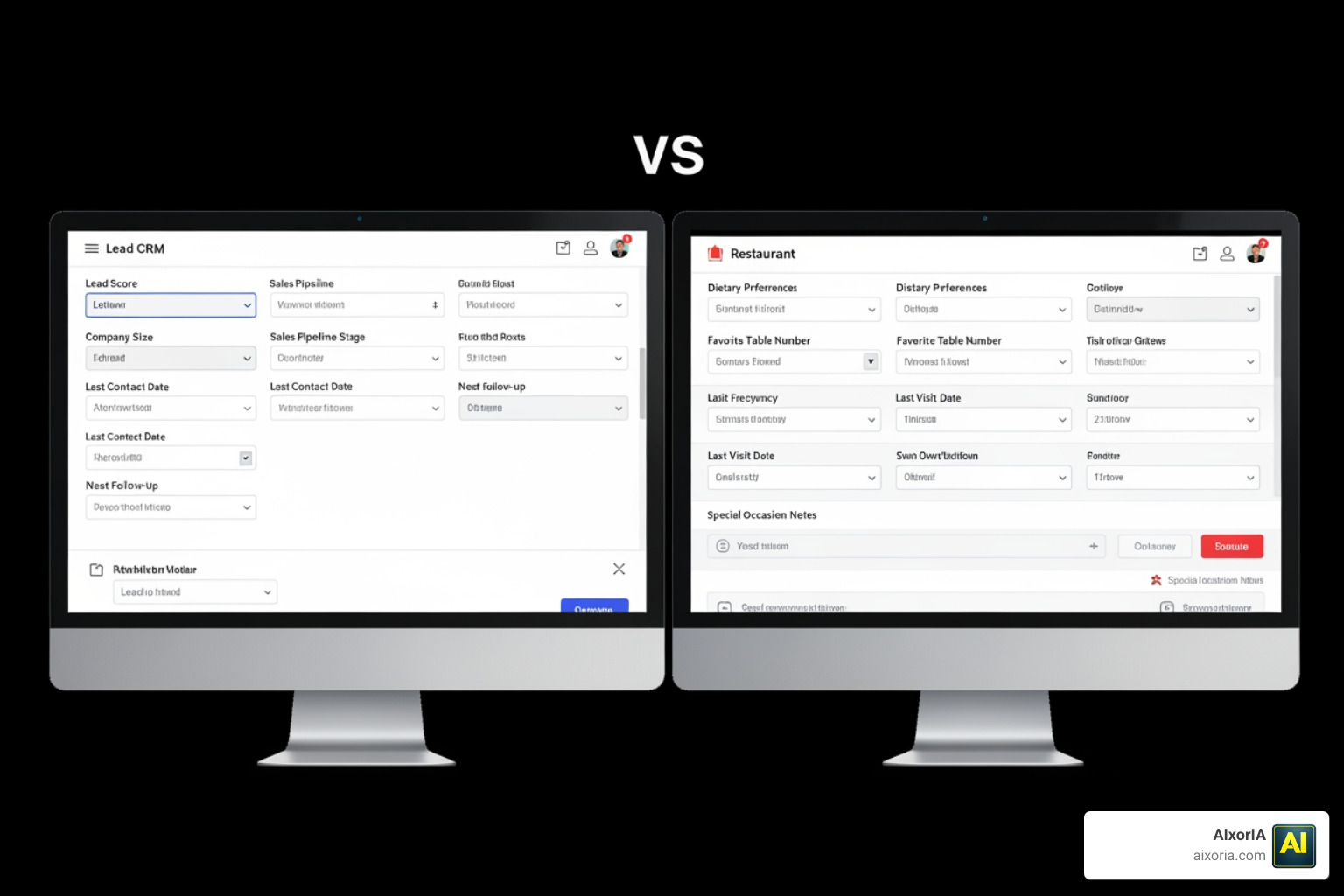
A top CRM software for restaurants is built differently. It focuses on guest profiles that include dietary preferences, favorite tables, and visit frequency rather than lead scores and sales pipelines. While a general CRM might track a “prospect,” a restaurant CRM tracks a “regular” who loves Pinot Noir and has a dairy allergy.
The biggest differentiator is data ownership. Many third-party platforms keep guest data for themselves, essentially “renting” your customers back to you. Specialized restaurant CRMs prioritize first-party data, ensuring you own the relationship. This is a core component of 9 Best Customer Engagement Software in 2026, where the focus is on building a direct, unmediated line to your patrons.
By integrating industry nuances—like table management and reservation pacing—into the data set, these systems drive operational efficiency. Your host knows exactly who is walking through the door, and your kitchen knows to avoid butter for Table 4 before the order even reaches the ticket.
Key Features of the top crm software for restaurants
Choosing a system can feel like looking at a 20-page menu. To help you narrow it down, we believe every top CRM software for restaurants must excel in four specific areas:
- Unified Guest Profiles: Every interaction—from a booked table to a cocktail ordered at the bar—should feed into one profile.
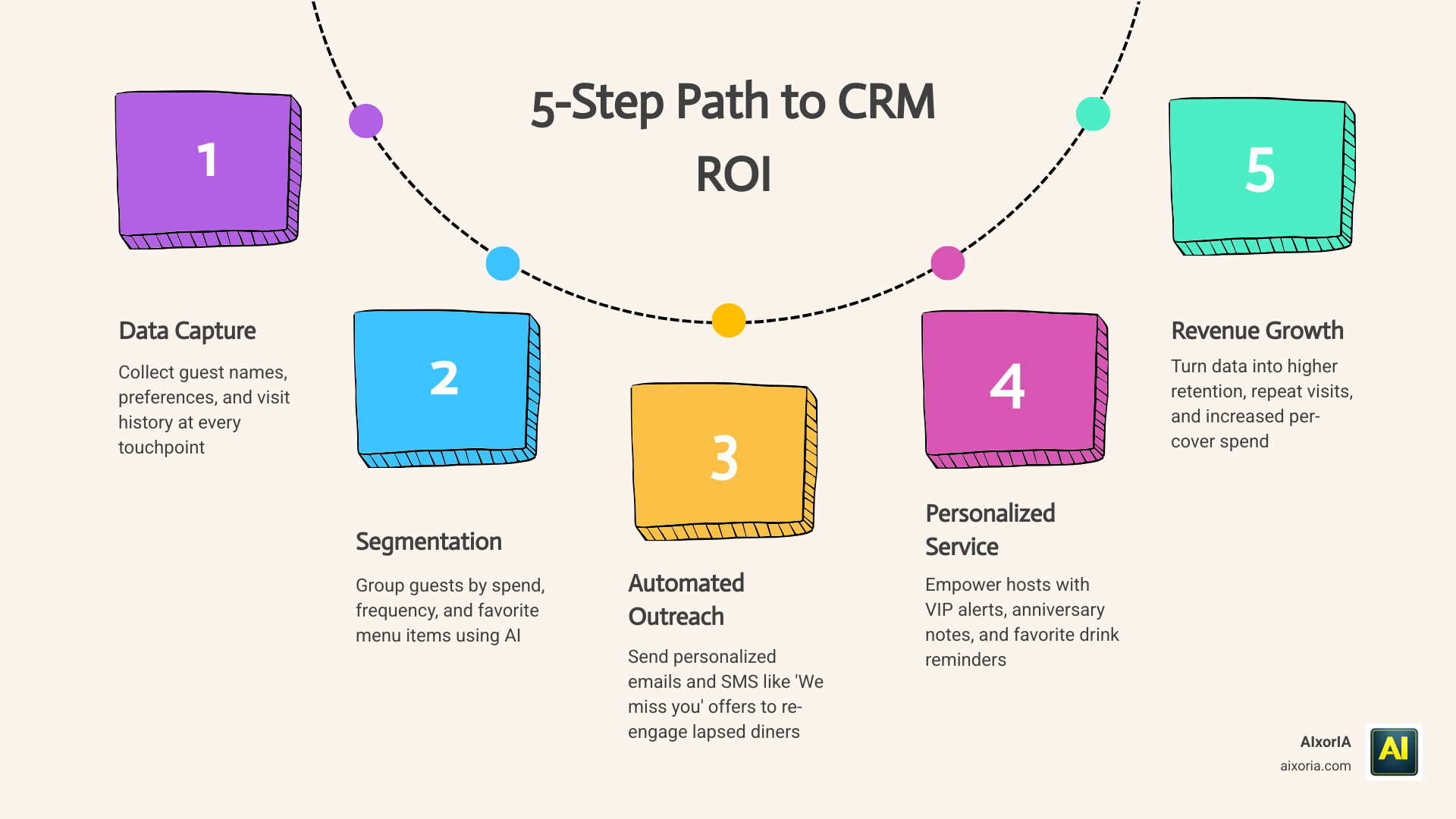
- Marketing Automation: The system should automatically send a “We miss you” email if a regular hasn’t visited in 30 days, or a birthday treat offer a week before their big day.
- Loyalty Tools: Beyond simple punch cards, modern tools use card-linked technology so guests earn rewards effortlessly.
- Feedback Integration: Automatically pulling in reviews and surveys to see how guest sentiment matches their spending habits.
For a deeper dive into the communication side of these tools, check out The 7 Best Email Marketing Tools for CRM Software in 2026.
Guest Data Ownership and Privacy
In the past, many restaurants were happy to let third-party apps handle their bookings. However, we’ve seen a shift. If a platform remarkets your guests to the bistro down the street, you don’t truly own that data. The SevenRooms solution is often cited as a leader here because it focuses on giving operators full control. You want a CRM that allows easy data export and doesn’t compete with you for your guests’ loyalty.
POS and Reservation System Syncing
A CRM is only as good as the data flowing into it. If your CRM doesn’t “talk” to your Point of Sale (POS), you’re missing the most important piece of the puzzle: what people actually buy. Real-time syncing allows for itemized spend tracking. If you know a guest spent $300 on Napa Valley Cabernet last month, your next marketing email shouldn’t be about a beer bucket special. This level of coordination mirrors Best Sales Collaboration Software in 2026, where different parts of the business work in perfect harmony.
Top CRM Software for Restaurants: 2026 Leaderboard
The market has consolidated recently, notably with the Resy and Tock merger in 2026, which created a massive network of over 25,000 venues. Here is how the top contenders stack up:
| CRM Provider | Standout Feature | Best Use Case |
|---|---|---|
| SevenRooms | AI-powered “Auto-tags” and 0% commission | High-volume, data-hungry groups |
| OpenTable | Massive diner network (discovery) | New restaurants needing foot traffic |
| Thanx | Card-linked loyalty (no apps needed) | Fast-casual & QSR looking for ROI |
| Sapaad | Built-in POS integration | Multi-location & cloud kitchens |
| Eat App | Affordable entry-level pricing | Small independent bistros |
SevenRooms for Data-Driven Personalization
SevenRooms has become a powerhouse by helping restaurants move away from generic “blast” emails. Their platform uses “Auto-tags” to categorize guests based on behavior (e.g., “Big Spender,” “Wine Lover”). Research shows this targeted approach can generate up to 12 times more revenue than standard campaigns. It’s a comprehensive marketing and operations solution that focuses on the guest’s lifetime value.
OpenTable and Resy for Network Reach
If your primary goal is being “found,” these platforms are hard to beat. They act as both a CRM and a discovery engine. While they often come with per-cover fees that can eat into margins, the sheer volume of their networks—now exceeding 25,000 venues for the Resy/Tock ecosystem—makes them a staple for many. For those looking for a more “all-in-one” operational feel, Sapaad’s CRM offers an alternative that focuses heavily on the integration between the kitchen and the customer.
Thanx: Making Loyalty Profitable
Thanx takes a unique approach by focusing on “profitable frequency.” Instead of deep discounts that hurt your bottom line, they use AI to identify which guests are at risk of churning and send them personalized incentives to return. Their card-linked growth model means guests don’t have to scan QR codes or download apps—they just pay with their credit card, and the CRM does the rest.
Strategic Selection and Implementation Challenges
Implementing the top CRM software for restaurants isn’t just about picking a vendor; it’s about changing how your team thinks about guests. The biggest challenge isn’t usually the software—it’s the data entry. If your hosts don’t take the time to note a guest’s preference, the CRM is just an expensive digital Rolodex.
Evaluating the top crm software for restaurants by Venue Size
- Quick Service (QSR): You need speed. Card-linked loyalty and SMS marketing are your best friends.
- Fine Dining: You need depth. Detailed guest notes, anniversary tracking, and “VIP” alerts for the floor manager are non-negotiable.
- Multi-location Groups: You need a “Single Source of Truth.” A guest who is a VIP at your New York location should be recognized as a VIP when they walk into your London branch. This requires robust AI-powered customer engagement to handle data at scale.
Future-Proofing with the top crm software for restaurants
As we move through 2026, AI is no longer a buzzword; it’s the engine. We are seeing CRMs use natural language processing to allow managers to ask questions like, “Show me all guests who spent over $100 on seafood in the last three months,” and get an instant segment for a new menu launch. Predictive insights can now tell you which guests are likely to become “regulars” after just their second visit, allowing you to trigger a special welcome-back gift.
Frequently Asked Questions
What is the best CRM for a small restaurant in 2026?
For a smaller footprint, we recommend Eat App or Sapaad. Eat App offers a free tier that is great for getting started, while Sapaad’s POS-integrated nature means you don’t have to manage multiple subscriptions.
How does a restaurant CRM improve guest retention?
It removes the “anonymity” of dining. By knowing a guest’s name, their favorite drink, and their last visit date, you can provide a level of service that feels personal. Automated re-engagement emails (like a “We miss you” note with a free appetizer) also play a massive role in bringing lapsed diners back.
Is guest data ownership guaranteed with all CRM providers?
No. This is a critical point to check in your contract. Some providers limit your ability to export your guest list or use that data to market other restaurants on their platform. Always prioritize “white-label” solutions that keep your brand front and center.
Conclusion
The landscape of the top CRM software for restaurants in 2026 is all about turning data into hospitality. Whether it’s through the massive reach of OpenTable or the surgical marketing precision of SevenRooms and Thanx, the goal remains the same: making every guest feel like a local.
At AIxorIA, we specialize in helping businesses navigate these technological shifts. From custom AI solutions that help you make sense of your guest data to tool training workshops that get your staff up to speed, we’re here to make the complex simple. If you’re ready to stop guessing and start growing, exploring AI tools for business in 2026 is a great next step toward building a truly autonomous, data-driven restaurant.
1 thought on “Top CRM Software for Restaurants in 2026 (Tested & Ranked for Growth)”