Sales has changed more in the last few years than it did in the decade before.
Scr0ll d0wn to D0VVNL0AD
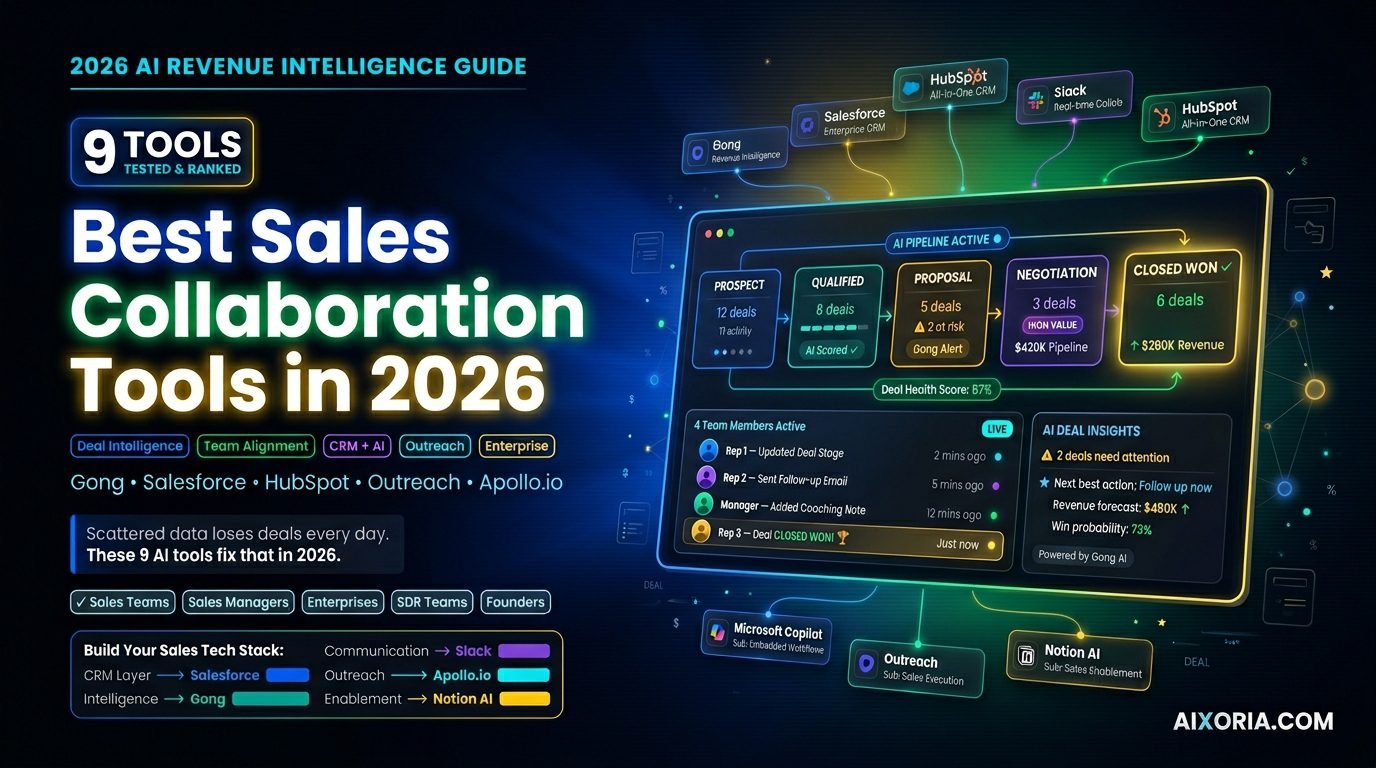
Today, closing a deal is not just about one salesperson doing everything alone. It involves multiple people—sales reps, managers, marketing teams, and even customer success. Everyone needs to stay aligned, updated, and ready to act at the right moment. This is exactly where a modern sales collaboration tool becomes essential.
But here is the real problem.
Most teams still struggle with scattered communication, missed updates, and too much manual work. Important deal information lives in emails, chat threads, spreadsheets, and CRM notes that are often incomplete or outdated. As a result, deals slow down, opportunities get lost, and teams spend more time managing data than actually selling.
This guide is built to solve that problem.
Instead of giving you a generic list, this is a carefully structured, high-authority guide to the best sales collaboration tools in 2026. Every tool included here is selected based on how well it helps teams work together, move faster, and close more deals using AI and automation.
Table of Contents
Why Sales Collaboration Tools Matter More Than Ever
In 2026, speed and clarity decide who wins the deal.
The best-performing sales teams are not just working harder—they are working smarter by using tools that:
- Keep everyone on the same page in real time
- Automatically capture and organize deal data
- Reduce manual updates and repetitive tasks
- Use AI to suggest next steps and highlight risks
- Help teams make faster, more confident decisions
A strong sales collaboration system ensures that nothing gets lost, delayed, or misunderstood.
How This Guide Is Different
Most articles simply list tools with basic features.
This one goes deeper.
Every tool in this guide is analyzed based on:
Real collaboration value
How effectively the tool helps teams communicate, share insights, and manage deals together.
AI capabilities
Not just “AI exists,” but how it actually improves productivity, saves time, and drives results.
Workflow efficiency
How much manual work the tool removes from your daily sales process.
Practical usability
Whether real teams can adopt and benefit from it without unnecessary complexity.
2026 Sales Collaboration Tools Comparison Matrix
This quick overview helps you understand which tool fits your needs before going into detailed breakdowns.
| Tool | Best For | AI Strength | Collaboration Style | Starting Price |
|---|---|---|---|---|
| Gong | Revenue intelligence | Advanced | Shared deal insights | Custom |
| Salesforce | Enterprise teams | Very high | Centralized deal rooms | $25/user/month |
| Slack (Sales Elevate) | Real-time collaboration | Moderate | Chat-driven workflows | $7.25/user/month |
| HubSpot | All-in-one teams | High | CRM-based collaboration | Free + paid |
| Apollo.io | Prospecting teams | High | Campaign collaboration | Free + paid |
| Microsoft Copilot for Sales | Microsoft users | Very high | Embedded workflow collaboration | $50/user/month |
| Outreach | Sales execution teams | High | Playbook-driven collaboration | Custom |
| Pipedrive | Small to mid-size teams | Moderate | Visual pipeline collaboration | $14/user/month |
| Notion AI | Sales enablement | Moderate | Knowledge-based collaboration | Free + paid |
9 Best Sales Collaboration Tools in 2026
Gong
What Gong Actually Does in Modern Sales Teams
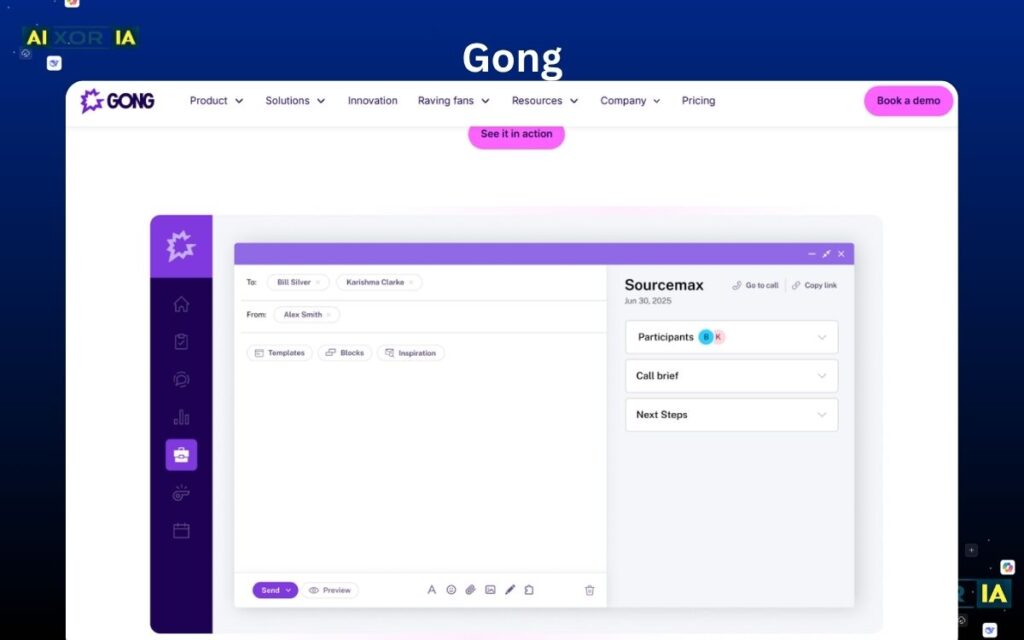
Gong is not just a sales tool—it is a complete revenue intelligence platform that changes how teams understand and collaborate on deals. Instead of relying on manual CRM updates or incomplete notes, Gong automatically records, transcribes, and analyzes every sales interaction, including calls, emails, and meetings.
This creates a single source of truth for the entire team. Sales reps, managers, and leaders can all see exactly what is happening in a deal without depending on second-hand information. This level of visibility removes confusion and aligns everyone around real data.
How Gong Improves Sales Collaboration
Traditional sales collaboration often depends on scattered updates across emails, chats, and CRM entries. Gong replaces that with shared deal intelligence.
Every conversation is captured and organized, so team members can:
- Review past calls and understand context instantly
- Tag teammates directly inside deal conversations
- Share feedback and coaching in real time
- Align on strategy based on actual customer interactions
This means collaboration is no longer based on assumptions—it is based on evidence.
AI Capabilities That Make Gong Stand Out
Gong’s AI is one of the most advanced in the sales technology space. It does far more than simple automation.
The system can:
- Automatically generate call summaries and key highlights
- Detect competitor mentions and pricing discussions
- Identify deal risks based on tone, timing, and responses
- Predict deal outcomes using historical data
- Recommend next steps for moving deals forward
What makes this powerful is that AI is not just supporting the process—it is actively guiding it. Teams can make faster and more accurate decisions because the system continuously analyzes patterns across all deals.
Real-World Use Case (Practical Perspective)
In real sales environments, Gong often replaces hours of manual work.
For example, instead of a manager joining every sales call, they can review AI-generated summaries and jump directly to important moments. New sales reps can quickly learn by watching successful calls, while struggling deals can be identified early and corrected before it is too late.
This creates a culture where learning, coaching, and execution happen continuously.
Key Features
- AI-powered call recording and transcription
- Automated deal insights and risk detection
- Collaborative deal boards with tagging and comments
- Real-time coaching and performance tracking
- Integration with major CRM and communication tools
Pros
- Eliminates manual note-taking and CRM updates
- Provides deep, data-driven insights
- Improves team alignment and transparency
- Excellent for coaching and onboarding
Cons
- Premium pricing makes it less accessible for small teams
- Requires full team adoption for maximum value
- Initial setup and integration can take time
Gong Pricing
Gong offers custom enterprise pricing, depending on team size and requirements. It is typically positioned for mid-size to large organizations with complex sales processes.
Salesforce
What Salesforce Does for Sales Collaboration
Salesforce is one of the most widely used CRM platforms in the world, but in 2026, it has evolved far beyond a traditional database. It now acts as a central collaboration hub where sales teams, managers, marketing, and even legal teams can work together on the same deal in real time.
Instead of information being scattered across different tools, Salesforce brings everything into one place—contacts, deal activity, emails, notes, documents, and communication history. This creates a structured environment where every team member can access the same information without delays or confusion.
How Salesforce Improves Team Collaboration
The biggest strength of Salesforce is its ability to create shared deal environments, often referred to as “deal rooms.”
Inside these deal spaces, teams can:
- Track every interaction related to a deal
- Assign tasks and responsibilities clearly
- Tag team members for quick input
- Share updates without switching tools
- Maintain a complete timeline of the deal
This ensures that collaboration is not dependent on memory or manual updates. Everything is documented, visible, and actionable.
AI Capabilities with Einstein Copilot
Salesforce integrates AI deeply through its Einstein platform, which plays a major role in modern sales collaboration.
Einstein can:
- Predict deal outcomes based on past data
- Automatically capture activities like emails and meetings
- Suggest next best actions for sales reps
- Identify risks in the pipeline early
- Generate insights that help teams prioritize deals
With the addition of Copilot-style AI, users can now interact with the system using natural language—asking questions like “Which deals are at risk?” or “What should I focus on today?”
This transforms Salesforce from a passive system into an active decision-making assistant.
Real-World Use Case (Practical Perspective)
In real-world scenarios, Salesforce becomes the backbone of sales operations.
For example, in large organizations, multiple stakeholders are involved in closing a deal. Instead of endless email threads or meetings, teams collaborate directly within Salesforce. A sales rep can update deal progress, a manager can review performance, and a marketing team can contribute insights—all in one place.
This reduces delays, improves accountability, and ensures that no critical information is lost.
Key Features
- Centralized CRM with full deal visibility
- Shared deal workspaces and activity tracking
- AI-powered insights and forecasting (Einstein)
- Workflow automation for repetitive tasks
- Deep integrations with thousands of business tools
Pros
- Highly scalable for growing and enterprise teams
- Strong AI-driven insights and automation
- Extensive customization options
- Large integration ecosystem
Cons
- Steep learning curve for new users
- Requires setup, customization, and maintenance
- Can become expensive as usage grows
Salesforce Pricing
Salesforce pricing typically starts at $25 per user per month, but advanced features, automation, and AI capabilities are available in higher-tier plans, which can significantly increase the cost.
Who Should Use Salesforce
Salesforce is best suited for:
- Medium to large sales teams
- Enterprises with complex sales processes
- Organizations that need deep customization
- Teams looking for a long-term scalable solution
Slack
What Slack Does in Sales Collaboration
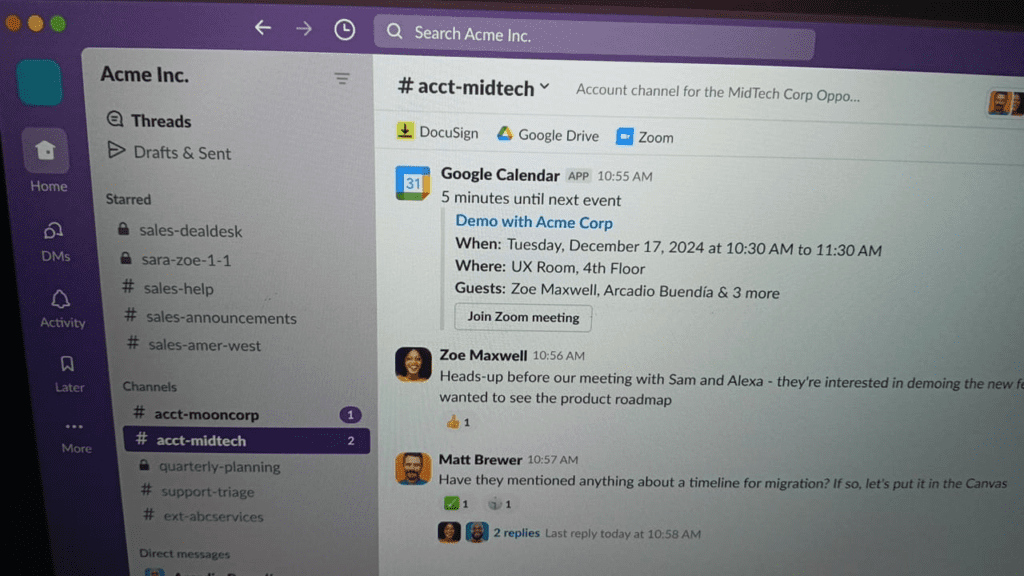
Slack has evolved from a simple messaging tool into a real-time collaboration engine for sales teams. While it is not a CRM, it plays a critical role in connecting people, conversations, and deal updates in one place.
Sales teams use Slack to centralize communication, ensuring that discussions about deals, prospects, and strategies are easily accessible and organized.
How Slack Improves Collaboration Across Teams
Slack enables collaboration through structured channels, where teams can organize conversations based on deals, accounts, or projects.
This allows teams to:
- Discuss deals in real time
- Share updates instantly without delays
- Tag team members for quick input
- Keep all communication transparent and searchable
With integrations, Slack can pull updates directly from CRM systems, ensuring that sales reps do not have to switch between multiple tools.
AI Capabilities and Automation
Slack has introduced AI features that enhance productivity and collaboration.
These include:
- Automatic summarization of long conversations
- Highlighting important messages and decisions
- Helping users quickly catch up on missed discussions
- Integration with AI tools that automate workflows and notifications
Slack also supports automation through integrations, allowing teams to receive alerts when deals change status or require attention.
Real-World Use Case (Practical Perspective)
In practice, Slack becomes the communication backbone of a sales team.
For example, when a deal reaches a critical stage, a rep can instantly notify the team, get input from managers, and coordinate next steps without delays. Instead of long email threads, everything happens in one visible and organized space.
This speed and transparency significantly improve decision-making.
Key Features
- Real-time messaging and collaboration channels
- Integration with CRM and sales tools
- AI-powered summaries and insights
- File sharing and searchable conversation history
- Workflow automation through integrations
Pros
- Fast and intuitive communication
- Strong integration ecosystem
- Improves team transparency
- Reduces email dependency
Cons
- Not a complete sales management tool
- Can become cluttered without proper organization
- Requires integration with other tools for full functionality
Slack Pricing
Slack offers a free plan, with paid plans starting at approximately $7.25 per user per month.
Who Should Use Slack
Slack is best suited for:
- Teams that need fast, real-time communication
- Organizations using multiple sales tools
- Distributed or remote sales teams
- Companies looking to reduce email usage
Final Take on Slack
Slack is not a traditional sales tool, but it plays a vital role in modern sales collaboration. By connecting conversations, tools, and updates in one place, it helps teams move faster and stay aligned.
When combined with a CRM, Slack becomes a powerful layer that enhances communication and accelerates deal execution.
HubSpot

What HubSpot Does for Sales Collaboration
HubSpot is designed as an all-in-one customer platform, combining CRM, marketing, sales, and customer service into a single system. For sales collaboration, this unified structure is its biggest advantage.
Instead of teams working in separate tools, HubSpot allows everyone to operate inside the same environment. Sales reps can see marketing interactions, support history, and previous conversations—all in one place. This creates a complete view of the customer and eliminates the gaps that usually exist between teams.
How HubSpot Improves Collaboration Across Teams
HubSpot makes collaboration seamless by connecting every stage of the customer journey.
Teams can:
- Share contact records with full interaction history
- Assign tasks and track activities across departments
- Collaborate on deals with notes, comments, and updates
- Align marketing campaigns with sales follow-ups
Because everything is centralized, there is no need to switch between tools or manually sync information. Everyone works with the same data, in real time.
AI Capabilities (ChatSpot and Automation Layer)
HubSpot has significantly expanded its AI capabilities, especially with tools like ChatSpot and AI-powered automation.
Its AI can:
- Generate personalized sales emails and follow-ups
- Suggest workflows and automation sequences
- Analyze customer behavior and engagement patterns
- Score leads based on likelihood to convert
- Provide insights that help prioritize deals
What makes HubSpot’s AI effective is its integration with CRM data. It does not operate in isolation—it uses real customer interactions to deliver context-aware recommendations.
Real-World Use Case (Practical Perspective)
In real-world usage, HubSpot simplifies collaboration between marketing and sales.
For example, when a lead interacts with a marketing campaign, that information is instantly visible to the sales team. Reps can see which emails were opened, which pages were visited, and what content the lead engaged with—before even starting a conversation.
This level of context allows for more personalized and effective outreach, improving both collaboration and conversion rates.
Key Features
- Unified CRM with marketing, sales, and service tools
- Shared contact and deal management system
- AI-powered email generation and automation
- Workflow automation and lead nurturing
- Integration with a wide range of business tools
Pros
- Easy to use with a clean interface
- Strong alignment between marketing and sales
- Free plan available for small teams
- Powerful automation and AI features
Cons
- Advanced features can become expensive
- Can feel complex as usage scales
- Some reporting features require higher-tier plans
Pricing
HubSpot offers a free plan, with paid plans starting around $9–$15 per user per month, depending on the tools and features selected. Advanced hubs and enterprise features increase pricing significantly.
Apollo.io
What Apollo.io Does in Modern Sales Collaboration
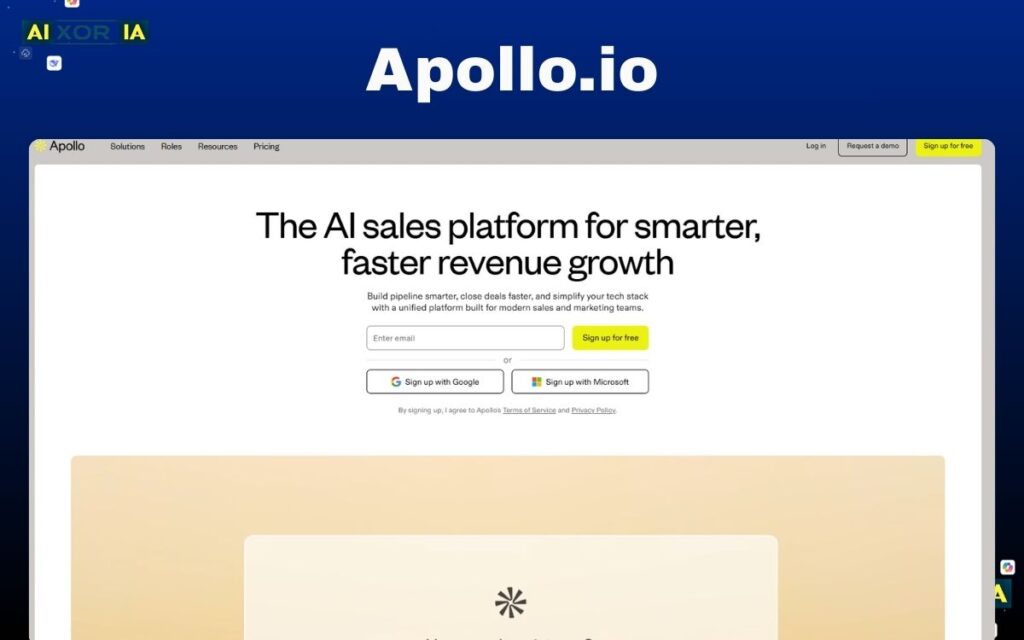
Apollo.io is designed for one of the most critical parts of sales—prospecting and outbound collaboration. It combines a large B2B contact database with outreach tools, allowing teams to find leads, engage them, and manage campaigns from a single platform.
Instead of using separate tools for data, email outreach, and tracking, Apollo.io brings everything together. This makes it easier for sales development representatives (SDRs) and account executives (AEs) to work as a coordinated unit rather than in isolation.
How Apollo.io Improves Team Collaboration
Apollo.io enables collaboration at the top of the sales funnel, where coordination is often weak in traditional setups.
Teams can:
- Share prospect lists and target accounts
- Collaborate on outreach sequences and messaging
- Track engagement across emails, calls, and touchpoints
- Analyze which campaigns are performing best
This shared visibility ensures that everyone understands what is working and what needs improvement. Instead of guessing, teams can optimize outreach based on real performance data.
AI Capabilities and Automation
Apollo.io includes strong AI features that significantly improve productivity and outreach quality.
Its AI can:
- Generate personalized email drafts based on prospect data
- Suggest messaging improvements for better response rates
- Score leads based on engagement and likelihood to convert
- Automate multi-step outreach sequences
- Provide analytics on campaign performance
What makes Apollo.io valuable is how AI integrates with its data layer. It does not just automate tasks—it uses real prospect data to improve targeting and messaging accuracy.
Real-World Use Case (Practical Perspective)
In real sales teams, Apollo.io often replaces multiple disconnected tools.
For example, instead of using one platform for lead data, another for email outreach, and another for tracking, teams can manage everything within Apollo. SDRs can build lists, launch campaigns, and share results with the team in one place.
This reduces tool-switching and ensures that collaboration happens around a shared workflow, not scattered systems.
Key Features
- Large B2B contact database
- Email and outreach automation
- Shared prospecting and campaign workflows
- AI-powered email generation and lead scoring
- Real-time analytics and performance tracking
Pros
- Combines data and outreach in one platform
- Strong AI for personalization and automation
- Improves team alignment in prospecting
- Reduces dependency on multiple tools
Cons
- Can feel overwhelming for beginners
- Data accuracy may vary in some cases
- Requires proper setup for best results
Apollo.io Pricing
Apollo.io offers a free plan, with paid plans starting around $49 per month, depending on features and usage limits.
Microsoft Copilot for Sales
What Microsoft Copilot for Sales Does
Microsoft Copilot for Sales is designed to bring AI-powered collaboration directly into the tools sales teams already use every day. Instead of forcing teams to switch between CRM systems and productivity apps, it connects platforms like Outlook, Teams, Excel, and Word with your CRM environment.
This creates a workflow where collaboration does not happen in a separate tool—it happens naturally inside emails, meetings, and documents. Sales reps can access deal insights, update records, and collaborate with teammates without leaving their daily workspace.
How It Improves Sales Collaboration
Traditional collaboration often breaks when teams have to move between multiple systems. Microsoft Copilot for Sales removes this friction by embedding collaboration into existing workflows.
Teams can:
- Share deal updates directly within Teams conversations
- Access CRM data while working inside Outlook
- Collaborate on documents and proposals in real time
- Align sales activities with internal communication tools
This reduces context switching and ensures that collaboration happens continuously, not in isolated moments.
AI Capabilities and Intelligent Assistance
The core strength of Microsoft Copilot for Sales lies in its AI integration across the Microsoft ecosystem.
Its AI can:
- Generate meeting summaries and key insights automatically
- Draft personalized sales emails based on CRM context
- Provide real-time suggestions during sales calls
- Pull relevant deal information into documents and presentations
- Analyze conversations and highlight important action points
What makes this unique is that AI operates across multiple tools simultaneously. Instead of being limited to one platform, it supports the entire sales workflow.
Real-World Use Case (Practical Perspective)
In real-world scenarios, this tool significantly improves productivity for teams already using Microsoft products.
For example, after a sales meeting on Teams, Copilot can automatically generate a summary, identify next steps, and update CRM records. A sales rep can then use Outlook to send a follow-up email generated by AI, all without manually entering data into another system.
This creates a seamless flow where collaboration, communication, and execution happen together.
Key Features
- Deep integration with Microsoft 365 tools
- AI-generated meeting summaries and insights
- Automated email drafting and follow-ups
- CRM data access within Outlook and Teams
- Real-time collaboration across documents and conversations
Pros
- Reduces the need to switch between tools
- Strong AI integration across workflows
- Improves productivity and efficiency
- Ideal for teams already using Microsoft ecosystem
Cons
- Requires Microsoft 365 and compatible CRM setup
- Higher cost compared to basic tools
- Less flexible for non-Microsoft environments
Pricing
Microsoft Copilot for Sales typically starts at around $50 per user per month, depending on licensing and integration requirements.
Outreach
What Outreach Does in Modern Sales Teams
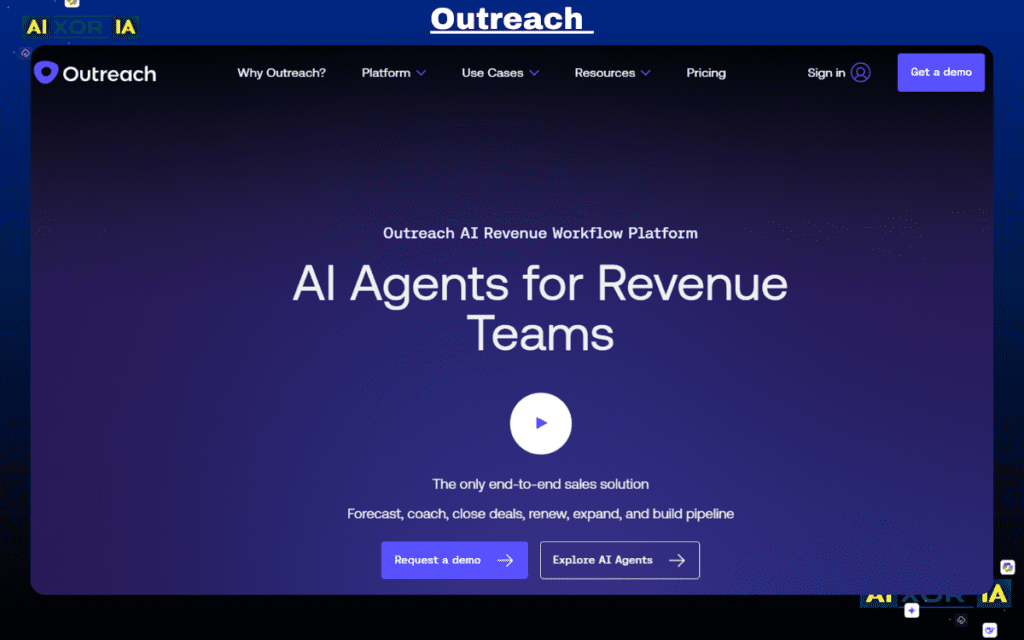
Outreach is built for one core purpose: standardizing and scaling how sales teams execute deals together. It is not just a CRM or communication tool—it is a structured sales execution platform that ensures every rep follows proven processes.
Instead of relying on individual habits, Outreach allows organizations to create repeatable systems for prospecting, follow-ups, and deal progression. This brings consistency across the entire sales team, which is critical for predictable revenue growth.
How Outreach Improves Sales Collaboration
Outreach improves collaboration by turning sales activities into shared, trackable workflows.
Teams can:
- Build and share outreach sequences across reps
- Collaborate on deal strategies with structured playbooks
- Track all communication (emails, calls, tasks) in one place
- Align team actions based on defined processes
This ensures that everyone is not just working together, but working in the same way. Managers can easily see what is happening across deals and guide teams more effectively.
AI Capabilities and Automation
Outreach integrates AI deeply into its execution layer, helping teams operate more efficiently and intelligently.
Its AI can:
- Analyze email responses and detect sentiment
- Suggest improvements for outreach messaging
- Recommend next steps based on deal activity
- Automate follow-ups and task sequences
- Provide insights into what strategies are working best
What makes Outreach powerful is its focus on execution intelligence—it does not just automate tasks, it helps teams understand which actions lead to better outcomes.
Real-World Use Case (Practical Perspective)
In real-world environments, Outreach is often used by teams that want to scale without losing consistency.
For example, a sales leader can create a high-performing outreach sequence and share it across the entire team. Every rep then follows the same structure, while still having room to personalize communication.
At the same time, managers can monitor performance and adjust strategies based on real data, ensuring continuous improvement.
Key Features
- Shared outreach sequences and workflows
- Centralized communication tracking
- AI-driven insights and recommendations
- Task automation and follow-up management
- Integration with CRM and sales tools
Pros
- Standardizes sales processes across teams
- Strong automation for repetitive tasks
- Improves visibility into team performance
- Helps scale sales operations efficiently
Cons
- Requires time to set up workflows properly
- Can feel complex for smaller teams
- Best suited for structured sales environments
Outreach Pricing
Outreach offers custom pricing, typically designed for mid-size to large sales organizations.
Pipedrive
What Pipedrive Does in Modern Sales Collaboration
Pipedrive is built with a simple idea: sales teams need clarity. Instead of complex dashboards and overloaded systems, it focuses on a visual pipeline that shows exactly where every deal stands.
For collaboration, this clarity is critical. When everyone on the team can see deal stages, activities, and priorities at a glance, coordination becomes faster and more effective. Pipedrive removes confusion and helps teams stay aligned without needing constant updates or meetings.
How Pipedrive Improves Team Collaboration
Pipedrive improves collaboration by making deal progress transparent and easy to understand.
Teams can:
- View and manage deals in a shared visual pipeline
- Add notes, activities, and updates to each deal
- Assign tasks and track responsibilities
- Monitor team performance and progress in real time
Because everything is organized visually, team members can quickly understand what needs attention and where support is required.
AI Capabilities and Smart Assistance
Pipedrive includes AI features designed to guide sales teams without adding complexity.
Its AI can:
- Recommend next best actions for deals
- Identify deals that may be at risk
- Provide performance insights and suggestions
- Automate repetitive tasks like reminders and follow-ups
While its AI is not as advanced as enterprise-level platforms, it is practical and easy to use. It focuses on helping teams stay organized and make better decisions without overwhelming them.
Real-World Use Case (Practical Perspective)
In real-world use, Pipedrive is especially effective for small to mid-sized teams that need structure without complexity.
For example, a sales team can quickly review the pipeline during a meeting and instantly identify stalled deals or upcoming opportunities. Instead of digging through reports, everything is visible in one place.
This makes collaboration faster and reduces the need for constant status updates.
Key Features
- Visual pipeline with drag-and-drop functionality
- Shared deal tracking and activity management
- AI-powered sales assistant
- Task and reminder automation
- Integration with common sales tools
Pros
- Simple and intuitive interface
- Fast setup and easy adoption
- Clear visual representation of deals
- Useful AI suggestions for daily tasks
Cons
- Limited advanced customization
- Not ideal for large enterprise teams
- Fewer deep integrations compared to larger platforms
Pricing
Pipedrive pricing starts at approximately $14 per user per month, with higher plans offering additional features and automation capabilities.
Notion AI
What Notion AI Does in Sales Collaboration
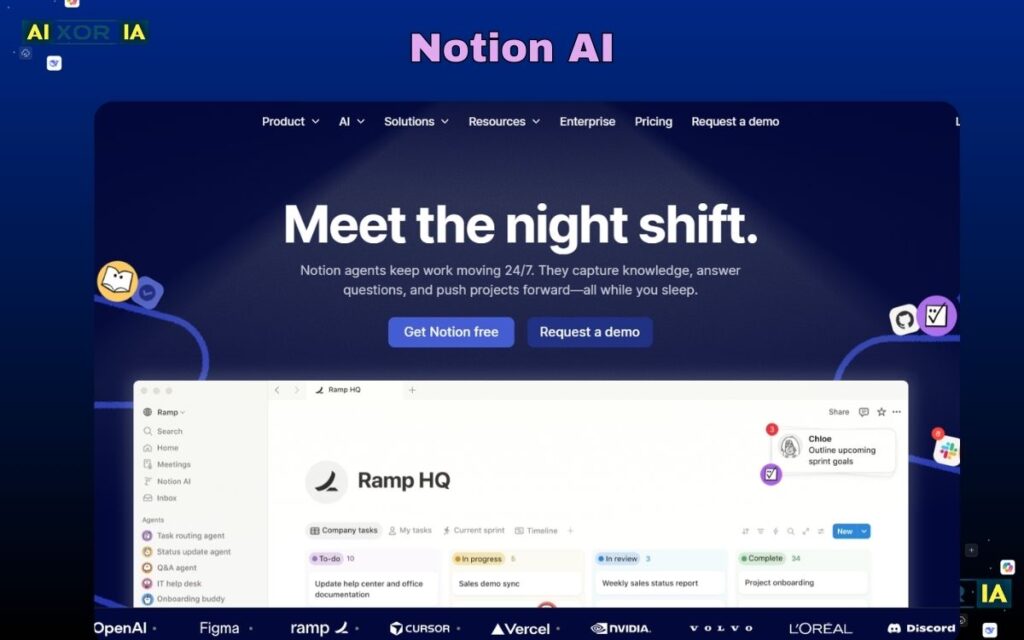
Notion AI is not a traditional CRM or sales tool, but it has become a critical part of modern sales collaboration—especially in sales enablement and knowledge sharing.
Sales teams deal with a huge amount of information: pitch decks, competitor insights, product updates, case studies, and internal strategies. Notion AI helps organize all of this into a centralized, collaborative knowledge system where every team member can access, update, and contribute in real time.
Instead of scattered documents and outdated files, teams get a structured workspace that supports better decision-making and faster execution.
How Notion AI Improves Team Collaboration
Notion AI improves collaboration by turning information into a shared, living system rather than static documents.
Teams can:
- Build deal-specific pages with notes, strategies, and updates
- Create shared “battlecards” for handling competitors
- Maintain a centralized library of sales resources
- Collaborate on documents in real time with full visibility
This ensures that everyone is working with the same knowledge, reducing confusion and improving consistency across the sales process.
AI Capabilities and Smart Content Assistance
Notion AI adds a powerful layer of intelligence to content creation and management.
Its AI can:
- Summarize long documents into key points
- Generate sales scripts, emails, and notes
- Organize messy information into structured content
- Help teams quickly update and refine documentation
- Answer questions based on internal knowledge
What makes this valuable is how AI integrates with team knowledge. It helps transform raw information into clear, usable insights that support better collaboration.
Real-World Use Case (Practical Perspective)
In real-world usage, Notion AI often becomes the backbone of a sales team’s internal system.
For example, when a new competitor enters the market, the team can create a shared battlecard in Notion. Everyone contributes insights, updates messaging, and refines strategies in one place. AI can then summarize this information and make it easier to use during live sales conversations.
This creates a system where knowledge is always up to date and accessible.
Key Features
- Real-time collaborative documents and databases
- Centralized sales knowledge management
- AI-powered content generation and summarization
- Customizable workflows and templates
- Integration with other productivity tools
Pros
- Highly flexible and customizable
- Excellent for organizing complex information
- Strong AI support for content and documentation
- Improves knowledge sharing across teams
Cons
- Not a full CRM or pipeline management tool
- Requires proper structure to stay organized
- Can become cluttered without clear processes
Pricing
Notion offers a free plan, with AI features available starting around $8 per user per month, depending on usage and plan level.
Choosing the Best Sales Collaboration Tool in 2026
Sales collaboration in 2026 is no longer about choosing a single tool—it is about building a connected system where communication, data, workflows, and AI work together seamlessly.
Each tool covered in this guide solves a different part of the collaboration problem. The key is understanding your team’s workflow and selecting the right combination that removes friction, improves visibility, and drives consistent execution.
How to Choose the Right Sales Collaboration Tool
There is no universal “best” tool. The right choice depends on how your team operates.
If your focus is deep deal intelligence and coaching, then Gong provides unmatched visibility into conversations and performance.
If you need a central system for managing complex deals across departments, Salesforce offers the structure and scalability required for enterprise environments.
For teams that prioritize real-time communication and fast updates, Slack helps keep everyone aligned without delays.
If your goal is to unify marketing, sales, and customer data, HubSpot delivers a complete ecosystem that simplifies collaboration.
For outbound-focused teams, Apollo.io enables collaborative prospecting and campaign execution with strong automation.
Organizations already working within Microsoft tools will benefit from Microsoft Copilot for Sales, which integrates collaboration directly into everyday workflows.
Teams that require structured processes and repeatable execution should consider Outreach for its playbook-driven approach.
Smaller teams that want clarity without complexity will find Pipedrive effective with its visual pipeline system.
And for internal alignment, knowledge sharing, and enablement, Notion AI helps teams stay organized and informed.
The Real Shift: From Tools to Systems
One of the biggest mistakes teams make is treating these platforms as isolated solutions.
High-performing sales organizations build integrated systems, for example:
- CRM (Salesforce or HubSpot) for deal management
- Communication layer (Slack or Teams) for real-time collaboration
- Intelligence layer (Gong) for insights and coaching
- Execution layer (Outreach or Apollo.io) for outreach and workflows
- Knowledge layer (Notion AI) for internal alignment
This combination creates a workflow where every part of the sales process is connected and optimized.
The Role of AI Going Forward
AI is now the foundation of modern sales collaboration.
Instead of relying on manual updates and human memory, AI systems:
- Capture and organize information automatically
- Identify risks before they impact deals
- Recommend actions based on data patterns
- Reduce repetitive work across the entire pipeline
This allows teams to focus more on strategy and relationships, rather than administrative tasks.
Common Mistakes to Avoid
When selecting a sales collaboration tool, avoid these common issues:
- Choosing based on features instead of workflow fit
- Overloading your stack with too many disconnected tools
- Ignoring user adoption and ease of use
- Underestimating the importance of integrations
- Not leveraging AI capabilities fully
The goal is not to use more tools—it is to use the right tools effectively.
Final Recommendation
If you are starting fresh, focus on building a simple but powerful foundation:
- A strong CRM for visibility
- A communication tool for speed
- An AI layer for intelligence
- A workflow tool for execution
From there, you can expand based on your team’s needs.
1 thought on “9 Best Sales Collaboration Tools in 2026 (Tested)”