Paraphrasing tools have become essential for students—but in 2026, the conversation has shifted. It’s no longer just about rewriting text. The real concern for students in the US is AI detection.
Even well-written assignments can be flagged by tools like Turnitin or GPTZero if the phrasing appears overly “AI-like.” That means choosing the right paraphrasing tool is not just about quality—it’s about safety, originality, and academic integrity.
In this guide, we break down the best AI paraphrasing tools for students in 2026, with a focus on:
- Writing quality
- AI detection risk
- Academic usability
- Pricing and real-world performance
Table of Contents
What Makes the Best AI Paraphrasing Tool in 2026?
For US students, the standard has changed. The best tools must now deliver:
Context-aware rewriting
Not just synonym replacement, but deep restructuring of sentences while preserving meaning.
Human-like output
Text should read naturally, with variation in sentence structure and tone.
Low AI detection risk
Tools must avoid patterns that AI detectors flag (repetitive phrasing, unnatural flow).
Academic tone control
Support for formal, neutral, and analytical writing styles.
Ethical usability
Tools should assist—not replace—original thinking.
READ MORE – 7 Best Free AI Paraphrasing Tools in 2026
Best AI Paraphrasing Tools for Students (2026 Comparison)
| Tool | Best For | AI Detection Risk | Pricing |
|---|---|---|---|
| QuillBot | Academic paraphrasing | Low (Academic Mode) | Free + Paid |
| Grammarly | Editing & clarity | Very Low | Free + Paid |
| Wordtune | Natural rewriting | Low | Free + Paid |
| Rephrasy | AI detection bypass | Ultra Low | Free + Paid |
| Claude | Human-like paraphrasing | Very Low | Free + Paid |
| Jasper AI | Advanced rewriting | Medium | From $39/month |
| Writesonic | Multi-purpose AI | Medium | Free + Paid |
| Spinbot | Free tool | High | Free |
Best Overall AI Paraphrasing Tool for Students
QuillBot
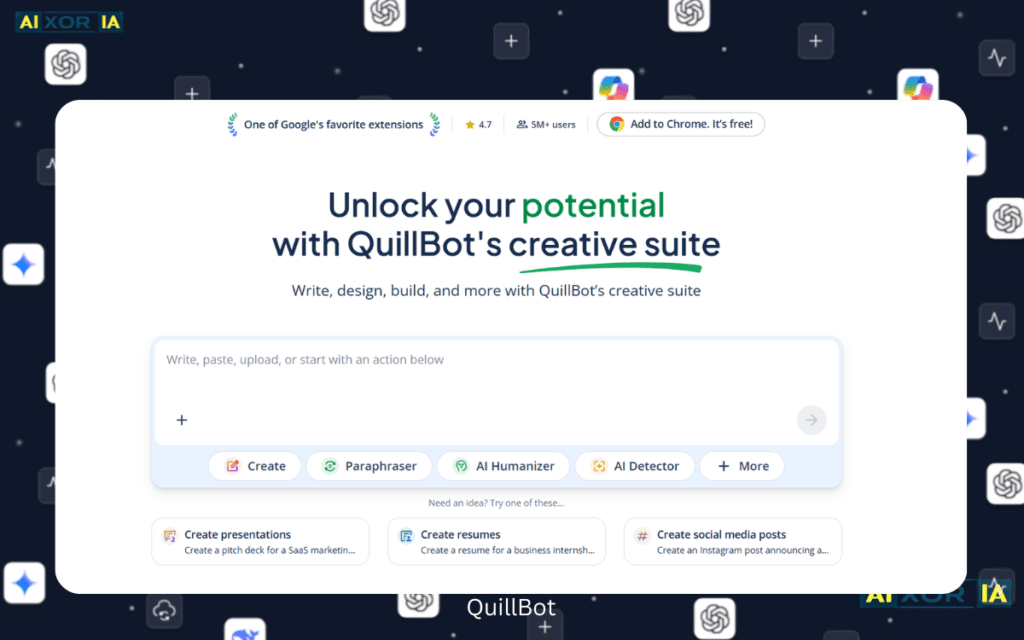
QuillBot continues to be one of the most reliable paraphrasing tools for academic use, especially for students who need precise and structured rewriting.
What makes QuillBot stand out in 2026 is its Academic Mode, which focuses on maintaining formal tone while restructuring sentences more intelligently than basic tools. Instead of simple synonym replacement, it adjusts sentence flow, improves clarity, and ensures that the output aligns with academic writing standards.
Students can choose from multiple modes such as Standard, Fluency, and Formal, depending on how much they want the content to change. For assignments, Academic and Formal modes are the most effective.
In terms of AI detection, QuillBot performs better than most basic paraphrasers, but results still depend on how the tool is used. If you input fully AI-generated text and paraphrase it directly, detection risk increases. However, when used to refine your own writing, it produces much safer output.
Pricing: Free plan available; Premium from $9.95/month
Pros:
- Strong academic tone support
- Multiple rewriting modes
- Reliable for essays and assignments
Cons:
- Limited free features
- Detection risk if overused on AI-generated text
Best AI Tool for Grammar, Clarity, and Safe Rewriting
Grammarly
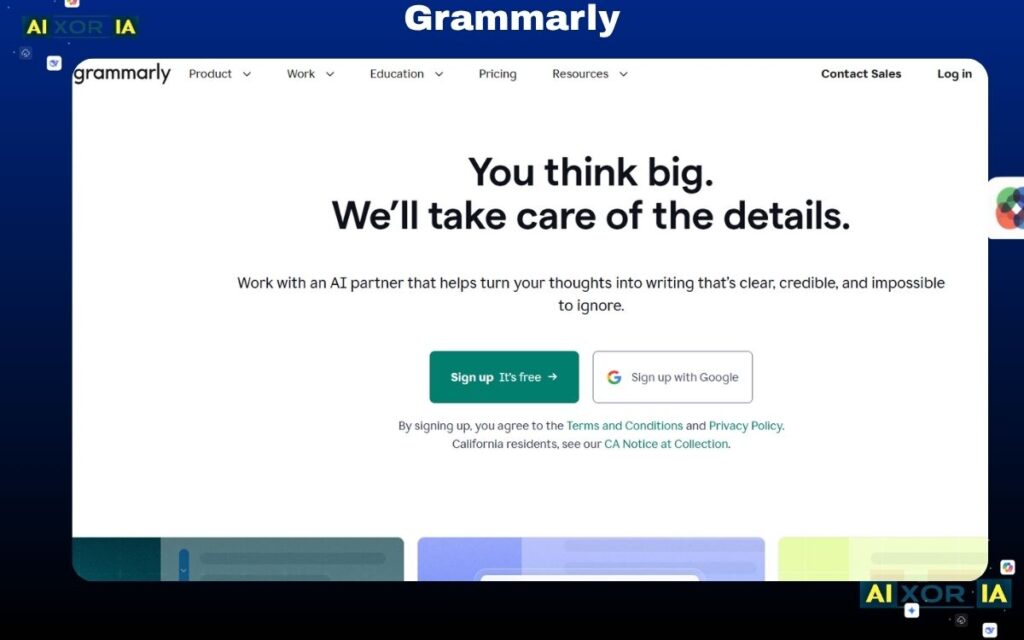
Grammarly has evolved into a full writing assistant, and in 2026, it plays a crucial role in low-risk paraphrasing.
Unlike traditional paraphrasers, Grammarly focuses on improving clarity, fixing grammar, and suggesting alternative sentence structures. This makes it one of the safest tools in terms of AI detection because it doesn’t aggressively rewrite entire paragraphs.
Its tone detection and adjustment features are particularly useful for academic writing, ensuring that your work remains formal and consistent. Grammarly is best used as a final polishing tool after drafting your content.
Because its changes are subtle and human-like, the output typically carries a very low AI detection risk.
Pricing: Free plan available; Premium from $12/month
Pros:
- Extremely low detection risk
- Excellent grammar and clarity improvements
- Real-time suggestions
Cons:
- Not designed for deep paraphrasing
- Limited control over full rewrites
Best Tool for Natural, Human-Like Rewriting
Wordtune
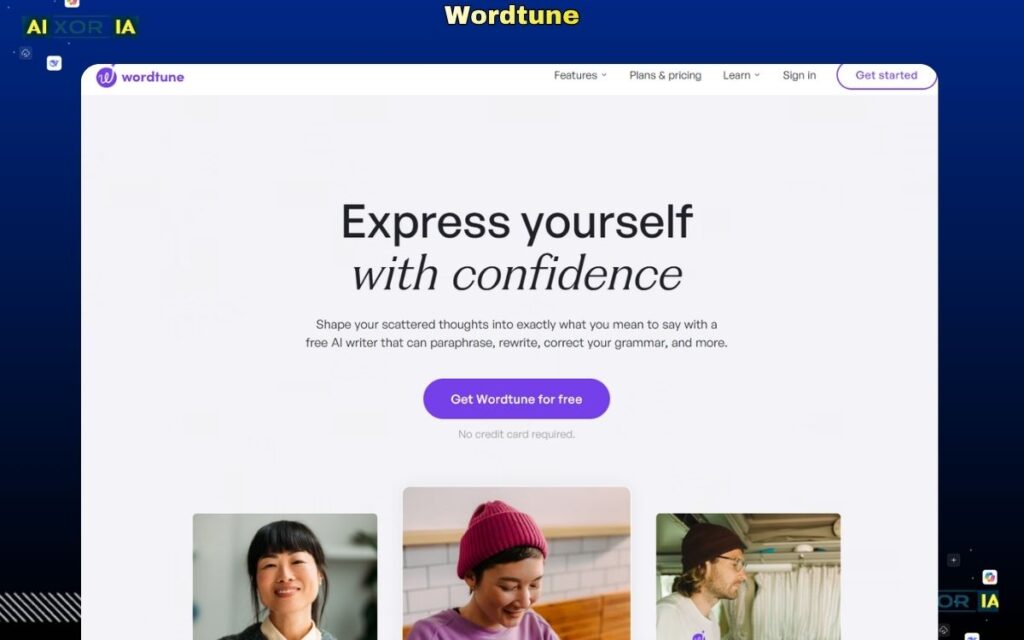
Wordtune is built specifically for rewriting sentences in a natural and human tone. It offers multiple variations for each sentence, allowing students to choose the most appropriate version.
What makes Wordtune valuable in 2026 is its ability to produce human-like flow, which reduces detection risk significantly. It avoids repetitive structures and generates more organic sentence patterns.
It’s especially useful for improving readability and clarity without drastically altering meaning. However, it works best on smaller sections of text rather than full essays.
Pricing: Free plan available; Paid from $9.99/month
Pros:
- Natural-sounding rewrites
- Multiple suggestions per sentence
- Easy to use
Cons:
- Limited for long-form rewriting
- Usage limits in free plan
Best AI Tool for Bypassing AI Detection
Rephrasy
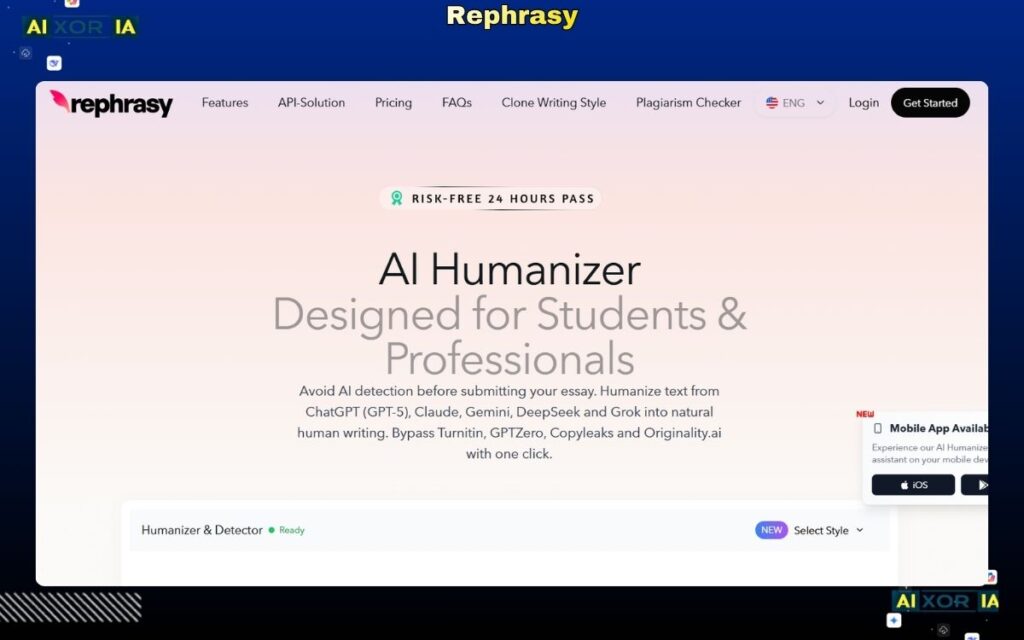
Rephrasy has gained attention in 2026 for its focus on AI detection avoidance. It is designed to restructure sentences more aggressively, making output less predictable and harder for detection tools to flag.
Unlike basic paraphrasers, Rephrasy changes sentence structure, phrasing patterns, and word order in a way that mimics human writing more closely. This results in a significantly lower detection rate when compared to older tools.
However, aggressive rewriting can sometimes affect clarity, so students should always review and refine the output.
Pricing: Free + Paid plans
Pros:
- Very low detection risk
- Strong structural rewriting
- Useful for sensitive assignments
Cons:
- May require manual editing
- Less polished than premium tools
Best AI Tool for Advanced Human-Like Paraphrasing
Claude
Claude has become one of the most preferred AI tools among students for paraphrasing in 2026 due to its natural writing style.
Compared to many AI tools, Claude produces text that feels less mechanical and more conversational, even in formal contexts. This makes it particularly effective for rewriting paragraphs in a way that avoids detection patterns.
Students often use Claude not just for paraphrasing, but for improving structure, refining arguments, and enhancing clarity. It works well for longer academic content where maintaining logical flow is important.
Pricing: Free + Paid plans (varies by usage)
Pros:
- Highly natural output
- Strong contextual understanding
- Suitable for long-form writing
Cons:
- Requires good prompting
- Not a dedicated paraphrasing interface
Best Advanced AI Writing Tool
Jasper AI
Jasper AI is a powerful platform designed for high-quality content generation and rewriting. Its paraphrasing capabilities are advanced, with strong contextual understanding and structured output.
For students, Jasper is useful for rewriting complex paragraphs and improving clarity. However, because it generates more polished and sometimes “perfect” text, detection risk can be higher if not used carefully.
Pricing: From $39/month
Pros:
- High-quality output
- Advanced rewriting capabilities
- Suitable for long-form content
Cons:
- Expensive
- Medium detection risk
Best Multi-Purpose AI Writing Tool
Writesonic
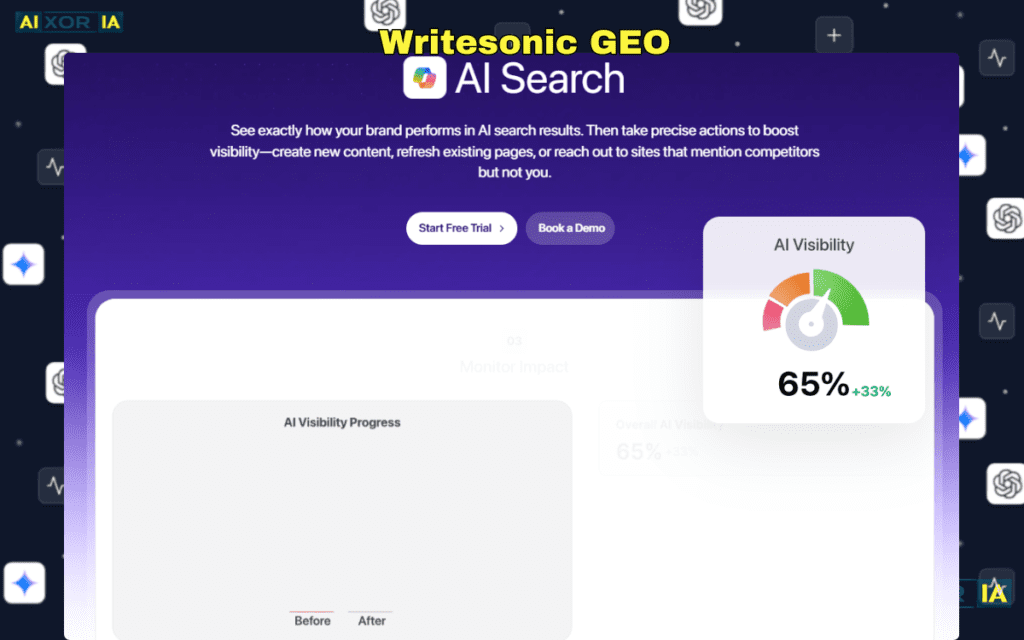
Writesonic offers a combination of paraphrasing, content generation, and AI assistance. It’s useful for students who need an all-in-one writing tool.
Its paraphrasing capabilities are solid, but since it’s not specialized, output quality can vary. Detection risk is moderate, especially if used for full content generation.
Pricing: Free plan available; Paid from $16/month
Pros:
- Multi-purpose functionality
- Easy to use
- Good for general writing
Cons:
- Not focused on paraphrasing
- Inconsistent output quality
Best Free AI Paraphrasing Tool
Spinbot
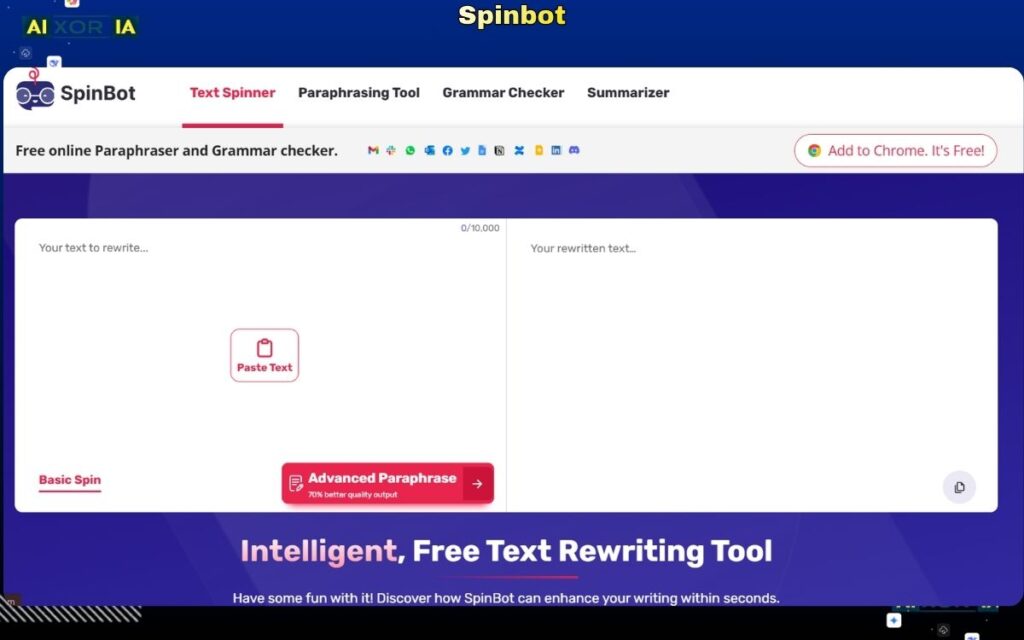
Spinbot is a basic, free paraphrasing tool that performs simple word replacements. While it’s accessible, it lacks the contextual understanding needed for academic writing.
In 2026, tools like Spinbot carry a high AI detection risk, as their output often appears unnatural and repetitive.
Pricing: Free
Pros:
- No cost
- Quick and easy
Cons:
- High detection risk
- Low-quality output
- Not suitable for academic work
READ MORE – 7 Best AI Paraphrasing Tools for SEO in 2026
Will These Tools Pass Turnitin in 2026?
This is the most important question for students.
The reality is:
- No tool guarantees 100% safety
- Detection depends on how you use the tool
General Insight:
- Basic tools (like Spinbot) → Easily detected
- Mid-level tools (QuillBot, Wordtune) → Safer with proper use
- Advanced tools (Claude, Rephrasy) → Lower detection risk due to natural output
The safest approach is not to rely entirely on AI, but to use it as a refinement tool.
How to Use AI Without Risking Your Degree
1. Start with your own writing
Never generate full assignments with AI and then paraphrase. Write your draft first.
2. Use AI for refinement, not replacement
Let tools improve clarity, not create content from scratch.
3. Manually edit after AI
Change 2–3 sentences yourself to break AI patterns.
4. Maintain your voice
Ensure the final output reflects your own understanding and tone.
US University Context (2026)
Many US universities, including institutions like Harvard University and Stanford University, allow limited AI usage for improving writing clarity and structure.
However:
- Full AI-generated or heavily paraphrased content can violate academic integrity policies
- Students are expected to demonstrate original thinking
Using AI responsibly is essential.
FAQs
Is QuillBot safe for university assignments in 2026?
Yes, when used to refine your own writing. Avoid using it on fully AI-generated text.
How can I paraphrase without getting flagged by AI detectors?
Write your own draft first, use AI tools for improvement, and manually edit the final version.
Which is the best free undetectable AI paraphraser?
There is no completely “undetectable” free tool. However, combining tools like Grammarly with manual editing is safer than relying on free paraphrasers alone.
Final Thoughts
The best AI paraphrasing tools for students in 2026 are not just about rewriting—they’re about balancing quality, safety, and academic integrity.
Tools like QuillBot, Grammarly, and Claude provide reliable support when used correctly. Others, like Rephrasy, offer more aggressive rewriting for lower detection risk. Free tools can help, but they often fall short in quality and safety.
Ultimately, the most effective strategy is simple:
Use AI to improve your writing—not replace it.