Email newsletters have evolved into one of the most powerful digital assets for creators, businesses, and publishers. Unlike social media audiences, email subscribers are owned—giving you direct, algorithm-independent access to your audience.
But in 2026, choosing the right platform is no longer just about sending emails. The best tools now combine automation, monetization, AI-powered content creation, analytics, and growth systems.
This guide breaks down the best email newsletter platforms and software in 2026, with detailed analysis, pricing, pros/cons, and AI capabilities—so you can choose the right platform based on your goals.
Table of Contents
What Makes the Best Email Newsletter Platform in 2026?
Not all tools are built for the same purpose. The best platforms stand out in these key areas:
Monetization and growth tools
Modern platforms include referral systems, ad networks, and paid subscriptions to help turn newsletters into businesses.
Automation and segmentation
Advanced tools allow behavior-based emails, funnels, and audience targeting—critical for scaling.
AI-powered features
AI now helps with subject lines, content writing, personalization, and workflow automation.
Ease of use vs flexibility
Some platforms prioritize simplicity, while others offer deep customization and control.
Integration ecosystem
Strong integrations with CRM, eCommerce, and analytics tools reduce manual work.
The Best Email Newsletter Platforms at a Glance
| Platform | Best For | Pricing | Key Strength |
|---|---|---|---|
| Beehiiv | Growth-focused newsletters | Free → $39+/mo | Built-in growth + monetization |
| Substack | Writers & beginners | Free (10% fee) | Simplicity + discovery |
| ConvertKit | Creators & automation | Free → $25+/mo | Advanced email automation |
| Mailchimp | Businesses & marketing | Free → $13+/mo | Full marketing suite + AI |
| Ghost | Publishers | $9+/mo | Ownership + open-source |
| Brevo (Sendinblue) | Budget businesses | Free → low-cost plans | Email + SMS marketing |
Best Email Newsletter Platform for Growth and Monetization
Beehiiv
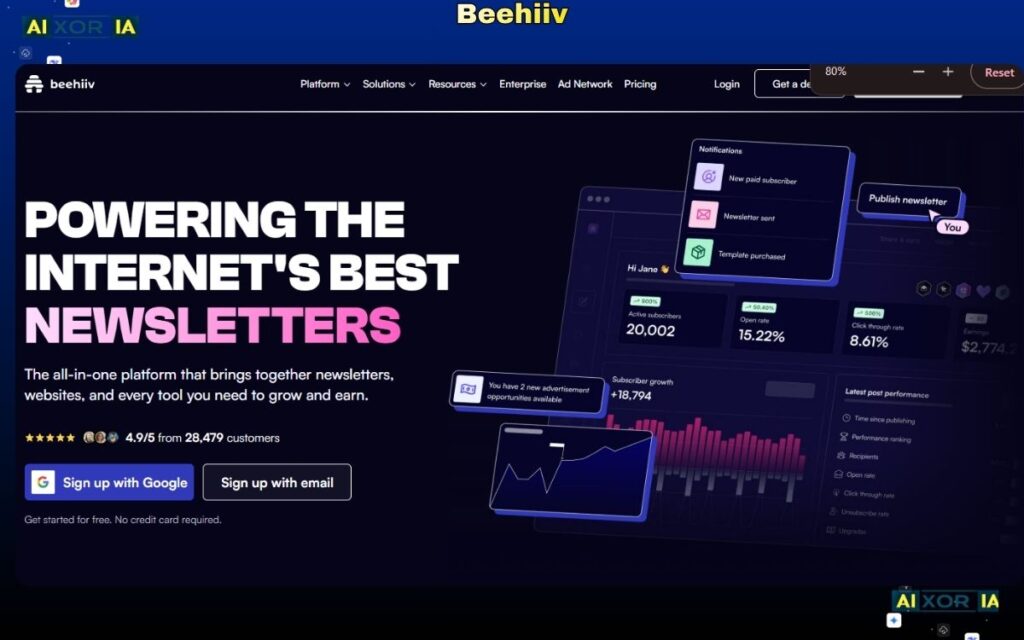
Beehiiv is widely considered one of the strongest newsletter platforms in 2026, especially for creators focused on growth and monetization.
Built by early newsletter operators, Beehiiv includes features specifically designed to scale publications. These include a built-in referral system, ad network, SEO-friendly blog hosting, and advanced analytics. It essentially combines newsletter publishing with a full media business toolkit.
One of Beehiiv’s biggest advantages is its native monetization system. Unlike platforms that rely only on subscriptions, Beehiiv allows creators to earn through ads and sponsorships directly inside the platform. It also includes audience segmentation and growth tools that outperform many competitors.
AI Capabilities
Beehiiv includes AI tools for writing assistance, content optimization, and automated workflows. These features help generate newsletter drafts, improve subject lines, and analyze engagement patterns to optimize performance.
Pricing
- Free: Up to ~2,500 subscribers
- Paid: Starts around $39/month
Pros
- Built-in ad network and referral growth system
- Strong analytics and segmentation
- SEO-ready publishing system
Cons
- Limited advanced automation compared to ConvertKit
- Smaller integration ecosystem
Best Email Newsletter Platform for Writers and Simplicity
Substack
Substack remains the simplest way to start a newsletter in 2026. It removes all technical barriers—allowing writers to publish, grow, and monetize without setup.
The platform includes built-in discovery features, helping creators gain subscribers organically through recommendations and its internal network. This makes it especially attractive for journalists, bloggers, and independent writers.
However, Substack follows a revenue-sharing model. While it’s free to start, it takes a percentage of paid subscriptions, which can become significant as revenue grows.
AI Capabilities
Substack has limited AI features compared to competitors. Most workflows remain manual, focusing on writing and publishing rather than automation or optimization.
Pricing
- Free to start
- 10% fee on paid subscriptions
Pros
- Zero setup required
- Built-in audience discovery
- Clean, writing-focused interface
Cons
- Limited customization
- Revenue share model reduces long-term profit
Best Email Newsletter Platform for Automation and Creator Businesses
ConvertKit
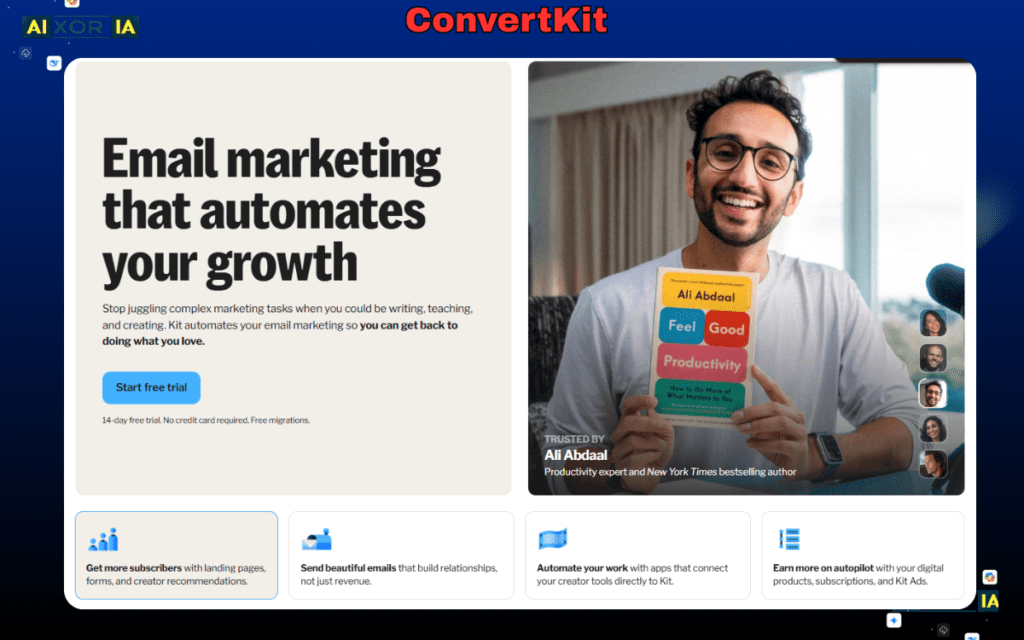
ConvertKit (now also known as Kit) is designed for creators who want more than just a newsletter—it’s built for full email marketing and business automation.
It excels in segmentation, automation workflows, and digital product sales. You can create advanced funnels, automate email sequences, and manage subscriber behavior in detail.
This makes ConvertKit ideal for bloggers, course creators, and entrepreneurs who use newsletters as part of a broader business strategy.
AI Capabilities
ConvertKit includes AI tools for email writing, subject line generation, and automation suggestions. These features help creators optimize campaigns without deep technical expertise.
Pricing
- Free plan available
- Paid plans start around $25/month
Pros
- Advanced automation and segmentation
- Strong creator-focused features
- Built-in commerce tools
Cons
- Less focused on publishing-style newsletters
- Learning curve for beginners
Best Email Newsletter Platform for Businesses and Marketing Teams
Mailchimp
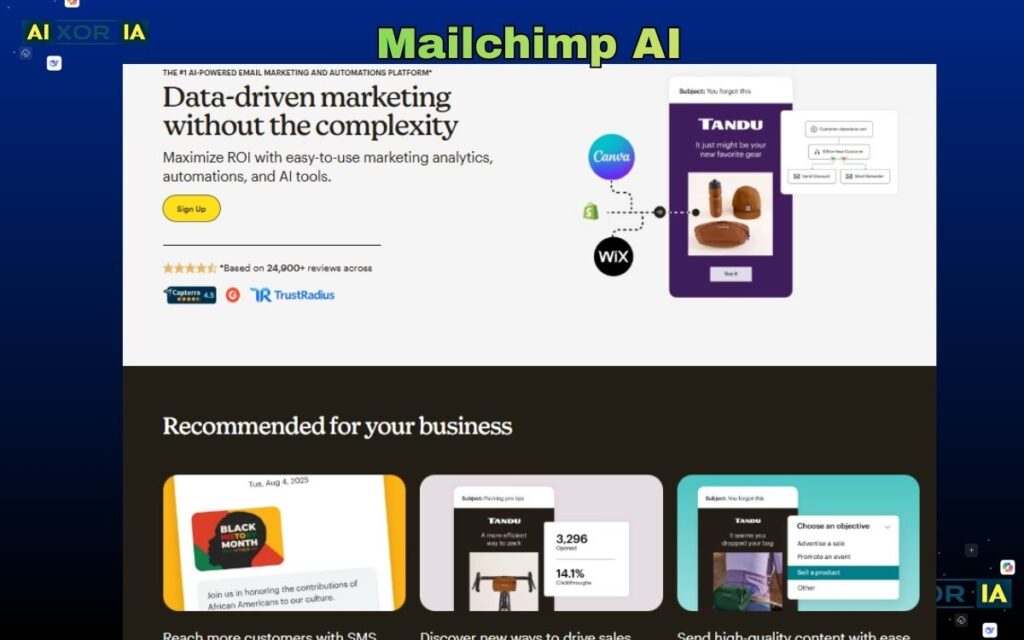
Mailchimp remains one of the most established email marketing platforms, especially for businesses and eCommerce brands.
It offers a full marketing suite, including email campaigns, CRM features, landing pages, and ad integrations. Its biggest strength lies in its versatility—it’s not just a newsletter tool but a complete marketing platform.
Recent updates have introduced AI-powered features under “Intuit Assist,” enabling predictive segmentation, automated workflows, and content generation.
AI Capabilities
Mailchimp provides advanced AI tools for:
- Subject line generation
- Audience targeting
- Content optimization
- Predictive analytics
Pricing
- Free plan available
- Paid plans start around $13/month
Pros
- Powerful automation and integrations
- Strong AI features
- Ideal for eCommerce and marketing
Cons
- Pricing increases as your list grows
- Can feel complex for beginners
Best Email Newsletter Platform for Publishers and Ownership
Ghost
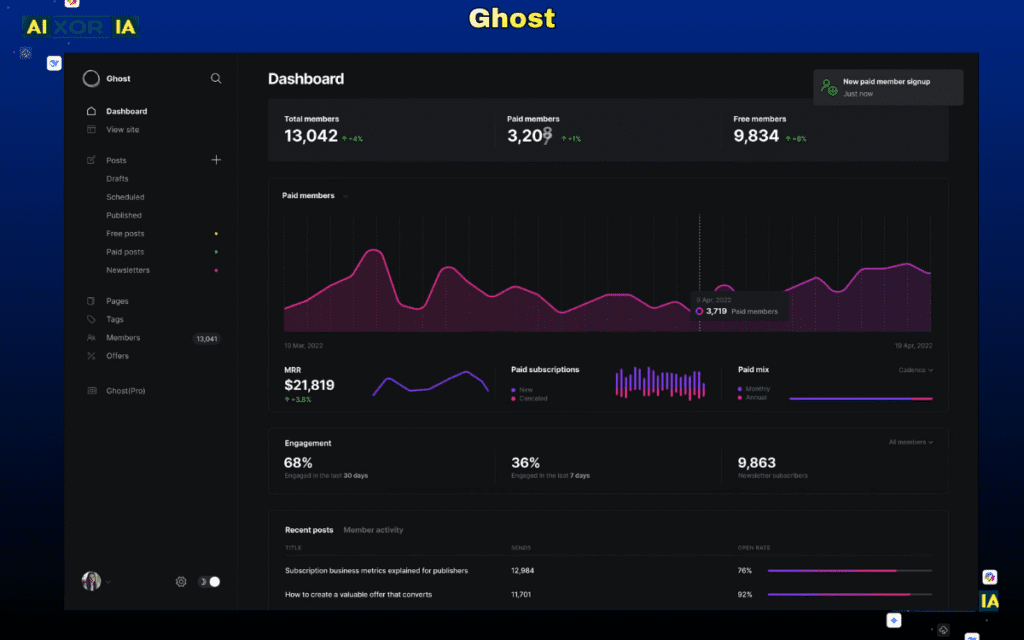
Ghost is an open-source publishing platform designed for creators who want full control over their content and audience.
Unlike hosted platforms, Ghost allows you to own your data, customize your site, and run your newsletter independently. It combines blogging, memberships, and email newsletters into one system.
This makes it ideal for publishers, developers, and businesses that prioritize long-term ownership over convenience.
AI Capabilities
Ghost itself has limited native AI, but it supports integrations with external AI tools, allowing flexible customization for advanced workflows.
Pricing
- Starts around $9/month (self-hosted)
Pros
- Full ownership and control
- Open-source flexibility
- Strong publishing features
Cons
- Requires technical setup
- No built-in growth tools
Best Budget Email Newsletter Platform
Brevo (formerly Sendinblue)
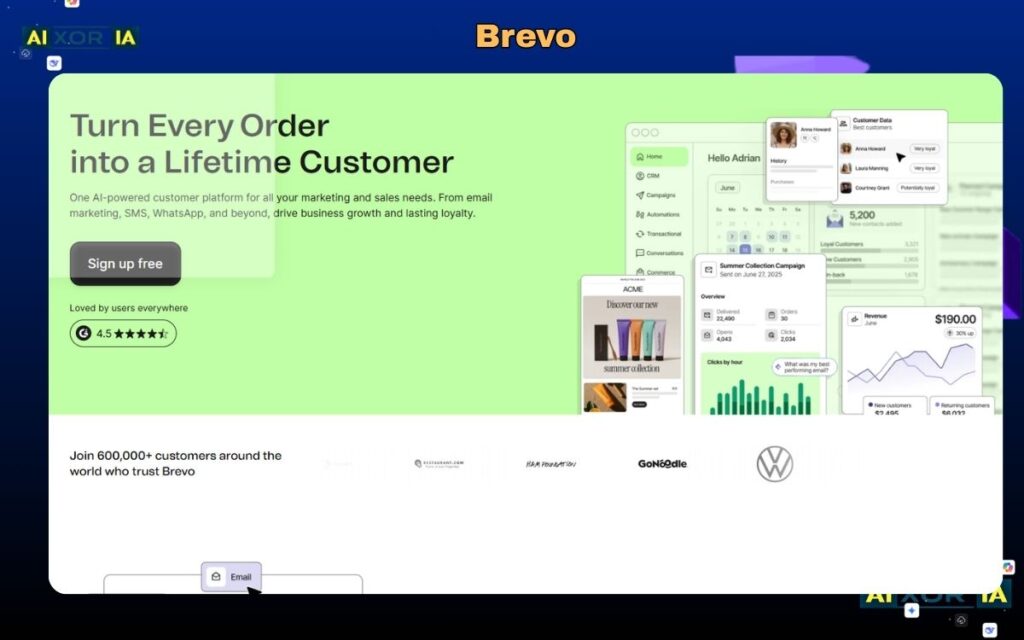
Brevo is a strong option for businesses looking for an affordable email marketing solution with multi-channel capabilities.
It offers email campaigns, SMS marketing, automation, and CRM features at a lower cost than many competitors. This makes it particularly attractive for startups and small businesses.
AI Capabilities
Brevo includes AI features for email personalization, send-time optimization, and automation improvements, helping improve campaign performance without increasing cost.
Pricing
- Free plan available
- Paid plans are competitively priced
Pros
- Affordable pricing
- Email + SMS marketing
- Good automation features
Cons
- Less advanced than premium tools
- Limited publishing features
How to Choose the Right Newsletter Platform
The best platform depends on your goal:
- If you want growth + monetization → Beehiiv
- If you want simplicity → Substack
- If you want automation → ConvertKit
- If you run a business → Mailchimp
- If you want ownership → Ghost
- If you want budget option → Brevo
No single platform is perfect—many creators choose based on their business model and scale.
The Role of AI in Newsletter Platforms (2026)
AI is now a core part of modern newsletter software.
Platforms increasingly offer:
- AI-generated email drafts
- Subject line optimization
- Predictive audience segmentation
- Automated workflows
These features reduce manual effort and improve performance. Tools like Mailchimp and Beehiiv are leading this shift with built-in AI systems that optimize campaigns in real time.
Final Thoughts
The best email newsletter platforms and software in 2026 are no longer just tools—they are growth engines, monetization systems, and automation platforms combined.
Your choice should depend on:
- Whether you are building a media brand, business, or personal audience
- How important automation and AI are to your workflow
- Whether you prioritize simplicity or control
For most users, platforms like Beehiiv, ConvertKit, and Mailchimp offer the best balance of features, scalability, and long-term value.
Thanks for creating content that actually makes a real difference in people’s lives
This content speaks to hearts