Why Most Businesses Are Switching to AI-Powered Customer Engagement Software in 2026

AI-powered customer engagement software is one of the fastest-growing categories in business technology right now — and for good reason.
Here’s a quick snapshot of the top platforms to compare:
| Platform | Best For | Key AI Feature |
|---|---|---|
| Braze | Mid-market & enterprise | AI-powered journey orchestration |
| Salesforce Marketing Cloud | Enterprise | Agentic AI across sales, service & marketing |
| HubSpot | Small to mid-size businesses | AI automation & CRM unification |
| Intercom | SaaS & tech companies | Conversational AI & agent assist |
| Zendesk | Customer support teams | AI ticketing & sentiment analysis |
| Insider One | E-commerce & retail | Hyper-personalization at scale |
| Engageware | Regulated industries (banking, telecom) | Compliant agentic AI |
| Respond.io | SMBs & messaging-first teams | Omnichannel AI conversation management |
| Gladly | Retail & service brands | Persistent customer memory across channels |
Now here’s what’s driving the switch.
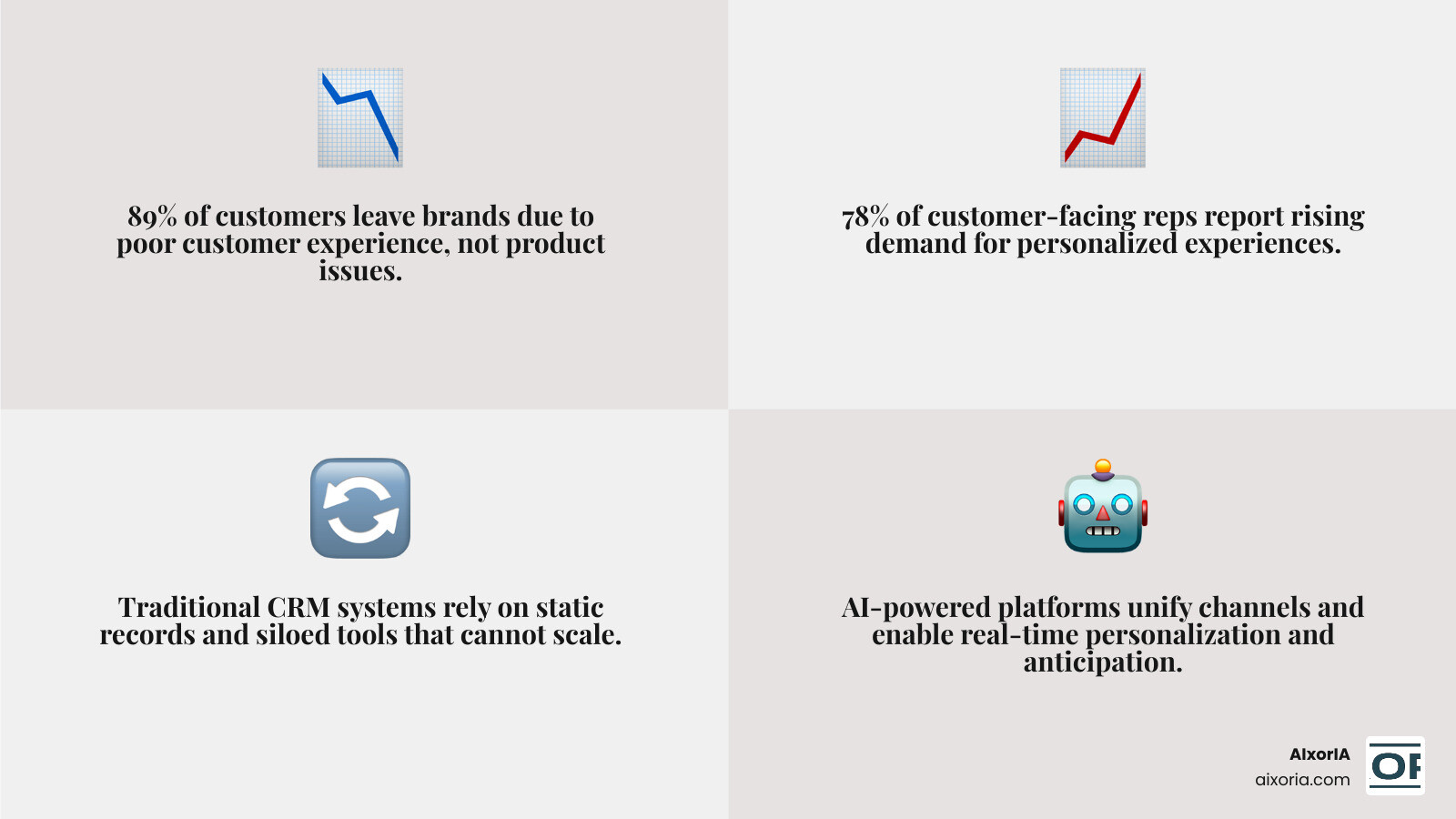
Customers have more choices than ever. And 89% of customers who leave a brand cite poor customer experience as the reason — not the product itself. Meanwhile, 78% of customer-facing reps say customers now expect more personalized experiences than they did just a few years ago.
The old way of managing customer relationships — static CRM records, siloed email tools, and manual follow-ups — simply can’t keep up.
AI changes the game. Instead of reacting to customers, you can anticipate what they need. Instead of hiring more agents, your existing team handles more with less effort. Instead of generic messages, every interaction feels personal.
But with dozens of platforms on the market, each claiming to be the best, it’s genuinely hard to know which one is right for your business — especially if you’re a small business owner without a dedicated IT team or a big implementation budget.
This guide breaks it all down in plain language: what these platforms actually do, how they differ, and which ones are worth your attention in 2026.
What is AI-Powered Customer Engagement Software?
At its core, AI-powered customer engagement software is a system designed to pull every email, call, SMS, and chat into one unified view, using artificial intelligence to automate, optimize, and personalize those interactions in real time.
Unlike traditional setups where marketing sends an email from one tool, support answers a live chat in another, and sales logs notes in a third, these modern platforms unify your data. They allow you to orchestrate responsive cross-channel journeys without losing context. If you are looking to explore your options, you can read our breakdown of the 9 Best Customer Engagement Software In 2026.
Core Capabilities of AI-Powered Customer Engagement Software
Modern platforms are built on three main pillars:
- Agentic AI: Autonomous AI agents that don’t just follow simple “if/then” rules, but actually resolve issues, execute transactions, and qualify leads on their own.
- Omnichannel Support: Meeting customers wherever they are—whether that is WhatsApp, Messenger, email, or voice—and keeping the entire history in a single thread.
- Automated Workflows: Eliminating repetitive admin work so your human staff can focus on building relationships.
To see how different software providers stack up in these areas, check out our guide on the 9 Best Customer Engagement Software Vendors In 2026.
How AI Differs from Traditional CRM Systems
Traditional CRMs are fantastic for organizing sales pipelines and keeping static records of who bought what. However, they are historically built as databases—repositories of past events.
AI-powered engagement platforms, on the other hand, are built for dynamic, real-time action. Instead of leaving your team to suffer from “toggle tax”—switching between a dozen disconnected tabs to piece together a customer’s history—AI tools surface the right context instantly. They turn passive data into active, two-way conversations. You can learn more about this shift by reading about Th 9 Best Customer Engagement Software In 2026.
Key Features of Modern AI Engagement Platforms

When evaluating platforms like Respond.io | #1 AI-Powered Customer Conversation Management Software or AI Customer Service Platform & CRM | Kustomer , it helps to understand the underlying technology. Modern customer engagement relies on two distinct types of artificial intelligence:
| Capability | Generative AI | Agentic AI |
|---|---|---|
| Primary Function | Creates content, drafts replies, and summarizes chats. | Decides, acts, and executes workflows across systems. |
| Best For | Speeding up agent writing and translating languages. | Resolving refunds, booking appointments, and routing leads. |
| Human Oversight | Recommended for final tone adjustments. | Runs on pre-set policy guardrails and safety rules. |
Hyper-Personalization in AI-Powered Customer Engagement Software
Today, 73% of consumers expect AI to know their history. Hyper-personalization means the system automatically checks a customer’s purchase history, past interactions, and current browsing behavior to deliver tailored recommendations.
For example, platforms like Gladly | AI that resolves. A workspace that remembers. provide a single lifelong conversation thread that never resets. If a customer texts about an exchange on Monday and calls on Friday, the AI ensures they never have to repeat themselves. To boost your customer satisfaction scores using these automated workflows, check out the Best Ai Tools For Improving Csi Scores With Automated Customer Service.
Sentiment Analysis and Real-Time Guidance
AI doesn’t just read words; it reads emotions. Through natural language processing (NLP), modern tools perform real-time sentiment analysis. If a customer is getting frustrated, the system flags the interaction and can instantly route it to a senior human agent, providing live coaching tips on the agent’s screen to help de-escalate the situation. This approach aligns with research from the Harvard Business Review on Customer Sentiment, which highlights how recognizing emotional cues directly impacts brand loyalty.
Business Benefits and ROI of AI Adoption
Implementing AI-powered customer engagement software isn’t just about keeping up with tech trends—it delivers measurable business results. According to the McKinsey & Company AI ROI Report, companies that successfully integrate AI into their customer-facing workflows see significant lifts in customer lifetime value and operational efficiency.
Efficiency Gains and Cost Reduction
The numbers speak for themselves:
- 30% Cost Reduction: Achieved by automating routine FAQs and scheduling workflows.
- 98% Digital Resolution: AI agents can autonomously resolve standard inquiries, such as return processing and order tracking.
- 25% Reduction in Handle Time: Features like AI-powered Quality Management and live note-taking save agents hours of manual wrap-up work.
For a deeper dive into the platforms delivering these exact metrics, read our roundup of the 9 Best Ai Powered Customer Engagement Software In 2026.
Elevating the Customer Experience (CX)
AI-powered systems provide 24/7 availability without adding headcount. For example, retail brands using conversational AI have seen a 65% increase in CSAT scores simply because customers get instant, accurate answers at 2 AM. By removing friction and reducing customer effort, brands build deep, lasting loyalty. This aligns with Gartner Customer Experience Research, which consistently shows that ease of interaction is the number one driver of customer retention.
Implementation Challenges and Best Practices
Despite the clear benefits, adopting AI is not without its hurdles. In fact, 55% of organizations cite tech stack integration as a major barrier to AI adoption.
Overcoming Integration and Data Privacy Barriers
Trust is the ultimate currency in 2026. 61% of customers state that rapid AI advancements make it more important than ever for companies to be trustworthy. To build that trust, businesses must implement strict policy guardrails and secure data infrastructure that complies with GDPR Compliance Guidelines.
If you are in a highly regulated field like banking or healthcare, you cannot afford data leaks. In these spaces, specialized platforms with built-in audit trails and Human-in-the-Loop (HITL) governance are essential. You can explore compliant options in our guide to the 9 Best Financial Services Customer Engagement Software In 2026.
Best Practices for Team Adoption and Monitoring
To ensure a smooth transition, we recommend following these practical steps:
- Audit Your Current Tech: Identify exactly where your data is siloed and where your agents spend the most time on manual tasks.
- Get Early Buy-In: 79% of customer service agents believe having AI as a co-pilot supercharges their abilities. Show your team how AI will remove their administrative burdens, not replace their jobs.
- Start Small and Iterate: Launch AI agents for simple use cases first—like booking appointments or answering basic FAQs—before expanding to complex workflows.
- Keep Humans in the Loop: Always provide an easy, seamless escape hatch for customers to speak with a real person when an issue is emotional or complex.
Frequently Asked Questions about AI Customer Engagement
How does AI customer engagement software differ from marketing automation?
Traditional marketing automation tools send static, one-way alerts (like scheduled email newsletters) based on broad triggers. AI customer engagement software facilitates dynamic, two-way conversations across the entire customer lifecycle, adapting its responses in real time based on customer replies and behavior.
Can AI engagement tools integrate with my existing CRM?
Yes. Enterprise platforms like Oracle AI for CX | Oracle Fusion Cloud Customer Experience Apps are built to integrate directly with your existing CRM, database, and CCaaS stacks using open APIs, ensuring your customer data remains synchronized without requiring a complete “rip-and-replace” process.
How do companies maintain customer trust when using AI?
By being entirely transparent about when customers are talking to an AI agent versus a human, implementing strict data encryption, and establishing clear policy guardrails to ensure the AI only uses verified, source-backed knowledge.
Conclusion
The future of customer experience is conversational, personalized, and powered by AI. By unifying your channels and leveraging intelligent automation, you can lower support costs, boost sales, and keep your customers coming back for years.
At AIxorIA, we specialize in helping businesses navigate this transition. We provide custom AI solutions, hands-on tool training workshops, practical tutorials, and performance audits designed to help you scale safely and affordably.
Ready to unlock the true potential of your business? Learn how to maximize your ROI with autonomous agents and find the perfect strategy for your team today.
3 thoughts on “AI-Powered Customer Engagement Software in 2026: Best Tools, Features & ROI”