A Complete Guide to Improving Product Discovery, Search Rankings, and AI-Driven Growth
In 2026, ecommerce visibility is no longer just about ranking on traditional search engines. With the rise of AI-powered discovery systems—such as conversational search, recommendation engines, and generative shopping assistants—brands now need to optimize for how artificial intelligence finds, understands, and promotes their products.
AI visibility tools help ecommerce businesses ensure their products appear across search engines, marketplaces, recommendation systems, and AI-driven platforms. These tools go beyond basic SEO. They analyze data patterns, optimize product feeds, improve content relevance, and automate decisions that directly impact visibility and conversions.
For ecommerce teams operating in the US market, where competition is intense and customer expectations are high, choosing the right AI visibility tools can significantly improve traffic, discoverability, and revenue.
This guide breaks down the best AI visibility tools for ecommerce in 2026, based on scalability, real-world usability, integrations, and impact on search and discovery.
Table of Contents
What Are AI Visibility Tools for Ecommerce?
AI visibility tools are platforms that use machine learning, automation, and data analysis to improve how products are discovered across digital channels.
They typically focus on:
- Search engine visibility (SEO + AI search)
- Marketplace ranking (Amazon, Walmart, etc.)
- Product feed optimization
- Personalization and recommendations
- Content optimization for AI systems
- Performance analytics and predictive insights
Unlike traditional tools, these platforms continuously learn from user behavior, search trends, and algorithm updates to adjust strategies in real time.
What Makes a Great AI Visibility Tool in 2026?
Before choosing a tool, it’s important to understand the core capabilities that matter:
1. Multi-Channel Visibility
Your products should be optimized not just for Google, but also for:
- Marketplaces (Amazon, Shopify ecosystem)
- Social commerce platforms
- AI-driven search engines
2. AI-Powered Optimization
Look for tools that:
- Automatically improve product titles and descriptions
- Suggest keyword and content updates
- Adapt to algorithm changes
3. Data Integration
The best tools connect with:
- Ecommerce platforms (Shopify, WooCommerce)
- Analytics tools
- Ad platforms
- CRM systems
4. Automation at Scale
Manual optimization doesn’t work at enterprise or growing-store levels. Tools should automate:
- Product tagging
- Feed updates
- Content improvements
5. Actionable Insights
Data alone is not enough. The tool should clearly tell you:
- What to fix
- Why it matters
- How it impacts visibility
The Best AI Visibility Tools for Ecommerce
1. Jasper AI – Best for AI Content Optimization
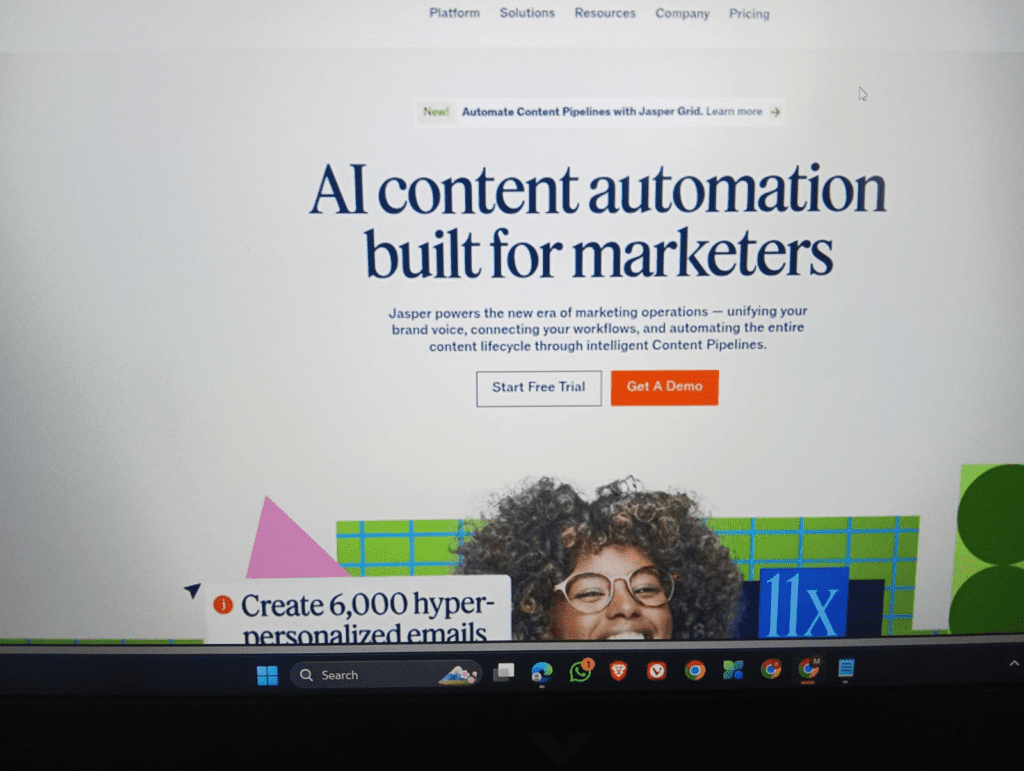
Jasper AI is widely used for generating high-quality product descriptions, landing pages, and SEO content at scale.
Key Strengths
- AI-generated product descriptions optimized for search intent
- Brand voice customization
- Long-form content creation for category pages and blogs
Why It Matters for Ecommerce Visibility
Product content is a major ranking factor. Jasper helps ensure your listings are:
- Keyword-optimized
- Readable and persuasive
- Consistent across thousands of products
Limitations
- Requires human editing for accuracy
- Not focused on analytics or technical SEO
Best For
Brands that need to scale content creation without sacrificing quality.
READ MORE – Best AI Tools for Enhancing Visibility
2. Surfer SEO – Best for On-Page AI SEO Optimization
Surfer SEO uses AI to analyze top-ranking pages and gives precise recommendations for improving your content.
Key Strengths
- Data-driven keyword suggestions
- Real-time content scoring
- SERP-based optimization
Why It Matters
It helps ecommerce pages match what Google and AI systems expect in terms of:
- Structure
- Keyword relevance
- Content depth
Limitations
- More focused on content pages than product feeds
- Requires manual implementation
Best For
Ecommerce businesses investing in blog-driven traffic and organic growth.
3. Feedonomics – Best for Product Feed Optimization
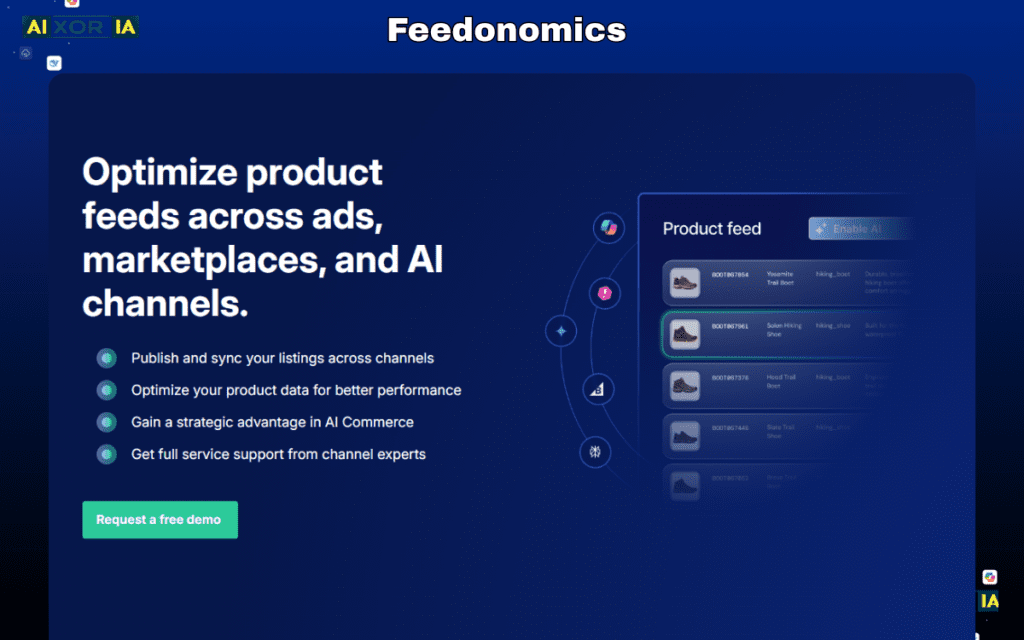
Feedonomics is a powerful platform designed to optimize product feeds for marketplaces and advertising channels.
Key Strengths
- Automated feed optimization
- Data transformation for multiple platforms
- Integration with Google Shopping, Amazon, and more
Why It Matters
Product feeds directly impact visibility in:
- Google Shopping
- Paid ads
- Marketplace listings
Feedonomics ensures your data is clean, structured, and optimized.
Limitations
- Enterprise-level pricing
- Requires setup and onboarding
Best For
Medium to large ecommerce brands managing multiple sales channels.
4. BrightEdge – Best for Enterprise SEO and AI Insights
BrightEdge is an enterprise SEO platform with strong AI-driven insights.
Key Strengths
- AI-based keyword and trend analysis
- Competitive insights
- Content performance tracking
Why It Matters
It helps ecommerce teams understand:
- What customers are searching
- How competitors are ranking
- Where visibility gaps exist
Limitations
- Expensive
- Complex for beginners
Best For
Large ecommerce businesses with dedicated SEO teams.
READ MORE – 7 Best AI Visibility Tools for Marketers
5. Algolia – Best for AI-Powered Search and Discovery
Algolia improves on-site search and product discovery using AI.
Key Strengths
- Fast, personalized search results
- AI-driven recommendations
- Advanced filtering and ranking
Why It Matters
Better on-site search leads to:
- Higher conversion rates
- Improved user experience
- Increased product visibility within your store
Limitations
- Requires technical setup
- Focused on internal search, not external SEO
Best For
Ecommerce stores with large catalogs.
6. Semrush – Best All-in-One Visibility Platform
Semrush combines SEO, content, and competitive research in one platform.
Key Strengths
- Keyword research
- Competitor analysis
- Content optimization tools
- AI-powered insights
Why It Matters
It helps ecommerce businesses:
- Identify high-value keywords
- Track rankings
- Optimize content strategy
Limitations
- Not specialized for ecommerce feeds
- Requires experience to use effectively
Best For
Businesses that want a complete visibility toolkit.
7. ChatGPT and Custom AI Workflows – Best for AI Strategy and Automation
Custom AI workflows using tools like ChatGPT allow ecommerce teams to automate various visibility tasks.
Key Strengths
- Generate SEO content
- Analyze product data
- Automate repetitive workflows
Why It Matters
AI assistants can:
- Improve content speed
- Identify optimization opportunities
- Support decision-making
Limitations
- Needs proper prompting and strategy
- Not a standalone visibility platform
Best For
Teams experimenting with AI-driven operations.
READ MORE – 20 Best SEO Tools I’m Using in 2026
How to Choose the Right Tool
The best tool depends on your specific needs:
- For content optimization: Jasper AI, Surfer SEO
- For product feeds: Feedonomics
- For enterprise SEO: BrightEdge
- For on-site discovery: Algolia
- For all-in-one strategy: Semrush
- For AI workflows: ChatGPT-based systems
In many cases, businesses use a combination of tools rather than relying on just one.
Common Mistakes to Avoid
- Relying only on traditional SEO tools
- Ignoring product feed optimization
- Using AI without human review
- Not integrating tools with your ecommerce platform
- Focusing only on traffic, not conversions
Conclusion
AI visibility is becoming the foundation of ecommerce growth. As search evolves into AI-driven discovery, businesses must adapt their strategies to remain competitive.
The tools listed above represent different approaches to improving visibility—from content optimization and SEO to product feeds and on-site search. The right combination will depend on your business size, technical resources, and growth goals.
For most ecommerce brands, the winning strategy is not choosing a single tool, but building a system where AI supports every stage of visibility—from content creation to product discovery and performance analysis.
If you implement these tools strategically, you won’t just improve rankings—you’ll create a scalable system for long-term ecommerce growth.
FAQs
What is AI visibility in ecommerce?
AI visibility refers to how well your products are discovered across AI-driven platforms, including search engines, recommendation systems, and marketplaces.
Do AI tools replace traditional SEO?
No. They enhance SEO by automating and improving optimization processes, but core SEO principles still apply.
Are these tools suitable for small ecommerce stores?
Yes, but smaller stores should start with tools like Jasper AI or Semrush before moving to enterprise platforms.
How many tools should I use?
Most businesses use 2–4 tools depending on their needs, such as one for SEO, one for content, and one for product feeds.
1 thought on “Best AI Visibility Tools for Ecommerce in 2026”