Revenue Operations (RevOps) has become a core function for modern enterprises. It aligns sales, marketing, and customer success under a single operational strategy, ensuring consistent growth, better forecasting, and improved customer experiences.
But RevOps is only as strong as the systems behind it.
Today’s enterprises need more than just a CRM or a marketing tool. They need a connected ecosystem—one that automates workflows, unifies data, and provides real-time insights across the entire revenue funnel.
In this guide, we’ll break down the best RevOps tools for 2026, including AI-powered platforms, and explain how to choose the right stack based on your business needs.
Table of Contents
What Are RevOps Tools?
RevOps tools are software platforms that help organizations manage and optimize the entire revenue lifecycle—from lead generation to customer retention.
These tools typically cover:
- Customer Relationship Management (CRM)
- Marketing automation
- Sales engagement
- Data analytics and reporting
- Workflow automation
- Customer success management
The goal is simple: eliminate silos, improve efficiency, and drive predictable revenue growth.
What Makes a Great RevOps Tool?
Not all tools are built for RevOps. The best platforms share a few key characteristics:
1. Unified Data Across Teams
RevOps depends on a single source of truth. Tools must integrate data from multiple systems and present it in a unified way.
2. Automation Capabilities
Manual processes slow down growth. The best tools automate workflows across departments.
3. AI and Predictive Insights
Modern RevOps platforms use AI to:
- Forecast revenue
- Score leads
- Identify churn risks
- Recommend actions
4. Scalability and Governance
Enterprise teams need role-based access, audit trails, and compliance features.
5. Integration Ecosystem
Your RevOps tool should connect with CRM, ERP, support tools, and internal systems.
The Best RevOps Tools for Enterprises
1. HubSpot – Best All-in-One RevOps Platform
HubSpot is one of the most complete platforms for revenue operations, combining CRM, marketing, sales, and customer service into a single system.

Key Features:
- Centralized CRM with full customer lifecycle tracking
- Marketing automation (email, workflows, lead nurturing)
- Sales pipeline management and automation
- Customer service tools (ticketing, live chat)
- Built-in reporting and dashboards
AI Capabilities:
- AI-powered content generation
- Predictive lead scoring
- Automated workflow suggestions
Best For:
Organizations looking for a unified platform to manage the entire revenue funnel without relying on multiple tools.
Limitations:
- Can become complex at scale
- Advanced features require higher-tier plans
READ MORE – The 5 Best AI Tools for Data Integration
2. Salesforce – Best for Enterprise-Scale RevOps
Salesforce is the most widely used enterprise CRM and a powerful RevOps backbone.
Key Features:
- Highly customizable CRM
- Advanced workflow automation
- Revenue forecasting and pipeline tracking
- Extensive app marketplace
AI Capabilities (Einstein AI):
- Predictive analytics
- Opportunity scoring
- Automated insights and recommendations
Best For:
Large enterprises with complex sales processes and dedicated technical teams.
Limitations:
- High cost
- Requires implementation and ongoing management
3. Zapier – Best for Workflow Automation Across Tools
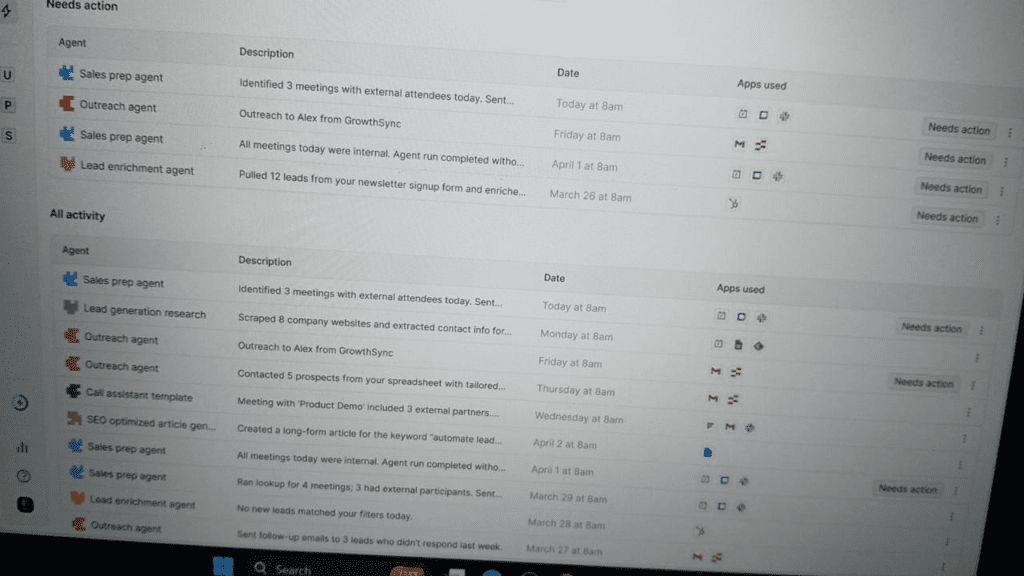
Zapier acts as the orchestration layer for RevOps, connecting thousands of apps and automating workflows between them.
Key Features:
- 8,000+ integrations
- Multi-step workflow automation
- No-code automation builder
- Cross-platform data movement
AI Capabilities:
- AI workflow generation
- AI agents for task automation
- Natural language automation setup
Best For:
Teams using multiple tools that need to automate processes across systems without writing code.
Limitations:
- Not a standalone CRM or analytics tool
- Requires structured workflows to scale effectively
READ MORE – 9 Best Finance Automation Software Tools
4. Gong – Best for Revenue Intelligence
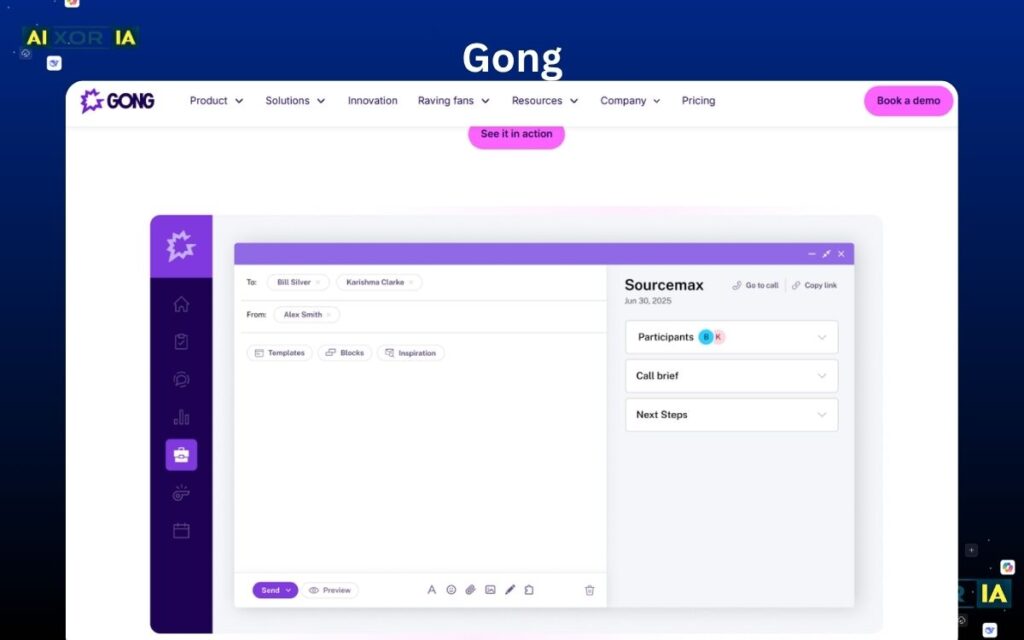
Gong focuses on analyzing customer interactions to improve sales performance.
Key Features:
- Call and meeting recording
- Conversation analytics
- Deal tracking and forecasting
- Sales coaching insights
AI Capabilities:
- AI-driven conversation analysis
- Deal risk prediction
- Performance recommendations
Best For:
Sales teams that want to improve conversion rates through data-driven insights.
Limitations:
- Focused primarily on sales, not full RevOps
- Requires integration with CRM
5. Clari – Best for Revenue Forecasting
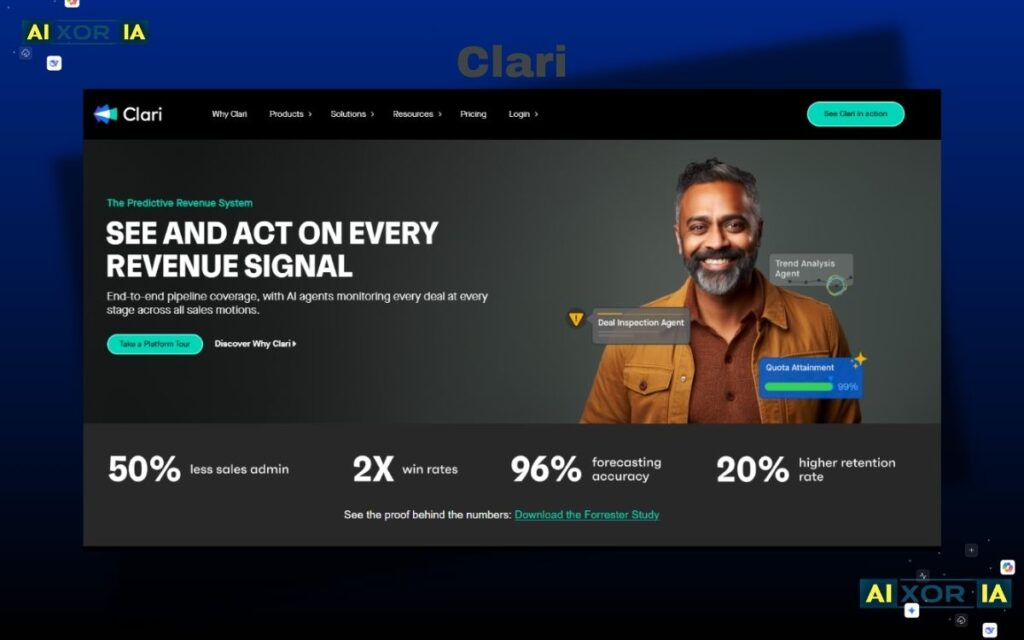
Clari is designed specifically for revenue forecasting and pipeline visibility.
Key Features:
- Real-time pipeline tracking
- Forecast management
- Deal inspection tools
- Revenue analytics
AI Capabilities:
- Predictive forecasting
- Risk identification
- Pipeline health scoring
Best For:
Enterprises that need accurate, data-driven revenue forecasting.
Limitations:
- Narrow focus compared to full RevOps platforms
- Works best alongside CRM systems
6. Segment – Best for Customer Data Infrastructure
Segment helps unify customer data from multiple sources into a single platform.
Key Features:
- Data collection from websites, apps, and tools
- Customer data unification
- Real-time data syncing
- Audience segmentation
AI Capabilities:
- Predictive audience building
- Behavioral analysis
Best For:
Companies that want a clean, centralized customer data layer for RevOps.
Limitations:
- Requires technical setup
- Not a standalone operational tool
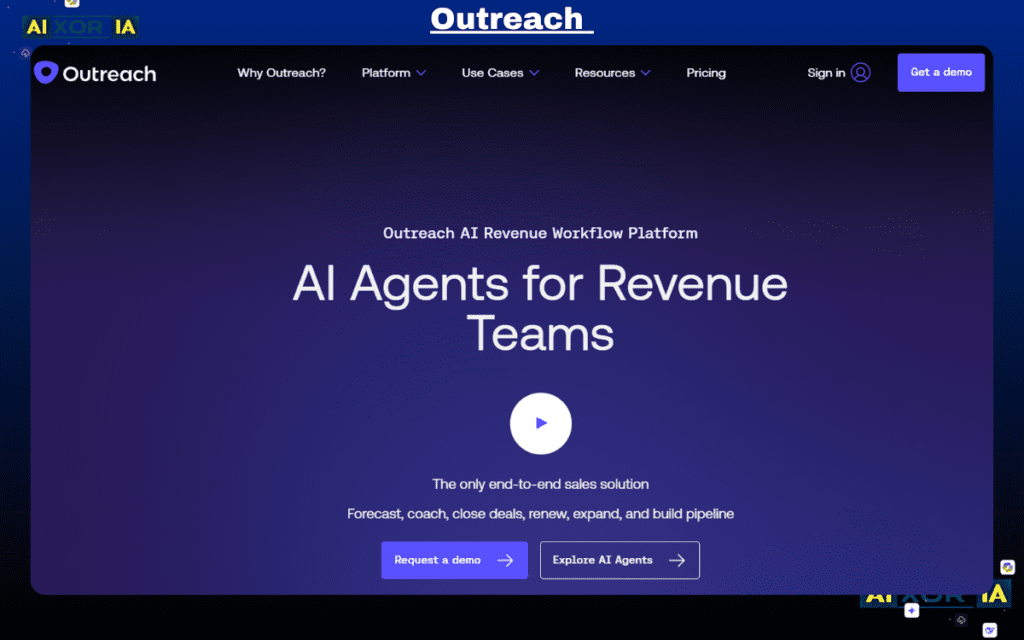
7. Outreach – Best for Sales Engagement
Outreach focuses on automating and optimizing sales communication.
Key Features:
- Email and sequence automation
- Task management for sales reps
- Performance tracking
- CRM integration
AI Capabilities:
- Email optimization suggestions
- Engagement scoring
- Sales activity insights
Best For:
Sales teams that want to scale outreach while maintaining personalization.
Limitations:
- Limited beyond sales workflows
- Needs integration with CRM and analytics tools
READ MORE – Best AI Tools for Sales GTM in 2026
How AI Is Transforming RevOps Tools
AI is no longer optional in RevOps—it is becoming the foundation.
Modern RevOps tools use AI to:
- Predict which deals will close
- Identify high-value leads
- Automate repetitive workflows
- Analyze customer behavior at scale
- Recommend next best actions for teams
The biggest shift is from reactive operations to proactive decision-making.
Instead of asking “what happened,” teams now know “what will happen next—and what to do about it.”
How to Choose the Right RevOps Stack
There is no single “best” tool for every company. The right choice depends on your structure and goals.
Choose an All-in-One Platform if:
- You want simplicity
- You have a small to mid-sized team
- You prefer a single system over multiple tools
Choose a Modular Stack if:
- You need flexibility
- You have complex processes
- Different teams require specialized tools
Typical Enterprise Stack Example:
- CRM: Salesforce or HubSpot
- Automation: Zapier
- Intelligence: Gong or Clari
- Data Layer: Segment
Common Mistakes to Avoid
- Using too many disconnected tools
- Ignoring data consistency
- Over-automating without strategy
- Choosing tools without considering scalability
- Not aligning teams before implementing systems
Conclusion
RevOps is not just about tools—it’s about alignment, visibility, and efficiency across the entire revenue engine.
The best RevOps tools in 2026 are those that:
- Connect your systems
- Automate your workflows
- Provide actionable insights
- Scale with your organization
For most enterprises, the ideal approach is a combination of platforms—using a strong CRM as the foundation, automation tools to connect systems, and AI-powered platforms to drive smarter decisions.
The key is not choosing the most popular tool, but the one that fits your processes, team structure, and growth strategy.