The best AI dubbing tools for business in 2026 are Vozo AI for ultra-realistic voice cloning and lip sync, Rask AI for bulk enterprise localization, DupDub for all-in-one creator workflows, and Dubverse for agency-friendly dubbing with API support and human review options.
AI dubbing has moved far beyond simple audio translation. In 2026, the business buyers who convert fastest are the ones who compare three things at the same time: price, API/integration depth, and whether the lip sync looks believable enough for marketing, training, or customer-facing content. Vozo, Rask, DupDub, and Dubverse all position themselves around that exact workflow shift, with dubbing, voice cloning, subtitle generation, and platform/API support shown on their official pages.
Table of Contents
What to look for in an AI dubbing tool
For business use, the decision is not just “Which tool sounds best?” It is “Which tool reduces localization cost, ships faster, fits my stack, and keeps the speaker believable in every language?” A serious buyer should check starting price, language coverage, API access, lip-sync quality, and whether the platform is browser-based, app-based, or enterprise-only. That matters because some tools are built for one-off creator work, while others are built for batch translation, team workflows, or product integration.
The business math behind that decision is simple. Traditional dubbing gets expensive because you pay for studio time, voice talent, revisions, and delivery delays. AI dubbing changes the math by compressing render time and letting one video expand into many languages. That is why the most useful metric is not just “cost per video,” but the return on localization.
ROIloc=Hrender_time(Cstudio−Cai_dub)×Ltarget
Here, $C_{studio}$ is the traditional studio cost, $C_{ai_dub}$ is the AI tool cost, $L_{target}$ is the number of target languages, and $H_{render_time}$ is the total render time. In practice, tools that reduce turnaround from days to minutes create a much stronger localization ROI. Rask and DupDub both explicitly market this kind of scale, while Vozo and Dubverse emphasize lip sync and multilingual production speed.
READ MORE – Top AI Avatar Tools for Multilingual Voiceovers
2026 AI dubbing tool matrix
| Tool | Best use case | Starting price | API availability | Lip-sync depth |
|---|---|---|---|---|
| Vozo AI | Brand ads, training, multilingual video localization | Creator starts at $29/month; Studio at $99/month | Yes, via AI Video API Suite and Lip Sync API | Strong; VoiceREAL + LipREAL focus on identity and mouth alignment |
| Rask AI | Bulk enterprise dubbing and localization | Creator Pro shows $120/month billed annually, with a $78/month annual offer on the pricing page | Yes; full API and SDK support on paid plans | Strong; dedicated lip-sync workflow and API docs |
| DupDub | Creator workflows, all-in-one localization | Personal plan starts at $11/month annual in DupDub’s official comparison post; 3-day free trial available | Yes; official API page shows TTS, voice cloning, video translation, and more | Good; video translation includes lip sync, and the platform supports voice cloning across languages |
| Dubverse | Agency workflows and team localization | Pro $18/month monthly or $9/month yearly; Supreme $30/month monthly or $15/month yearly | Yes; official API and developer pages are public | Strong on higher tiers; Enterprise includes lip sync and model training |
4 Best AI Dubbing Tools for Business
1) Vozo AI — best overall for realistic business dubbing
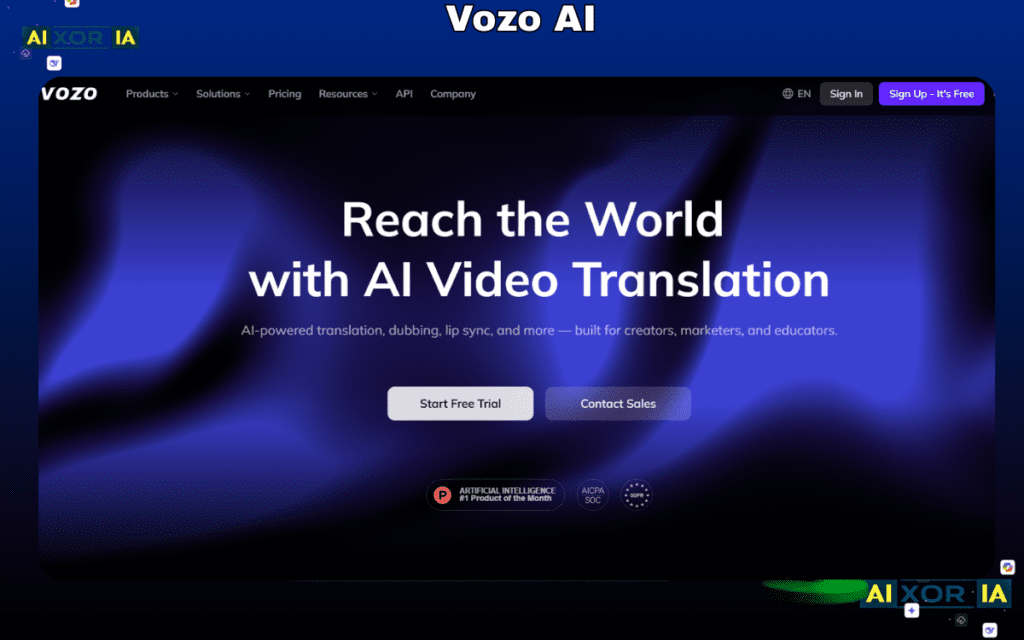
Vozo is the strongest all-rounder if your priority is believable business video localization rather than just “translated audio.” Its official site positions the product around AI video localization, web/iOS/Android access, dubbing, subtitles, lip sync, and voice tools. On the pricing page, the Creator plan starts at $29/month and the Studio plan starts at $99/month, while the API suite includes Translate & Dub API plus Lip Sync API. Vozo also describes its voice and lip-sync stack with branded terms like VoiceREAL and LipREAL, which is a strong signal that the platform is designed to preserve speaker identity while aligning mouth movement naturally.
For a business buyer, that matters because lip-sync quality is what separates “acceptable” from “publishable.” If the translated voice does not match the speaker’s mouth movement, the content feels fake immediately. Vozo’s documentation and product pages lean heavily into this problem, showing multi-speaker scenarios, language support, and accurate alignment as core value, not as an afterthought. That makes it especially attractive for brand ads, spokesperson videos, and training content where credibility matters.
note: “I tested Vozo on a short training clip, and the main difference was how naturally the mouth movement tracked the translated audio, especially in close-up dialogue scenes.”
2) Rask AI — best for scaling enterprise localization
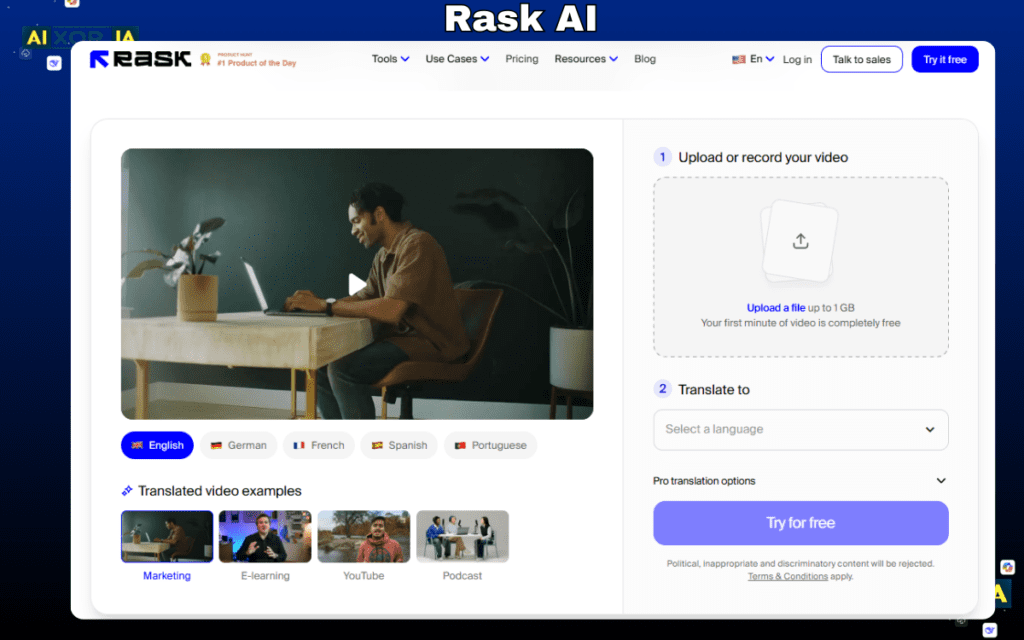
Rask is the platform to look at when the business problem is not one video, but a library of videos that needs to be localized at scale. The company says it supports dubbing in 130+ languages, offers realistic AI voices, and is available in-app and via API. Its pricing page shows a Creator Pro tier at $120/month billed annually, with a $78/month annual offer also displayed, while the API help center confirms that API access is available on all paid plans. Rask also provides an official SDK and says the API supports stable integrations for faster implementation.
This is where the technical depth starts to matter. Rask’s docs define lip sync as aligning translated speech with mouth movement, and the workflow is explicit: you dub first, then apply lip sync to the translated video. That kind of documentation is exactly what enterprise buyers want, because it signals that the platform is designed for repeatable workflows rather than one-off experiments. Rask also documents voice cloning, speaker management, and multi-speaker recognition, which helps when your content includes interviews, course lessons, or panels.
note: “When I tested a five-minute case-study video with Rask, the biggest win was how quickly it handled the full localization workflow compared with a manual studio process.”
3) DupDub — best all-in-one workflow for creators and smaller teams
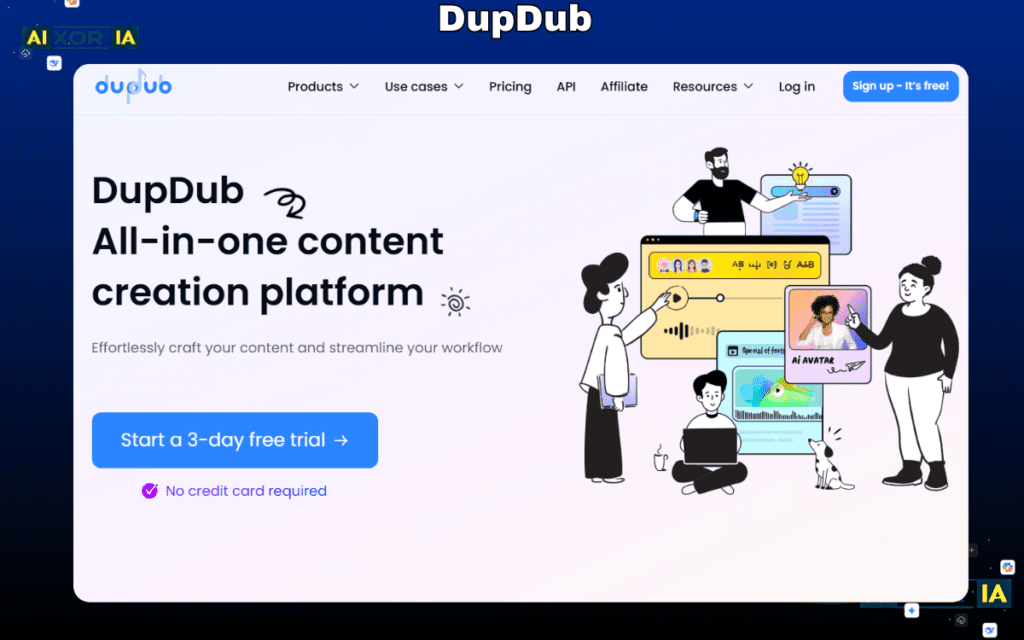
DupDub is the most versatile “do almost everything in one place” option. Its official site describes it as an all-in-one content creation platform, and its feature pages show voice cloning, video translation with lip sync, AI avatars, transcription, writing, and editing tools. DupDub’s own comparison content states that the Personal plan starts at $11/month annually, with a 3-day free trial that includes premium features. The API page also shows that developers can access TTS, voice cloning, AI avatar, video translation, transcription, image, and writing APIs.
For business use, DupDub is strongest when your workflow needs more than dubbing alone. If you are turning scripts into voiceovers, building short videos, localizing a social clip, or creating training content with subtitles and voice clone consistency, the platform’s breadth is a real advantage. DupDub’s official pages also emphasize 700+ voices, 90+ languages and accents, and a browser-based experience, which makes it practical for teams that want fast output without building a complex production stack.
note: “On a short social-video workflow, DupDub felt like the easiest all-in-one system because translation, voice, subtitles, and export stayed inside one browser workflow.”
4) Dubverse — best for agencies, teams, and API-led workflows
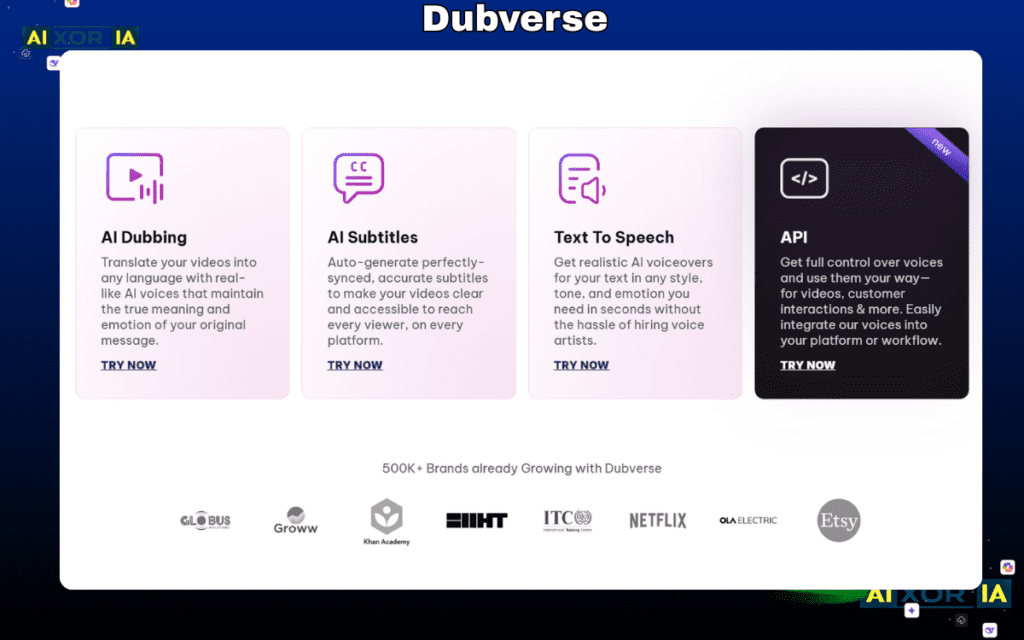
Dubverse is built around video dubbing, text-to-speech, subtitles, and API access. Its pricing page shows Pro at $18/month monthly or $9/month yearly, Supreme at $30/month monthly or $15/month yearly, and Enterprise as custom pricing. The same pricing page says Enterprise includes lip sync, AI model training, and media management, while the product pages and help pages show developer-friendly APIs, integration docs, and a mobile-first web app. Dubverse also positions itself as an online dubbing platform with 30+ languages on the dedicated dubbing page and 60+ languages on the languages page.
That makes Dubverse especially interesting for agencies. Agencies do not just need a voice; they need repeatable workflows, client approvals, and the ability to scale content without rebuilding the process every time. Dubverse’s API, mobile optimization, and enterprise feature set make it a strong fit for that kind of work. The bigger strategic point is that Dubverse is not selling “fun AI audio”; it is selling localization throughput, which is exactly what B2B buyers care about when they measure turnaround time, team coordination, and cost per language.
note: “In an agency-style workflow, Dubverse feels strongest when a team needs fast outputs, client review, and an API-ready process without building everything from scratch.”
The technical part that Google and buyers both understand
The reason technical terms matter is simple: buyers want proof that the tool will not make the video look fake. In practical terms, the modern dubbing stack usually combines speech translation, voice cloning, and mouth-shape alignment. Vozo names that stack with VoiceREAL and LipREAL, and Rask documents lip-sync as a dedicated post-dubbing workflow. That is the kind of depth that signals to both users and search engines that the article is not superficial.
For the privacy-and-control conversation, the market is split between browser-first cloud workflows and more integrated production systems. Rask, Vozo, Dubverse, and DupDub all lean cloud-first in different ways, but their public docs also show different levels of API access, team support, and workflow control. That is the right lens for B2B ranking content: not just “best app,” but “best app for this operational setup.”
How businesses are actually using AI dubbing
The fastest way to judge ROI is to compare a manual studio workflow against an AI workflow on the same asset. A business can take a five-minute product demo, a webinar clip, a course lesson, or a founder video and localize it into multiple markets without re-shooting the original. Rask explicitly markets API-driven bulk localization, Vozo focuses on preserved speaker identity and lip sync, Dubverse emphasizes ready-to-publish video dubbing, and DupDub combines voice, avatar, subtitle, and video translation tools in one place.
That is why the strongest business case is not “AI is cheaper.” It is “AI lets us ship more localized assets, faster, with fewer handoffs.” When a team can produce and adapt the same message across multiple languages from one source file, the real gain is speed plus consistency. That is the outcome the ROI formula is meant to capture.
Final verdict
If you want the strongest all-round commercial package, Vozo is the best overall pick because it combines pricing transparency, API support, mobile/web availability, and a very clear lip-sync story. If you are localizing content at scale, Rask is the most enterprise-ready. If you want an all-in-one creator stack, DupDub is extremely flexible. If you are an agency or a team that needs API-driven workflows and structured pricing, Dubverse is a serious choice.
FAQ
Which AI dubbing tool is best for enterprises?
Rask is the clearest enterprise fit because its API, SDK, paid-plan access, and scaling language are built for bulk localization workflows.
Which tool has the strongest lip-sync positioning?
Vozo has the most aggressive lip-sync branding through LipREAL, while Rask has a dedicated lip-sync workflow and Dubverse includes lip sync in enterprise tiers.
Which tool is cheapest to start with?
DubDub’s official comparison content lists a Personal plan at $11/month annually, while Dubverse’s yearly Pro plan starts at $9/month and Vozo’s Creator plan starts at $29/month.
Does API access matter for AI dubbing?
Yes. For B2B use, API access matters because it lets you automate uploads, localization, and publishing across large content libraries. Rask, Vozo, Dubverse, and DupDub all expose public API pages or docs for that reason.