Outbound sales has changed dramatically over the last few years. Traditional BDR teams used to spend hours researching leads, writing cold emails, and manually following up with prospects. Today, AI-driven sales systems can perform much of this work automatically while maintaining personalization at scale.
Modern AI BDR platforms do far more than automate email sequences. The newest generation of systems uses agentic AI, predictive lead intelligence, and behavioral data analysis to decide who to contact, what to say, and when to follow up. For fast-growing SaaS companies, this shift allows outbound teams to generate pipeline without dramatically increasing headcount.
This guide explores the most effective AI BDR tools available today and explains how advanced systems qualify prospects, personalize outreach, and scale outbound operations.
Table of Contents
What an AI BDR Actually Does
An AI BDR (Artificial Intelligence Business Development Representative) is a software system designed to replicate the workflow of a human sales development representative.
Typical responsibilities include:
- Identifying high-value prospects
- Enriching contact data
- Writing personalized outreach messages
- Managing follow-up sequences
- Detecting buying signals
- Scheduling meetings automatically
The difference between early automation tools and modern AI BDR platforms is decision-making ability. Instead of simply executing predefined workflows, newer systems evaluate prospect signals and dynamically adjust outreach strategies.
How AI BDRs Qualify Leads (Technical Model)
Modern AI BDR platforms evaluate prospect quality using multiple behavioral and data signals. Instead of basic lead scoring rules, advanced systems calculate engagement probability through predictive models.
AI Lead Engagement Probability ($P_{engage}$)Pengage=Spam Risk Score+Time Since Last Touch∑(Intent Signals×Enrichment Depth)
How the model works
Intent Signals
These include measurable buying indicators such as:
- Website visits
- Content downloads
- LinkedIn engagement
- Job changes
- Technology adoption signals
Enrichment Depth
The more context an AI system has about a lead, the better it can personalize outreach. Enrichment data may include:
- Company size
- Funding stage
- Technology stack
- Hiring patterns
Spam Risk Score
AI systems evaluate deliverability risk by analyzing domain reputation, inbox placement probability, and message similarity.
Time Since Last Touch
If a prospect was contacted recently, engagement probability decreases.
When the final probability score exceeds a threshold, AI BDR systems automatically trigger hyper-personalized outreach campaigns.
Agentic AI vs Traditional Workflow Automation
Older sales automation tools relied on rigid sequences. If a prospect didn’t respond to email one, the system automatically sent email two after a few days.
Modern AI BDR platforms operate differently.
Workflow Automation
Traditional systems execute fixed sequences such as:
- Email 1 → wait 3 days
- Email 2 → wait 4 days
- LinkedIn message
The system cannot interpret replies or adjust strategy.
Agentic AI
Agentic systems behave more like digital sales agents.
They can:
- Interpret prospect responses
- Detect buying intent in replies
- Change messaging tone
- Switch communication channels
- Pause outreach when signals decline
Instead of following a static script, the AI chooses the next best action.
This shift is why modern outbound strategies rely increasingly on intelligent AI BDR agents rather than simple automation tools.
READ MORE – Best AI Tools for Enhancing Digital Banking
The 2026 AI BDR Matrix
| AI BDR Tool | Core AI Feature (2026) | Best For | Outbound Focus |
|---|---|---|---|
| Artisan AI | Fully autonomous AI sales agent | Startups & SaaS | End-to-end outreach |
| Apollo.io | Predictive data enrichment | Scaling sales teams | B2B contact intelligence |
| Instantly.ai | Inbox deliverability AI | Cold email teams | High-volume campaigns |
| Clay | Waterfall data enrichment | RevOps teams | Lead intelligence |
| Regie.ai | AI sequence playbooks | Enterprise reps | Hyper-personalized outreach |
Best AI BDR Tools for Scaling Outbound
Artisan AI
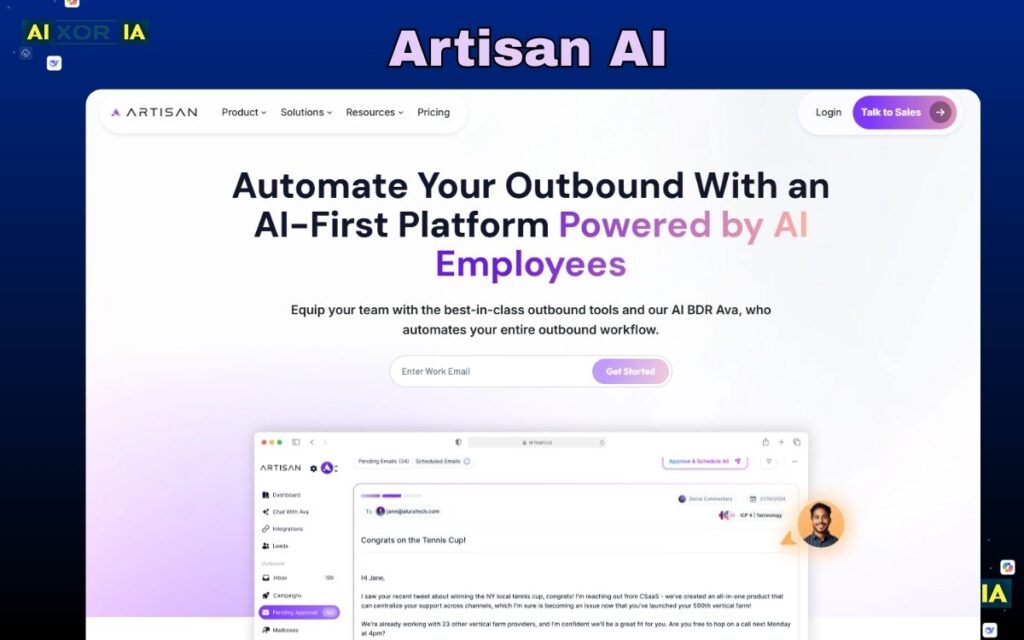
Artisan AI has gained significant attention in the outbound sales space because it introduced a concept many platforms are now adopting: a fully autonomous AI sales agent.
Instead of acting as a simple outreach tool, Artisan provides an AI BDR named Ava that performs most early-stage sales development tasks automatically.
Ava can:
- Research target accounts
- Enrich prospect data
- Generate personalized messaging
- Manage email sequences
- Schedule meetings with qualified leads
One of the most valuable aspects of Artisan is its large B2B data infrastructure. The platform integrates with massive datasets containing hundreds of millions of professional contacts. This allows the AI agent to discover new prospects continuously while filtering them based on relevance and engagement potential.
Another advantage is behavioral signal detection. Ava monitors prospect interactions such as email opens, link clicks, and engagement patterns. If signals indicate increasing interest, the AI agent escalates communication with deeper personalization or alternative messaging strategies.
The system also integrates with CRM platforms, allowing sales teams to maintain full visibility into AI-driven outreach activities.
For startups and SaaS companies attempting to scale outbound quickly, Artisan provides something closer to a digital BDR team rather than a simple tool. It can handle prospect research, messaging, and follow-ups simultaneously across thousands of leads.
Real experience
During one outbound test campaign, Artisan’s automated follow-up logic resurfaced leads that manual sequences missed, generating several conversations from prospects who had previously ignored earlier outreach attempts.
Apollo.io
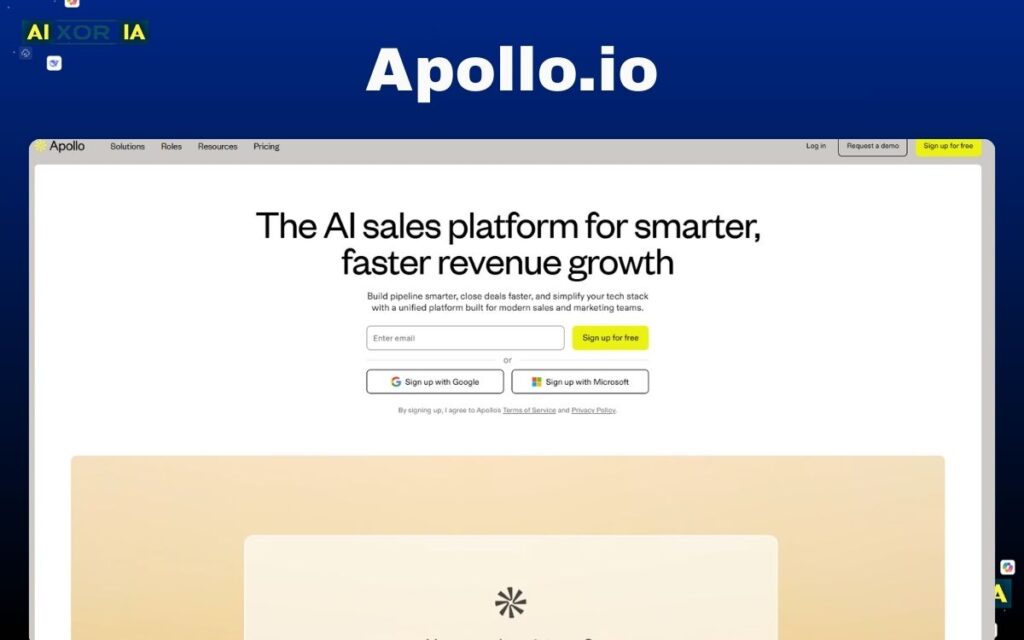
Apollo.io has become one of the most widely used prospecting platforms in B2B sales. Its strength lies in combining an enormous contact database with sales intelligence and outreach tools.
The platform provides access to a massive repository of professional contacts, including detailed company and role information. Sales teams can filter prospects based on highly specific criteria such as industry, company size, technology stack, hiring trends, and funding stage.
One of Apollo’s most powerful capabilities is predictive enrichment. Instead of simply providing static contact data, the platform continuously updates information using multiple sources, ensuring that outbound campaigns target accurate and relevant prospects.
Apollo also includes built-in outreach capabilities, allowing teams to launch email campaigns directly from the platform. These campaigns can include dynamic personalization fields and engagement tracking, helping sales teams monitor performance across large prospect lists.
Another important feature is buying-signal detection. The system identifies behavioral indicators that suggest a company may be entering a buying cycle. For example, rapid hiring in a specific department or adoption of a particular technology can signal a potential need for certain products or services.
Sales teams often combine Apollo with dedicated email platforms to create a complete outbound stack.
Real experience
When running targeted SaaS outreach campaigns, Apollo’s filtering system helped narrow prospect lists from thousands of contacts to a highly relevant group of decision-makers within minutes.
Instantly.ai
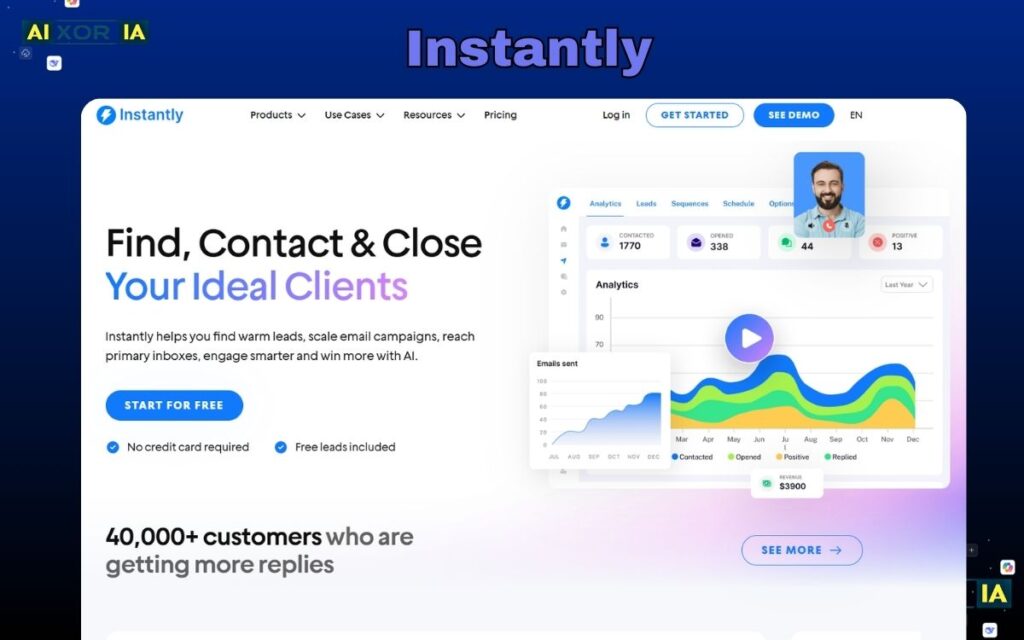
Instantly.ai has become a major tool for teams focused on scaling cold email outreach while maintaining inbox deliverability.
One of the biggest challenges in outbound campaigns is ensuring emails actually reach prospect inboxes rather than spam folders. Instantly addresses this problem through advanced deliverability infrastructure.
The platform allows users to connect multiple sending accounts and rotate inboxes automatically. This distribution strategy prevents domain reputation damage that can occur when sending large volumes of emails from a single account.
Instantly also includes AI-based deliverability monitoring, which continuously analyzes sending patterns, bounce rates, and inbox placement metrics. When risk signals appear, the system adjusts campaign behavior to maintain healthy domain reputation.
Another valuable feature is campaign testing. Users can run A/B experiments on subject lines, messaging tone, and personalization strategies to identify which variations produce the highest reply rates.
For agencies and growth teams managing large outreach campaigns, Instantly provides the operational backbone required to send thousands of emails without compromising deliverability.
Because of its infrastructure focus, Instantly is often combined with data platforms and enrichment tools.
Real experience
Using Instantly with multiple warmed-up domains allowed large outbound campaigns to scale safely while maintaining consistent inbox placement across thousands of daily emails.
Clay
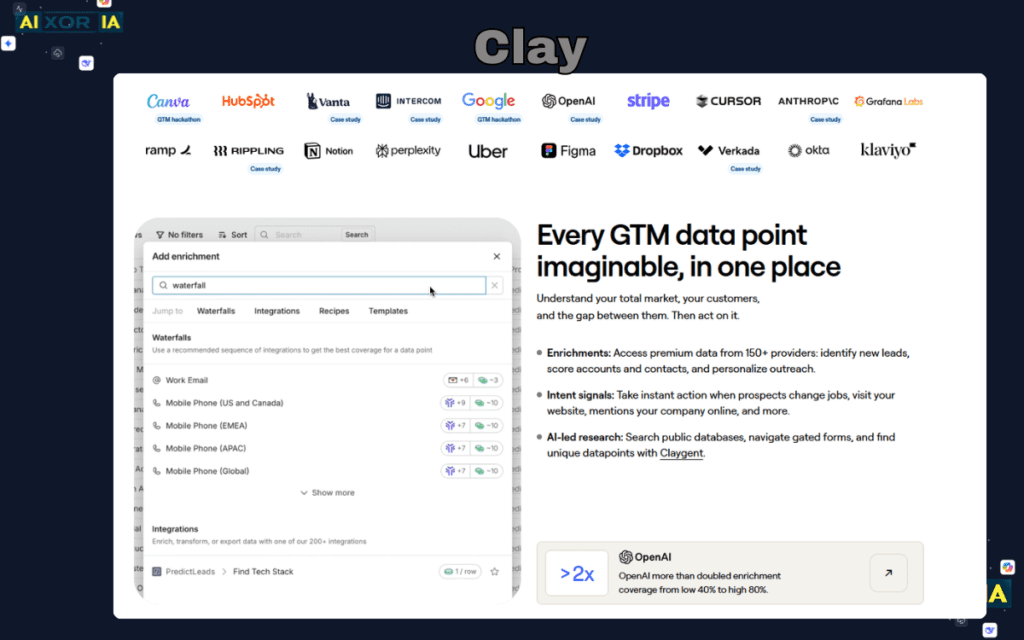
Clay occupies a unique position in the outbound sales ecosystem. Rather than functioning primarily as an outreach platform, Clay focuses on deep lead intelligence and data enrichment.
Outbound success often depends on understanding prospects deeply enough to create relevant messaging. Clay enables this by aggregating data from dozens of external sources and building rich prospect profiles.
The platform can collect information such as:
- Company growth indicators
- Technology usage
- Hiring patterns
- Social media activity
- Recent company announcements
This data can then be used to craft highly personalized outreach messages that reference real business context.
Clay also offers waterfall enrichment, a process where the system queries multiple databases sequentially until it retrieves the required information. This significantly improves data accuracy compared to relying on a single source.
Another powerful capability is automated research workflows. Users can design enrichment pipelines that gather specific insights about target companies, such as recent product launches or funding rounds.
Because of its flexibility, Clay is often used by RevOps teams and growth marketers to power advanced outbound personalization strategies.
Real experience
Clay’s enrichment workflows uncovered contextual details about prospects that made cold outreach feel like warm introductions rather than generic sales messages.
Regie.ai
Regie.ai focuses on improving the quality of outbound messaging through AI-driven sequence generation and personalization.
Rather than replacing sales representatives entirely, Regie functions as an AI assistant that helps teams design highly effective outreach strategies.
The platform analyzes successful sales conversations and outreach campaigns to generate optimized messaging frameworks. These frameworks can then be adapted to different industries, buyer personas, and sales scenarios.
One of Regie’s most valuable features is AI sequence playbooks. Instead of manually designing outreach sequences, sales teams can generate full campaign structures tailored to specific target audiences.
The AI can recommend:
- Messaging angles
- Subject line variations
- Follow-up timing
- Personalization elements
Another key capability is tone optimization. Regie evaluates email content to ensure messaging remains conversational and human-like rather than overly promotional.
For enterprise sales teams handling complex deals, this type of AI assistance can significantly improve outbound communication quality.
Real experience
Regie’s sequence recommendations often produced messaging angles that felt more conversational and relevant than traditional template-based outreach approaches.
READ MORE – Best AI Writing Tools for Students
Building a Modern AI Outbound Stack
Most high-performing outbound teams combine several tools rather than relying on a single platform.
A typical stack might look like this:
Lead intelligence
Clay
Prospect database
Apollo
Email infrastructure
Instantly
Messaging optimization
Regie
Autonomous AI agent
Artisan
This layered approach allows companies to combine deep data insights with scalable outreach infrastructure.
Pro Insight From a US Outbound Test
When testing outbound campaigns targeting US SaaS companies, a combined stack produced noticeably stronger engagement compared to single-tool workflows.
Using Apollo alone generated solid prospect lists, but personalization remained limited.
When Clay enrichment was added before launching campaigns through Instantly, outreach emails included contextual insights about company growth, hiring patterns, and technology adoption.
This deeper personalization increased open rates significantly and produced more meaningful conversations with potential clients.
Final Thoughts
Outbound sales is evolving rapidly as AI becomes more capable of interpreting data, understanding buyer intent, and communicating with prospects.
The most effective modern sales teams no longer rely solely on manual prospecting or basic automation sequences. Instead, they combine AI-driven research, predictive lead scoring, and intelligent outreach platforms to create scalable outbound systems.
As AI BDR technology continues to develop, these systems will increasingly function as digital sales agents capable of managing large portions of the sales development process autonomously.
For companies seeking to scale outbound pipeline efficiently, adopting the right AI BDR stack can transform how leads are discovered, qualified, and converted into opportunities.
Frequently Asked Questions
What is an AI BDR and how is it different from a traditional BDR?
An AI BDR (Artificial Intelligence Business Development Representative) is a software system that performs many of the tasks normally handled by human sales development representatives. These tasks include prospect research, lead qualification, personalized outreach, and follow-up communication.
The key difference is scale and speed. A traditional BDR can research and contact a limited number of prospects each day, while AI systems can analyze thousands of leads simultaneously. Modern platforms such as Artisan AI and Apollo.io use data signals, enrichment sources, and predictive models to identify high-quality prospects before outreach begins.
AI BDR tools also adapt their messaging based on engagement patterns, which allows them to maintain personalization while scaling outreach campaigns.
Are AI BDR tools replacing human sales teams?
AI BDR tools are not replacing sales teams entirely, but they are transforming how sales development work is done.
Most companies use AI BDR systems to automate repetitive tasks such as lead research, enrichment, and initial outreach. This allows human sales representatives to focus on activities that require relationship building, negotiation, and closing deals.
For example, data enrichment from Clay can provide detailed insights about a prospect, while outreach tools like Instantly.ai handle large-scale communication. Sales teams then engage directly once the AI identifies interested prospects.
This hybrid approach often improves productivity without removing the human element from sales.
What features should you look for in an AI BDR tool?
Choosing the right AI BDR platform depends on your outbound strategy, but several core capabilities are particularly important.
First, strong prospect data and enrichment are essential. Accurate information ensures outreach campaigns target the right decision-makers.
Second, personalization capabilities matter because generic cold emails rarely produce strong engagement. Tools that analyze prospect context and generate customized messaging tend to perform better.
Third, deliverability infrastructure is crucial for teams sending large volumes of emails. Systems such as Instantly.ai help maintain inbox placement and protect domain reputation.
Finally, automation logic should be flexible enough to adapt based on prospect responses rather than relying solely on static sequences.
1 thought on “Best AI BDR Tools for Scaling Outbound Efforts in 2026”