Corporate training has changed dramatically over the past decade. Organizations once relied on static courses, workshops, and occasional performance reviews to improve employee skills. Today, that approach is proving insufficient for fast-moving workplaces where employees must adapt continuously.
The biggest reason traditional training struggles is simple: feedback arrives too late.
When a learner practices a skill—whether presenting, negotiating, or handling customer interactions—the improvement depends on how quickly they receive guidance about what went right and what went wrong. If feedback takes hours or days, the learning opportunity is already gone.
Modern AI feedback tools solve this problem by delivering real-time coaching during the learning process.
Instead of waiting for instructors to review performance manually, AI systems analyze behavior instantly using voice analytics, computer vision, and behavioral pattern recognition. Learners receive feedback within seconds, allowing them to adjust their approach immediately.
This guide explores the most advanced AI feedback tools used in modern training programs, how their underlying technologies work, and how organizations are applying them to build faster and more effective learning environments.
Why Feedback Determines Training Success
Training effectiveness is not determined solely by the quality of course material. What actually determines whether learners improve is the feedback loop.
Every training system operates within three basic stages:
- Practice – the learner performs a task or simulation
- Evaluation – performance is analyzed
- Correction – the learner receives guidance and improves
In traditional training models, the evaluation stage depends on human instructors. That means the feedback loop can take hours, days, or sometimes weeks.
AI systems dramatically compress this cycle.
Instead of waiting for instructors to review performance, AI tools analyze interactions instantly and generate feedback within seconds.
The result is a continuous improvement cycle where learners practice, receive guidance, and repeat the task immediately.
This is one of the core reasons AI-driven feedback tools are transforming modern training programs.
Measuring Learning Velocity in AI Training Systems
Learning and development teams increasingly measure training success using a concept known as learning velocity.
Learning velocity describes how quickly learners convert knowledge into real-world skills.
In AI coaching environments, learning velocity can be modeled using the following relationship:Lv=Feedback Latency (seconds)(Retention Rate×Skill Application)
Where:
- Retention Rate measures how well learners remember information
- Skill Application represents how effectively they apply knowledge in practice
- Feedback Latency measures the delay between performance and feedback
Traditional training systems often have feedback latency measured in hours or days.
AI training systems reduce this latency to less than one second, dramatically increasing the overall learning velocity.
This is why AI coaching tools are capable of accelerating skill development far more effectively than conventional training methods.
AI Feedback Precision Score
Another important metric used in modern AI coaching platforms is the AI Feedback Precision Score, which evaluates how accurately the system identifies meaningful performance improvements.Pfb=Total Data Points AnalyzedCorrective Actions Taken×100
In practical terms, this measures how often the system’s recommendations lead to meaningful behavioral improvements.
Advanced computer-vision systems used in AI coaching can analyze thousands of behavioral signals in a single training session, allowing them to detect subtle patterns that human trainers may overlook.
The Rise of Multimodal AI Feedback
Early digital learning platforms evaluated training performance using only quiz results or written responses.
Modern AI training tools operate very differently.
Instead of analyzing a single input, they combine multiple sources of behavioral data simultaneously. This approach is known as multimodal analysis.
Multimodal AI systems evaluate several signals at the same time, including:
- voice tone and speech rhythm
- facial expressions
- eye movement and gaze direction
- conversational structure
- body posture and gestures
For example, during a simulated sales conversation, an AI system may analyze:
- whether the learner sounds confident
- whether they interrupt the customer
- whether their facial expression matches the emotional tone of the conversation
- whether their pacing suggests uncertainty or clarity
These signals allow AI systems to deliver far richer coaching insights than traditional training feedback.
The AI Coaching Loop
To understand how these systems work in practice, imagine the training process as a continuous feedback loop.
Step 1: Scenario Simulation
The learner practices a skill inside a digital simulation. This might involve presenting an idea, negotiating with a client, or responding to a customer complaint.
Step 2: Data Capture
The platform records voice, video, and interaction patterns.
Step 3: AI Analysis
Machine learning models analyze the data and compare it to expert performance benchmarks.
Step 4: Real-Time Feedback
The learner receives immediate insights about their communication style, decision-making, and behavioral signals.
Step 5: Iteration
The learner repeats the scenario and improves their performance.
This loop allows training programs to shift from static instruction to adaptive skill development.
Read More – Is Using AI Actually Bad for the Environment?
Best AI Feedback Tools for Training Programs
Several platforms have emerged as leaders in AI coaching and feedback technology. Each platform focuses on different types of training environments and learning objectives.
Virti – Immersive AI Roleplay Training
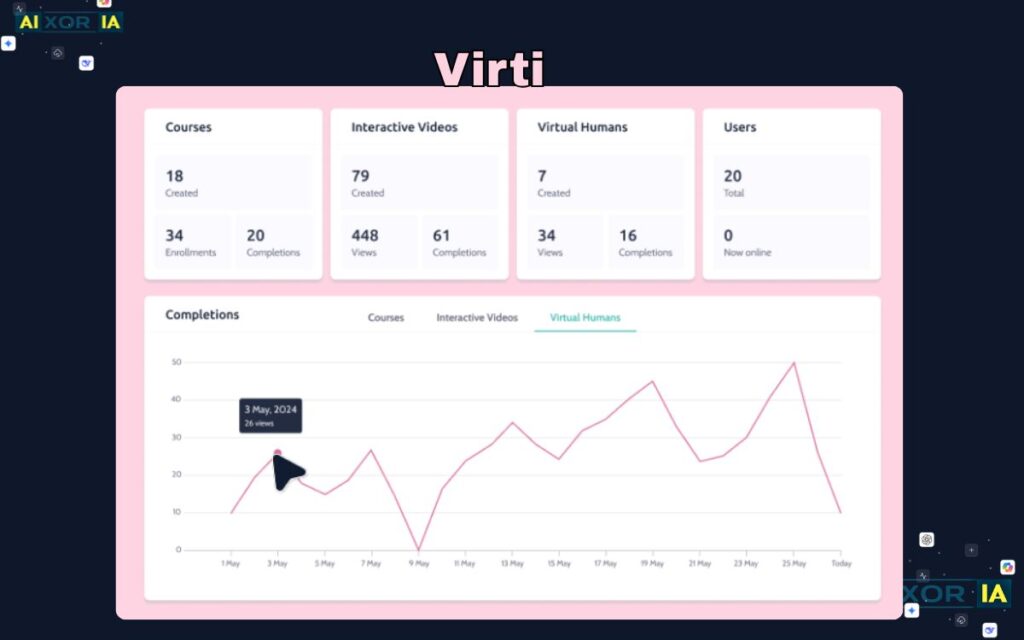
Virti focuses on immersive learning experiences where employees practice real-world scenarios using virtual simulations.
The platform is particularly popular in industries where mistakes in training can have serious consequences, such as healthcare, aviation, and emergency response.
Core Technology
Virti uses immersive simulations combined with AI behavioral analysis to evaluate learner decisions and communication patterns.
Key Capabilities
- virtual roleplay environments
- interactive decision-based simulations
- immersive VR training scenarios
- AI performance analysis
Real Experience Insight
During a simulated leadership conversation scenario, I interacted with a virtual employee who was upset about workload distribution.
Initially, I focused too much on explaining company policy rather than acknowledging the emotional context of the conversation.
The system highlighted that my response contained several interruptions and suggested slowing the pacing of my responses.
When repeating the scenario, adjusting my response timing and acknowledging the concern earlier dramatically improved the conversation outcome.
The ability to practice the same scenario multiple times with real-time coaching is one of Virti’s most powerful features.
Quantified – AI Communication Intelligence
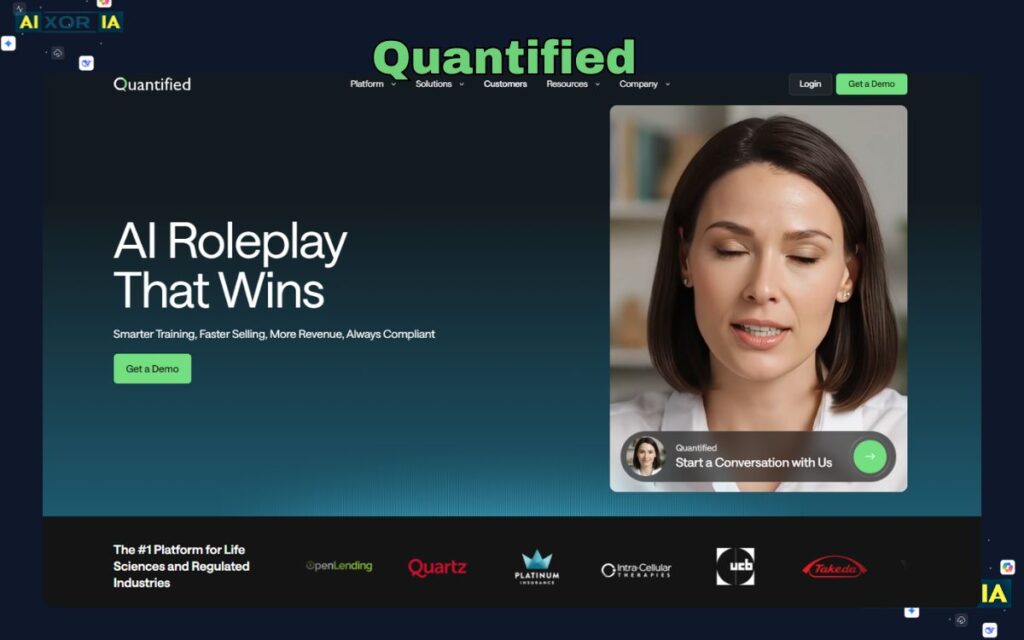
Quantified specializes in analyzing communication skills using behavioral data and speech analysis.
The platform is widely used in sales training and executive communication coaching.
Core Technology
Quantified analyzes speech patterns and communication structure using behavioral benchmarking models trained on large conversation datasets.
Key Capabilities
- voice tone analysis
- speech pacing insights
- filler word detection
- communication effectiveness scoring
Real Experience Insight
After recording a short presentation using Quantified, the system highlighted several subtle communication patterns I had never noticed.
For instance, my speech pace accelerated during technical explanations. The platform suggested introducing slightly longer pauses after key points.
After applying the suggested adjustments, the second recording sounded significantly clearer and more confident.
The level of detail in communication analysis makes Quantified particularly useful for professionals who regularly present ideas or lead discussions.
Retorio – AI Video Feedback for Soft Skills
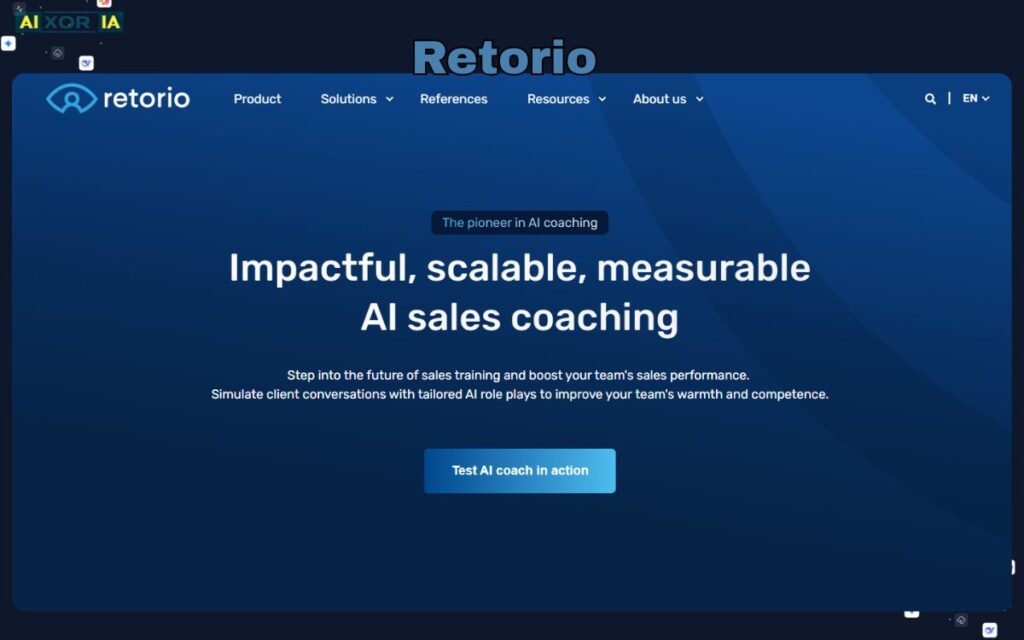
Retorio focuses on analyzing video responses to evaluate interpersonal communication and emotional intelligence.
Instead of focusing only on spoken words, the system evaluates the visual cues that influence human interaction.
Core Technology
Retorio uses neural expression analysis models that identify emotional signals in facial expressions and body language.
Key Capabilities
- facial expression analysis
- body language recognition
- emotional engagement scoring
- real-time video feedback
Real Experience Insight
During a simulated customer service training exercise, the AI highlighted that my facial expression remained neutral while delivering positive news to the customer.
The platform suggested maintaining stronger visual engagement and adjusting posture slightly forward to convey enthusiasm.
After making these adjustments, the replay of the interaction felt significantly more engaging.
These subtle communication improvements are difficult to identify without AI-assisted feedback.
LearnUpon – AI-Enhanced Learning Management System
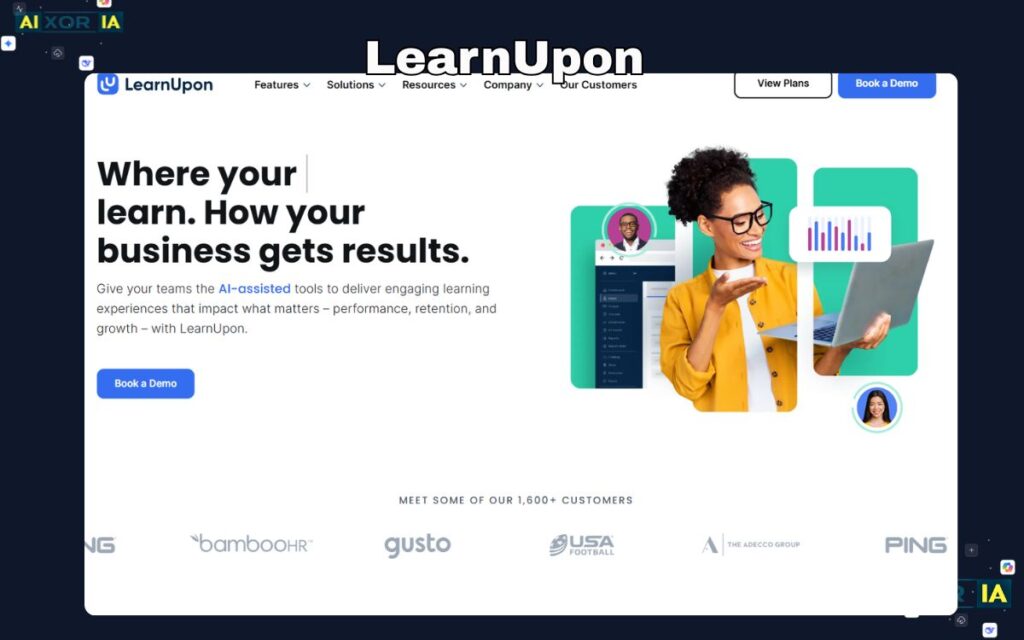
LearnUpon approaches AI training from a different angle.
Instead of focusing purely on simulations, it integrates AI into the structure of learning management systems.
Core Technology
The platform uses adaptive learning algorithms that analyze learner behavior and adjust course recommendations accordingly.
Key Capabilities
- automated learner analytics
- adaptive learning paths
- course engagement insights
- skill gap detection
Real Experience Insight
In one training program review, the platform highlighted that most learners struggled with a compliance module related to data protection.
This insight allowed instructors to redesign the module with more practical examples and shorter explanations.
After the update, course completion rates improved significantly.
The value of LearnUpon lies in how it transforms training data into actionable insights for instructors.
Read More – Best AI Tools for Corporate Training Roleplays
Taito.ai – Continuous Feedback and Performance Development
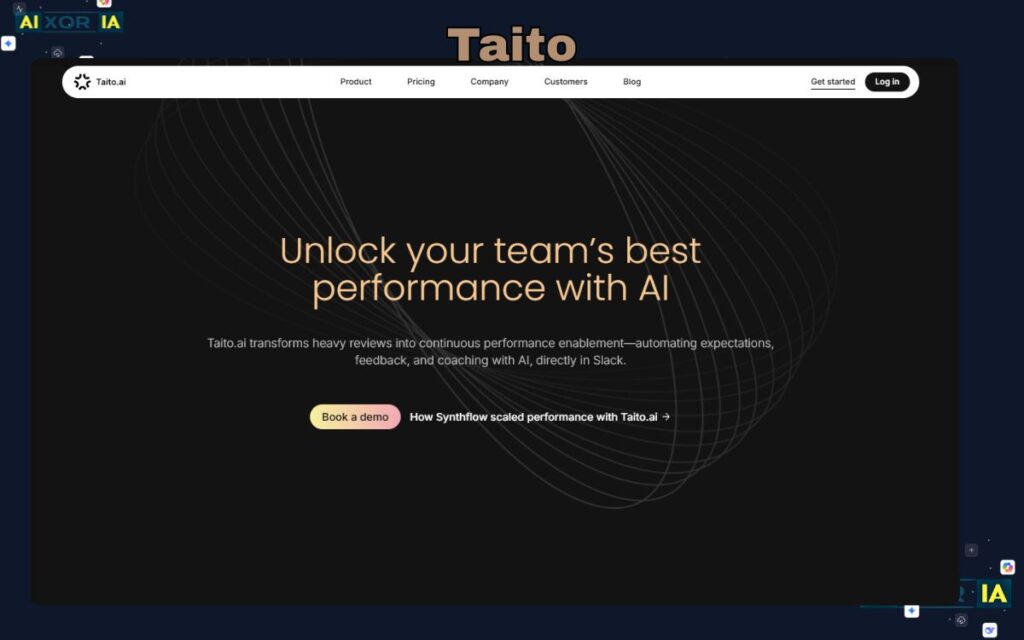
Taito.ai focuses on continuous performance development rather than isolated training events.
The platform integrates with collaboration tools so that feedback becomes part of everyday work.
Core Technology
Taito.ai analyzes interaction patterns within workplace communication systems to identify opportunities for skill development.
Key Capabilities
- continuous performance feedback
- integration with collaboration platforms
- skill development analytics
- team collaboration insights
Real Experience Insight
In team collaboration environments, feedback often gets lost between meetings or project deadlines.
Taito.ai helps solve this by embedding feedback prompts directly into team communication workflows.
For example, after a project meeting, the platform may encourage participants to provide quick feedback about communication clarity and teamwork effectiveness.
Over time, these small feedback loops create a continuous development history for each team member.
Technical Comparison of Leading AI Feedback Tools
| Tool | Primary Technology | Best Training Use Case | Feedback Mode | Ease of Use |
|---|---|---|---|---|
| Virti | Immersive simulation AI | leadership and crisis training | VR roleplay analysis | moderate |
| Quantified | speech analytics AI | presentation and sales coaching | voice tone analysis | easy |
| Retorio | computer vision AI | soft skills training | video behavior analysis | moderate |
| LearnUpon | adaptive LMS AI | corporate training programs | learning analytics | easy |
| Taito.ai | continuous feedback AI | team development | integrated workplace feedback | easy |
Each platform approaches AI coaching differently, but all aim to reduce feedback latency and improve skill development.
Choosing the Right AI Feedback Tool
Selecting an AI feedback platform requires careful consideration of training goals.
Organizations should evaluate several factors before implementation.
Training objective
Some platforms focus on communication skills while others specialize in immersive simulations or workplace feedback.
Integration capability
The system should integrate with existing training infrastructure and collaboration tools.
Analytics quality
The ability to measure skill improvement over time is critical for evaluating training effectiveness.
User adoption
Training platforms must be easy for employees to use, otherwise engagement may decline.
Privacy, Compliance, and Ethical AI in Training
AI coaching systems process large amounts of behavioral data, including voice recordings and video analysis.
Because of this, privacy and ethical design are critical considerations.
Modern AI training platforms typically include safeguards such as:
- encrypted video processing
- anonymized behavioral analysis
- strict data retention controls
- transparency in AI decision systems
Organizations implementing AI training tools must ensure that employees understand how their data is used and that systems are designed to protect user privacy.
Responsible AI design will continue to play an important role as these technologies become more widely adopted.
The Future of AI-Driven Learning and Development
AI coaching technology is still evolving rapidly.
Future training systems are expected to include:
- fully personalized AI mentors
- adaptive learning environments that adjust difficulty dynamically
- advanced skill gap analytics across entire organizations
- intelligent training assistants that guide employees throughout their careers
Training programs will likely evolve from occasional events into continuous learning ecosystems integrated directly into everyday work environments.
Final Thoughts
AI feedback tools are transforming the way organizations approach training and professional development.
By reducing feedback latency, analyzing multimodal behavioral signals, and enabling continuous improvement loops, these systems help learners develop skills far more efficiently than traditional training programs.
Platforms such as Virti, Quantified, Retorio, LearnUpon, and Taito.ai illustrate how artificial intelligence is reshaping modern learning environments.
As AI technology continues to evolve, these systems will likely become essential infrastructure for organizations seeking to build highly skilled and adaptable teams.
1 thought on “What Are the Best AI Feedback Tools for Training Programs?”