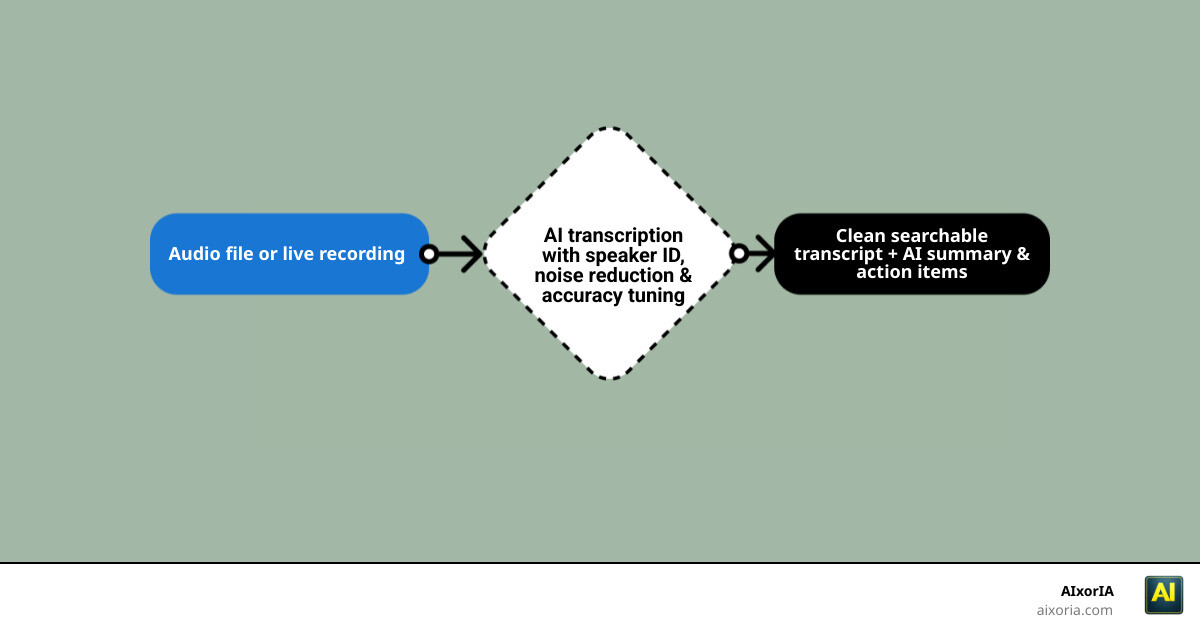
Transcription software has quietly become one of the most important productivity tools in 2026. What used to take hours of manual typing is now handled in minutes by AI systems that can listen, understand, and structure conversations into clear, usable text.
But here’s the reality most guides don’t tell you:
Not all transcription tools are built the same.
Some are optimized for meetings.
Some are designed for creators.
Some focus on enterprise security.
And some are simply outdated but still ranking on Google.
That’s exactly why this guide exists.
Instead of giving you a generic list, this article is structured to help you actually choose the best transcription software based on real-world use cases—whether you’re a content creator, business professional, journalist, or part of a large organization in the US.
Table of Contents
Why Choosing the Right Transcription Software Matters
If you pick the wrong tool, you’ll notice it quickly:
- Poor accuracy wastes time fixing errors
- No integrations break your workflow
- Weak AI features limit productivity
- High pricing doesn’t justify value
On the other hand, the right tool can:
- Save hours every week
- Automate meeting notes and summaries
- Improve content production speed
- Help teams collaborate more effectively
In short, transcription software is no longer just a utility—it’s a workflow multiplier.
How We Evaluated the Best Transcription Software (Methodology)
To make this guide genuinely useful and not just another listicle, each tool was evaluated based on the following criteria:
1. Real-World Accuracy
We considered how well each tool performs with:
- Different accents (important for US diversity)
- Background noise
- Multi-speaker conversations
2. AI Capabilities
Modern transcription tools are powered by AI. We analyzed:
- Real-time transcription
- Summaries and action items
- Speaker detection
- Smart search and insights
3. Ease of Use
A tool might be powerful, but if it’s difficult to use, it slows you down. We prioritized:
- Clean interfaces
- Fast onboarding
- Minimal learning curve
4. Integrations
We looked at how well each tool connects with:
- Zoom, Google Meet, Microsoft Teams
- CRM systems like Salesforce
- Content and collaboration tools
5. Pricing and Value
Instead of just listing prices, we focused on:
- Value for money
- Scalability
- Free vs paid usefulness
6. Use-Case Fit
Each tool is ranked based on who it’s actually best for, not just features.
READ MORE – What Are the 5 Most Commonly Used Productivity Tools?
Transcription Software Quick Comparison Matrix (2026)
Below is a clear comparison of the most relevant transcription tools right now. This helps you quickly shortlist the right option before diving into detailed sections.
| Tool | Best For | AI Strength | Ease of Use | Pricing |
|---|---|---|---|---|
| Otter.ai | Meetings | Real-time summaries | Very Easy | Free + Paid |
| Fireflies.ai | Teams & Sales | Workflow automation | Medium | Free + Paid |
| Descript | Creators | Editing + AI voice | Medium | Free + Paid |
| Rev | Legal & accuracy | Human + AI | Easy | Pay per minute |
| TurboScribe | Heavy users | Unlimited AI | Easy | Low-cost |
| Fathom | Free meetings | AI summaries | Very Easy | Free |
| Trint | Journalists | Collaboration AI | Medium | Premium |
| Sonix | Global teams | Multi-language AI | Medium | Pay-as-you-go |
| Amberscript | Enterprise | Compliance AI | Medium | Custom |
9 Best Transcription Software Tools in 2026
1. Otter.ai — Best Transcription Software for Real-Time Meetings
Overview

Otter.ai is widely recognized as one of the most reliable transcription tools for real-time conversations. It is designed for professionals who attend frequent meetings and need accurate notes without manual effort. Instead of recording audio and transcribing later, Otter works live—capturing conversations as they happen and converting them into structured, searchable text.
For US-based users working in remote or hybrid environments, Otter fits naturally into daily workflows. It integrates directly with platforms like Zoom, Google Meet, and Microsoft Teams, allowing it to join meetings automatically and generate transcripts without any extra setup.
AI Capabilities and How It Works
Otter.ai is powered by advanced speech recognition AI that focuses on real-time processing. Unlike older transcription tools that only convert audio to text, Otter goes a step further by understanding context.
It can:
- Identify multiple speakers automatically
- Highlight key points during conversations
- Generate summaries after meetings
- Allow users to search through past discussions
One of its most useful features is AI-powered chat within transcripts. You can ask questions like “What decisions were made?” and Otter will pull answers directly from the conversation. This transforms transcripts into a knowledge base rather than just static text.
Key Features
- Real-time transcription for live meetings
- Automatic meeting summaries and highlights
- Speaker identification and labeling
- Searchable transcript history
- Integration with Zoom, Google Meet, and Teams
- Mobile and web access
Pros
- Extremely easy to use, even for beginners
- Strong real-time transcription performance
- Saves significant time on note-taking
- Good integration ecosystem for business users
Cons
- Accuracy can drop in noisy environments
- Struggles with heavy accents or technical jargon
- Limited advanced editing compared to creator-focused tools
Otter Pricing

- Free plan available with limited minutes
- Paid plans start at approximately $10 per month
- Business plans available for teams with advanced features
Best Use Cases
Otter.ai works best for:
- Business meetings and team calls
- Online classes and lectures
- Interviews and discussions
- Daily note-taking for professionals
If your primary need is capturing conversations without missing details, Otter is one of the most practical choices.
Real Experience Insight
In real-world use, Otter performs very well for structured meetings with clear audio. It captures most conversations accurately and highlights important points automatically. However, in fast-paced discussions with multiple people speaking at once, minor corrections are still required.
2. Fireflies.ai — Best Transcription Software for Sales, Teams, and Workflow Automation
Overview

Fireflies.ai is not just a transcription tool—it is a full workflow automation system built around conversations. While many tools focus only on converting speech to text, Fireflies is designed to capture, analyze, and turn conversations into actionable data.
For US-based businesses, especially in sales, marketing, and operations, Fireflies fits directly into revenue workflows. It automatically joins meetings, records conversations, transcribes them, and then pushes insights into tools like CRMs, Slack, and project management systems.
If Otter.ai is focused on note-taking, Fireflies is focused on decision-making and execution after the meeting ends.
AI Capabilities and How It Works
Fireflies.ai uses advanced conversational AI to go beyond basic transcription. It listens to meetings and understands context, intent, and key moments within discussions.
Its AI can:
- Automatically generate meeting summaries
- Detect action items and assign tasks
- Track keywords like competitor mentions or objections
- Analyze sentiment and conversation patterns
- Sync insights directly into CRM systems
One of its most powerful features is conversation intelligence. For example, sales teams can track how often certain objections come up or how competitors are mentioned across multiple calls.
This makes Fireflies not just a transcription tool, but a data intelligence layer for conversations.
Key Features
- Automatic meeting recording and transcription
- AI-generated summaries and action items
- Deep integrations with Salesforce, HubSpot, Slack, and more
- Searchable conversation database
- Keyword tracking and analytics
- Team collaboration and sharing
Pros
- Strong automation and workflow integration
- Ideal for sales and business teams
- Saves time on follow-ups and task management
- Powerful AI insights beyond transcription
Cons
- Interface can feel overwhelming for beginners
- Requires setup for full automation benefits
- Not ideal for simple or one-time transcription needs
Fireflies.ai Pricing

- Free plan available with limited features
- Paid plans start at approximately $10/month
- Advanced business plans available for teams and enterprises
Best Use Cases
Fireflies.ai is best suited for:
- Sales teams tracking customer conversations
- Marketing teams analyzing calls and feedback
- Project managers managing meeting outcomes
- Businesses that rely heavily on CRM workflows
If your goal is not just to record meetings but to extract value from them, Fireflies is one of the strongest options available.
Real Experience Insight
In practical use, Fireflies performs exceptionally well when integrated with CRM systems. It automatically logs meeting details and follow-ups, which reduces manual work significantly. However, the initial setup and configuration require some time to fully unlock its capabilities.
3. Descript — Best Transcription Software for Content Creators and Media Editing
Overview

Descript is not just a transcription tool—it is a complete content creation platform that transforms how audio and video are edited. Instead of working on complex timelines, Descript allows you to edit media simply by editing text.
For creators in the US—especially podcasters, YouTubers, course creators, and marketers—Descript eliminates the need for multiple tools. You can record, transcribe, edit, enhance, and publish content all in one place.
What makes Descript different is its approach: transcription is not the final output—it is the control layer for editing media.
AI Capabilities and How It Works
Descript uses advanced AI to connect transcription directly with editing workflows. Once your audio or video is transcribed, every word becomes editable.
Its AI can:
- Remove filler words like “um” and “uh” automatically
- Generate realistic AI voiceovers using “Overdub”
- Improve audio quality with Studio Sound
- Sync transcript edits with video and audio timelines
- Detect speakers and structure conversations
One of the most powerful features is Overdub, which allows you to create or correct voiceovers using AI. This means you can fix mistakes in recordings without re-recording audio.
Descript essentially turns transcription into a creative editing engine powered by AI.
Key Features
- Text-based audio and video editing
- Automatic transcription with speaker detection
- AI voice generation (Overdub)
- Filler word removal
- Screen recording and video editing tools
- Multi-track editing for podcasts and videos
Pros
- All-in-one tool for creators
- Saves hours in editing workflows
- Advanced AI features beyond transcription
- Ideal for podcasts, videos, and online content
Cons
- Learning curve for new users
- Requires desktop app for full functionality
- Not ideal for simple transcription-only needs
Descript Pricing

- Free plan available with basic features
- Paid plans start at approximately $12/month
- Advanced plans available for professional creators
Best Use Cases
Descript is best for:
- Podcast editing and production
- YouTube video creation
- Online course development
- Marketing and content teams
If your workflow involves creating and editing media regularly, Descript can replace multiple tools and significantly improve efficiency.
Real Experience Insight
In real-world use, Descript drastically reduces editing time. Removing filler words or correcting mistakes directly from text feels intuitive and fast. However, beginners may need some time to fully understand its editing workflow.
4. Rev — Best Transcription Software for Maximum Accuracy and Professional Use
Overview

Rev is widely considered the benchmark for transcription accuracy, especially in industries where mistakes are not acceptable. Unlike most tools that rely only on AI, Rev combines automated transcription with human-reviewed services, giving users flexibility between speed and precision.
For US-based professionals working in legal, medical, academic, or media environments, Rev offers a level of reliability that purely AI tools still struggle to match. Whether you are transcribing interviews, depositions, or official records, Rev is built for situations where accuracy matters more than speed.
AI Capabilities and How It Works
Rev uses AI to deliver fast transcription results, but its real strength lies in its hybrid model. Users can choose between:
- AI transcription for quick turnaround
- Human transcription for near-perfect accuracy
The AI engine handles standard speech recognition tasks such as:
- Speaker detection
- Timestamping
- Basic formatting
When higher accuracy is required, human transcriptionists review and refine the content, ensuring precision even in complex audio conditions like overlapping speech or technical terminology.
This combination makes Rev one of the most dependable transcription solutions available.
Key Features
- AI-powered transcription with fast delivery
- Human-reviewed transcription for 99%+ accuracy
- Speaker identification and timestamps
- Caption and subtitle generation
- Support for multiple file formats
- Secure handling of sensitive data
Pros
- Extremely high accuracy with human option
- Trusted for professional and legal use
- Reliable turnaround times
- Supports captions and subtitles
Cons
- Human transcription is significantly more expensive
- Limited automation compared to AI-first tools
- Not ideal for real-time transcription
Rev Pricing
- AI transcription starts at approximately $0.25 per minute
- Human transcription costs significantly higher (based on complexity and turnaround time)
- Custom pricing available for enterprise needs
Best Use Cases
Rev is best suited for:
- Legal transcription (court recordings, depositions)
- Medical documentation
- Academic research interviews
- Media production requiring accurate captions
If your work requires precision and credibility, Rev is one of the safest choices.
Real Experience Insight
In practical use, Rev’s AI transcription is fast and reasonably accurate for clear audio. However, when dealing with complex interviews or technical discussions, the human-reviewed option delivers significantly better results with minimal corrections needed.
5. TurboScribe — Best Transcription Software for Unlimited Usage and High-Volume Workflows
Overview

TurboScribe has quickly become one of the most talked-about transcription tools in 2026, primarily because it solves one of the biggest pain points users face: usage limits. Most transcription platforms charge per minute or restrict the number of hours you can process. TurboScribe takes a different approach by offering unlimited transcription under a flat subscription model.
For users in the US who handle large volumes of audio—such as researchers, content creators, agencies, and media teams—this pricing model alone makes TurboScribe highly attractive. Instead of worrying about costs per file, you can focus entirely on productivity.
AI Capabilities and How It Works
TurboScribe is powered by advanced speech recognition models similar to modern AI systems used in leading transcription platforms. It is optimized for handling long-form audio and large files efficiently.
Its AI capabilities include:
- High-accuracy speech-to-text conversion
- Support for multiple languages and accents
- Processing of long recordings (including multi-hour files)
- Automatic formatting and structured output
While it may not offer deep workflow automation like some enterprise tools, its core strength lies in consistent and scalable transcription performance.
Key Features
- Unlimited transcription with subscription
- Support for long audio and video files
- Multi-language transcription
- Fast processing speed
- Simple and clean interface
- Downloadable transcripts in multiple formats
Pros
- Excellent value for heavy users
- No per-minute pricing limitations
- Handles large files efficiently
- Easy to use with minimal setup
Cons
- Limited collaboration features
- Basic editing tools compared to advanced platforms
- Fewer integrations with business apps
TurboScribe Pricing
- Free plan available with limited access
- Paid plans start around $10/month (unlimited usage model)
Best Use Cases
TurboScribe is best for:
- Content creators processing large volumes of audio
- Researchers transcribing interviews
- Agencies handling bulk transcription projects
- Users who want predictable pricing without usage limits
If your workflow involves hours of audio every week, TurboScribe offers one of the most cost-effective solutions available.
Real Experience Insight
In real-world use, TurboScribe performs reliably for long recordings and bulk uploads. It significantly reduces costs compared to per-minute tools. However, users may need to rely on external tools for advanced editing or collaboration.
6. Fathom — Best Free Transcription Software for Meetings and AI Summaries
Overview

Fathom has rapidly gained attention in 2026 because it offers something most tools don’t: powerful AI meeting transcription completely free. While many platforms limit features behind paywalls, Fathom provides recording, transcription, and summarization without requiring a paid plan.
For US-based professionals, freelancers, and small teams, this makes Fathom one of the most accessible transcription tools available. It is designed specifically for meetings, meaning it works best when integrated with platforms like Zoom, Microsoft Teams, and Google Meet.
Instead of acting as a general transcription tool, Fathom focuses on one core use case—capturing and understanding meetings automatically.
AI Capabilities and How It Works
Fathom uses AI to not only transcribe conversations but also extract meaning from them. Once a meeting is recorded, the tool processes the audio and generates structured outputs.
Its AI capabilities include:
- Automatic transcription of meetings
- AI-generated summaries and highlights
- Detection of key discussion points
- Integration with productivity tools like Notion and Google Docs
- Timestamped insights for quick navigation
One standout feature is its ability to create instant highlights during a live meeting. Users can mark important moments with a single click, and the AI organizes them into structured notes afterward.
This makes Fathom more than a recorder—it becomes a meeting intelligence tool.
Key Features
- Free AI meeting transcription
- Automatic summaries and highlights
- Integration with Zoom, Teams, and Google Meet
- One-click highlight feature during meetings
- Easy export to productivity tools
- Clean and simple interface
Pros
- Completely free with strong core features
- Very easy to set up and use
- Excellent for meeting-focused workflows
- Generates useful summaries automatically
Cons
- Limited support for uploaded or offline files
- Focused mainly on meetings, not general transcription
- Fewer advanced editing options
Pricing
- Free plan with core features
- Team and advanced plans may vary depending on usage
Best Use Cases
Fathom is best for:
- Weekly team meetings
- Client calls and discussions
- Freelancers managing multiple conversations
- Professionals who want a free alternative to paid tools
If your main goal is to capture meeting insights without spending money, Fathom is one of the best options available.
Real Experience Insight
In practical use, Fathom performs reliably for live meetings and provides surprisingly accurate summaries. It removes the need for manual note-taking, though it is less flexible when working with pre-recorded audio files.
7. Trint — Best Transcription Software for Journalists, Media Teams, and Collaborative Workflows
Overview

Trint is built for professionals who don’t just need transcripts—they need a complete editorial workflow around audio and video content. Originally designed with journalists in mind, Trint has evolved into a powerful platform used by newsrooms, media agencies, and content teams that handle large volumes of interviews and recordings.
For US-based media professionals, the biggest advantage of Trint is its ability to turn raw audio into structured, collaborative, and publish-ready content. Instead of exporting transcripts and editing them in separate tools, everything happens inside a single workspace.
AI Capabilities and How It Works
Trint uses advanced AI to convert speech into text with strong accuracy, but its real value comes from how it organizes and enhances that content.
Its AI capabilities include:
- Automated transcription with speaker identification
- Keyword detection and tagging
- Searchable transcripts across large libraries
- Content structuring for storytelling and publishing
- Integration with editing and newsroom workflows
One of Trint’s standout features is its ability to let users highlight, tag, and extract quotes directly from transcripts. This is particularly useful for journalists who need to quickly pull key statements from interviews.
It also supports collaborative editing, allowing teams to work on the same transcript in real time—similar to a shared document environment.
Key Features
- High-quality AI transcription
- Real-time collaboration and editing
- Story-building and content organization tools
- Speaker identification and timestamps
- Integration with media workflows
- Multi-language support
Pros
- Excellent for collaborative content creation
- Designed specifically for media and journalism
- Strong editing and organization tools
- Reliable transcription accuracy
Cons
- Higher pricing compared to basic tools
- Slight learning curve for new users
- Not ideal for simple or occasional transcription needs
Pricing
- Starts at approximately $48/month
- Custom plans available for enterprise teams
Best Use Cases
Trint is best suited for:
- Journalists and reporters handling interviews
- Media teams producing articles and reports
- Documentary and video production teams
- Organizations managing large audio archives
If your workflow involves turning conversations into structured content, Trint provides one of the most efficient environments to do so.
Real Experience Insight
In real-world use, Trint significantly improves the process of working with interview content. Extracting quotes and organizing information is much faster compared to traditional transcription tools. However, it takes some time to fully adapt to its workflow if you are new to the platform.
8. Sonix — Best Transcription Software for Multilingual Projects and Global Teams
Overview

Sonix is designed for users who need transcription beyond a single language. It is one of the most reliable platforms for multilingual transcription, translation, and subtitle generation.
For US-based businesses working globally—or researchers handling international content—Sonix provides a complete solution for managing audio across languages.
Unlike basic transcription tools, Sonix combines transcription and translation into a single workflow, reducing the need for multiple platforms.
AI Capabilities and How It Works
Sonix uses advanced AI models trained for multi-language processing. It can automatically detect languages, transcribe audio, and translate content with high accuracy.
Its AI capabilities include:
- Automatic language detection
- Transcription in multiple languages
- Built-in translation tools
- Subtitle and caption generation
- Custom dictionary for industry-specific terms
This makes Sonix particularly useful for global teams that need to process content across regions.
Key Features
- Multi-language transcription and translation
- Browser-based editing interface
- Subtitle and caption tools
- Speaker identification and timestamps
- Custom vocabulary support
- Export in multiple formats
Pros
- Strong multilingual capabilities
- Clean and intuitive interface
- Accurate transcription for global content
- Useful for subtitles and media production
Cons
- Pay-as-you-go pricing can become expensive
- Limited free features
- Not focused on real-time meeting transcription
Sonix Pricing
- Pay-as-you-go pricing model
- Costs vary based on usage and features
Best Use Cases
Sonix is best for:
- International businesses
- Researchers working with global data
- Content creators producing multilingual content
- Teams needing subtitles and translations
If your work involves multiple languages, Sonix is one of the most reliable tools available.
Real Experience Insight
In practical use, Sonix performs well for multilingual transcription and translation tasks. The interface is clean and easy to navigate, though frequent users may notice increasing costs over time.
9. Amberscript — Best Transcription Software for Enterprise Security and Compliance
Overview

Amberscript is built for organizations where transcription is not just about convenience—it’s about accuracy, security, and compliance. Unlike many tools designed for individuals or small teams, Amberscript focuses on enterprise environments such as legal firms, government agencies, healthcare providers, and large corporations.
For US-based enterprises dealing with sensitive data, Amberscript offers a structured and secure transcription solution that aligns with strict privacy requirements. It combines AI transcription with human verification, ensuring both speed and reliability.
AI Capabilities and How It Works
Amberscript uses advanced AI models to transcribe audio and video content quickly, while also offering human review for higher accuracy.
Its AI capabilities include:
- Automated speech-to-text transcription
- Speaker identification and timestamps
- Multi-language support
- Structured formatting for professional use
Where Amberscript stands out is in its compliance-focused architecture. It ensures that data is processed securely, with features designed to meet enterprise-level requirements.
The hybrid model (AI + human) allows organizations to balance speed and precision depending on the importance of the content.
Key Features
- AI and human transcription options
- Enterprise-grade security and encryption
- GDPR and compliance-ready infrastructure
- Multi-language transcription
- API and workflow integrations
- Scalable solutions for large teams
Pros
- High accuracy with human review
- Strong focus on data security and compliance
- Suitable for large-scale enterprise use
- Flexible and scalable solutions
Cons
- Custom pricing makes it less accessible for individuals
- Requires onboarding for enterprise use
- Not ideal for casual or small-scale users
Amberscript Pricing

- Custom pricing based on organization needs
- Enterprise plans tailored to workflow requirements
Best Use Cases
Amberscript is best for:
- Legal and compliance-heavy industries
- Government and corporate organizations
- Healthcare transcription workflows
- Enterprises handling sensitive data
If your priority is data security and regulatory compliance, Amberscript is one of the most reliable choices available.
Real Experience Insight
In enterprise-level use, Amberscript provides consistent accuracy and strong data protection. However, the onboarding process and pricing structure are better suited for organizations rather than individual users.
What We Learned from Comparing the Best Transcription Software
After analyzing all nine tools in detail, one thing becomes clear: transcription software in 2026 is no longer just about converting audio into text. It has evolved into a complete productivity and workflow system powered by AI.
Each tool in this list solves a different problem:
- Some focus on real-time meetings and notes
- Others specialize in content creation and editing
- A few are built for enterprise security and compliance
- And some prioritize cost efficiency and high-volume usage
This means there is no universal “best” tool. The right choice depends entirely on how you work.
Quick Decision Guide (Based on Real Use Cases)
If you want a simple and clear answer, use this:
- For daily meetings and note-taking → Otter.ai or Fathom
- For automation and business workflows → Fireflies.ai
- For content creation and editing → Descript
- For maximum accuracy → Rev
- For bulk transcription at low cost → TurboScribe
- For collaboration and journalism → Trint
- For multilingual needs → Sonix
- For enterprise-level security → Amberscript
This approach helps you avoid confusion and choose based on actual needs instead of features alone.
How AI Is Changing Transcription Software
AI has completely reshaped transcription tools in recent years. Today’s platforms can:
- Understand context, not just words
- Generate summaries automatically
- Detect speakers and intent
- Extract action items from conversations
- Integrate directly into workflows
This shift means transcription tools are becoming decision-making tools, not just documentation tools.
However, there is still one limitation:
AI is not 100% perfect.
For critical use cases like legal or medical transcription, human review is still necessary. That’s why hybrid tools like Rev and Amberscript remain important.
Common Mistakes to Avoid When Choosing a Tool
Many users make these mistakes:
- Choosing the cheapest tool without checking accuracy
- Ignoring integrations with existing workflows
- Overpaying for features they don’t use
- Using meeting tools for heavy file transcription (wrong fit)
Avoiding these mistakes will save both time and money.
SEO Insight: Why This Matters for Content Creators and Businesses
If you are a content creator, marketer, or business owner, transcription software can directly impact your growth:
- Faster content production (blogs, videos, podcasts)
- Better documentation of ideas and meetings
- Improved SEO through transcribed content
- Increased productivity across teams
In short, the right tool doesn’t just save time—it scales your output.
Final Recommendation
If you are still unsure, start simple:
- Try a free tool like Fathom or Otter.ai
- Test it with your real workflow
- Upgrade only when you clearly need more features
This approach prevents unnecessary spending and helps you understand what actually works for you.
Closing Thought
The best transcription software Softwarein 2026 is not the one with the most features—it’s the one that fits seamlessly into your daily workflow and removes friction.
If a tool saves you time, reduces manual effort, and helps you focus on meaningful work, it is the right choice.
1 thought on “9 Best Transcription Software Tools in 2026 (Tested, Compared, and Optimized for Real Workflows)”