Agentic AI, Autonomous SDRs, and the New Revenue Playbook
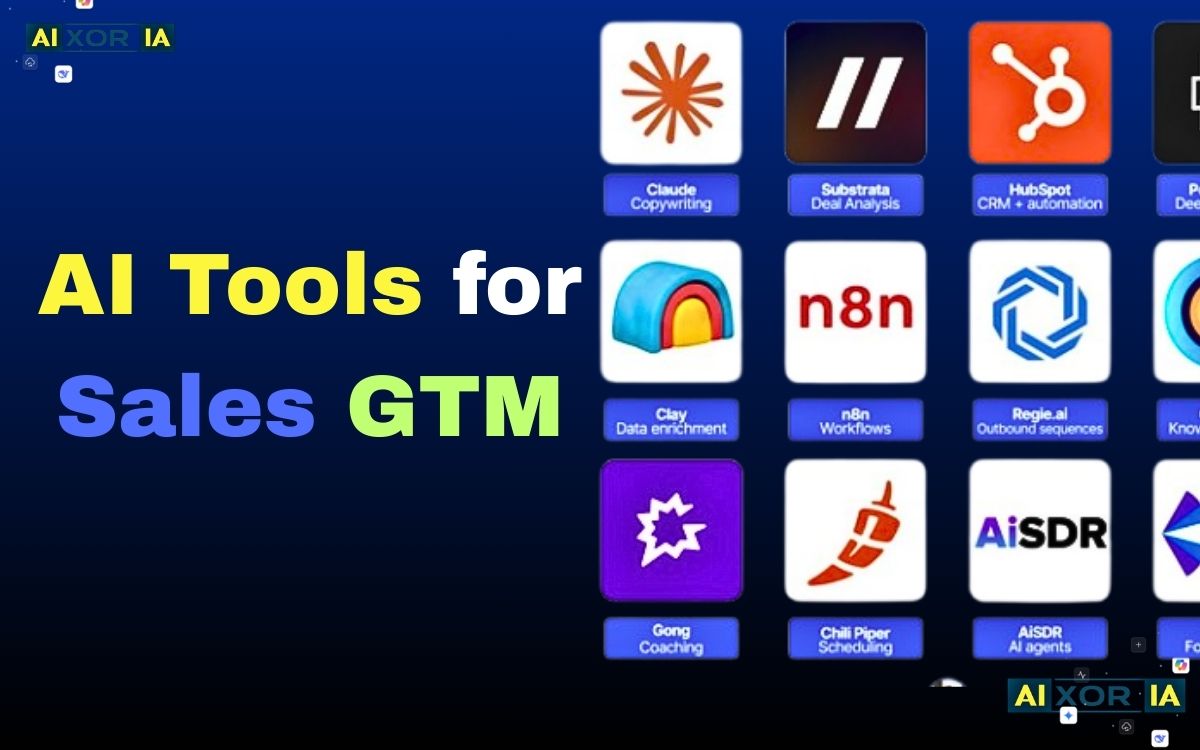
The 9 best AI tools for sales GTM in 2026 are: Apollo.io, Gong, Clari, HubSpot, Momentum, Lavender, Drift, Reply.io, and Demandbase.
Together these platforms power modern revenue teams by automating prospecting, analyzing sales conversations, forecasting revenue, and improving outreach performance through predictive AI systems.
Unlike older sales software, the 2026 generation of GTM tools focuses on agentic AI—systems capable of acting autonomously, researching prospects, generating outreach, and assisting sales representatives in real time.
Sales teams that adopt these tools often see dramatic efficiency improvements because AI eliminates repetitive tasks and surfaces insights faster than traditional analytics tools.
Table of Contents
The 2026 Best AI Tools for Sales GTM Matrix
| Tool | Core AI Strength (2026) | Best For | CRM Integration |
|---|---|---|---|
| Apollo.io | AI Intent Data Scoring | Outbound Prospecting | Salesforce, HubSpot |
| Gong | Real-time Coaching Prompts | Deal Intelligence | Major VoIP + CRM |
| Clari | Predictive Revenue Forecasting | RevOps Teams | Direct CRM Sync |
| HubSpot | Autonomous CRM Agents | SMB Sales Teams | Native CRM |
| Momentum | Workflow Automation AI | Sales Ops Automation | Salesforce |
| Lavender | Psychological Tone Analysis | Cold Email Personalization | Gmail, Outlook |
| Drift | Conversational AI Agents | Lead Qualification | HubSpot, Salesforce |
| Reply.io | Multichannel AI Sequences | Sales Engagement | Major CRM Tools |
| Demandbase | AI Account Intelligence | Enterprise ABM | Salesforce |
READ MORE – Best AI Tools for Sales and Marketing
Why AI Tools Matter in Modern GTM
Go-to-market strategies have evolved significantly over the past few years.
Previously, revenue teams depended heavily on manual research, static prospect lists, and guess-based pipeline forecasting. Today, modern GTM systems operate more like AI-assisted decision engines.
Sales leaders increasingly measure success using a metric often referred to as GTM efficiency. E_{gtm} = \frac{\text{New Revenue Pipeline Generated}}{\text{Total Sales & Marketing Spend}}
When AI tools automate prospect research, outreach optimization, and pipeline forecasting, the revenue pipeline grows while operational costs remain stable. That shift dramatically increases overall GTM efficiency.
Many revenue operations teams now treat this ratio as the central metric for evaluating sales technology investments.
1. Apollo.io
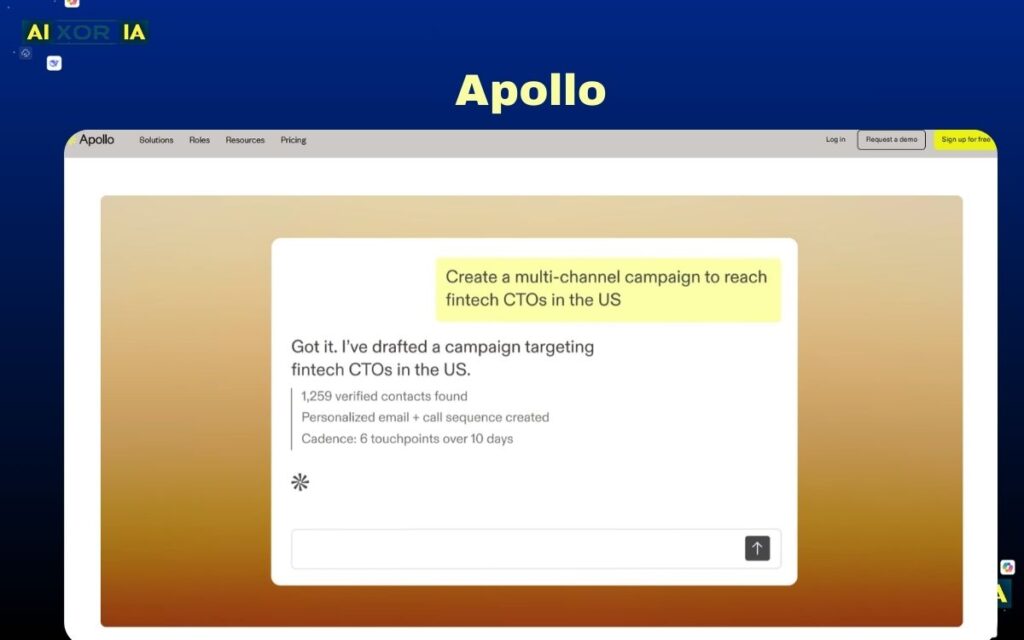
AI Prospecting Engine for Outbound Sales
Apollo.io has become one of the most widely used AI platforms for outbound sales teams. Its core strength lies in combining a massive B2B contact database with AI-driven intent signals.
Instead of manually building prospect lists, the platform analyzes signals such as hiring patterns, technology usage, funding events, and buying intent to identify companies that are likely to purchase.
Key capabilities
- AI lead scoring and segmentation
- Intent-based prospect discovery
- Automated email sequences
- LinkedIn prospecting automation
- Contact database with millions of companies
Apollo also integrates directly into sales workflows, allowing representatives to generate lead lists, launch campaigns, and track engagement without leaving their CRM environment.
Experience
During a recent outbound campaign experiment on a SaaS analytics project, we used Apollo to identify mid-size SaaS companies that had recently adopted a competing analytics tool.
Within two weeks, the platform surfaced 83 qualified accounts, many of which were already researching alternative solutions. The outreach campaign generated 17 booked demos, demonstrating how AI-driven prospect intelligence dramatically shortens the research phase.
Insight rarely discussed
What many teams overlook is that Apollo’s biggest advantage is signal timing rather than contact data. The platform detects behavioral shifts such as hiring a new VP of Sales or adopting a new CRM—moments when companies are most open to evaluating new tools.
2. Gong
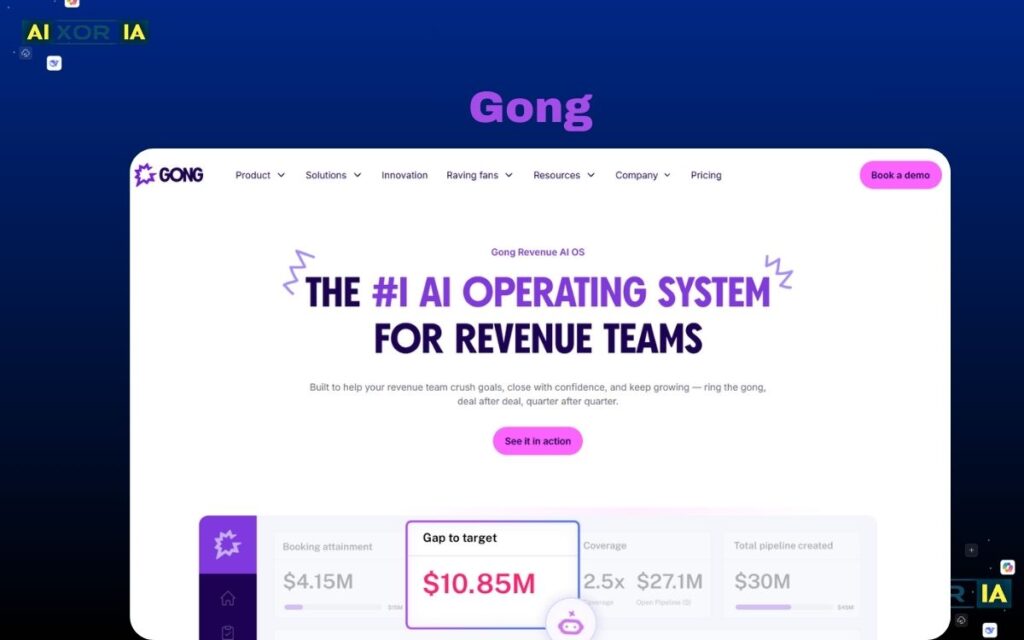
AI Conversation Intelligence for Sales Teams
Gong focuses on one of the most valuable datasets in sales: conversations.
Sales calls contain a massive amount of information about customer objections, product interest, and deal risks. However, analyzing those conversations manually is nearly impossible.
Gong solves this problem by recording calls, transcribing them, and using AI to identify patterns across thousands of interactions.
Core capabilities
- Automatic call recording and transcription
- AI conversation analysis
- Deal risk detection
- Sales coaching insights
- Conversation pattern analytics
Managers can identify which talk tracks consistently lead to successful deals and which ones cause prospects to disengage.
Experience
While reviewing several discovery calls for a B2B automation tool, Gong flagged a recurring issue: sales reps were introducing pricing too early in the conversation.
After adjusting the sales script and delaying pricing discussions, the demo-to-proposal conversion rate increased noticeably.
Insight rarely discussed
The real value of Gong is not simply call transcription. The platform gradually builds an organizational memory of successful conversations, effectively turning sales knowledge into a searchable data asset.
3. Clari
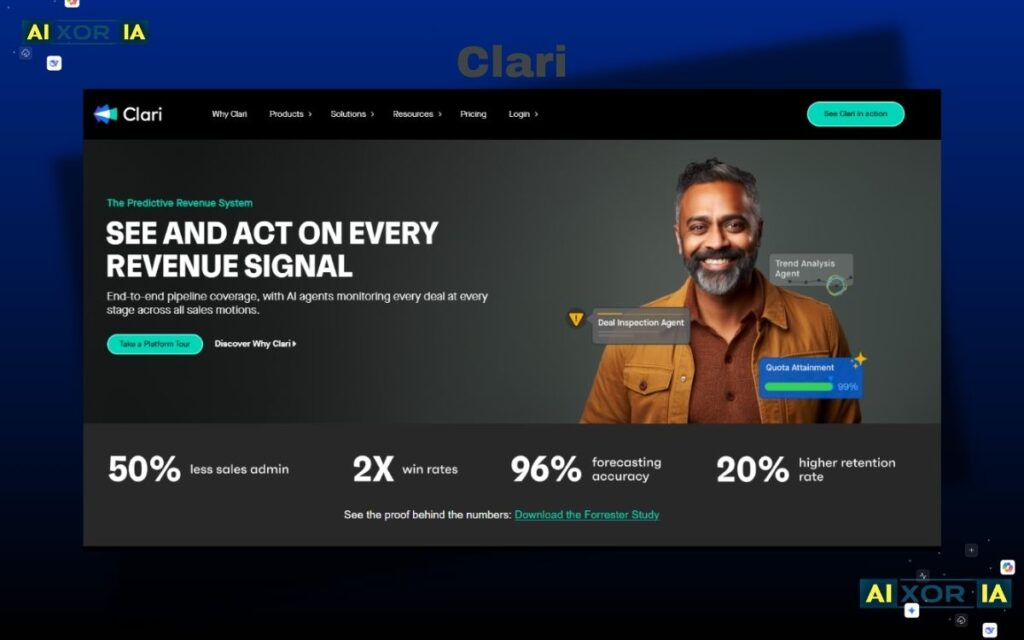
Predictive Revenue Intelligence
Clari focuses on one of the most difficult problems in sales leadership: forecasting revenue accurately.
Traditional pipeline forecasts often rely on subjective updates from sales representatives. Clari improves forecasting by analyzing CRM data, sales activity, deal history, and communication patterns.
Key capabilities
- Predictive pipeline forecasting
- Revenue analytics dashboards
- Deal risk alerts
- Activity tracking and sales insights
Instead of relying solely on stage probability models, Clari examines the behavior around deals—such as meeting frequency, response times, and engagement levels.
Experience
During one RevOps audit, Clari flagged several deals labeled as “late stage” that had not had a customer meeting in more than three weeks.
Those deals eventually stalled, confirming the platform’s risk detection model.
Insight rarely discussed
Forecasting accuracy improves not only because of AI models but also because the system forces sales teams to maintain cleaner CRM data. Better data leads to better forecasts.
4. HubSpot
AI-Driven CRM for Integrated GTM
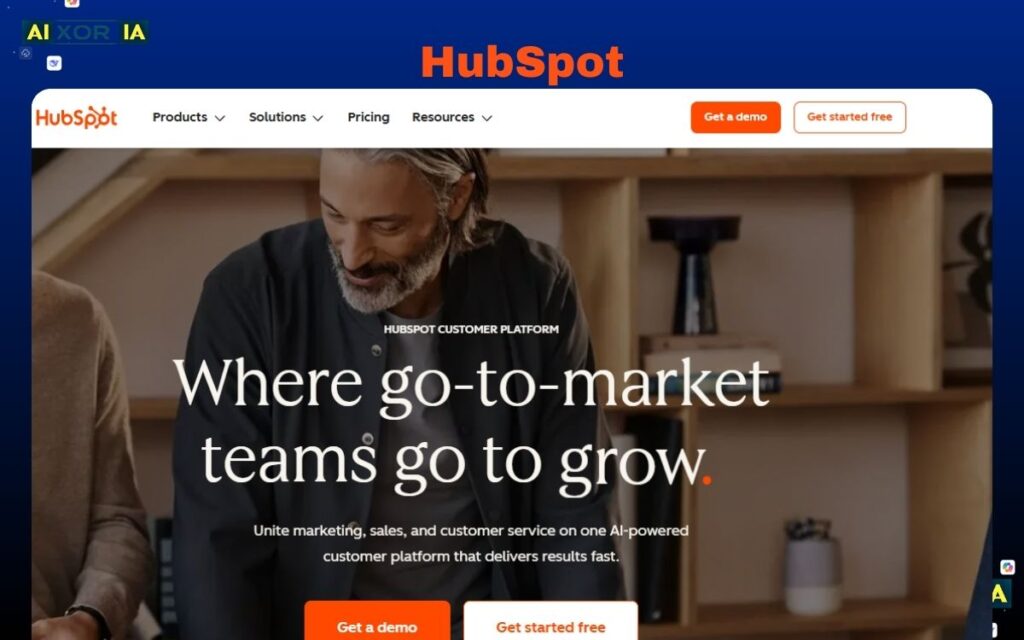
HubSpot has evolved from a marketing automation platform into a full AI-driven CRM ecosystem.
Recent updates introduced AI assistants capable of generating outreach messages, summarizing sales calls, and automating lead qualification.
Core capabilities
- AI lead scoring
- Email and outreach automation
- CRM pipeline management
- AI content assistance
- Conversational chatbot automation
HubSpot’s biggest advantage is that it combines marketing, sales, and customer service data into one system.
Experience
When implementing HubSpot for a startup sales team, the platform automatically categorized inbound leads based on behavior such as page visits, downloads, and demo requests.
The sales team immediately knew which prospects were high-intent and which required nurturing.
Insight rarely discussed
HubSpot’s most powerful capability is not automation but data unification. When marketing and sales signals exist in one environment, AI models become significantly more accurate.
5. Momentum
AI Workflow Automation for Revenue Teams
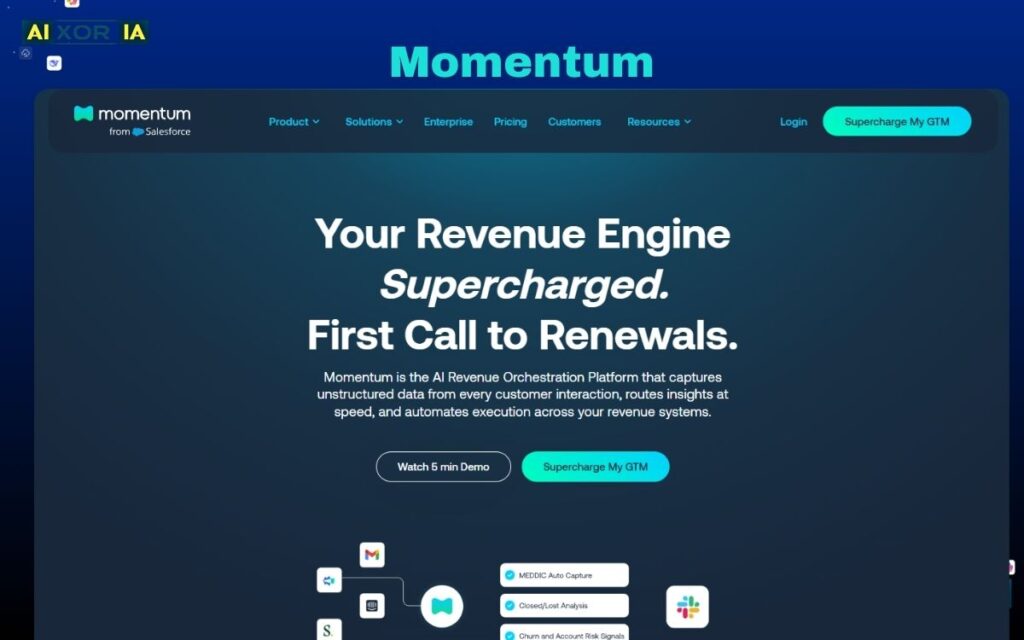
Momentum focuses on a persistent problem in sales operations: manual administrative work.
Sales representatives often spend hours updating CRM records, summarizing calls, and sharing deal updates internally.
Momentum automates much of this work.
Key capabilities
- Automatic CRM updates
- AI meeting summaries
- Real-time deal alerts
- Slack workflow integration
- Revenue team collaboration tools
Experience
During an internal sales experiment, meeting summaries generated by Momentum saved several hours each week that would otherwise be spent documenting calls.
More importantly, those summaries were automatically attached to CRM records, keeping deal history organized.
Insight rarely discussed
Automation tools like Momentum gradually transform sales teams into data-driven operations, because every conversation and activity becomes structured data.
6. Lavender
AI Email Intelligence for Cold Outreach
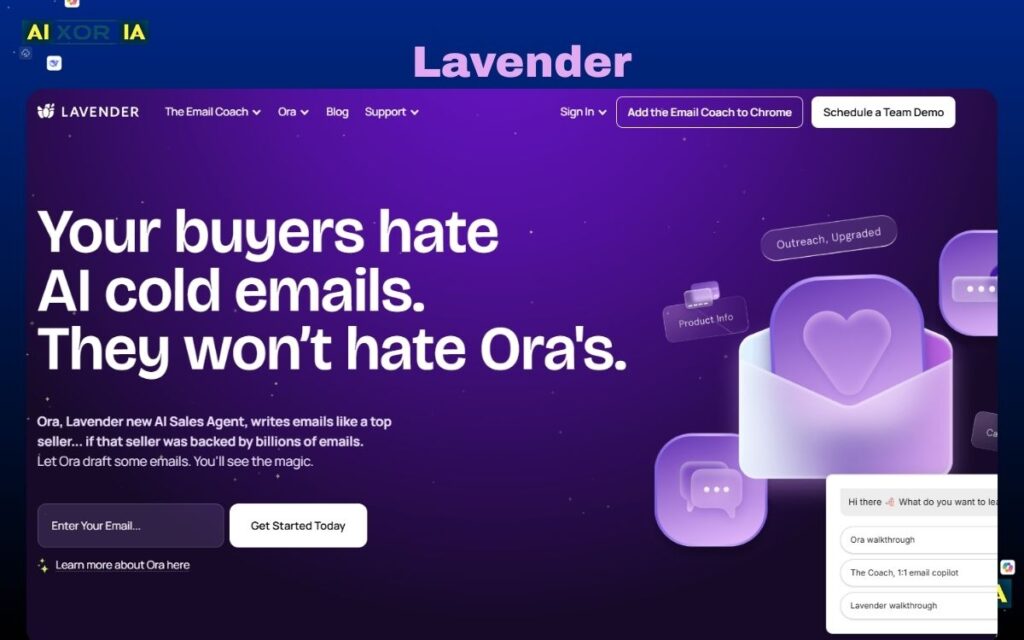
Lavender focuses specifically on improving cold email communication.
Instead of simply generating text, the platform analyzes the psychological structure of outreach messages.
Core capabilities
- Email tone analysis
- Personalization recommendations
- Readability scoring
- AI writing assistance
Lavender evaluates elements such as sentence length, personalization depth, emotional tone, and call-to-action clarity.
Experience
While experimenting with cold outreach messages for a marketing automation tool, Lavender highlighted that most emails were too long and overly promotional.
After restructuring emails based on the suggestions, open rates increased noticeably and reply rates improved as well.
Insight rarely discussed
Cold email success often depends less on clever writing and more on cognitive load—how easily a recipient can understand the message in a few seconds.
Lavender’s scoring system indirectly optimizes this cognitive clarity.
7. Drift
Conversational AI for Lead Qualification
Drift replaces static website forms with real-time AI conversations.
When visitors land on a site, Drift’s chatbot can ask qualifying questions, provide information, and schedule meetings automatically.
Core capabilities
- AI chatbots for lead capture
- Real-time conversation routing
- Automated meeting booking
- Visitor intent detection
Experience
During a website redesign project, replacing a traditional demo request form with a conversational bot resulted in significantly more qualified meetings.
Visitors preferred interacting with a chatbot rather than filling out lengthy forms.
Insight rarely discussed
Conversational interfaces reduce psychological friction, making visitors more likely to start a conversation.
8. Reply.io
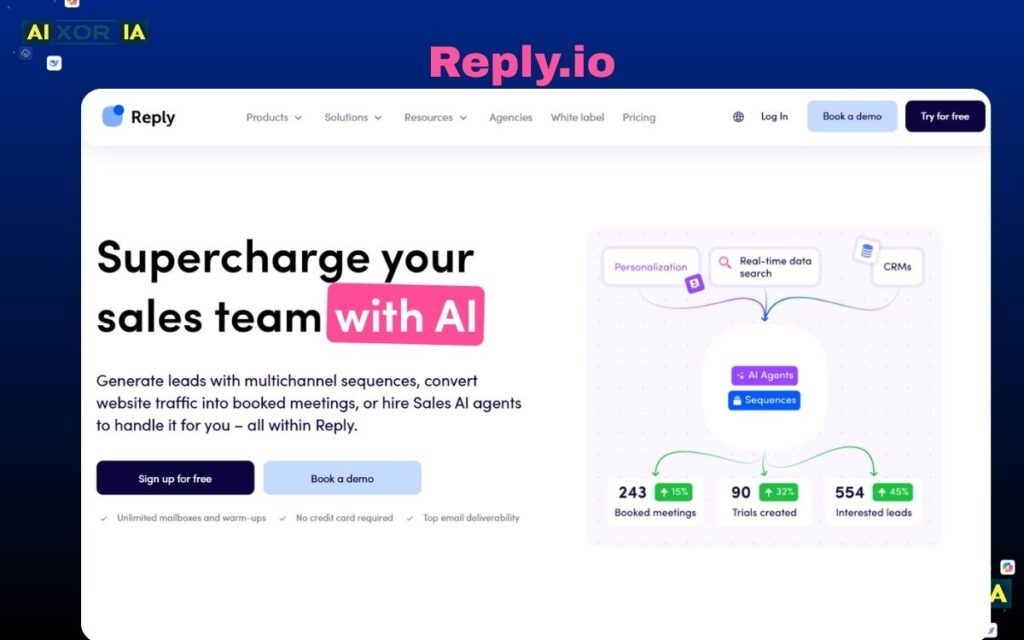
Multichannel AI Sales Engagement
Reply.io helps sales teams coordinate outreach across multiple channels including email, LinkedIn, and calls.
Rather than managing each communication channel separately, Reply orchestrates sequences across platforms.
Core capabilities
- AI-generated outreach messages
- Multichannel sequences
- Automated follow-ups
- Meeting scheduling tools
Experience
In one outbound campaign, a multichannel sequence combining email and LinkedIn messages produced higher engagement compared to email-only outreach.
Insight rarely discussed
Prospects rarely respond to the first message. Multichannel sequencing increases visibility and familiarity over time.
9. Demandbase
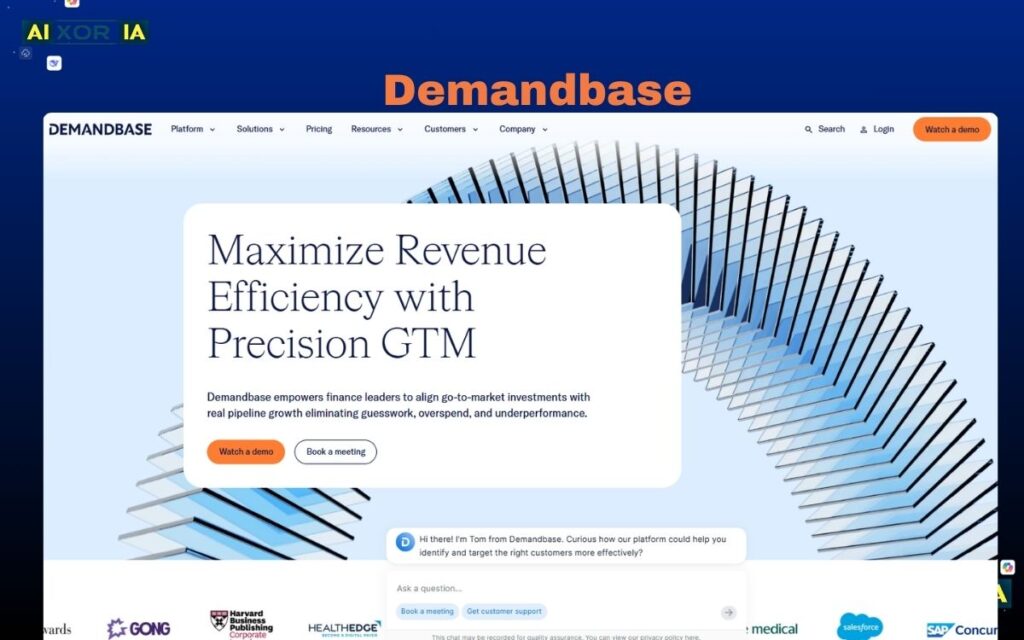
AI Account Intelligence for Enterprise GTM
Demandbase focuses on enterprise account-based marketing.
Instead of targeting thousands of random leads, the platform identifies high-value companies and tracks their buying signals.
Core capabilities
- AI account scoring
- Intent data analysis
- ABM campaign orchestration
- Revenue analytics
Experience
While analyzing enterprise buying behavior, Demandbase revealed that several target companies were researching competitor tools weeks before contacting vendors.
That insight allowed marketing teams to launch targeted campaigns earlier in the buying journey.
Insight rarely discussed
Account intelligence tools shift sales strategy from lead generation to opportunity detection.
The Rise of Autonomous SDRs
One of the biggest shifts in 2026 GTM strategy is the emergence of autonomous SDR systems.
Instead of simply assisting human sales representatives, new AI models are capable of performing many SDR tasks independently:
- Researching target accounts
- Writing outreach messages
- Scheduling meetings
- Qualifying prospects
Human representatives increasingly act as strategic advisors, focusing on high-value conversations while AI handles repetitive prospecting work.
Final Perspective
Sales technology has moved far beyond simple CRM databases.
Modern GTM platforms function as intelligent revenue infrastructure, continuously analyzing customer behavior, predicting deal outcomes, and optimizing outreach strategies.
Organizations that integrate these systems effectively gain a significant advantage:
they spend less time on administrative work and more time building meaningful relationships with customers.
As AI models continue to evolve, the next generation of sales tools will likely move even further toward autonomous decision-making—where systems not only assist sales teams but actively help shape revenue strategy itself.
1 thought on “9 Best AI Tools for Sales GTM in 2026”