Choosing the “best AI tools” for a tech company is no longer about picking the most popular name — it’s about selecting the right infrastructure layer for your product.
When I started comparing modern AI platforms for real-world use (APIs, agent frameworks, automation pipelines), one thing became clear:
Most articles oversimplify this space — but in reality, each AI provider behaves very differently under production load, cost pressure, and integration complexity.
This guide breaks down the top AI tool providers not from a marketing perspective, but from a deployment, scalability, and developer-experience standpoint.
Table of Contents
What Actually Defines the “Best” AI Tool in Production?
Before jumping into tools, let’s define this properly.
In real-world tech environments, an AI tool is only “best” if it:
- Handles large context (code, data, workflows)
- Offers predictable pricing at scale
- Integrates into APIs, pipelines, or agent frameworks
- Produces consistent outputs under edge cases
Anything else is just demo-level performance.
Best AI Tools for Tech Companies
1. OpenAI — Best for Product-Ready AI Features
When it comes to actually embedding AI into products (SaaS apps, developer tools, automation systems), OpenAI currently provides one of the most practical and flexible ecosystems.
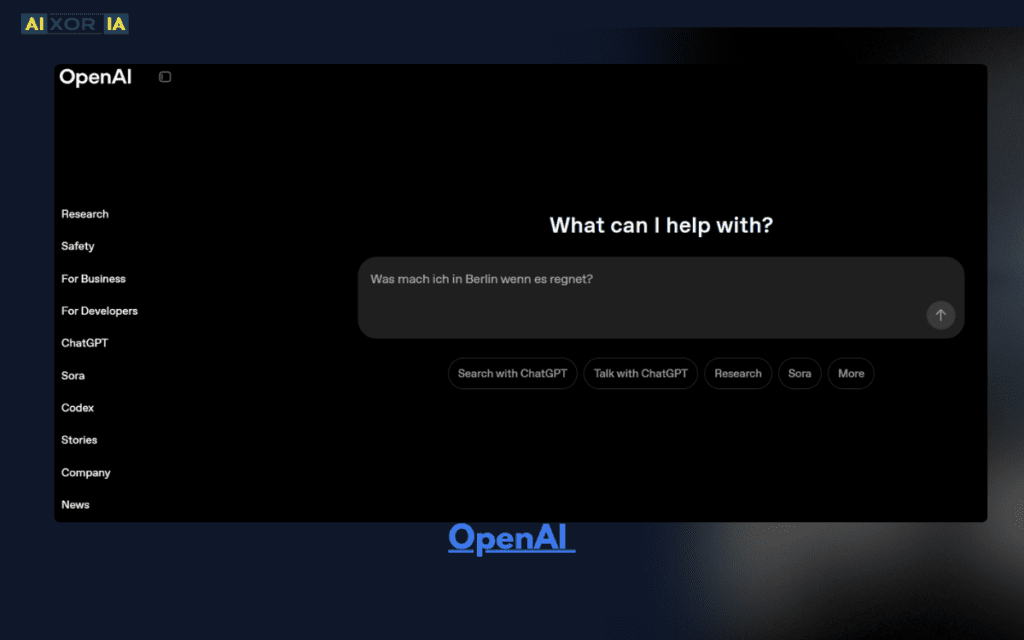
Their core strength lies in the OpenAI API, which allows teams to integrate text generation, reasoning, and automation into real applications without building models from scratch. Combined with tools like ChatGPT, companies can prototype fast and scale gradually.
From a technical standpoint, OpenAI models support:
- Large context handling (useful for multi-file code analysis)
- Function calling (critical for agent-based workflows)
- Structured outputs (JSON mode for backend systems)
Another major advantage is ecosystem compatibility. Frameworks like LangChain and modern agent systems are heavily optimized for OpenAI, making integration smoother compared to less mature platforms.
However, the biggest concern in production is cost predictability. Token-based pricing can become expensive when:
- Processing long documents
- Running multi-step agent workflows
- Scaling to thousands of users
Real Experience:
While testing OpenAI APIs in a multi-step agent workflow, I noticed costs scaled quickly when context wasn’t optimized. Caching and prompt compression became necessary for stability.
👉 Verdict:
Best for startups and SaaS companies building AI-first features quickly — but requires cost optimization at scale.
READ MORE – Which Are the Top 5 AI Tools in 2026?
2. Google — Best for Data-Heavy AI Systems
Google’s AI ecosystem is fundamentally different — it’s not just about models, but about data infrastructure + machine learning pipelines.

With Google Vertex AI and models like Gemini, Google provides a tightly integrated system for companies already working with large datasets.
The real strength of Google AI appears when:
- You’re handling massive structured/unstructured data
- You need custom model training or fine-tuning
- Your workflows depend on BigQuery, data lakes, or analytics pipelines
Technically, Vertex AI allows:
- Model training + deployment in one pipeline
- Integration with data sources
- Scalable inference across large systems
However, this power comes with complexity. Compared to OpenAI:
- Setup time is longer
- Requires ML understanding
- Debugging pipelines can be non-trivial
Real Experience:
While experimenting with data pipelines on Vertex AI, the setup felt powerful but required significantly more configuration compared to plug-and-play APIs like OpenAI.
👉 Verdict:
Best for companies where data is the core asset, not just AI features.
3. Microsoft — Best for Enterprise Workflow Automation
Microsoft’s AI strategy is deeply tied to its enterprise ecosystem. With Azure AI and Copilot, the focus is not just AI — but workflow transformation inside organizations.
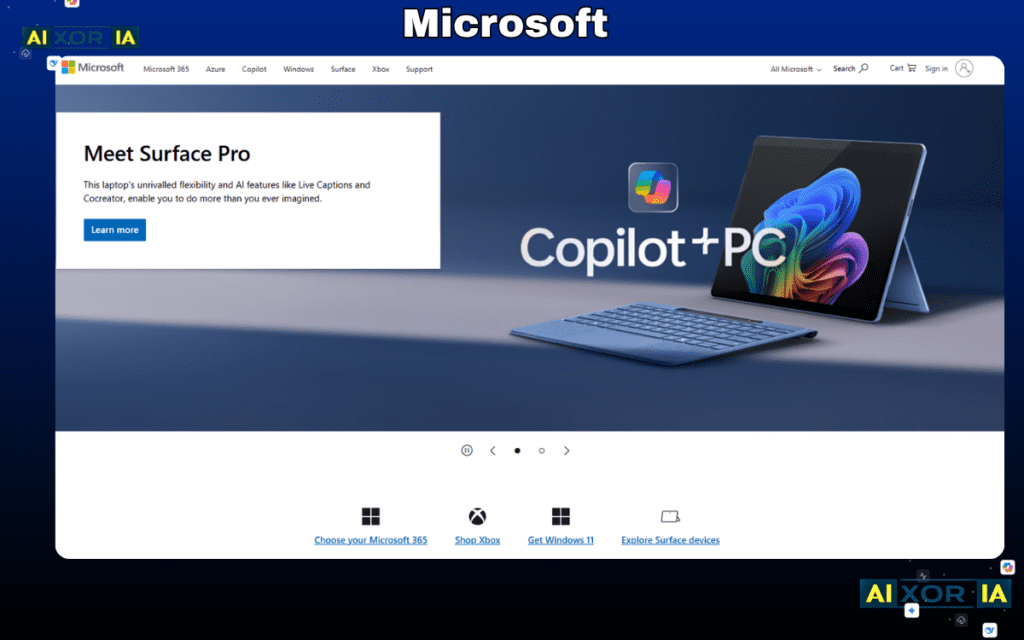
The biggest advantage here is integration:
- Office tools (Word, Excel, Teams)
- Enterprise authentication systems
- Internal data environments
For large organizations, this means:
- AI can be deployed across teams quickly
- Security and compliance are already handled
- No need to rebuild infrastructure
Technically, Azure AI also supports:
- Custom AI models
- API integrations
- Hybrid cloud deployments
The limitation? Flexibility.
Compared to developer-first platforms:
- Less control at low level
- Slower experimentation
- Sometimes over-engineered for smaller teams
Real Experience:
In enterprise-style environments, Microsoft tools felt extremely stable, but rapid prototyping was slower compared to lightweight API-based systems.
👉 Verdict:
Best for large enterprises optimizing internal workflows and productivity.
4. Anthropic — Best for Long Context & Reliable Outputs
Anthropic has positioned itself differently — focusing on safe, predictable, and long-context AI systems.
Their model, Claude, stands out especially in scenarios involving:
- Large codebases
- Long documents (100k–200k+ tokens)
- Structured reasoning tasks
From a technical perspective, Claude is particularly useful when:
- You need consistent outputs
- You’re analyzing large datasets in one pass
- You want fewer hallucinations in responses
This makes it ideal for:
- Documentation analysis tools
- Legal or compliance systems
- Code review assistants
However, the trade-off is ecosystem maturity:
- Fewer integrations compared to OpenAI
- Smaller developer community
- Limited tooling support in some frameworks
Real Experience:
When testing long-document analysis, Claude handled large context more smoothly than most tools, reducing the need for chunking strategies.
👉 Verdict:
Best for accuracy + long-context tasks, especially in technical or compliance-heavy environments.
READ MORE – Anthropic AI Automation Tool
5. Amazon — Best for Scalable Backend AI Infrastructure
Amazon approaches AI from an infrastructure-first perspective. With Amazon Bedrock and AWS AI services, it allows companies to access multiple models while maintaining full control over deployment.

The biggest advantage is flexibility:
- Choose different models (not vendor-locked)
- Scale across AWS infrastructure
- Integrate with existing backend systems
This is especially useful for:
- Backend-heavy applications
- Large-scale SaaS platforms
- Systems already running on AWS
Technically, Bedrock allows:
- Multi-model experimentation
- Secure deployments
- Enterprise-grade scalability
The downside is complexity:
- Requires AWS knowledge
- Setup is not beginner-friendly
- Debugging distributed systems can be challenging
Real Experience:
Working within AWS-based systems, Bedrock felt powerful but required deep infrastructure understanding to fully utilize its flexibility.
👉 Verdict:
Best for engineering-heavy teams building scalable backend systems.
Real-World Decision Scenarios
Scenario 1: Early-Stage Startup (AI Feature in SaaS)
- Goal: Launch fast
- Constraint: Limited resources
👉 Best Choice: OpenAI
Because speed > optimization at this stage.
Scenario 2: Data Platform or Analytics Company
- Goal: Process large datasets
- Constraint: Complex pipelines
👉 Best Choice: Google AI
Scenario 3: Enterprise Organization
- Goal: Improve internal productivity
- Constraint: Security + compliance
👉 Best Choice: Microsoft
Scenario 4: Large Codebase / Documentation Platform
- Goal: Analyze massive context
- Constraint: Accuracy
👉 Best Choice: Anthropic
Scenario 5: AWS-Based SaaS Infrastructure
- Goal: Scale backend AI systems
- Constraint: Control + flexibility
👉 Best Choice: Amazon
Final Thoughts
There is no universal “best AI tool.”
What actually matters is:
- Your architecture
- Your scale
- Your team’s technical depth
From real-world evaluation, the smartest approach is:
Start with one platform → validate use case → optimize or expand later
Because in production, wrong AI decisions are expensive to fix.
Frequently Asked Questions
Which AI platform is best for beginners?
For most developers and startups, OpenAI is the easiest to start with due to its simple API and strong ecosystem.
Are AI tools reliable in production?
Yes — but only when properly optimized. Without prompt control, cost management, and fallback handling, reliability can drop.
Should companies rely on a single AI provider?
Not always. Many modern systems use a multi-model strategy to balance cost, performance, and reliability.