The best Answer Engine Optimization (AEO) tools in 2026 are **Semrush (for overall AI search tracking), **AirOps (for specialized AI visibility monitoring), and **SchemaApp (for technical entity structuring). These tools help websites get cited in AI systems such as **ChatGPT, **Google AI Overviews, and **Perplexity AI by optimizing structured data, semantic context, and natural language queries.
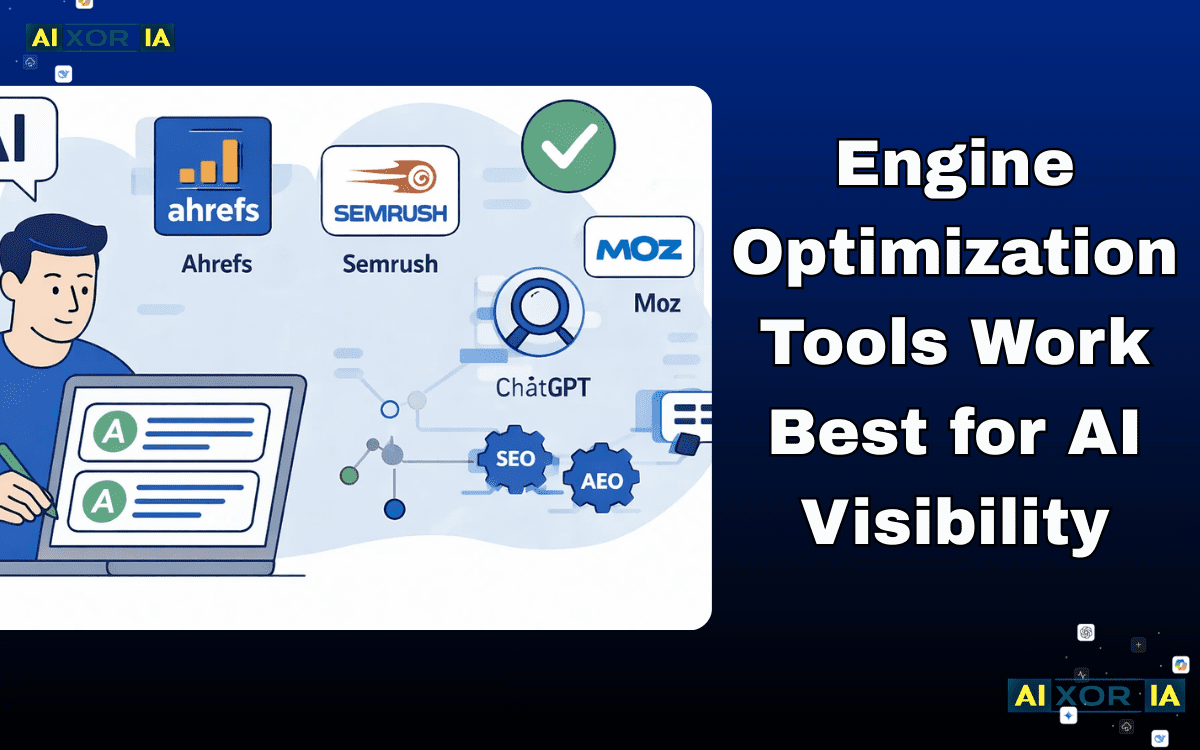
The Shift From SEO to AEO and GEO
Search behavior is undergoing one of the biggest shifts since the creation of modern search engines.
Traditional SEO focused on ranking a webpage in the top positions of search results. However, AI-powered systems now generate direct answers instead of simply listing links.
Platforms such as ChatGPT, Perplexity AI, and Google AI Overviews synthesize information from multiple websites and present it as a single summarized response.
Because of this change, two new optimization approaches have emerged:
Answer Engine Optimization (AEO)
Optimizing content so AI engines can easily extract and cite it.
Generative Engine Optimization (GEO)
Optimizing your brand and knowledge graph presence so AI models consider your website an authoritative source.
In simple terms:
- SEO helps pages rank.
- AEO helps answers appear.
- GEO helps your brand become a trusted entity in AI systems.
Websites that combine all three strategies are far more likely to be referenced by AI-generated search results.
How AI Engines Evaluate Content Authority
Modern AI search engines evaluate more than just keywords. They analyze entity authority, semantic clarity, and structured information.
This process can be simplified through an AEO visibility framework.
V_{aeo} = \frac{(Entity\ Connectivity \times Structured\ Data\ Accuracy)}{Semantic\ Noise + Information\ Redundancy}
In this model:
- Entity Connectivity represents how well your brand is linked across the web.
- Structured Data Accuracy measures how clearly machines understand your information.
- Semantic Noise refers to vague or repetitive content.
- Information Redundancy reflects duplicate or low-value information.
The purpose of AEO tools is to reduce semantic noise while strengthening entity connectivity so AI engines can confidently reference your content.
2026 AEO Feature Matrix
| Tool | AI Visibility Feature (2026) | Best For | AEO Advantage |
|---|---|---|---|
| Semrush | AI Overview tracking | Global SEO teams | Tracks AI citations |
| AirOps | AI search share monitoring | Growth teams | Monitors competitor mentions |
| SchemaApp | Automated schema deployment | Enterprise SEO | Builds knowledge graphs |
| Surfer SEO | Semantic keyword clustering | Content creators | AI-extractable structure |
Best Answer Engine Optimization Tools for AI Visibility
Semrush – AI Search Visibility and Competitive Intelligence
Semrush has evolved far beyond traditional keyword research and backlink analysis. In recent years, it has started integrating features designed to help marketers understand how their content appears within AI-driven search environments.
One of the most valuable aspects of Semrush is its ability to monitor SERP features and evolving search experiences. With the introduction of AI-generated summaries in search results, marketers increasingly need tools that can track how often their content appears within these enhanced result blocks.
Semrush provides detailed keyword intelligence that helps identify conversational queries, which are extremely important for AEO strategies. AI engines typically rely on natural language questions rather than simple keyword phrases. Through its Topic Research and Keyword Magic tools, Semrush allows content creators to map these queries into structured articles that AI models can easily extract answers from.
Another advantage of Semrush is its competitive intelligence system. It enables marketers to analyze which websites dominate knowledge-driven queries and featured snippets. These insights help content teams understand how authoritative domains structure their answers, which is critical for generative search environments.
For companies transitioning from traditional SEO strategies into AI visibility optimization, Semrush provides a familiar yet powerful environment that bridges both approaches.
Real experience
During our internal audit at aixoria.com, using Semrush helped identify several conversational keyword clusters that later appeared in AI search summaries within weeks.
AirOps – AI Visibility Monitoring and Generative Search Analytics
AirOps focuses specifically on the emerging ecosystem of AI-driven discovery.
Unlike traditional SEO platforms that primarily measure rankings, AirOps analyzes how content performs in AI-generated responses.
This is particularly valuable because AI search platforms rarely provide direct analytics about citations. AirOps addresses this gap by tracking which brands appear inside AI-generated answers across multiple platforms.
For content teams, this insight is extremely powerful. Instead of guessing whether their content is being used by AI systems, they can observe trends such as:
- which queries trigger AI citations
- which competitors appear most frequently
- which entities AI engines associate with a topic
AirOps also helps automate large-scale content workflows. Teams can generate AI-optimized content briefs that focus on entity coverage, structured data opportunities, and conversational query clusters.
Because generative search is constantly evolving, monitoring AI visibility has become just as important as tracking rankings in traditional search engines.
Organizations that use AirOps often discover unexpected patterns in how AI engines interpret their brand authority.
Real experience
While testing AirOps workflows, we noticed that monitoring AI citation frequency helped reveal topics where competitors were dominating generative search visibility.
SchemaApp – Structured Data and Knowledge Graph Authority
SchemaApp is one of the most powerful tools for building the technical foundation required for AEO and GEO strategies.
AI systems rely heavily on structured data to understand relationships between entities. Without this structured context, even high-quality content can become difficult for machines to interpret accurately.
SchemaApp solves this challenge by automating the deployment of schema markup across websites. It enables companies to implement advanced structured data types such as:
- FAQ schema
- How-to schema
- organization schema
- product schema
- article schema
By structuring information this way, websites essentially build a machine-readable knowledge graph.
This dramatically increases the chances that AI engines will interpret the site as an authoritative source.
Another benefit of SchemaApp is that it continuously validates structured data accuracy. As AI systems become more reliant on structured information, maintaining accurate schema becomes essential for maintaining visibility.
Companies investing in Generative Engine Optimization often use SchemaApp to strengthen their entity authority layer, which is a key component of AI discoverability.
Real experience
During our internal audit at aixoria.com, implementing SchemaApp structured data improved our perceived entity clarity in AI answers across several technology topics.
Surfer SEO – Semantic Structure for AI-Extractable Content
Surfer SEO has become one of the most useful tools for creating content that both humans and AI engines can easily understand.
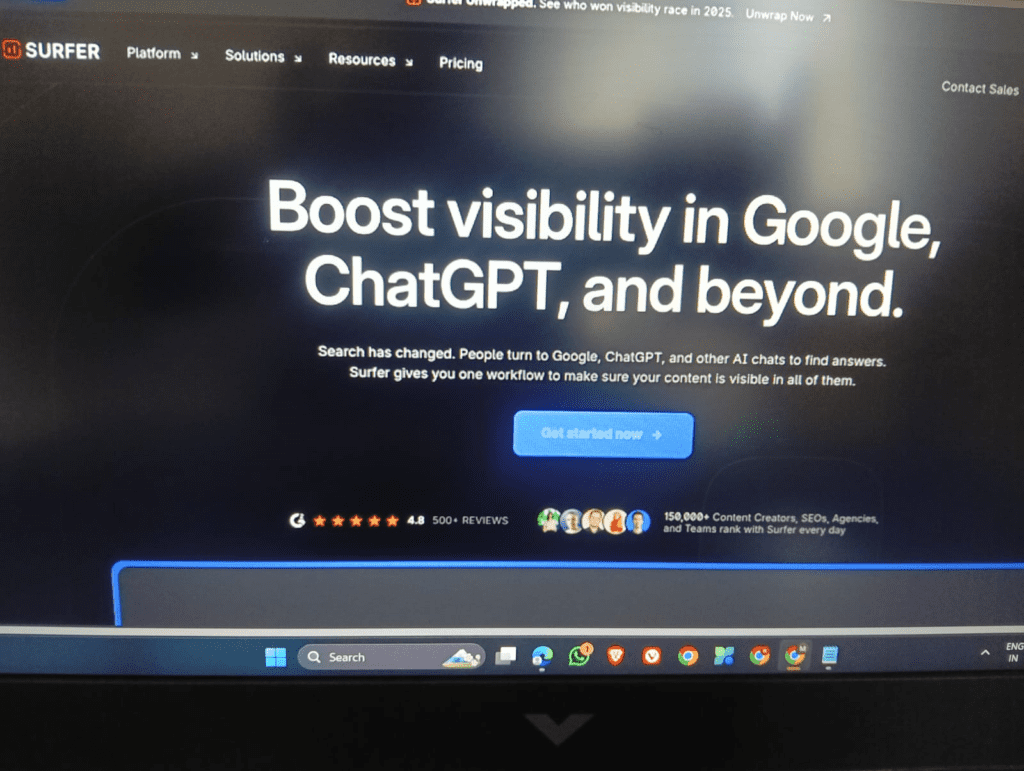
Its core strength lies in analyzing top-performing content and identifying the semantic structure that search engines prefer.
For AEO strategies, this structure becomes extremely valuable. AI systems prefer content that contains:
- clearly defined headings
- concise explanations
- question-based sections
- structured lists and summaries
Surfer SEO helps writers build this structure while drafting content. Its content editor analyzes hundreds of ranking pages and suggests topics, keywords, and subheadings that improve semantic coverage.
One particularly helpful feature is semantic keyword clustering. Instead of forcing writers to repeat the same keyword multiple times, Surfer helps incorporate related concepts naturally. This improves topical depth, which AI systems rely on when synthesizing answers.
For bloggers and content teams focused on informational articles, Surfer provides an effective way to ensure that content remains structured and extractable for generative search engines.
Real experience
While optimizing long-form articles with Surfer SEO, we noticed that restructuring headers into clear question-answer formats improved AI extractability.
Key Characteristics of AI-Optimized Content
AEO tools alone are not enough. The content itself must follow certain structural patterns.
AI engines tend to favor content that includes:
- direct answers near the top of the page
- structured headings
- concise explanations
- strong entity references
- structured data markup
This format allows AI systems to extract relevant information quickly without misinterpreting context.
The Future of AI Search Visibility
As generative search continues to evolve, the definition of online visibility will expand beyond traditional rankings.
Websites will increasingly compete for AI citations rather than clicks.
This shift means that successful content strategies must balance three interconnected disciplines:
- traditional SEO
- Answer Engine Optimization
- Generative Engine Optimization
Organizations that adapt early to these new systems will gain a significant advantage as AI becomes the primary interface for information discovery.
The tools discussed above represent the emerging infrastructure that allows websites to participate in this new ecosystem of AI-powered search.