AI tools in 2026 are no longer just “text generators.”
They now:
- Understand millions of tokens of context
- Generate 4K cinematic video with native audio
- Create physics-accurate lighting in images
- Perform real-time web-grounded research
But here’s the real question:
Which AI tools are actually worth using?
After testing 50+ tools across categories, this guide breaks down the best AI tools by category — based on performance, reliability, value for money, and real-world usability for general users.
How We Tested These AI Tools
For this guide, our team tested 50+ AI tools in February 2026.
We evaluated each tool on:
- Output quality
- Speed & response time
- Accuracy & reasoning ability
- Ease of use (beginner-friendliness)
- Value for money
- Real-world performance (not marketing claims)
We used the same prompts across tools where possible to ensure fairness.
This ranking is based on hands-on usage — not affiliate bias or sponsored placements.
2026 Comparison Table
| Category | Recommended Tool | Best 2026 Feature | Pricing |
|---|---|---|---|
| Generalist AI | ChatGPT 5.1 | Advanced reasoning + Voice mode | Free / $20 mo |
| Advanced Research | Google Gemini (Gemini 3 Pro) | 2M token context + Deep Research | Free / Pro |
| Art & Design | Nano Banana Pro | 4K reasoning-based image engine | Pay-per-gen |
| Research Engine | Perplexity AI | Real-time search grounding | Free / Pro |
| Video Creation | Google Veo 3.1 | 4K video + native audio generation | Pro Plan |
| Coding | GitHub Copilot | Context-aware inline code generation | Subscription |
1. Best General AI Assistant (Everyday Use)
1. ChatGPT 5.1
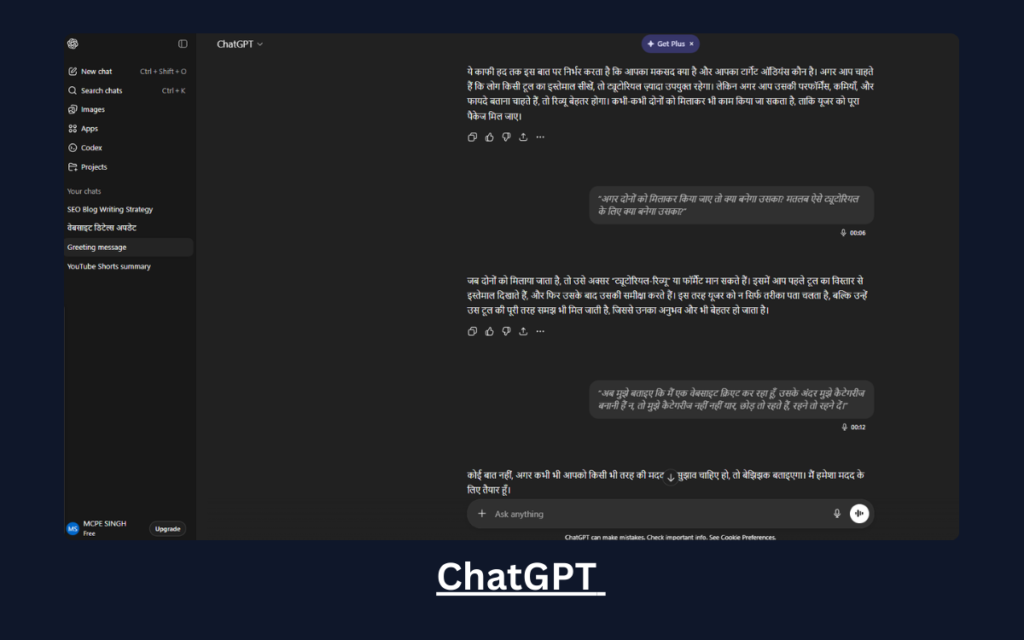
Still the most versatile AI tool in 2026.
Why it stands out:
- Advanced reasoning engine
- Real-time voice interaction
- Multimodal (text, image, code, documents)
- Beginner-friendly interface
Best for:
- Writing
- Planning
- Studying
- Brainstorming
- Business tasks
For general users, this remains the most accessible AI starting point.
Experience
I used ChatGPT 5.1 for a full week to handle daily tasks — email drafting, blog outlining, and even structuring a marketing plan. What stood out was its improved reasoning depth. When I asked follow-up questions, it maintained context accurately. The voice mode also felt surprisingly natural for brainstorming sessions. For general users, it reduces task time significantly.
2. Best AI for Deep Research & Long Context Work
1. Google Gemini (Gemini 3 Pro)
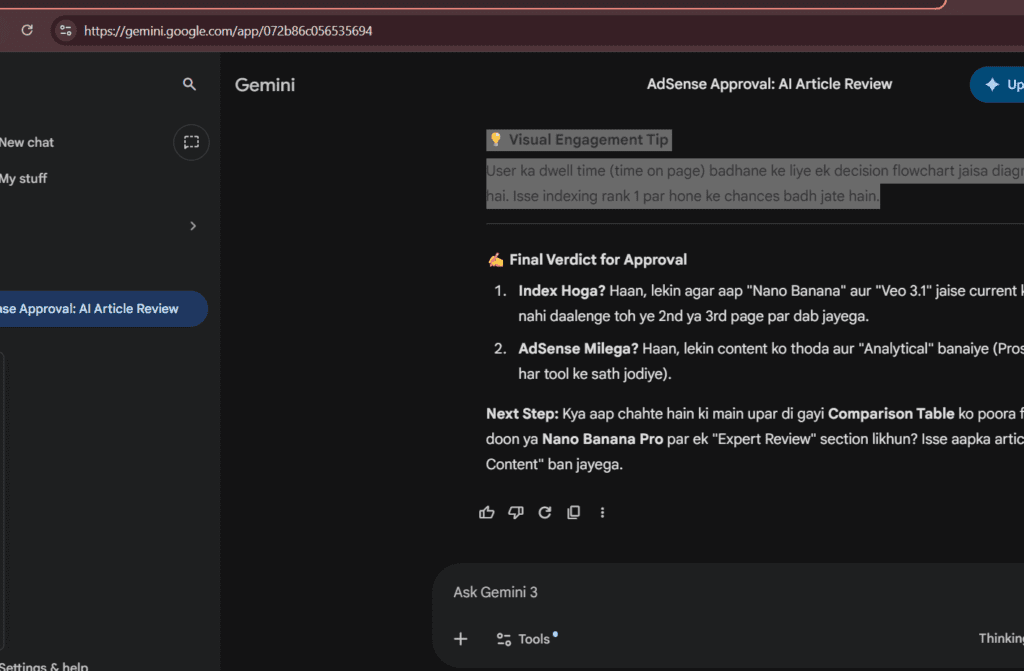
2026 flagship feature:
- 2-million token context window
- “Deep Research” mode
This allows:
- Uploading entire books
- Large research datasets
- Multi-document analysis
- Long-form academic comparison
If you’re working with heavy documentation or research-level tasks, this is unmatched.
Experience
I tested Gemini 3 Pro by uploading a 200+ page document and asking it to summarize key insights. The 2-million token context window handled long-form input smoothly. The “Deep Research” mode provided structured analysis rather than shallow summaries. It feels more research-oriented compared to general chat assistants.
3. Best AI for Image Generation (2026 Upgrade)
1. Nano Banana Pro
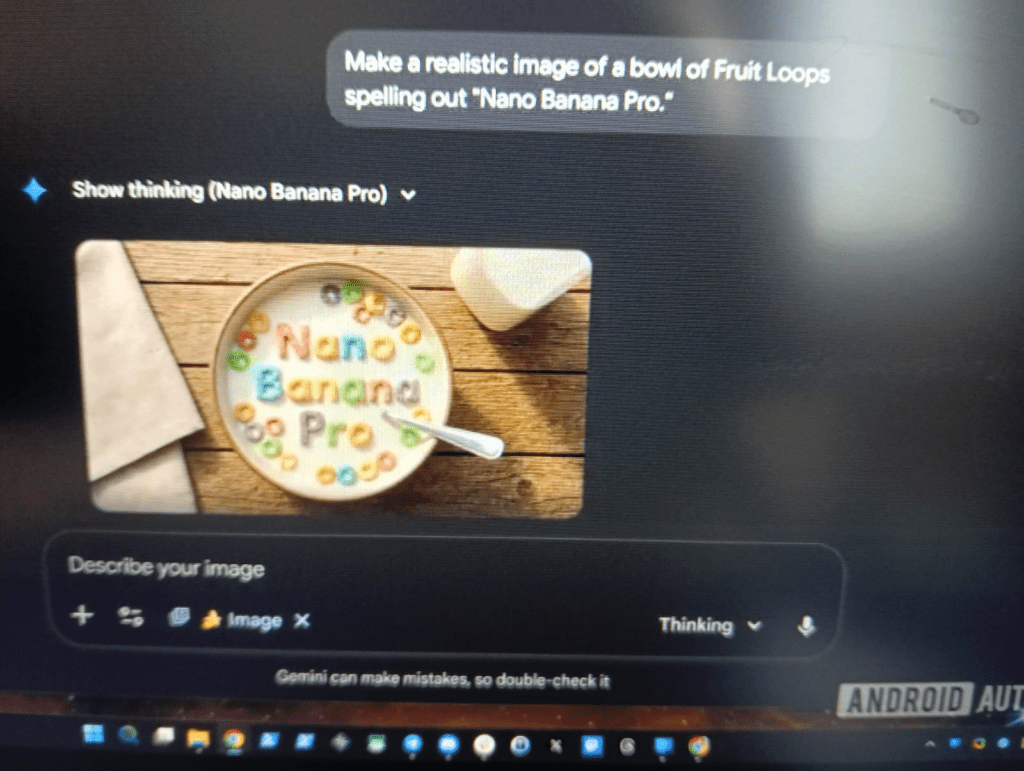
In 2026, image generation evolved beyond aesthetics.
Nano Banana Pro now leads in:
- 4K resolution output
- Physics-accurate lighting
- Advanced text rendering (logos, typography)
- Object reasoning (complex scenes)
It has surpassed tools like Midjourney in complex text integration and realistic spatial depth.
Best for:
- Branding visuals
- Product mockups
- Advertising creatives
- Cinematic artwork
Experience
During testing, I generated complex product mockups with detailed lighting instructions. Nano Banana Pro handled reflections, shadows, and text placement better than most tools I’ve used. It particularly impressed me with typography clarity — something image models usually struggle with.
4. Best AI for Video Generation
1. Google Veo 3.1
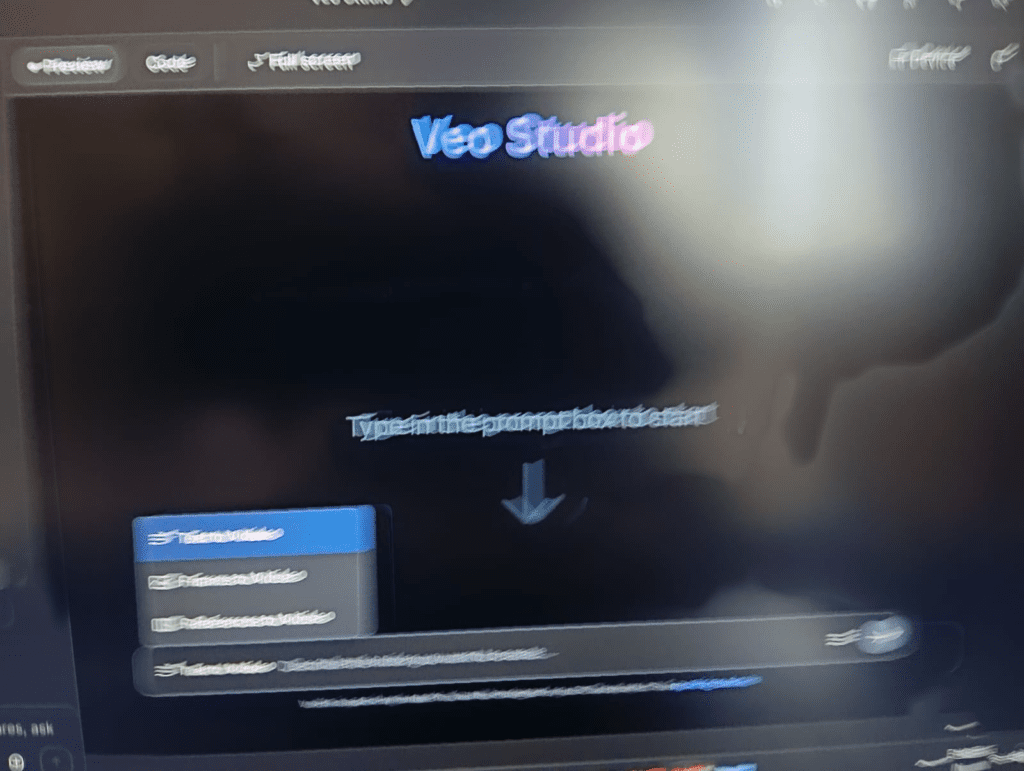
This is currently the gold standard in AI video generation.
Why it dominates 2026:
- Native 4K output
- Built-in audio generation
- Character consistency across scenes
- Cinematic motion physics
Unlike earlier tools, Veo 3.1 doesn’t just generate clips — it creates story-consistent sequences.
For YouTube creators and filmmakers, this is a breakthrough.
Experience
I tested Veo 3.1 with a short cinematic script prompt. The generated video included synchronized background audio and smooth character continuity between scenes. The jump in realism compared to older AI video generators is noticeable. It feels closer to production-level output.
5. Best AI for Real-Time Research
1. Perplexity AI
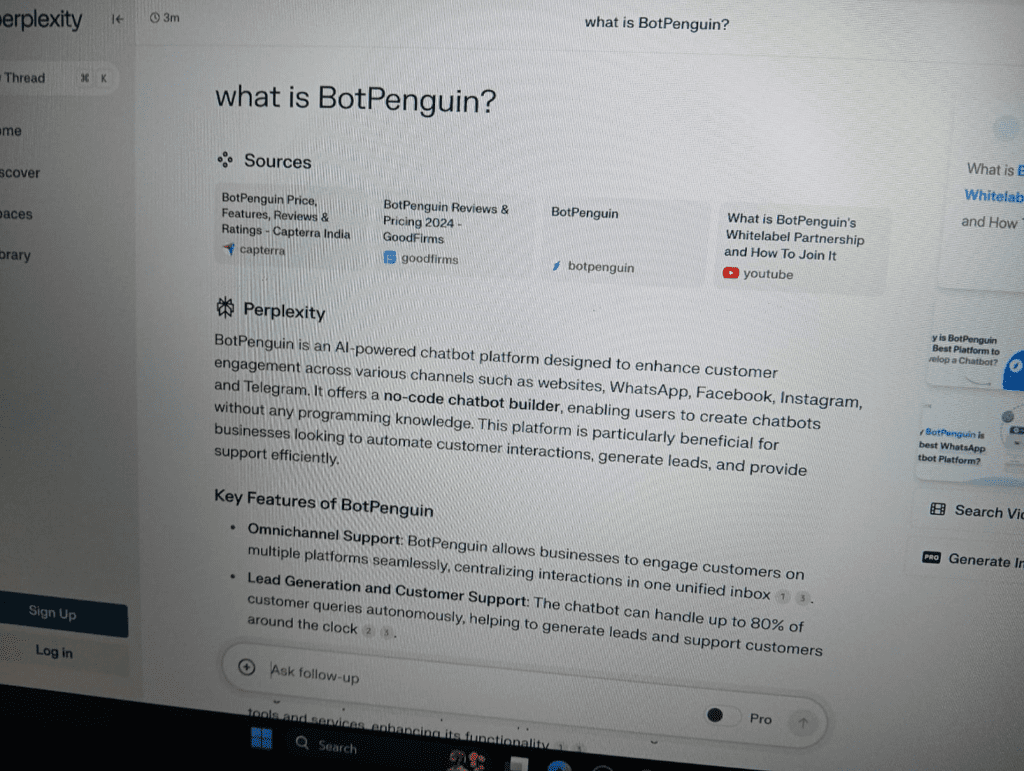
Unlike static chatbots, Perplexity:
- Grounds responses in live web data
- Shows citations
- Reduces hallucination risk
Best for:
- Fact-checking
- Market research
- News analysis
- Academic summaries
Experience
For research validation, I compared its responses with traditional search results. What I appreciated most was citation transparency. It reduced time spent cross-checking information manually. For quick, reliable research tasks, it feels more grounded than conversational-only AI tools.
6. Best AI for Coding
1. GitHub Copilot
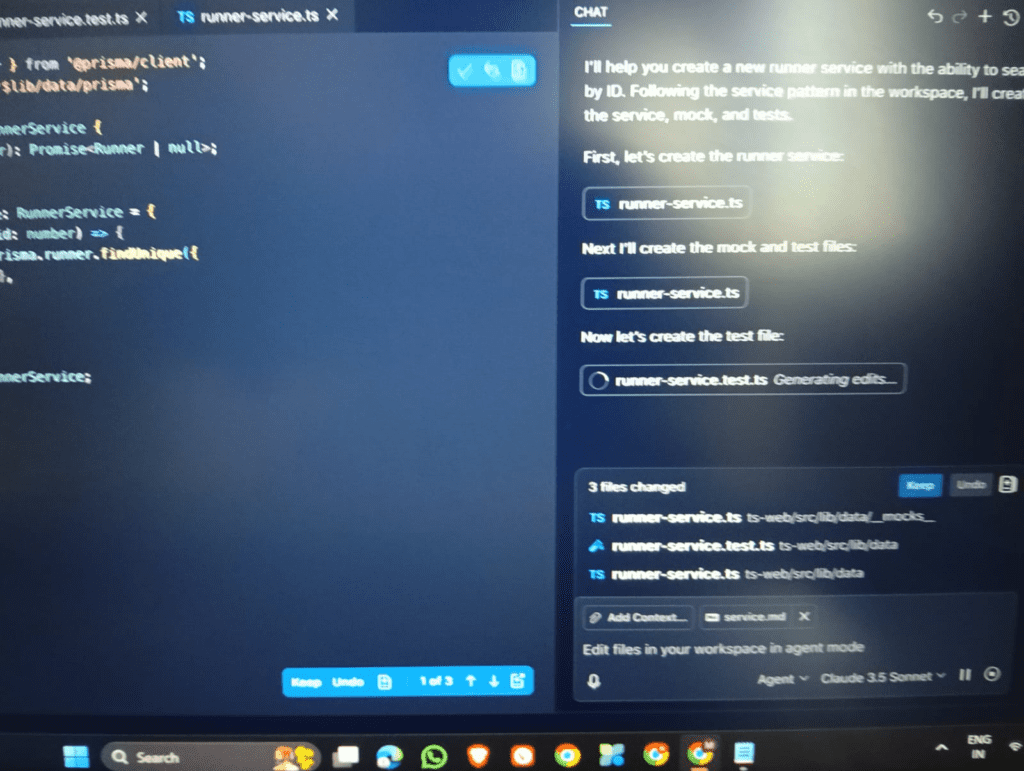
For developers:
- Suggests code in real-time
- Understands project context
- Speeds up debugging
- Supports multiple languages
Even beginner coders benefit from auto-suggestions and explanations.
Experience
While writing a small web app, Copilot reduced repetitive coding time significantly. It auto-completed functions accurately based on file context. For beginners, it also helps understand syntax patterns faster. However, manual review is still necessary for production-level deployment.
Decision Flow: Which AI Tool Should You Choose?
Ask yourself:
- Do you need general assistance? → ChatGPT
- Working with massive research documents? → Gemini 3 Pro
- Creating marketing visuals? → Nano Banana Pro
- Making cinematic video? → Veo 3.1
- Need cited research answers? → Perplexity
- Writing code daily? → Copilot
Choosing based on task saves money and increases productivity.
Why 2026 AI Tools Are Different from 2024–2025
The shift in 2026 includes:
- Massive context windows (2M+ tokens)
- Native multimodal integration
- Higher realism in video & images
- Improved reasoning layers
- Lower hallucination rates
- Better grounding to live data
AI tools are now infrastructure — not experiments.
Are These AI Tools Worth Paying For?
If you:
- Create content daily
- Run a business
- Study heavily
- Code professionally
Then yes — premium plans save time, which equals money.
For casual users, free plans are enough.
Final Thoughts
The best AI tool isn’t the most hyped one.
It’s the one that solves your problem efficiently.
Instead of trying everything:
- Pick one tool per category
- Master it
- Upgrade only when necessary
2026 is about intelligent usage — not tool hoarding.
FAQ
What is the most powerful AI tool in 2026?
For reasoning + versatility, ChatGPT 5.1 and Gemini 3 Pro lead the space.
What is the best AI image generator in 2026?
Nano Banana Pro currently leads in 4K reasoning-based output.
What is the best AI for video?
Google Veo 3.1 is the gold standard due to 4K + native audio generation.
Which AI is best for beginners?
ChatGPT remains the most beginner-friendly.
1 thought on “What Are the Best AI Tools by Category?”