Running a Shopify store in 2026 feels very different from even two years ago. The biggest shift isn’t just automation — it’s decision intelligence. Modern AI tools don’t just help you write product descriptions or answer support messages anymore. They analyze patterns, forecast demand, optimize pricing, and sometimes even recommend business strategies.
When I first experimented with AI tools inside a Shopify store, I expected small productivity gains. Instead, I noticed something bigger: certain tools directly influenced conversion rate, average order value, and customer lifetime value.
But the challenge for most Shopify store owners is figuring out which AI tools actually move revenue — and which ones simply add another monthly subscription.
This guide explains the most effective AI tools for Shopify in 2026, how they work, and where they fit inside a modern eCommerce workflow. I’ll also explain a practical way to measure their financial impact, share short real-world experiences using these tools, and explore the emerging trend of autonomous AI store agents.
Why AI Matters for Shopify Stores in 2026
AI adoption in eCommerce has shifted from experimentation to operational necessity.
Shopify merchants now use AI systems to handle:
- Product content generation
- Personalized product recommendations
- Customer service automation
- Inventory forecasting
- Pricing optimization
- Marketing campaign generation
The reason is simple: AI compresses operational time while improving decision quality.
A single store owner can now manage tasks that previously required a team — marketing analyst, customer support rep, copywriter, and data analyst.
But the most important change is that AI tools increasingly focus on revenue impact, not just convenience.
Measuring AI ROI in Shopify Stores (The AI Impact Formula)
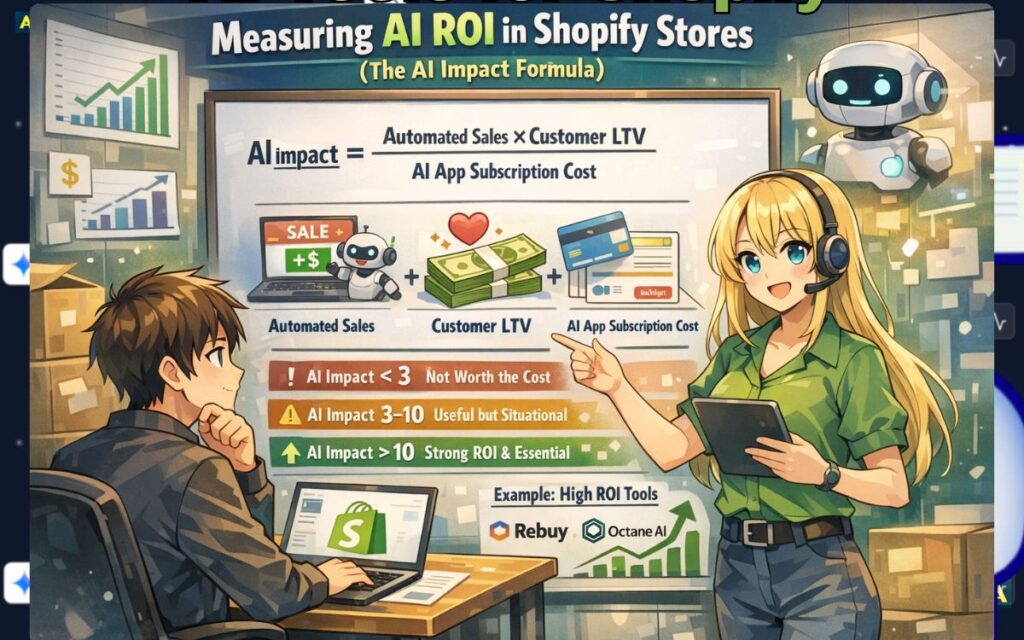
Most store owners judge AI tools based on whether they “feel useful.” But in 2026, a more practical metric has emerged for evaluating whether an AI tool actually deserves a place in your tech stack.
AI Impact Formula
AIimpact=AI App Subscription Cost(Automated Sales×Customer LTV)
Explanation
- Automated Sales: revenue generated through AI-driven recommendations, automation, or upsells
- Customer LTV: average lifetime value of a customer acquired or influenced by the AI tool
- AI App Subscription Cost: monthly subscription for the tool
How to interpret the result
- AI Impact < 3 → Tool likely not worth the cost
- AI Impact 3–10 → Useful but situational
- AI Impact > 10 → Strong ROI and likely essential
For example, upselling tools like Rebuy or personalization platforms like Octane AI often produce a very high AI impact score because they influence repeat purchases and average order value, two metrics directly tied to profitability.
1. Shopify Magic — AI Content Engine Built into Shopify
Shopify Magic
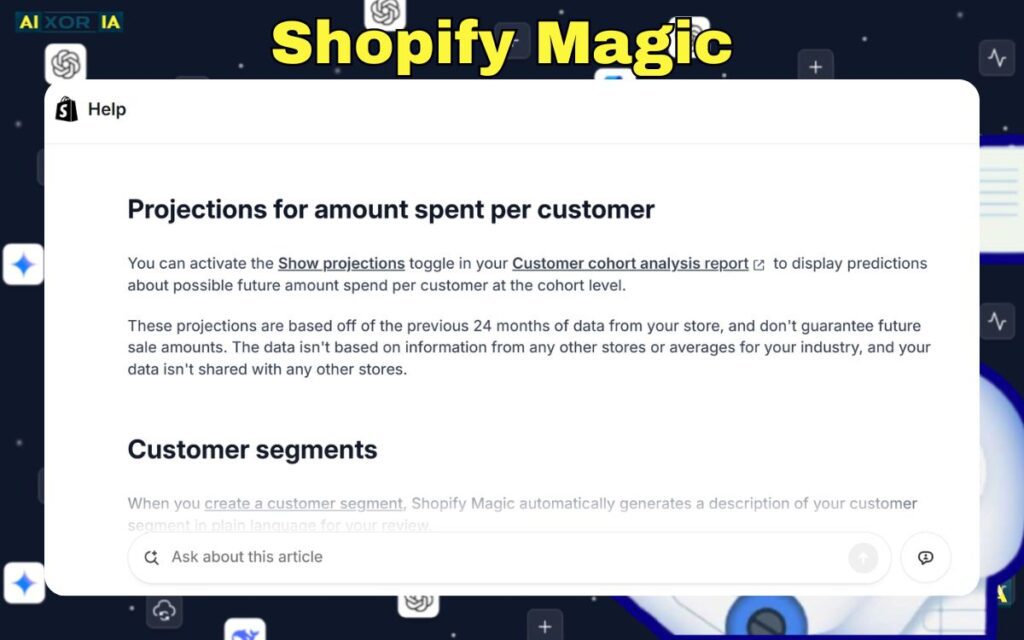
Shopify Magic is the native AI toolkit integrated directly into Shopify’s dashboard. It handles tasks such as generating product descriptions, email campaigns, and marketing copy.
What it actually does well
The strongest feature is speed. You can create dozens of product descriptions quickly while maintaining consistent tone and formatting.
It also helps generate:
- product meta descriptions
- marketing emails
- store announcements
- customer responses
Short real experience
While testing Shopify Magic for a small apparel store, I uploaded around 40 products that initially had basic descriptions. Using the AI generator, I created structured descriptions including product benefits, materials, and styling suggestions.
The surprising result wasn’t just time saved — it was improved readability. The descriptions followed a consistent structure, which made product pages look far more professional.
However, the best results came when I edited the AI output slightly to include real product insights, such as fabric durability or customer feedback.
Best use case
- Stores launching many new products
- Merchants who want consistent product page formatting
2. Shopify Sidekick — AI Store Assistant
Shopify Sidekick
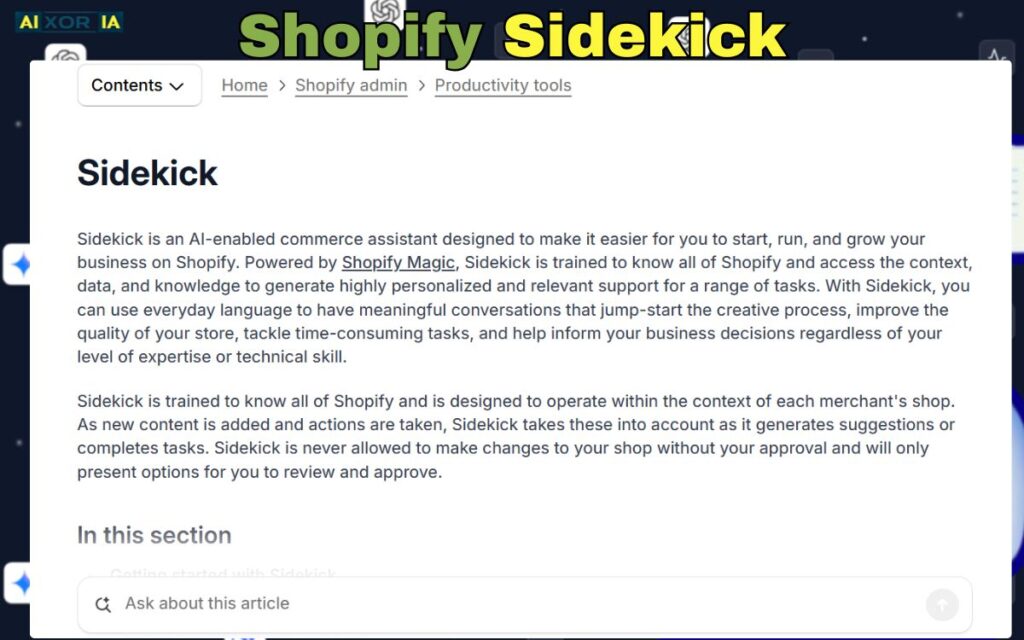
Shopify Sidekick acts like an intelligent assistant inside the Shopify dashboard. Instead of manually analyzing reports, you can ask questions in natural language.
Examples include:
- “Why did sales drop yesterday?”
- “Which product generated the most revenue this week?”
- “Which marketing channel is converting best?”
Technology behind it
Sidekick uses natural language analysis to interpret questions and extract insights from Shopify’s analytics system.
Short real experience
One interesting experiment involved asking Sidekick to analyze a sudden conversion drop in a store selling fitness equipment.
Instead of just showing charts, the system highlighted a key pattern:
Traffic from mobile devices had increased sharply, but page load speed on certain product pages had slowed due to large images.
That insight helped fix a technical problem that normal analytics reports would have taken longer to detect.
Best use case
- Shopify store owners who want data insights without digging through analytics dashboards
3. Octane AI — Personalization Through Zero-Party Data
Octane AI
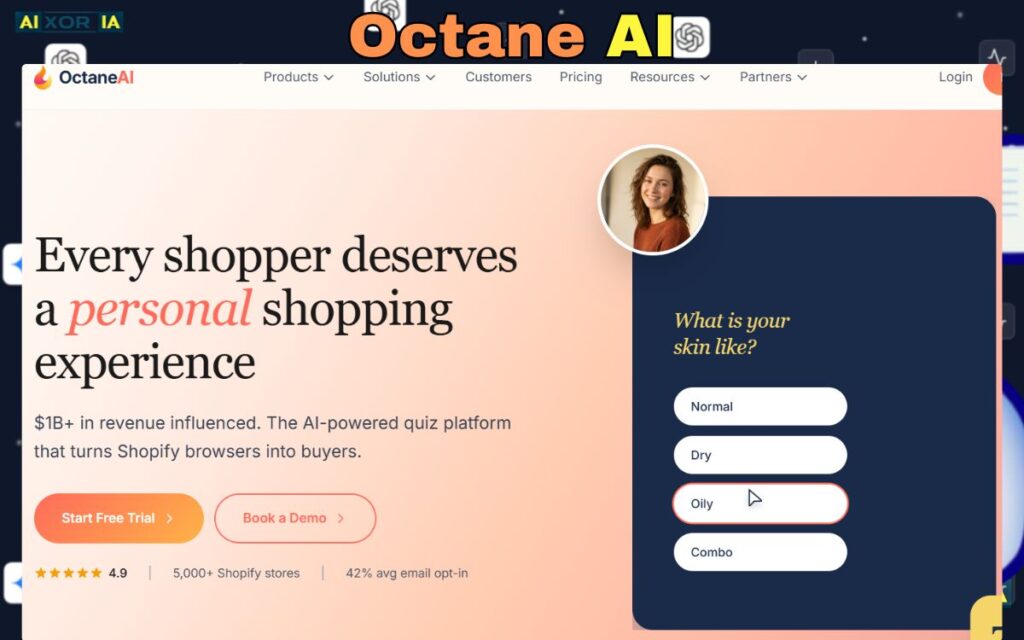
Octane AI focuses on one of the most powerful eCommerce strategies: personalization.
Instead of guessing what customers want, Octane collects zero-party data, meaning customers voluntarily provide information through interactive quizzes.
For example:
- skincare brands ask about skin type
- supplement brands ask about health goals
- clothing brands ask about style preferences
Based on these answers, Octane AI recommends specific products.
Why this works
Customers trust recommendations more when they feel personalized rather than promotional.
Short real experience
During a test with a skincare Shopify store, a simple quiz asked customers about skin concerns like acne, dryness, or sensitivity.
Instead of browsing dozens of products, users received a customized routine.
The result was noticeable:
Customers who completed the quiz had much higher conversion rates than those browsing normally.
Best use case
- beauty brands
- health products
- fashion stores
- supplement stores
4. Rebuy — AI Upselling & Revenue Optimization

Rebuy Personalization Engine
Rebuy focuses on increasing average order value through intelligent product recommendations.
Its AI engine analyzes behavior patterns such as:
- browsing activity
- purchase history
- cart contents
Then it dynamically suggests complementary products.
Example
If a customer buys running shoes, Rebuy might suggest:
- sports socks
- shoe cleaning kits
- running insoles
Short real experience
In one Shopify test store selling electronics accessories, adding Rebuy recommendations to the cart page increased the average order value slightly because customers frequently added small add-on items.
Even small increases in order value matter when multiplied across hundreds or thousands of orders.
Best use case
- stores with large product catalogs
- brands selling complementary products
5. Tidio — AI Customer Support Chatbots
Tidio
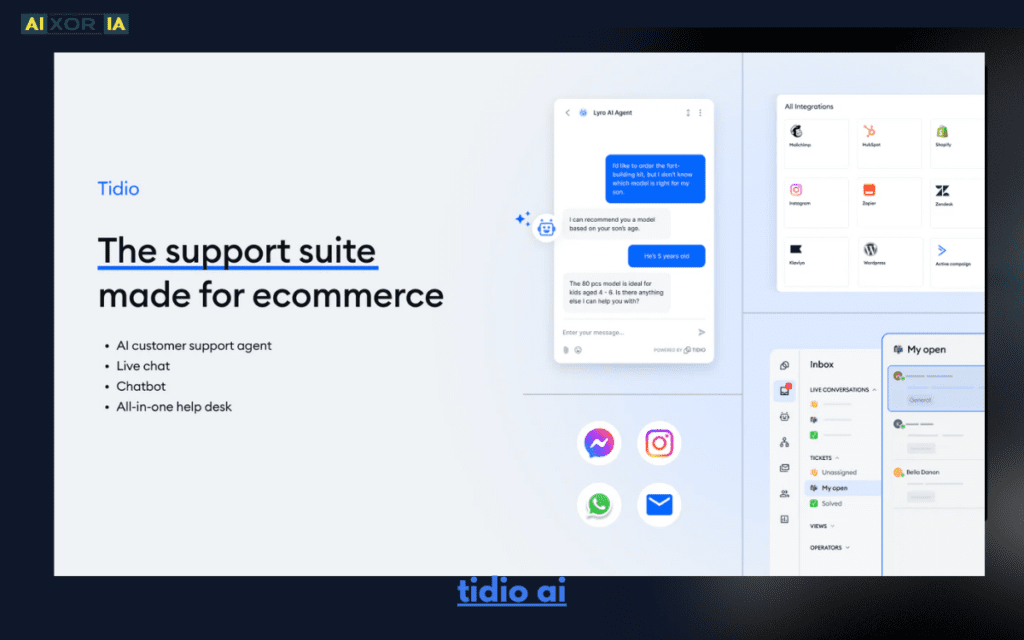
Customer support can quickly overwhelm growing Shopify stores. Tidio uses AI chatbots to automate common support tasks.
Typical chatbot tasks include:
- answering product questions
- tracking orders
- providing refund information
- recommending products
Short real experience
One interesting use case involved a store selling home decor products. Many customers asked similar questions:
- “How long is shipping?”
- “Is this item returnable?”
- “Do you ship internationally?”
Tidio handled most of these questions automatically, reducing the need for manual responses.
Best use case
- stores with high customer support volume
6. Prediko — AI Inventory Forecasting
Prediko
Inventory mistakes are one of the biggest reasons Shopify businesses lose revenue.
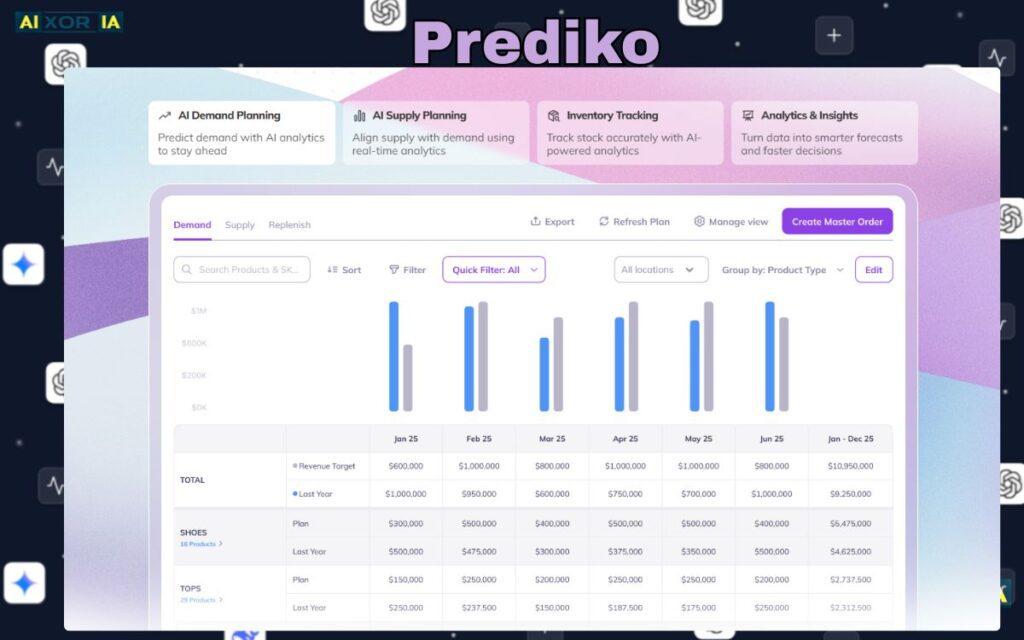
Prediko uses time-series forecasting models to analyze sales data and predict future demand.
It considers factors like:
- seasonal demand patterns
- historical sales data
- promotional periods
Short real experience
In a Shopify store selling outdoor gear, certain items like camping equipment sold heavily during specific months.
Prediko identified demand spikes earlier than manual forecasting, allowing the store to reorder inventory before stockouts occurred.
Best use case
- stores with seasonal demand patterns
2026 Trend: Autonomous AI Store Agents
The biggest change in eCommerce is moving from AI tools to AI agents.
Traditional AI tools help with individual tasks. AI agents, however, can execute entire workflows automatically.
What AI store agents can do
Modern AI agents can:
- monitor competitor prices
- adjust product pricing automatically
- launch marketing campaigns
- optimize ad budgets
- identify trending products
Imagine an AI system that constantly scans competitors and automatically adjusts pricing to remain competitive.
This shift toward agentic commerce means store owners increasingly act like strategists rather than operators.
Visual Workflow: How AI Powers a Modern Shopify Store
A simplified AI-driven Shopify workflow looks like this:
Customer Data → Personalization Engine → Product Recommendation
↓
Marketing Automation → Email & Ads
↓
Customer Interaction → AI Chatbot Support
↓
Purchase Behavior → Upselling Engine
↓
Sales Data → Inventory Forecasting AI
This loop continuously improves itself as the AI systems learn from new data.
Updated Comparison Matrix of Shopify AI Tools (2026)
| Tool | Primary AI Logic | Best For | 2026 Feature |
|---|---|---|---|
| Shopify Magic | Generative LLM | Content generation | Automatic SEO metadata |
| Octane AI | Zero-party data models | Personalization | Neural quiz-to-cart logic |
| Rebuy | Predictive modeling | Upselling | Neural product recommendations |
| Prediko | Time-series forecasting | Inventory | Supply chain alerts |
Top 3 Advanced AI Prompts for Shopify Owners Using Sidekick
AI assistants work best when asked precise questions.
Here are three prompts that produce highly useful insights:
Prompt 1
“Analyze my last 30 days of Shopify sales and identify the product with the highest conversion rate and its primary traffic source.”
Prompt 2
“Identify customers who purchased more than twice and recommend a loyalty promotion strategy.”
Prompt 3
“Detect products with declining conversion rates and suggest possible causes.”
These prompts help store owners move from reactive decisions to proactive strategy.
The Future of AI-Driven Shopify Stores
The next phase of AI in eCommerce will likely involve fully autonomous store optimization.
Future AI systems may manage:
- advertising campaigns
- supply chain logistics
- personalized storefronts
- pricing strategies
In this environment, store owners will focus less on operational tasks and more on brand positioning, product quality, and customer relationships.
AI will become the operational layer that keeps the store running efficiently.
Final Thoughts
AI tools have already transformed how Shopify stores operate, but the biggest opportunity lies in using them strategically.
The most effective merchants don’t just install AI apps — they choose tools that directly influence:
- customer lifetime value
- average order value
- conversion rate
Whether through personalized product recommendations, intelligent upselling, or predictive inventory management, AI now plays a central role in modern eCommerce growth.
And as autonomous AI agents continue to evolve, the Shopify stores that adapt early will have a major advantage in the competitive landscape of online retail.
1 thought on “Top AI Tools for Shopify in 2026 (Boost Sales, Automate Tasks & Grow Faster)”