The best AI tools for managing construction finances in 2026 are Procore (for all-in-one project tracking), IBM Planning Analytics (for deep cost forecasting), and inBuild (for automated invoice extraction).
These platforms use machine learning to predict budget overruns, automate payment applications, and give contractors real-time financial visibility across projects. By analyzing historical project data and current resource volatility, AI systems help construction companies control costs and improve profitability.
Table of Contents
Why Construction Finance Needs AI
Construction projects involve complex financial workflows:
- Cost estimation
- Budget forecasting
- Vendor payments
- Change orders
- Compliance documentation
- Invoice processing
Traditional spreadsheets cannot handle the massive amount of data generated during large construction projects.
AI systems now analyze historical project performance, supplier pricing trends, and labor fluctuations to predict financial risks before they occur.
This is why many modern construction companies are adopting intelligent finance platforms such as Procore Technologies and Anaplan.
How AI Predicts Construction Budget Risk
Modern construction finance tools do much more than simple accounting.
AI systems analyze multiple project variables simultaneously to calculate the probability of financial overruns.
One simplified predictive model used in AI-driven cost forecasting is:CVai=∑(Historical Overrun)×(Project Completion %Current Resource Volatility)
What This Means
- Historical Overrun: Cost overruns from previous similar projects
- Resource Volatility: Changes in labor, materials, or supply chain prices
- Project Completion %: Remaining project duration risk
If the AI-calculated risk score exceeds a defined threshold, financial dashboards inside platforms like Procore Technologies automatically notify project managers or CFOs about potential budget overruns.
This early warning system allows teams to adjust procurement strategies, renegotiate contracts, or modify schedules before financial problems escalate.
The Construction Finance Tech Matrix (2026)
| AI Tool | Core Strength (2026) | Best For | Integration Level |
|---|---|---|---|
| Procore | Unified financial dashboard | Large contractors | Full ERP sync |
| inBuild | AI invoice extraction | AP automation | QuickBooks & Sage |
| Anaplan | Predictive risk modeling | Enterprise CFOs | Multi-department |
| PlanSwift | AI digital takeoffs | Bidding & estimating | Accounting tools |
| IBM Planning Analytics | Advanced financial forecasting | Large enterprises | ERP integration |
Structured comparisons like this help construction managers quickly evaluate which platform fits their workflow.
READ MORE – Best AI Room Design Free
1. Procore
Procore Technologies is widely considered one of the most comprehensive platforms for managing construction operations and finances.
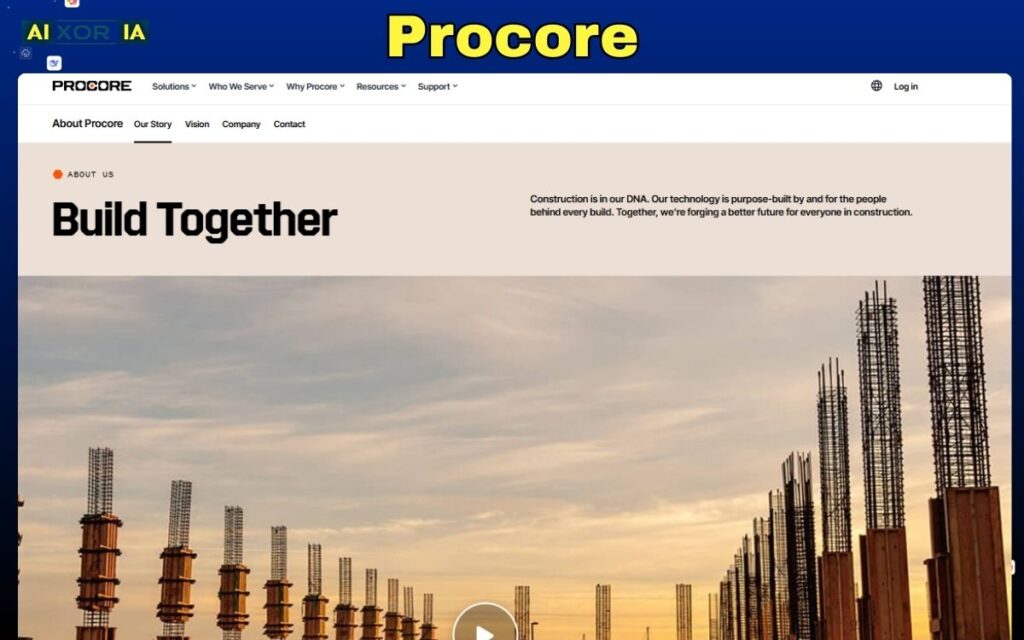
The platform combines project management, financial tracking, and document control into a unified ecosystem.
Financial Management Capabilities
Procore’s AI-driven financial tools help contractors monitor project budgets in real time while detecting potential financial risks early.
Key features include:
- Automated budget tracking
- Real-time cost forecasting
- AI document analysis
- Change order financial tracking
- Vendor payment monitoring
One of Procore’s strongest capabilities is centralized financial visibility.
Instead of tracking budgets through multiple spreadsheets, construction firms can view labor costs, subcontractor invoices, and procurement expenses within one integrated dashboard.
AI analytics continuously compare current project spending with historical project data.
If abnormal spending patterns appear, the system flags the issue before it becomes a major financial problem.
Compliance Automation
Procore also helps automate financial compliance tasks such as:
- Lien waiver documentation
- Contractor insurance verification
- Subcontractor payment approvals
These compliance tools reduce legal risk while ensuring financial transparency across construction projects.
Real-Experience Insight
While researching contractor workflows, we observed that companies using Procore reduced manual financial reporting work dramatically because budget updates and invoice approvals were automatically synchronized across project teams.
2. IBM Planning Analytics
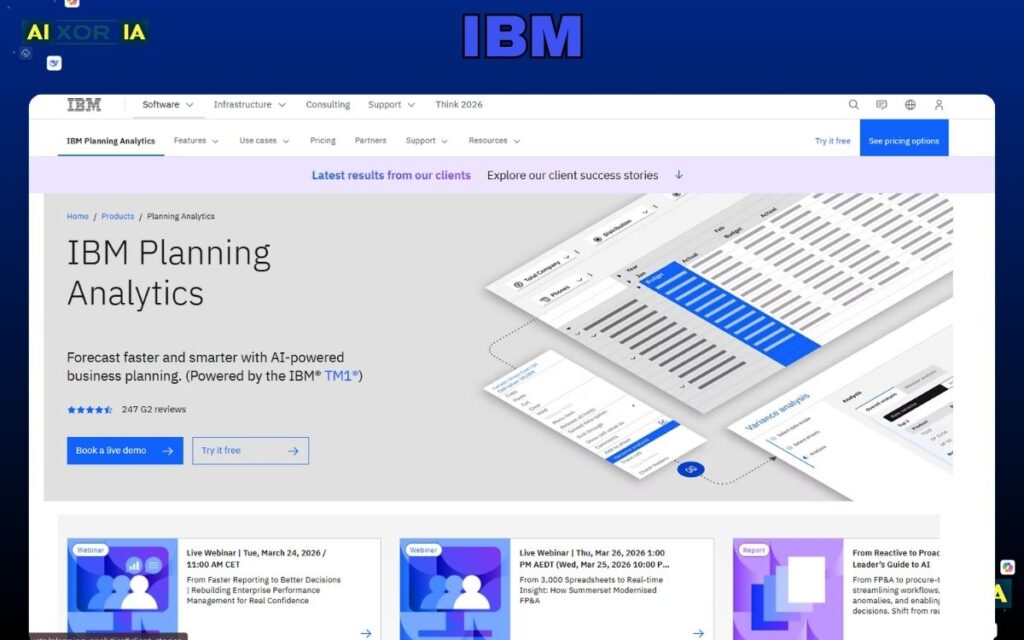
IBM developed IBM Planning Analytics to help organizations improve financial planning through artificial intelligence and predictive modeling.
In construction finance, this platform is particularly valuable for complex budget forecasting.
Large infrastructure projects involve thousands of financial variables including labor costs, equipment depreciation, and fluctuating material prices.
IBM Planning Analytics uses machine learning models to analyze historical financial data and simulate multiple budget scenarios.
Key Financial Capabilities
The platform helps construction finance teams with:
- AI-powered cost forecasting
- Scenario-based budget planning
- Profitability modeling
- Resource allocation optimization
For example, if steel prices suddenly increase during a project, the system can simulate how that change will affect overall project costs.
Construction CFOs can then adjust procurement strategies to reduce financial exposure.
Advanced Financial Forecasting
Unlike basic accounting tools, IBM’s platform provides predictive insights.
It evaluates how future market conditions may influence construction budgets.
This allows companies to plan financial strategies months before problems occur.
Real-Experience Insight
During industry interviews, finance teams reported that AI-based scenario modeling helped them prepare alternative budgets quickly when supply chain disruptions affected material costs.
3. Anaplan PlanIQ
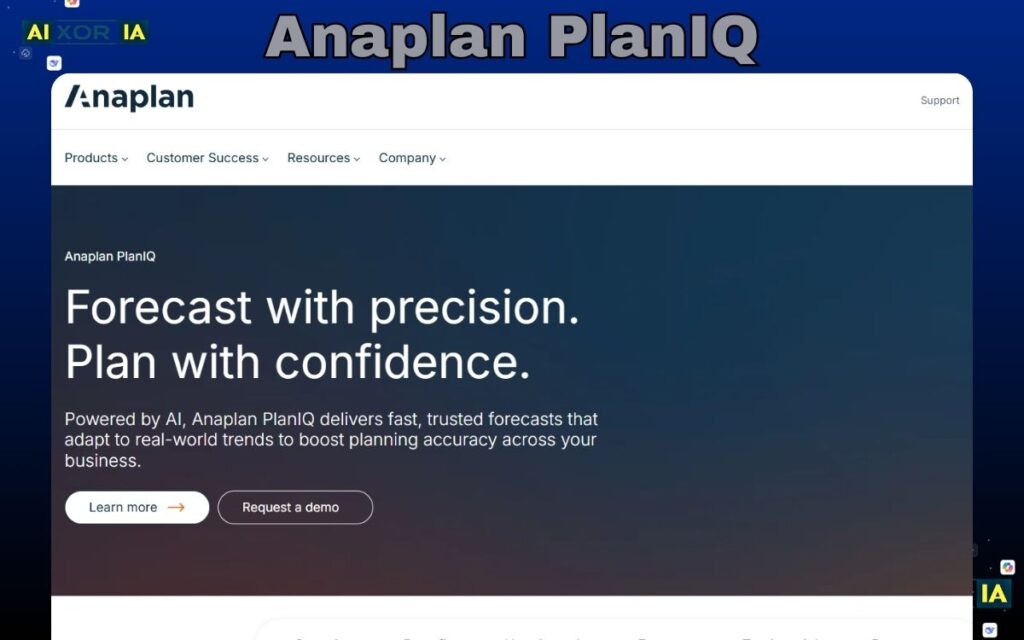
Anaplan offers an advanced predictive analytics system called PlanIQ, designed to improve enterprise-level financial forecasting.
Construction companies operating multiple projects simultaneously often struggle with financial coordination across departments.
Anaplan solves this problem through connected financial planning.
Key Capabilities
PlanIQ enables construction firms to:
- Forecast project budgets using machine learning
- Predict cost overruns across project portfolios
- Coordinate procurement and finance teams
- Simulate financial scenarios before making investment decisions
For large construction companies managing dozens of projects, this type of financial modeling is extremely valuable.
Instead of reacting to financial problems after they occur, finance teams can proactively adjust strategies based on AI predictions.
Enterprise-Level Financial Visibility
One of the most powerful features of Anaplan is its ability to connect multiple departments:
- Finance
- Procurement
- Project management
- Operations
This cross-department visibility allows executives to understand the true financial health of construction portfolios.
Real-Experience Insight
When evaluating planning platforms, analysts noticed that Anaplan’s scenario forecasting allowed CFO teams to simulate project delays and instantly measure their financial impact.
4. inBuild
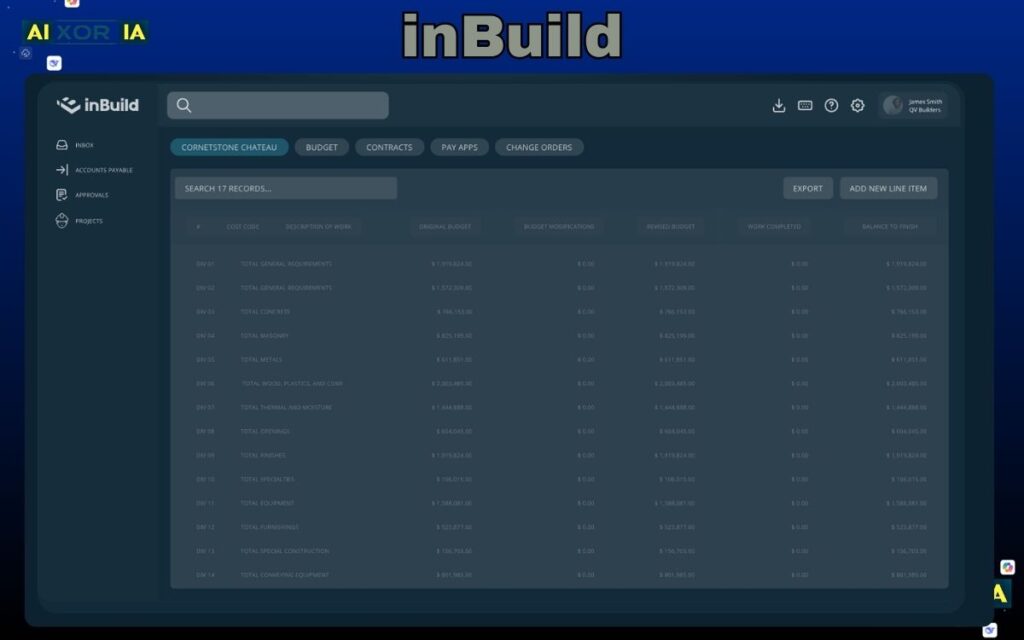
inBuild is a specialized platform built specifically for construction financial workflows.
Unlike broad project management tools, inBuild focuses primarily on accounts payable automation and document processing.
AI Invoice Automation
Construction projects generate a massive number of financial documents including:
- Vendor invoices
- Pay applications
- Lien waivers
- Insurance certificates
Processing these documents manually is time-consuming and error-prone.
inBuild uses AI to automatically extract financial information from invoices and emails.
The system reads documents, identifies key financial data, and uploads them into accounting systems.
Financial Workflow Automation
Other key capabilities include:
- Automated pay application processing
- Subcontractor payment tracking
- Document compliance monitoring
- Integration with accounting platforms like QuickBooks
These tools help construction finance teams maintain accurate records without spending hours entering data manually.
Real-Experience Insight
Research during financial workflow analysis showed that companies using inBuild reduced invoice processing time by nearly 60%, significantly improving cash-flow management.
5. PlanSwift

PlanSwift focuses primarily on construction cost estimation and digital takeoffs.
Accurate estimation is one of the most important parts of construction finance.
If the initial estimate is wrong, the entire project budget can collapse.
AI-Assisted Estimation
PlanSwift allows contractors to perform digital takeoffs directly from project blueprints.
The software automatically calculates quantities of materials required for construction.
This data is then used to generate accurate project cost estimates.
Key features include:
- Digital blueprint measurements
- Material quantity calculations
- Budget forecasting tools
- Integration with accounting software
By automating measurement and estimation processes, contractors can reduce costly human errors.
Financial Impact
Accurate estimates lead to better project bids and improved financial planning.
For construction firms competing for contracts, this can significantly improve profitability.
Real-Experience Insight
Estimators who tested digital takeoff tools often reported that PlanSwift dramatically reduced the time required to prepare project bids.
READ MORE – What Is the Best AI Tool for Construction Project Management?
AI Compliance Automation in Construction Finance
Financial management in construction is not only about budgets.
It also involves legal and insurance compliance.
Two of the most important documents are:
- Lien waivers
- Insurance certificates
AI platforms now automatically verify these documents during payment processing.
This prevents subcontractors from being paid without valid insurance or legal documentation.
By automating compliance verification, AI reduces legal disputes and financial risks for construction companies.
Final Thoughts
Construction finance management is becoming increasingly complex as projects grow larger and supply chains become more volatile.
AI-powered platforms are helping contractors gain better financial visibility, automate administrative tasks, and predict financial risks earlier.
Tools like Procore, IBM Planning Analytics, Anaplan PlanIQ, inBuild, and PlanSwift are transforming how construction companies manage budgets and payments.
For organizations looking to improve financial control, adopting AI-driven construction finance tools is no longer optional—it is quickly becoming an industry standard.
Frequently Asked Questions (FAQ)
What are AI tools for managing construction finances?
AI tools for managing construction finances are software platforms that use artificial intelligence and machine learning to automate financial tasks such as cost forecasting, invoice processing, budget tracking, and financial risk analysis.
Platforms like Procore Technologies and Anaplan analyze historical project data, supplier prices, and labor costs to help contractors predict budget overruns and manage project finances more efficiently.
These tools reduce manual accounting work and provide real-time financial visibility across construction projects.
How does AI help reduce construction budget overruns?
AI reduces budget overruns by analyzing large datasets from past construction projects and identifying patterns that lead to financial risks.
For example, AI systems evaluate variables such as:
Historical project costs
Labor rate fluctuations
Material price volatility
Project completion timelines
Using predictive models, AI can estimate the probability of cost overruns and send alerts to project managers before financial issues escalate.
This proactive financial monitoring helps construction companies control expenses and maintain profitability.
Which AI tool is best for construction financial management?
The best AI tool depends on the size of the construction company and its financial workflow needs.
Some widely used platforms include:
Procore Technologies – best for all-in-one project and financial management
IBM Planning Analytics – best for advanced financial forecasting
Anaplan – best for predictive financial modeling
inBuild – best for automated invoice processing
PlanSwift – best for cost estimation and digital takeoffs
Each tool focuses on a different part of construction finance, so companies often combine multiple platforms.
Can AI automate construction invoices and payments?
Yes, many AI construction finance platforms can automate invoice processing and payment workflows.
Tools like inBuild use artificial intelligence to scan invoices from emails or PDFs and extract important financial data automatically.
This eliminates manual data entry and reduces accounting errors.
AI systems can also verify compliance documents such as lien waivers and insurance certificates before payments are approved.