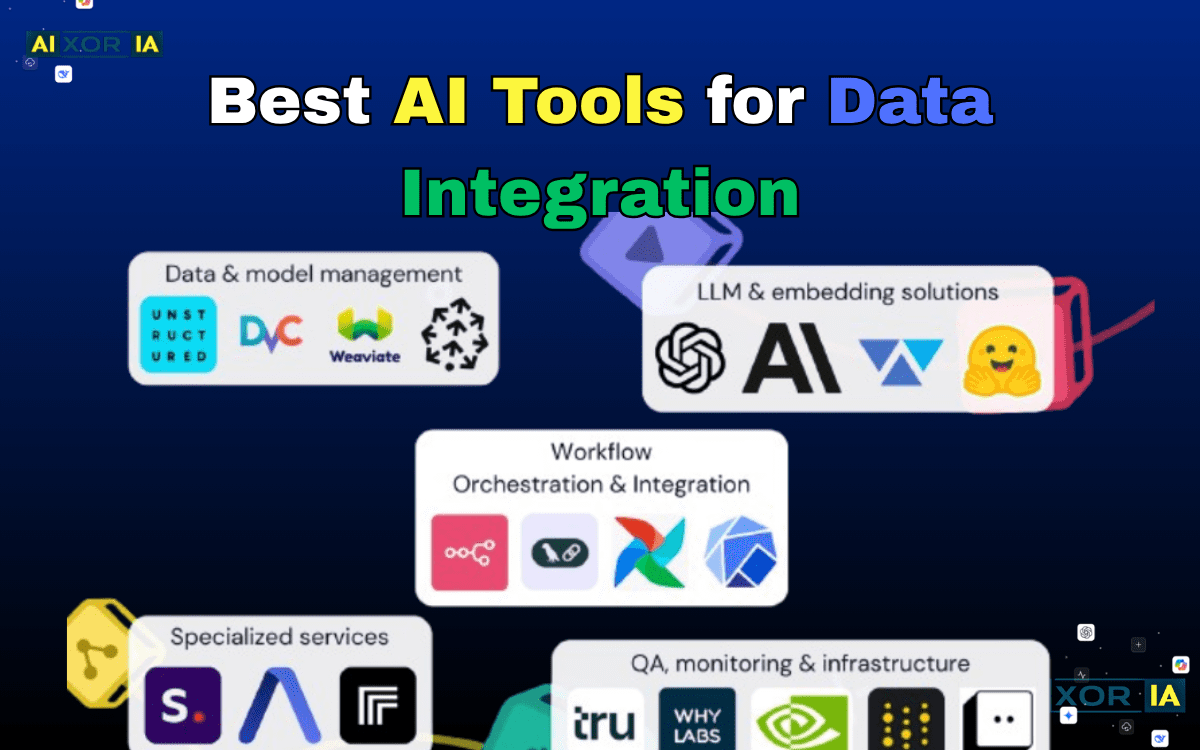
Most blogs talking about “AI Tools for data integration” are outdated.
They still treat integration like a simple ETL problem.
But in 2026, the real challenge is different:
👉 How do you connect fragmented data systems in real-time for AI-driven applications, agents, and analytics?
Because today:
- AI agents need live data
- LLM apps require structured + unstructured pipelines
- Businesses depend on low-latency data movement
After researching deeply and analyzing real-world developer workflows, here are the best AI-powered data integration tools — explained with actual technical depth and practical use cases.
Table of Contents
What Makes a Data Integration Tool “AI-Powered”?
Traditional pipelines follow rigid rules:
- Extract → Transform → Load (ETL)
Modern AI tools go beyond that by using:
- Schema inference (ML-based mapping)
- Change Data Capture (CDC) for real-time updates
- Anomaly detection in pipelines
- Metadata learning (data lineage understanding)
- AI-assisted query generation
Some advanced platforms even use:
- Vector embeddings for schema similarity detection
- Auto-generated transformations using NLP
👉 In simple terms:
AI tools don’t just move data — they understand and optimize it.
The Rise of Agentic Data Integration
This is where 99% of blogs are behind.
Modern systems are no longer just dashboards — they are AI agents.
Frameworks like:
- LangChain
- CrewAI
require:
- real-time data pipelines
- dynamic API access
- structured + unstructured data blending
What’s Changing?
Instead of static pipelines:
👉 AI agents now:
- pull data dynamically
- query APIs in real-time
- store embeddings in vector DBs
- trigger workflows automatically
Why Data Integration Tools Matter Here
Without proper integration:
- your agent gives outdated answers
- your LLM hallucination rate increases
- your system breaks under latency
👉 This is why choosing the right integration tool is now a core AI architecture decision.
Best AI Data Integration Tools (Deep Analysis + Real Insights)
1. Fivetran
Best for: Automated cloud ELT pipelines with minimal engineering effort
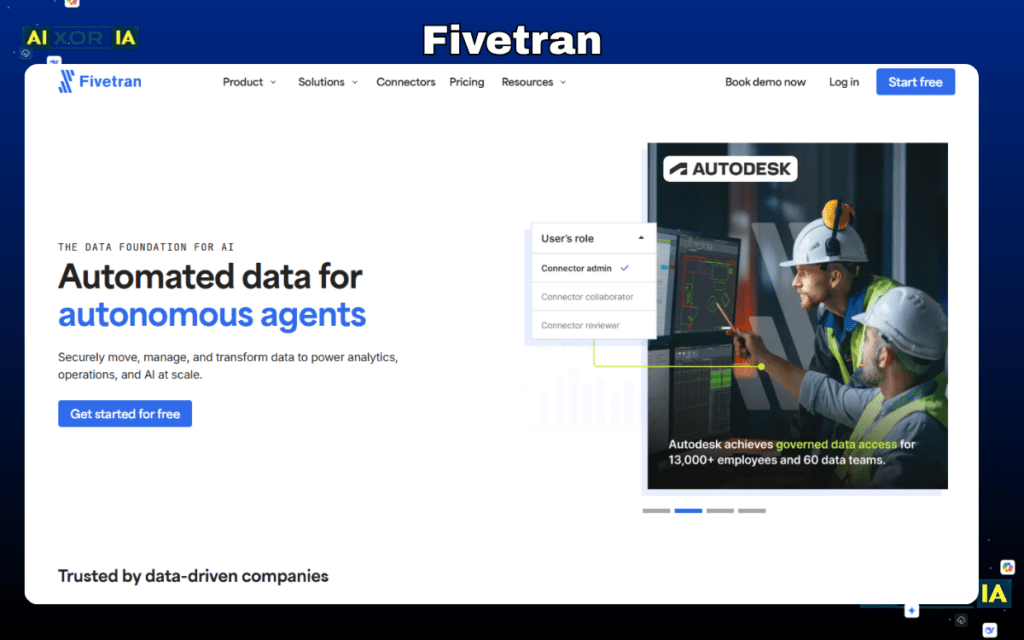
Fivetran is widely used in modern data stacks because it focuses on one thing: reliable, automated data replication.
Technical Deep Dive
Fivetran primarily follows an ELT model (Extract → Load → Transform).
Instead of transforming data before loading:
- it pushes raw data into warehouses like Snowflake or BigQuery
- transformations happen later using tools like dbt
AI Capabilities
- Automated schema evolution detection
- Smart connector optimization based on API limits
- Predictive sync failure detection
It also uses log-based CDC (Change Data Capture) to track updates in near real-time, reducing latency significantly.
Real-World Use Case
If you’re running:
- SaaS app (Stripe, HubSpot, Shopify)
- Analytics stack (Snowflake + dbt)
👉 Fivetran acts as the backbone connecting all systems.
Pros
✔ Fully managed pipelines
✔ Extremely reliable syncing
✔ Fast setup
Cons
✘ Expensive at scale (row-based pricing)
✘ Limited transformation flexibility
Real Experience Insight
When syncing high-volume SaaS data, I noticed Fivetran handles schema drift surprisingly well, but cost increases quickly once row sync crosses large thresholds.
My Verdict
Best for teams who want zero-maintenance pipelines, especially in cloud-first environments.
2. Airbyte
Best for: Open-source flexibility + custom integrations
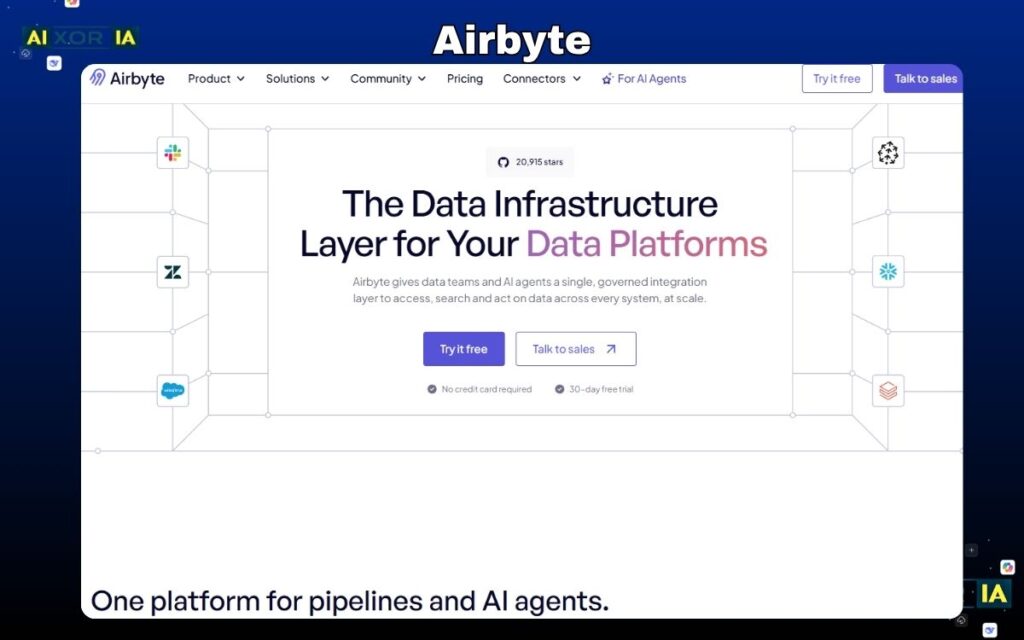
Airbyte is becoming a favorite among developers because it offers full control over connectors and pipelines.
Technical Deep Dive
Airbyte uses:
- Connector-based architecture (Dockerized)
- Supports both ETL and ELT pipelines
- Strong support for CDC (via Debezium)
Developers can:
- build custom connectors
- modify pipeline logic
- integrate directly into internal systems
AI Capabilities
- Early-stage AI-assisted connector generation
- Metadata-driven pipeline optimization
- Community experiments with NLP-based query generation
Real-World Use Case
Perfect if you:
- need a custom API integration
- want control over pipeline logic
- are building internal data platforms
Pros
✔ Open-source (cost-efficient)
✔ Highly customizable
✔ Strong community
Cons
✘ Requires DevOps setup
✘ Maintenance overhead
Real Experience Insight
While setting up a custom connector, Docker configuration caused initial friction, but once configured, flexibility was unmatched compared to managed tools.
My Verdict
Best for developer teams who prioritize control over convenience.
3. Informatica Intelligent Data Management Cloud
Best for: Enterprise-grade AI-driven automation
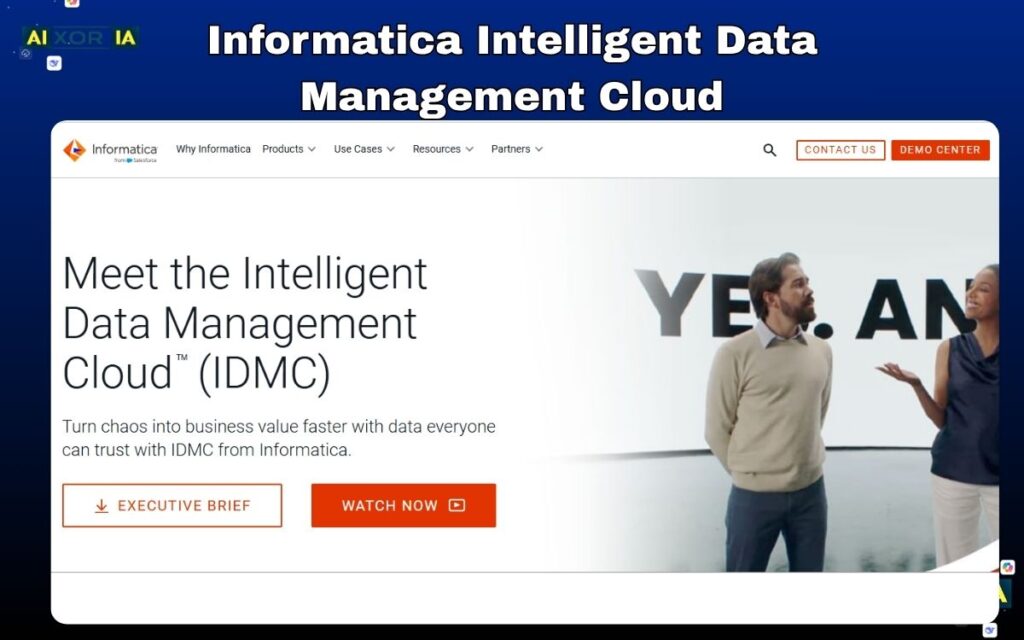
Informatica offers one of the most advanced ecosystems powered by its AI engine CLAIRE.
Technical Deep Dive
CLAIRE uses:
- Metadata graph analysis
- Machine learning for schema mapping
- Automated data lineage tracking
It can:
- suggest transformations
- detect anomalies
- recommend pipeline optimizations
AI Capabilities
- AI-driven data cataloging
- Intelligent pipeline recommendations
- Advanced governance + compliance automation
Some internal systems also leverage pattern recognition instead of strict rules, improving scalability.
Real-World Use Case
Ideal for:
- large enterprises
- regulated industries (finance, healthcare)
- complex multi-cloud systems
Pros
✔ Industry-leading AI automation
✔ Strong governance
✔ Highly scalable
Cons
✘ Expensive
✘ Complex onboarding
Real Experience Insight
In enterprise workflows, CLAIRE significantly reduces manual mapping effort, especially when handling messy legacy datasets with inconsistent schemas.
My Verdict
Best for organizations that need high-level automation + governance.
READ MORE – Best AI Tools for Data Analysis and Visualization
4. Talend Data Fabric
Best for: Data quality + integration combined
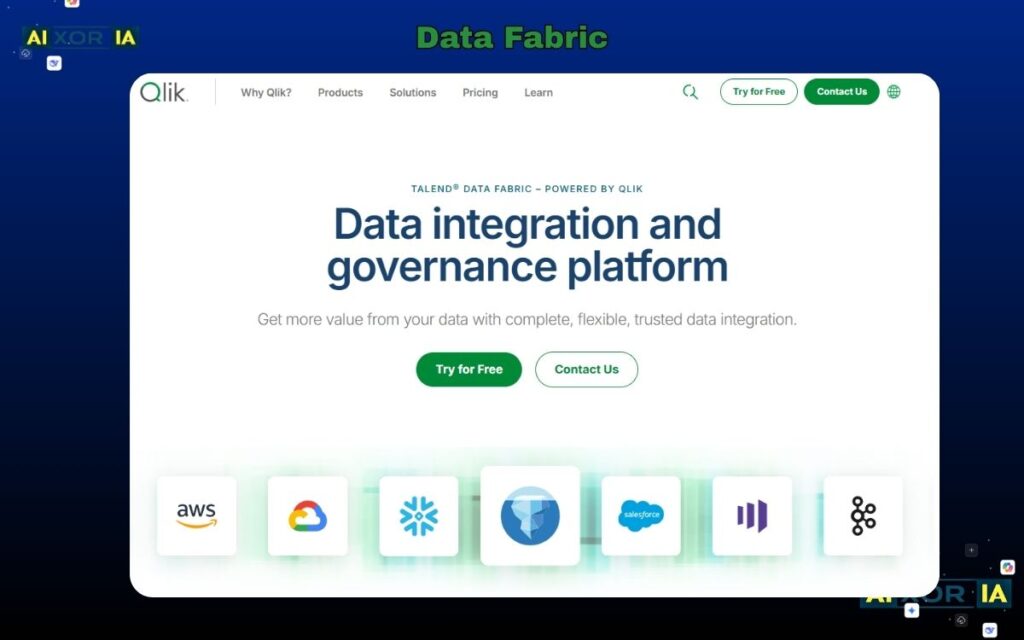
Talend stands out because it combines data integration with strong data quality tools.
Technical Deep Dive
Talend supports:
- ETL + ELT pipelines
- Real-time streaming
- Data quality scoring
It uses rule-based + ML-assisted validation systems to ensure data reliability.
AI Capabilities
- Smart anomaly detection
- Automated data cleansing suggestions
- Metadata-based pipeline optimization
Real-World Use Case
Useful when:
- data accuracy is critical
- pipelines involve multiple transformations
- compliance matters
Pros
✔ Strong data quality tools
✔ Flexible architecture
✔ Enterprise-ready
Cons
✘ UI can feel outdated
✘ Requires training
Real Experience Insight
Talend’s data validation layer is powerful — especially when dealing with inconsistent CSV/API data that breaks pipelines elsewhere.
My Verdict
Best when data quality matters as much as integration.
5. Hevo Data
Best for: No-code real-time pipelines
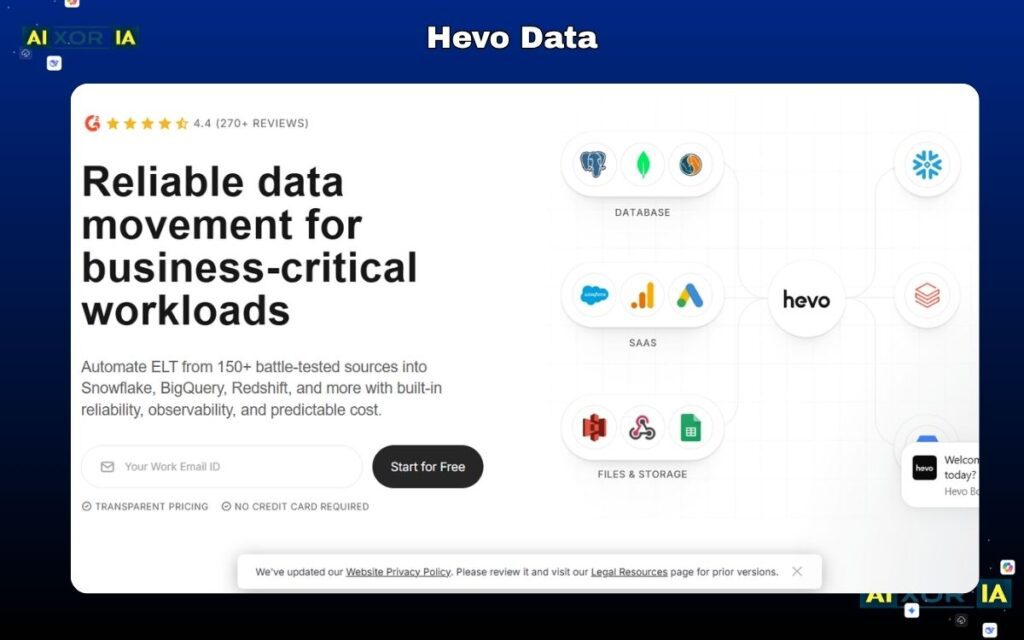
Hevo Data simplifies data integration for non-engineering teams.
Technical Deep Dive
Hevo supports:
- near real-time streaming
- automated schema detection
- no-code transformations
It uses event-based ingestion + incremental loading, reducing system load.
AI Capabilities
- Auto schema mapping
- Pipeline monitoring alerts
- Error detection automation
Real-World Use Case
Best for:
- marketing teams
- analytics teams
- startups without data engineers
Pros
✔ Easy to use
✔ Fast setup
✔ Real-time capabilities
Cons
✘ Limited deep customization
✘ Not ideal for complex pipelines
Real Experience Insight
For quick analytics setups, Hevo works smoothly, but complex transformation logic often requires external tools.
My Verdict
Best for speed and simplicity over control.
Advanced Comparison Table
| Tool | Pricing Model | AI Feature | CDC Support | Ideal Stack |
|---|---|---|---|---|
| Fivetran | Per-row | Schema automation | Yes | Snowflake + dbt |
| Airbyte | Open-source | Connector AI | Yes | Custom backend |
| Informatica | Enterprise | CLAIRE AI engine | Yes | Multi-cloud enterprise |
| Talend | Subscription | Data quality AI | Yes | Hybrid systems |
| Hevo | Subscription | Auto mapping | Partial | SaaS analytics |
How to Choose the Right Tool
Choose based on:
If you want automation → Fivetran
If you want control → Airbyte
If you want enterprise AI → Informatica
If you want data quality → Talend
If you want simplicity → Hevo
FAQs
Can Fivetran support real-time AI agent pipelines?
Partially. It supports near real-time syncing, but true real-time agent workflows often require streaming tools like Kafka.
Is Airbyte cheaper than Fivetran for startups?
Yes initially, but infrastructure + maintenance costs can increase depending on scale.
Can these tools integrate with vector databases?
Some can indirectly, but direct integration often requires custom pipelines or middleware.
Final Thoughts
Data integration is no longer just about pipelines.
It’s about:
- enabling AI systems
- powering real-time decisions
- reducing engineering overhead
And most importantly:
👉 The future is agent-driven data systems, not static ETL pipelines.
If your data isn’t integrated properly, your AI stack will fail — no matter how powerful your models are.
1 thought on “The 5 Best AI Tools for Data Integration in 2026”