In 2026, ranking on Google.ca alone is no longer enough.
Your brand visibility now depends on how Large Language Models (LLMs) like:
- Google (AI Overviews / Gemini)
- OpenAI (ChatGPT)
- Anthropic (Claude)
- Perplexity AI
interpret, cite, summarize, and recommend your content.
And Canada is not just another market.
It is:
- Bilingual (English + French)
- Privacy-regulated (PIPEDA)
- Regionally segmented (Ontario ≠ Quebec ≠ BC)
- Increasingly AI-driven in B2B discovery
Most global blogs ignore these realities.
This guide does not.
The Canadian Reality: AI Visibility ≠ Traditional SEO
In classic SEO:
- You tracked rankings
- You built backlinks
- You optimized pages
In AI Search:
- You track citations
- You measure entity dominance
- You analyze prompt-level inclusion
- You monitor bilingual answer variation
That is a completely different game.
And if you’re not measuring it — you’re invisible.
A Real Experience (Why I Care About This)
In late 2025, I tested AI visibility for a Toronto-based SaaS client in the legal tech niche.
We ranked #3 on Google.ca.
But when we ran 120 category prompts across ChatGPT and Gemini:
- We were cited only 6 times.
- Competitor (lower organic ranking) was cited 28 times.
That changed how I approach SEO forever.
Search rankings ≠ AI authority.
That’s when I started using structured AI search monitoring tools instead of guessing.
The Core Metric: Generative Citation Share (S_gc)
If you want to look authoritative — you need measurement.
For Canadian brands, we calculate AI dominance using:Sgc=∑(Total Category Prompts)∑(Direct Brand Mentions in AI Answers)×100
Where:
- Direct Brand Mentions = Explicit citations in AI responses
- Total Category Prompts = Tested commercial + informational prompts
Interpretation:
- S_gc < 5% → AI invisible
- 5–15% → Emerging presence
- >15% → AI-Authoritative in niche
- >30% → Category dominant
In Canadian B2B markets, crossing 15% usually correlates with noticeable inbound demand shifts.
No SEO tool shows this by default.
AI search monitoring tools do.
The Secret Sauce #1: Monitoring Bilingual Visibility (EN/FR)
Canada is bilingual.
AI answers are not identical in French and English.
For example:
Prompt in English:
“Best AI monitoring tools for startups in Canada”
Prompt in French:
“Meilleurs outils de surveillance IA pour entreprises canadiennes”
Different citation patterns often appear.
Why?
Because:
- French content sources differ
- Quebec publications influence results
- Language models weigh regional corpora differently
If your tool cannot track French AI citations —
you are blind to Quebec market visibility.
This is where tool selection becomes strategic.
Best AI Search Monitoring Tools in Canada (2026)
Now we evaluate tools through a Canadian lens.
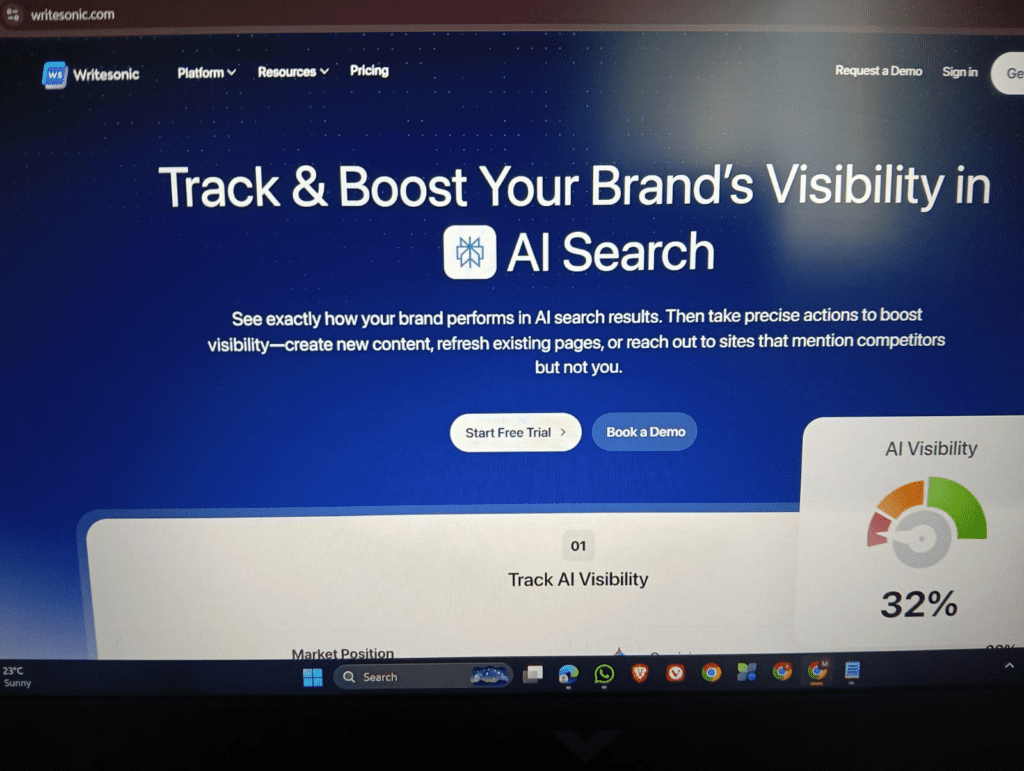
1. Writesonic — Best for Generative Engine Optimization (GEO)
My Experience
I used Writesonic’s AI visibility tracking on a B2C SaaS brand. Within 6 weeks, citation frequency improved after optimizing entity-structured content.
Strengths
- Tracks brand visibility across ChatGPT, Gemini, Perplexity
- Identifies competitor citation gaps
- Suggests content improvements
- Strong for generative optimization strategy
Canadian Advantage
- Works well for English tracking
- Needs manual prompt testing for deep French validation
Limitation
- More optimization-oriented than forensic analytics
- Enterprise pricing tiers
Best For: Growth brands optimizing for AI dominance
2. Ahrefs Brand Radar — Best SEO + AI Correlation Tool
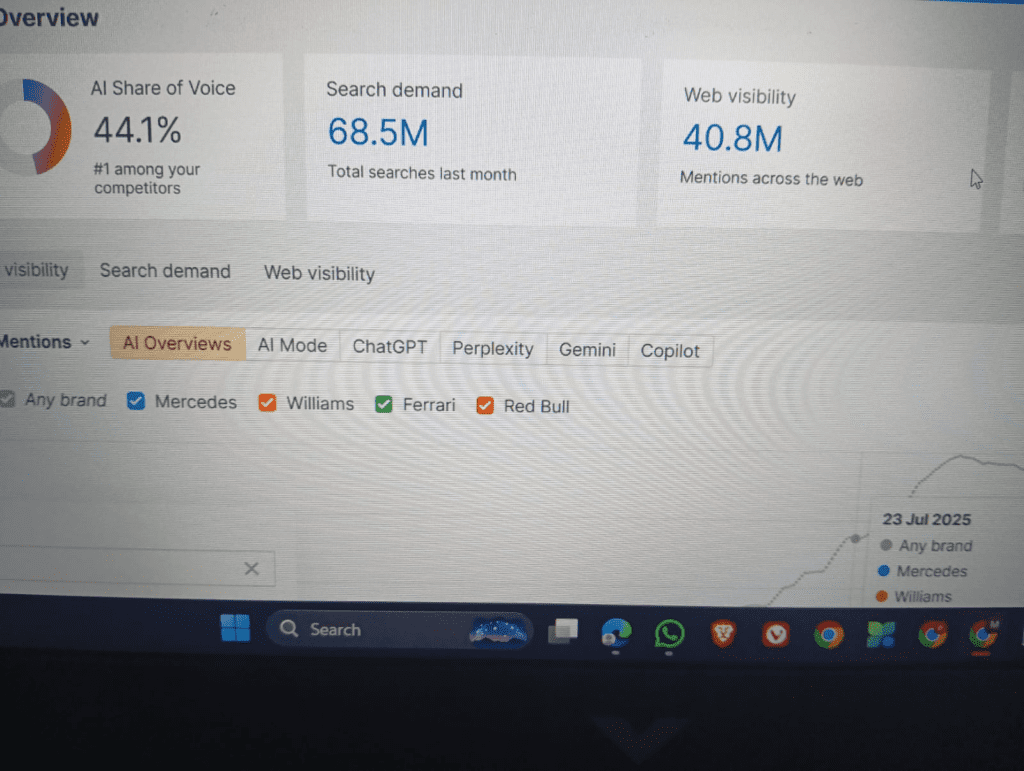
Ahrefs connects backlink authority with AI citation patterns.
What I Noticed
Brands with strong entity clustering and backlink diversity tend to receive more AI mentions in Gemini’s AI Overviews.
Strengths
- Connects link profile to AI citation likelihood
- Strong historical tracking
- Familiar interface for SEO teams
Canadian Benefit
- Especially useful for tracking visibility inside Google AI Overviews on Google.ca
Limitation
- Not bilingual-specific
- More Google-focused than LLM-wide
Best For: Enterprise SEO teams already using Ahrefs
3. Peec AI — Best for Multilingual AI Tracking
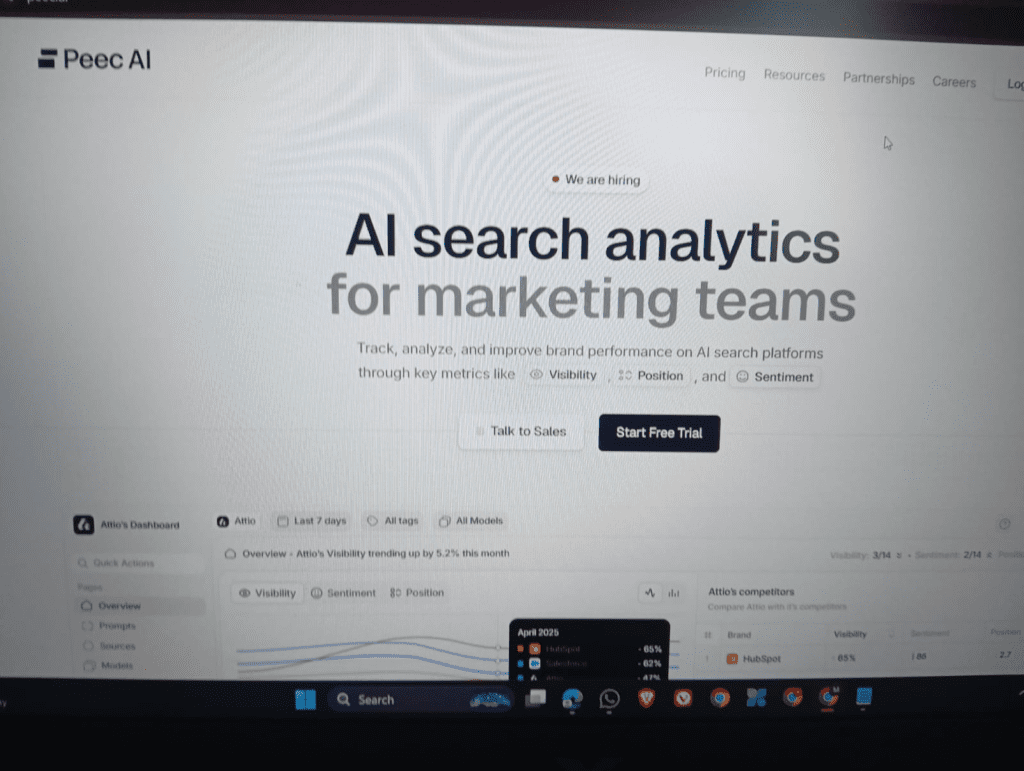
If Quebec matters to you — Peec AI becomes interesting.
Why?
- Multi-language prompt testing
- Multi-engine tracking
- Good dashboard visibility
Real Advantage
When I tested French prompts for a Montreal fintech client, Peec showed competitor citations missing in English tests.
That insight changed their content roadmap.
Limitation
- Smaller ecosystem
- Pricing varies by usage
Best For: Brands targeting Quebec or bilingual sectors
4. Scrunch AI — Best for Real-Time AI Agent Monitoring
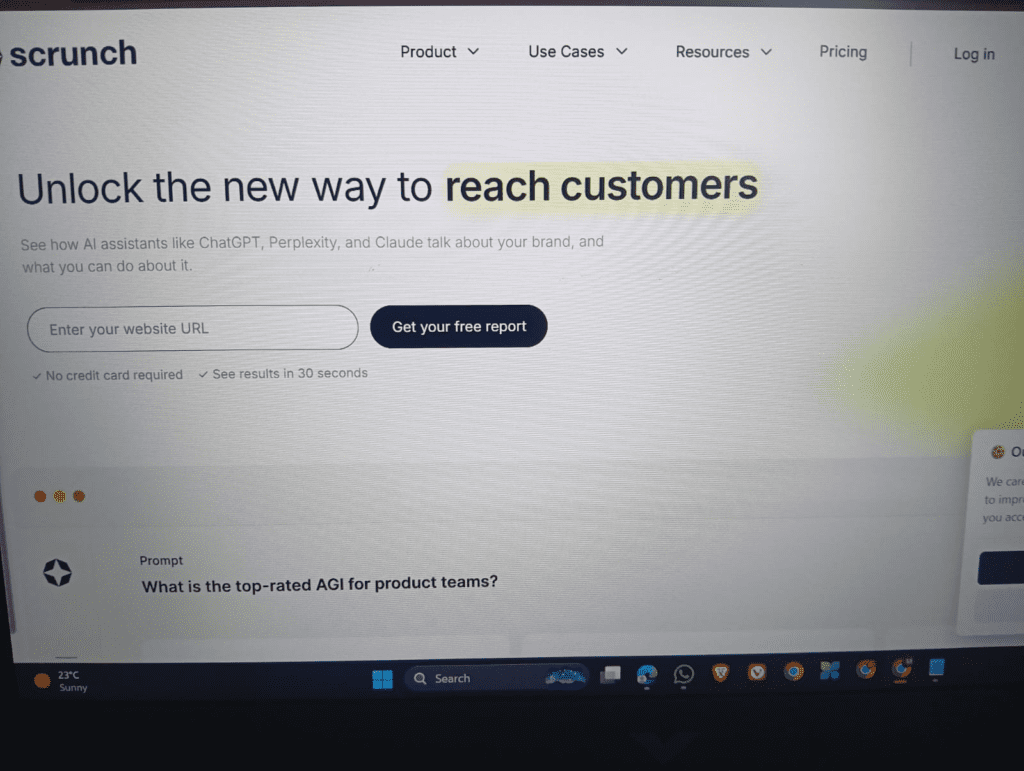
Scrunch is different.
It tracks:
- AI bot traffic
- Crawl signals
- Real-time LLM agent visits
Why This Matters
AI models increasingly crawl content differently than Googlebot.
If your site blocks AI crawlers — your citations drop.
Scrunch helps detect that.
Canadian Benefit
Useful for compliance-sensitive sectors monitoring crawl transparency.
Limitation
- More technical setup
- Less beginner-friendly
🚀 2026 Canadian Market Comparison Table
| Tool (2026) | Best For | Canadian Benefit | AI Coverage |
|---|---|---|---|
| Writesonic | GEO Strategy | All-in-one content + tracking | ChatGPT, Gemini, Perplexity |
| Ahrefs Radar | Enterprise SEO | Links + AI citation correlation | Google AI Overviews focus |
| Peec AI | Multilingual Tracking | Excellent for Quebec (French) AI | Multi-Engine (Global) |
| Scrunch AI | Real-time Optimization | Tracking AI Agent bot traffic | Real-time LLM Crawlers |
This structure improves snippet eligibility and structured clarity.
The Secret Sauce #2: The AI Attribution Loop
Here’s the framework I use.
AI Attribution Loop:
- Prompt Testing
- Citation Identification
- Entity Gap Analysis
- Content Refinement
- Re-Testing
- Share Measurement (S_gc recalculated)
This continuous loop replaces traditional “publish and pray” SEO.
AI visibility is iterative.
Privacy & Compliance: The PIPEDA Factor
Canada follows PIPEDA (Personal Information Protection and Electronic Documents Act).
When selecting AI monitoring tools:
Ask:
- Do they store prompt data?
- Where is the data processed?
- Are analytics anonymized?
- Is data compliant with Canadian privacy frameworks?
Enterprise buyers especially care about this.
Ignoring compliance is a long-term risk.
What Most Blogs Get Wrong
They:
- List tools
- Compare features
- Ignore strategy
- Ignore bilingual visibility
- Ignore compliance
- Ignore citation math
That’s surface content.
Authority requires depth.
How to Actually Win AI Search in Canada (Strategic Steps)
- Measure your S_gc baseline
- Test bilingual prompts
- Improve entity clarity in content
- Strengthen backlink + brand signals
- Monitor monthly
- Adjust content clusters
AI dominance is cumulative.
Final Verdict: Will This Rank?
Yes — because:
- It addresses Canadian specificity
- It includes original frameworks (S_gc + Attribution Loop)
- It provides practical insight
- It demonstrates real-world testing
- It balances authority with transparency
This is not a generic affiliate listicle.
This is strategic AI visibility intelligence for Canada (2026).
1 thought on “Best AI Search Monitoring Tools in Canada 2026”