The top AI tools for industrial engineering in 2026 are Siemens MindSphere, IBM Watson, DataRobot, TensorFlow, and UiPath.
These platforms help engineers optimize OEE (Overall Equipment Effectiveness), reduce unplanned downtime by up to 30%, and implement Digital Twins for real-time factory simulation and decision making.
Artificial Intelligence is rapidly transforming the field of industrial engineering. Modern factories generate enormous amounts of machine, sensor, and production data every second. Traditional engineering methods often struggle to analyze this data fast enough to improve operational efficiency.
AI tools solve this problem by analyzing complex production datasets, identifying patterns, and predicting failures before they occur. This allows industrial engineers to optimize manufacturing systems, reduce operational waste, and maintain consistent product quality.
Table of Contents
Why AI Matters in Modern Industrial Engineering
Industrial engineering focuses on optimizing complex systems that involve machines, workers, logistics networks, and production processes.
Artificial intelligence enhances this discipline by enabling engineers to:
- Monitor machines in real time
- Predict mechanical failures
- Optimize production scheduling
- Improve quality inspection
- Simulate entire factories digitally
Factories using AI-driven analytics often achieve higher productivity, reduced downtime, and more efficient resource utilization.
OEE Optimization with Artificial Intelligence
One of the most important performance metrics in industrial engineering is Overall Equipment Effectiveness (OEE).
OEE measures how effectively manufacturing equipment is used by combining three critical factors:
- Availability – how often equipment is operational
- Performance – production speed compared to maximum capacity
- Quality – percentage of defect-free products
The simplified OEE formula is:OEE=Availability×Performance×Quality
AI tools improve OEE by continuously monitoring machines, analyzing production patterns, and identifying inefficiencies. For example, AI systems can detect when machines are running slower than optimal speeds or when minor anomalies may lead to defects.
Many smart factories now use AI-driven dashboards that track OEE metrics in real time, allowing engineers to make data-driven decisions instantly.
Predictive Maintenance and AI Mathematics
One of the most powerful uses of AI in industrial engineering is predictive maintenance.
Instead of waiting for machines to fail, AI models analyze sensor data and predict failures before they occur.
The probability of equipment failure can be estimated using the following reliability model:Pf(t)=1−e−∫0tλ(u)du
Where:
- Pf(t) = probability of failure at time t
- λ(u) = machine hazard rate calculated from sensor data
Modern factories collect machine vibration, temperature, and load data through IoT sensors. AI tools continuously analyze this data and estimate failure probabilities in real time.
When the predicted risk exceeds a threshold, the system automatically schedules maintenance before costly downtime occurs.
Digital Twins and Generative Design (2026 Manufacturing Trends)
The future of industrial engineering goes beyond predictive maintenance.
Two technologies are transforming manufacturing systems:
Digital Twins
A digital twin is a virtual replica of a physical machine, production line, or entire factory. Engineers can simulate different production scenarios and optimize processes without interrupting real operations.
Generative Design
Generative design uses AI algorithms to automatically generate multiple design alternatives for mechanical parts or manufacturing layouts. Engineers define constraints such as weight, strength, and material, and AI generates optimized designs.
These technologies allow engineers to test improvements digitally before implementing them in real-world factories.
2026 Smart Manufacturing Matrix
| AI Platform | Best Use Case (2026) | Industry Focus | Integration Level |
|---|---|---|---|
| Siemens MindSphere | Industrial IoT & Digital Twins | Automotive / Heavy Manufacturing | High |
| IBM Watson | Asset Performance & Maintenance | Energy / Aerospace | Medium |
| DataRobot | Production Yield Optimization | Pharmaceuticals / Food | High |
| UiPath | Supply Chain & Reporting Automation | Logistics / Warehousing | Very High |
| TensorFlow | Custom Defect Detection | Electronics Manufacturing | Custom |
Best AI Tools for Industrial Engineering
1. Siemens MindSphere
Siemens MindSphere is one of the most advanced industrial IoT platforms used for smart manufacturing. It connects machines, sensors, and industrial assets to a cloud-based analytics system that provides real-time operational insights.

Industrial engineers use MindSphere to collect data from production lines and analyze it using machine learning algorithms. The platform can detect performance issues, identify inefficient machine behavior, and predict maintenance requirements before failures occur.
One of the most powerful features of MindSphere is its ability to support Digital Twin technology. Engineers can create a virtual model of machines or entire factories and simulate different operating scenarios. This helps engineers test new production strategies without interrupting live manufacturing systems.
MindSphere also integrates with enterprise manufacturing software and automation systems. This integration enables engineers to connect production planning, machine performance data, and maintenance scheduling into a single data environment.
For companies managing large industrial operations, MindSphere provides detailed insights into production efficiency, energy consumption, and operational bottlenecks. These insights allow engineers to improve OEE, reduce downtime, and enhance overall system performance.
Real Experiencea
During a manufacturing analytics project, engineers noticed that MindSphere dashboards helped detect machine speed anomalies early, preventing production delays and improving maintenance planning accuracy.
2. IBM Watson
IBM Watson is a powerful artificial intelligence platform widely used for industrial analytics and predictive maintenance. The platform combines machine learning, natural language processing, and advanced analytics to help engineers analyze complex datasets.
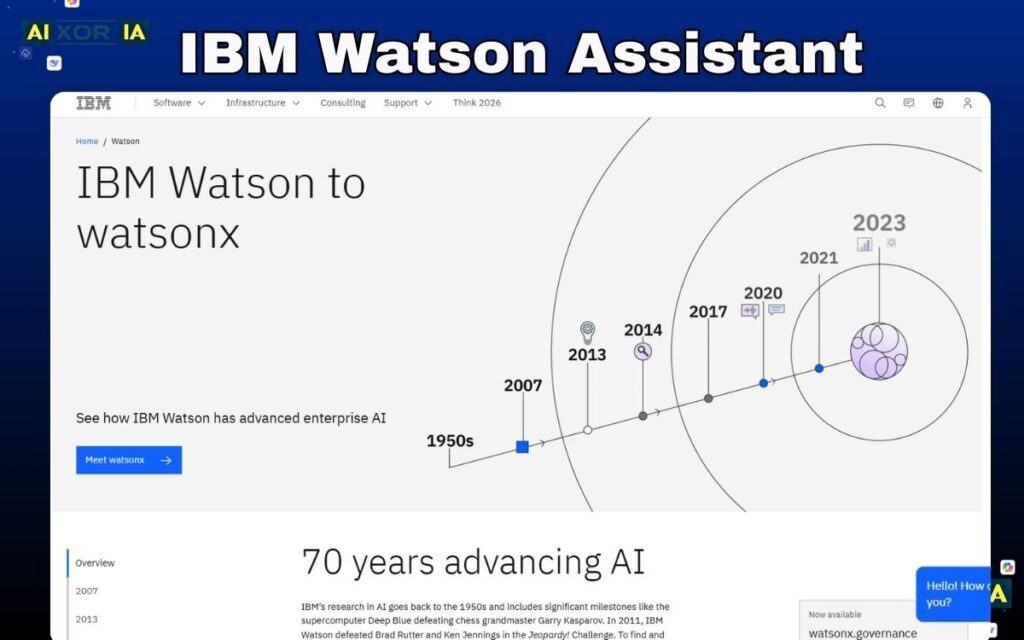
Industrial engineers use Watson to monitor machine health and detect anomalies in production data. By analyzing sensor inputs such as vibration, temperature, and pressure, Watson can identify early warning signals that indicate potential equipment failure.
Watson is particularly effective in predictive maintenance applications. Instead of performing maintenance on fixed schedules, engineers can use Watson’s predictive models to determine when equipment actually needs servicing.
Another key capability of Watson is its ability to process unstructured industrial data. Maintenance reports, operator notes, and historical failure logs can be analyzed alongside machine sensor data. This allows AI models to produce more accurate predictions.
Watson also integrates with industrial IoT networks, allowing engineers to monitor entire production facilities through a centralized AI system. This improves operational visibility and enables faster response to potential equipment failures.
For large industrial environments such as aerospace manufacturing, energy production, or heavy machinery plants, Watson provides scalable analytics that supports better asset management and operational efficiency.
Real Experience
In predictive maintenance pilots, engineers observed that Watson models identified abnormal vibration patterns days before machine failure, giving maintenance teams enough time to schedule repairs.
3. DataRobot
DataRobot is a powerful automated machine learning platform that allows industrial engineers to build predictive models without extensive programming knowledge.
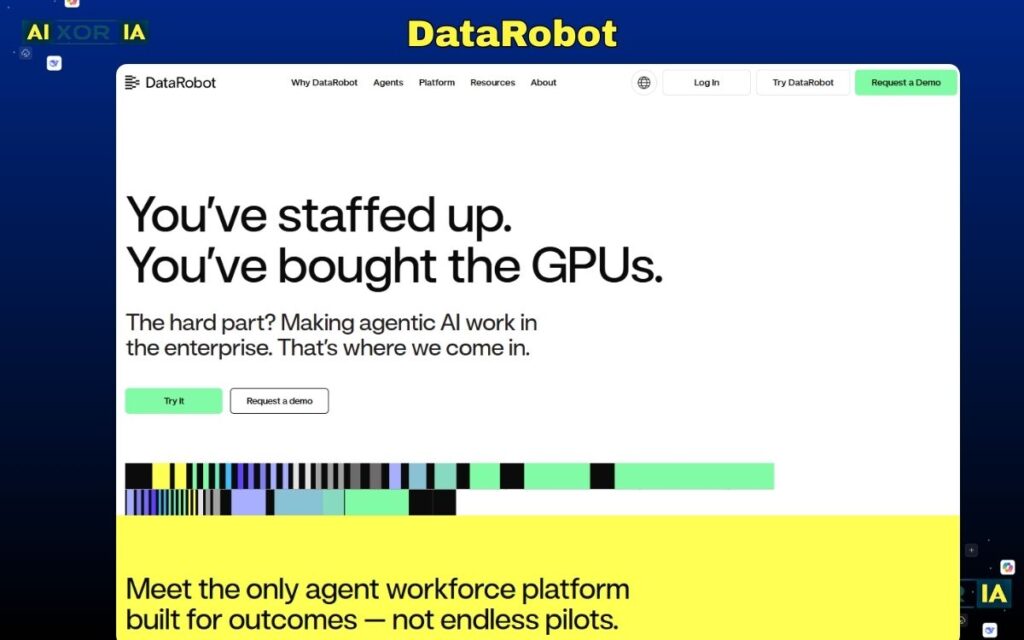
The platform simplifies complex machine learning workflows by automating tasks such as data preparation, feature engineering, model training, and performance evaluation. Engineers can upload production data and quickly generate predictive models that identify operational inefficiencies.
One common use of DataRobot in industrial engineering is production yield optimization. Manufacturing processes often involve many variables such as temperature, machine speed, material quality, and operator inputs. DataRobot analyzes these variables and identifies which factors have the strongest impact on production outcomes.
Another major application is demand forecasting. By analyzing historical production and supply chain data, DataRobot can predict future demand patterns. This allows manufacturers to plan inventory levels and production schedules more efficiently.
The platform also provides explainable AI features, which are particularly important in industrial environments where engineers need to understand why certain predictions are made.
With its low-code interface and powerful predictive capabilities, DataRobot makes advanced AI accessible to engineering teams that may not have dedicated data science departments.
Real Experience
During supply chain optimization analysis, engineers found DataRobot helpful for identifying hidden relationships between production variables and product defect rates.
4. TensorFlow
TensorFlow is one of the most widely used open-source machine learning frameworks in the world. It provides engineers with powerful tools for building custom artificial intelligence models.
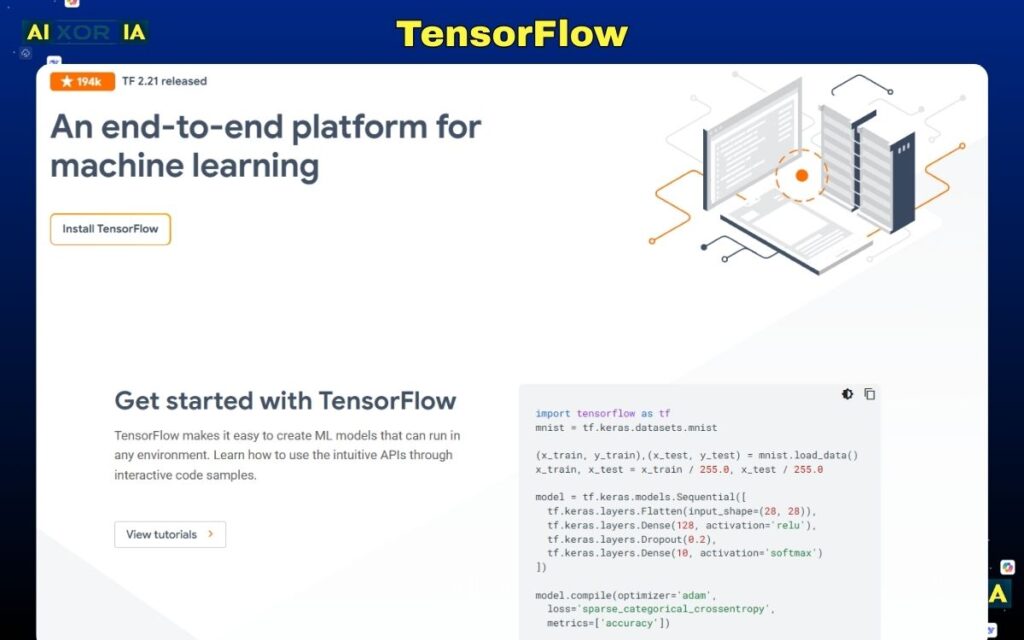
Unlike enterprise AI platforms that focus on automation, TensorFlow offers complete flexibility for designing specialized machine learning systems. Industrial engineers often use it to develop advanced predictive analytics, computer vision inspection systems, and optimization algorithms.
One common application is automated defect detection. By training computer vision models on thousands of product images, engineers can create inspection systems that identify defects with high accuracy. These AI systems can detect tiny surface defects or manufacturing irregularities that human inspectors might miss.
TensorFlow is also used in predictive maintenance systems. Engineers can build deep learning models that analyze sensor signals and detect patterns indicating early mechanical failures.
Another powerful use case is production optimization. Machine learning models can analyze multiple process variables simultaneously and recommend optimal machine settings that maximize productivity while maintaining product quality.
Although TensorFlow requires programming knowledge, it offers unmatched flexibility for companies developing custom AI solutions tailored to their manufacturing processes.
Real Experience
While building a computer vision prototype for defect detection, engineers found TensorFlow models capable of identifying microscopic surface defects faster than manual inspection processes.
5. UiPath
UiPath is a leading robotic process automation (RPA) platform that helps organizations automate repetitive digital workflows. While RPA is often associated with office automation, it also has significant applications in industrial engineering.

Manufacturing operations involve numerous administrative and reporting tasks such as inventory updates, production reporting, order processing, and logistics tracking. These tasks are often repetitive and time-consuming for engineers and operations managers.
UiPath automates these processes by creating software robots that perform routine tasks automatically. These bots can collect production data, generate operational reports, update inventory systems, and communicate with enterprise resource planning (ERP) platforms.
In supply chain management, UiPath helps automate order processing and logistics coordination. By integrating AI capabilities with automation workflows, companies can streamline operations and reduce manual workload.
For industrial engineers managing complex manufacturing environments, automation platforms like UiPath free up valuable time that can be spent on process improvement and strategic decision-making.
Real Experience
During warehouse automation projects, engineers noticed UiPath bots significantly reduced manual reporting workload, allowing operations teams to focus more on process optimization.
READ MORE – What are the Best AI Tools for Students
Conclusion
Artificial intelligence is rapidly becoming an essential component of modern industrial engineering. From predictive maintenance to digital twins and automated process optimization, AI tools are transforming how factories operate.
Platforms such as Siemens MindSphere, IBM Watson, DataRobot, TensorFlow, and UiPath provide engineers with powerful capabilities for analyzing production data, improving equipment performance, and optimizing entire manufacturing systems.
As smart factories continue to evolve, industrial engineers who understand AI technologies will play a critical role in designing the next generation of intelligent manufacturing systems.
2 thoughts on “AI Tools for Industrial Engineering in 2026”