AI Tools for Cold Email Outreach That Avoid Spam: What to Look For
Scr0ll d0wn to D0VVNL0AD
AI tools for cold email outreach that avoid spam should do more than write messages. Look for email verification, sending limits, bounce alerts, reply-aware follow-ups, and checks for generic or misleading copy. Use AI to draft a short email for a clearly defined audience, then review each claim before sending.
You can set up a small, targeted campaign in under an hour. You cannot build a sender reputation in an hour. Check your domain’s email authentication, start with low volume, and increase it gradually. No tool can guarantee inbox placement; relevant messages and prompt opt-out handling still matter.
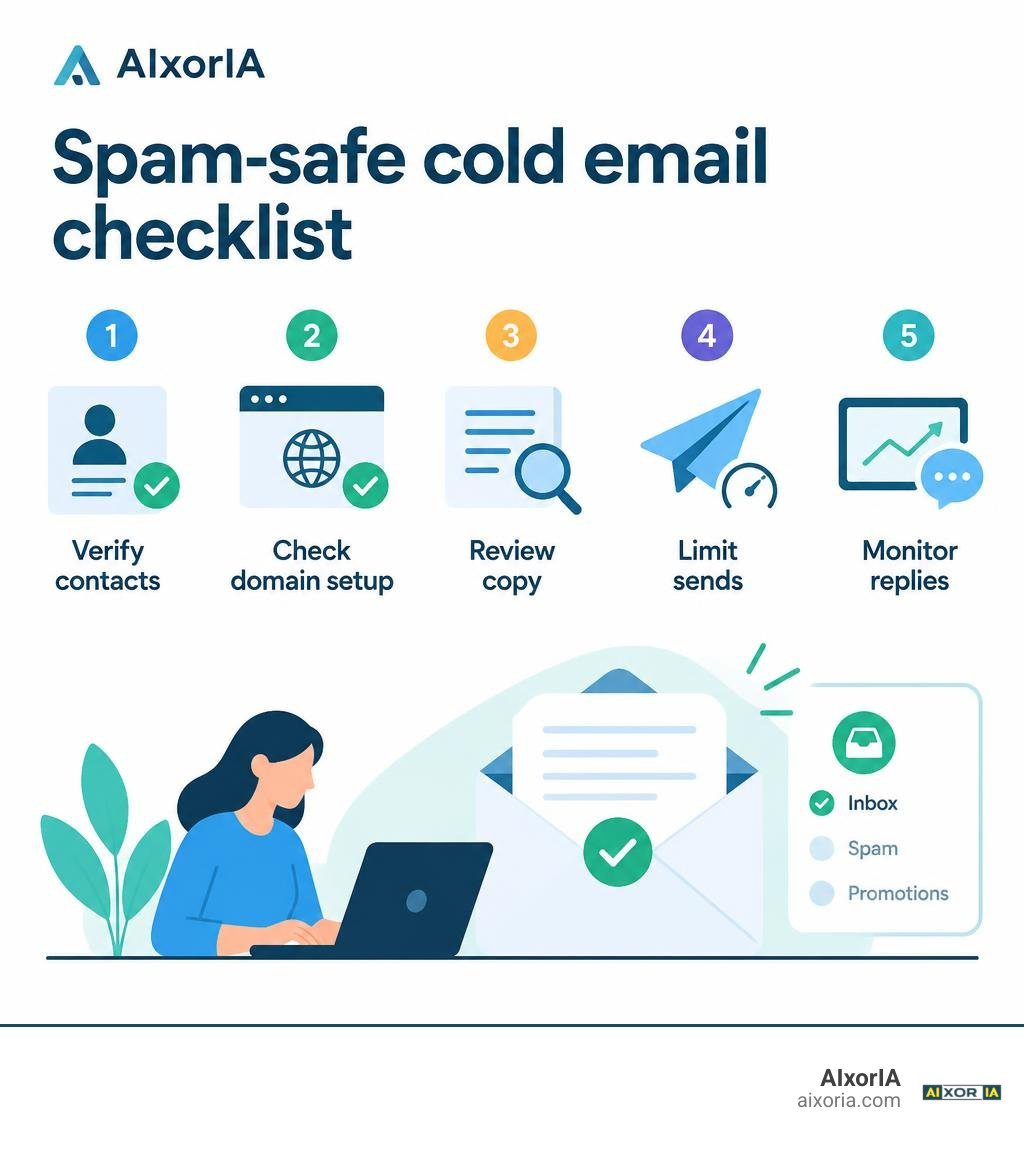
Key Mechanics: How AI Tools for Cold Email Outreach That Avoid Spam Protect Your Domain
Getting into the primary inbox in 2026 requires strict technical hygiene and smart sending behavior. Email service providers (ESPs) like Google Workspace and Microsoft 365 use sophisticated machine learning models to analyze incoming traffic. If your outreach exhibits robotic patterns, sudden spikes in volume, or repetitive text across hundreds of messages, your domain reputation will plummet.

Modern deliverability algorithms evaluate your domain based on bounce rates, spam complaint percentages, recipient engagement, and content diversity. To stay off blacklists, top teams leverage specialized AI tools for avoiding spam filters in email marketing alongside dedicated outreach platforms.
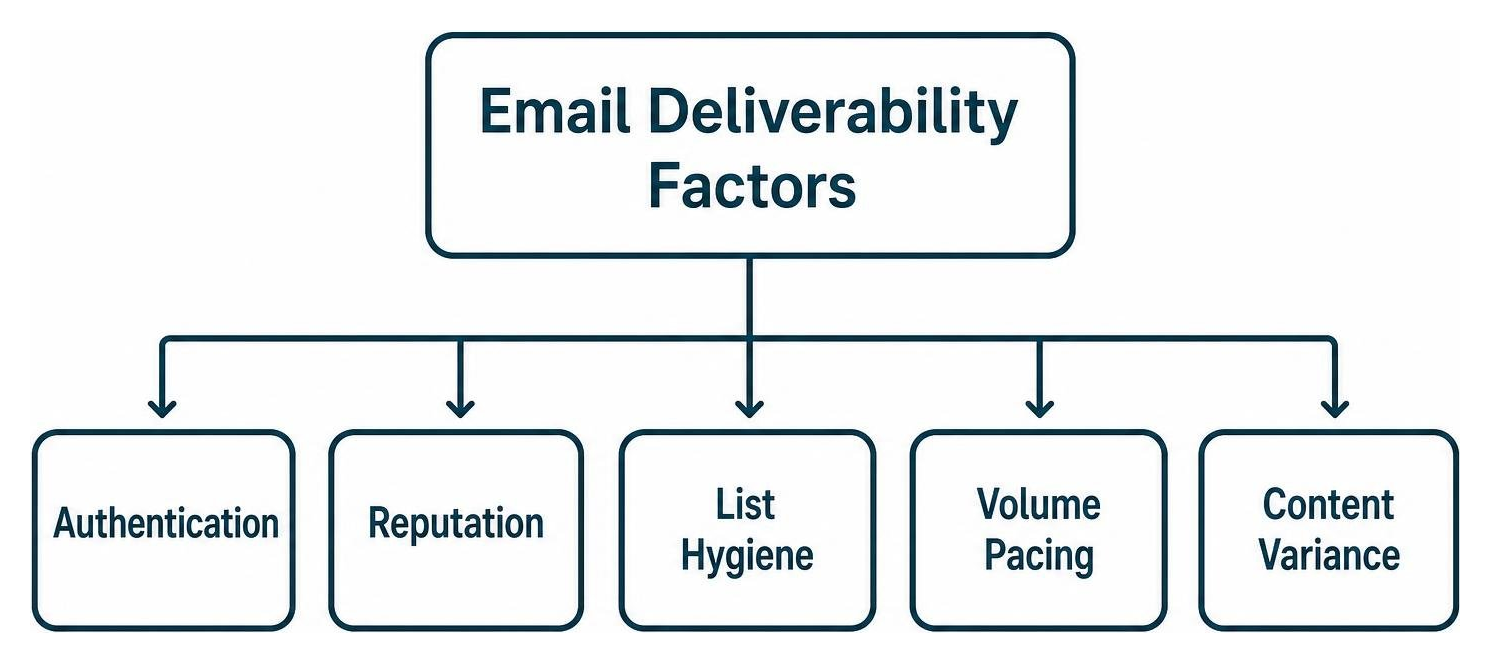
Automated Safeguards Built into AI Tools for Cold Email Outreach That Avoid Spam
Modern cold outbound software prevents domain burnout through automated safety protocols:
- Automated Bounce Detection & Sender Pausing: If your bounce rate exceeds 2% or an unusual cluster of soft bounces occurs, the system automatically pauses active campaigns on that mailbox to protect your sender score.
- Intelligent Rate Limiting: Sending hundreds of emails at once triggers provider alarms. AI schedulers inject randomized delays between sends (e.g., 60 to 180 seconds) to mimic authentic human workflows.
- Dynamic Ramp Schedules: New mailboxes cannot send 50 emails on day one. AI warmup algorithms automatically start at 2 to 5 emails daily, ramping volume gradually over several weeks.
- Peer-to-Peer Warm-Up Networks: Built-in warm-up systems exchange realistic, multi-turn messages across real Google and Microsoft inboxes. When messages land in spam folders, the network automatically rescues and marks them as important. Comparing dedicated tools like the Mailreach vs Instantly deliverability comparison highlights how crucial inbox pool quality is for sustained placement.
Real-Time Spam Word Checking and Content Optimization
Spam filters scan message bodies and subject lines for high-risk promotional triggers, aggressive punctuation, and suspicious formatting. Modern platforms use natural language processing (NLP) to flag risky language before sending:
- Spam Trigger Analysis: Instant scanning identifies pushy sales jargon, high-pressure urgency claims, and excessive capitalization.
- Readability & Sentiment Scoring: Algorithms ensure outreach reads at a natural 5th-to-7th-grade level, avoiding stiff corporate jargon that flags machine detection.
- Dynamic Spintax Generation: Sending identical message copies to 500 leads creates an unmistakable digital fingerprint. AI sequence engines dynamically spin sentence structures, greetings, and value propositions so each outbound message is linguistically unique.
Comprehensive Comparison of Top Cold Email Outreach Platforms in 2026
Choosing the right software depends on your operational model, team size, and sending strategy. Below is a comparison of leading AI-powered outreach platforms based on deliverability features, warm-up tools, and pricing.
| Platform | Best For | G2 Rating | Built-in AI Warm-Up | Key Anti-Spam Safeguards | Starting Price |
|---|---|---|---|---|---|
| Saleshandy | Deliverability & Sequences | 4.6/5 (650+ reviews) | Yes (Unlimited) | AI Sequence Copilot, bounce guard, sender rotation | $36/month |
| Smartlead.ai | Multi-Inbox Scale | 4.5/5 | Yes (Unlimited) | Dynamic IP warmup, automated mailbox rotation, reply parsing | $39/month |
| Instantly.ai | High-Volume Outbound | 4.8/5 (3,520+ reviews) | Yes (Unlimited) | Inbox placement testing, spintax engine, domain health radar | $37/month |
| Salesforge | Multichannel & Multi-Language | 4.7/5 | Yes (Free unlimited) | Native LinkedIn + email, real-time bounce auto-pause | $40/month (billed annually) |
| Woodpecker | Agencies & Strict Safety | 4.5/5 | Yes (Included) | Deliverability monitor, bounce protection, humanized pacing | $29/month |
| Snov.io | All-in-One Outbound CRM | 4.5/5 | Yes | Built-in verification, multichannel drip, spam word checker | $39/month |
| Apollo.io | Integrated Data & Prospecting | 4.5/5 (4,500+ reviews) | Add-on / Native | Real-time email validation, AI sequence writer, cadence limits | Free / $59/month |
| GMass | Native Gmail Outreach | 4.8/5 | Yes | Spam Solver placement tester, Gmail API rotation, spintax | $18/month |
Deliverability-First vs. High-Volume: Choosing AI Tools for Cold Email Outreach That Avoid Spam
When scaling outbound campaigns, organizations generally choose between two core architectures:
- Deliverability-First Platforms (e.g., Salesforge, Woodpecker, Saleshandy): These tools prioritize deep domain health, granular sending pacing, strict per-domain throttling, and dynamic personalization. They are well-suited for high-ACV deals where burning a domain carries significant financial consequences. Many organizations combine these platforms with AI sales automation tools for mid-market companies in 2026 to balance personalization and volume.
- High-Volume Multi-Inbox Platforms (e.g., Smartlead, Instantly): These platforms focus on distributing mass volume across dozens or hundreds of secondary domains. By rotating sends across a decentralized pool of mailboxes, individual inboxes stay well beneath provider throttling limits (e.g., sending fewer than 30 emails per inbox daily).
Feature, Pricing, and Inbox Placement Breakdown
For small sales teams and solo entrepreneurs, entry tiers from platforms like Saleshandy ($36/month) and Smartlead ($39/month) offer generous mailbox connections and built-in warm-up networks. Teams scaling outbound operations often equip dedicated SDRs with modern AI BDR tools for scaling outbound efforts to automate research, list segmentation, and pipeline tracking from a unified dashboard.
Step-by-Step Blueprint: Launching a Spam-Safe AI Campaign in Under 60 Minutes

Launching an effective outbound campaign quickly requires a structured execution workflow. Here is how to configure a spam-safe cold outreach engine in under an hour.
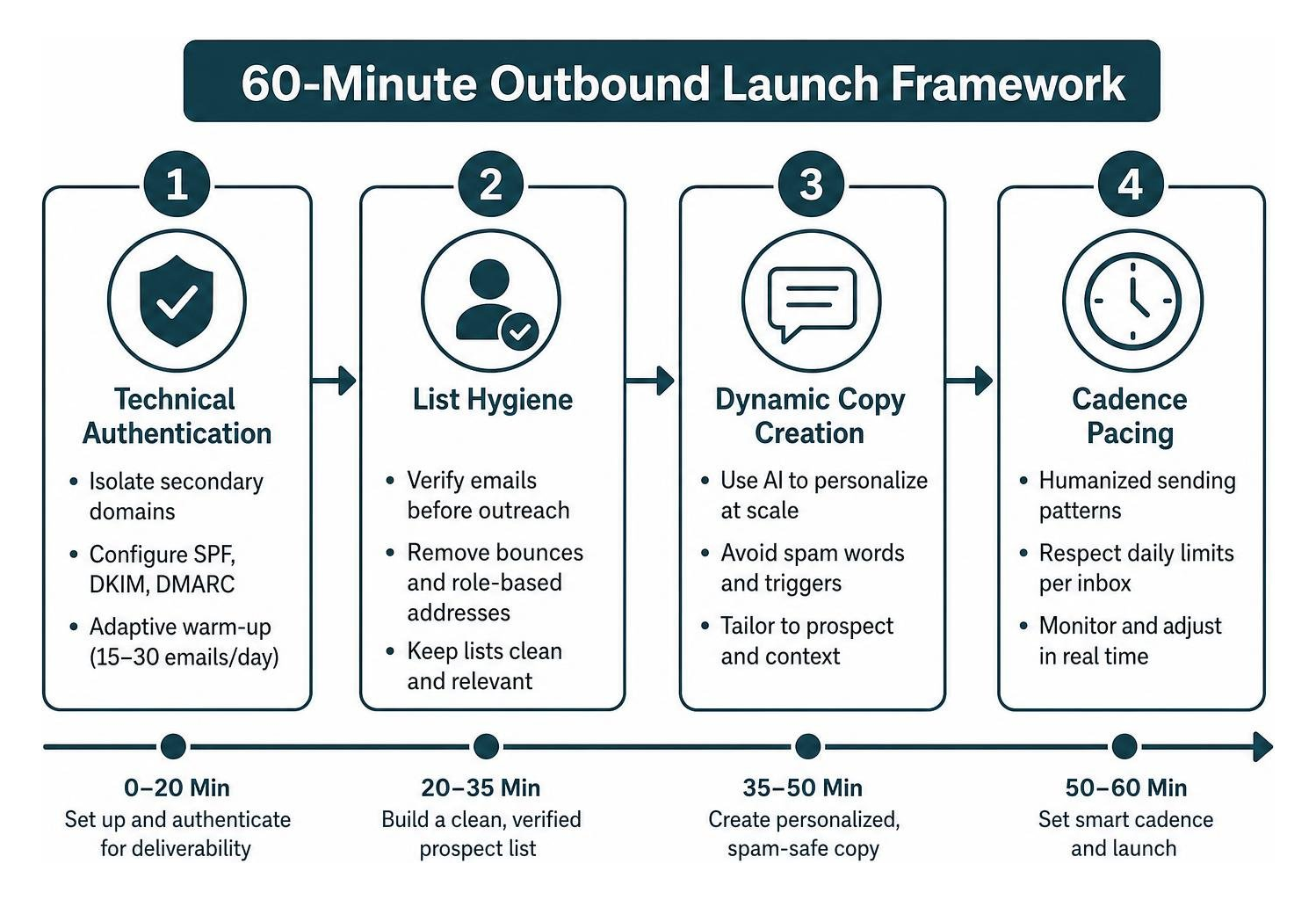
Phase 1: Technical Setup, Authentication, and Adaptive Warm-Up (Minutes 0–20)
Never send cold campaigns from your primary corporate domain. If an error occurs, your internal corporate communications and calendar invites could land in spam folders.
- Isolate Secondary Domains: Purchase 2 to 3 secondary domains that mirror your core brand name.
- Configure DNS Records:
- SPF (Sender Policy Framework): Specifies which mail servers are authorized to send on your domain’s behalf.
- DKIM (DomainKeys Identified Mail): Adds a cryptographic signature to verify message integrity in transit.
- DMARC (Domain-based Message Authentication, Reporting, and Conformance): Directs receiving servers on handling unauthenticated emails. Set your initial policy to
v=DMARC1; p=none;. - Custom Tracking Domain (CNAME): Replaces generic platform tracking links with a white-labeled subdomain (e.g.,
track.yourdomain.com) to preserve link equity.
- Connect to Automated Warm-Up: Hook your mailboxes into a peer-to-peer warm-up network with gradual ramp-up parameters. When setting up automated workflows, choosing reliable email drip campaign software ensures consistent scheduling without unexpected sending spikes.
Phase 2: Scaled Personalization and Spintax Optimization (Minutes 20–45)
Generic mass emails get flagged quickly because spam filters spot identical text blocks across multiple accounts. To stand out and protect deliverability, craft messaging using strategies from cold email personalization that beats AI detection.
- Data Enrichment: Enrich your prospect lists with relevant data points: recent company announcements, tech stack changes, hiring signals, or specific operational pain points.
- AI-Assisted Personalization: Use AI to draft targeted intro sentences referencing verified prospect details.
- Apply Dynamic Spintax: Use syntax variations within your templates (e.g.,
{Hi|Hello|Hey} {{First_Name}}, {I noticed|I saw|I came across} your team is expanding...). This ensures no two outgoing messages share an identical cryptographic hash. Integrating these tactics with broader AI tools for sales and marketing in 2026 creates a smooth, cohesive outbound process.
Phase 3: AI Reply Categorization and Regulatory Compliance (Minutes 45–60)
The final step is setting up reply handling and compliance rules before pushing campaigns live.
- Automate Intent Categorization: Modern platforms use language models to classify incoming replies automatically (e.g., Interested, Meeting Booked, Out of Office, Not Interested, or Do Not Contact).
- Automate Unsubscribe Management: If a recipient requests removal, modern platforms immediately tag the contact and add them to a global suppression list across all domains.
- Ensure Regulatory Compliance: Comply with CAN-SPAM and GDPR mandates by including a legitimate physical business address, clear sender identification, and an intuitive, one-click opt-out mechanism.
Frequently Asked Questions About Cold Email Deliverability
How do AI warm-up networks prevent emails from hitting spam filters?
AI warm-up networks run decentralized, peer-to-peer communication pools consisting of genuine business mailboxes across Google Workspace, Microsoft 365, and private SMTP servers.
The software initiates realistic, multi-turn conversations between accounts in the network. The receiving accounts automatically open incoming messages, mark them as important, and pull them out of the spam folder if they land there. This consistent positive engagement signals to major ESP algorithms that your domain is a trustworthy, active sender.
What is the ideal daily sending limit per inbox to maintain domain health?
To maintain strong inbox placement, we recommend keeping cold outbound volume between 25 and 35 cold emails per inbox per day (plus 15 to 25 daily warm-up messages).
Exceeding 50 cold emails per day on a single Google Workspace or Microsoft 365 account significantly increases the risk of throttling, spam filtering, or account suspension. If your strategy requires sending 300 emails daily, distribute that volume across 10 distinct mailboxes on 3 to 4 secondary domains.
How does AI personalization help bypass modern spam detection algorithms?
Spam filters examine both domain reputation and content fingerprints. When an ESP sees 500 identical emails sent within a short window, its automated defenses flag the campaign as bulk promotional traffic.
AI personalization prevents this by varying structural patterns, vocabulary, sentence length, and syntax across every message. Combined with genuine contextual relevance (such as referencing a prospect’s industry challenges), personalized emails achieve higher engagement, lower unsubscribe rates, and fewer spam complaints—the key signals ESPs look for when deciding inbox placement.
Conclusion
Scaling outbound sales in 2026 is about consistency, technical hygiene, and relevance—not mass-blasting unverified lists. By using AI platforms with automated bounce prevention, sender rotation, spintax variations, and built-in warm-up networks, you can protect your domain reputation while booking qualified meetings.
At AIxorIA, we curate top AI tools, tutorials, and productivity guides to help businesses and modern professionals boost performance. To stay ahead with the latest frameworks and vetted sales automation software, explore curated AI resources and guides at AIxorIA and build a sustainable outbound engine today.
1 thought on “AI Tools for Cold Email Outreach That Avoid Spam (2026)”