MoFi Business Loans Reviews: The Quick Take

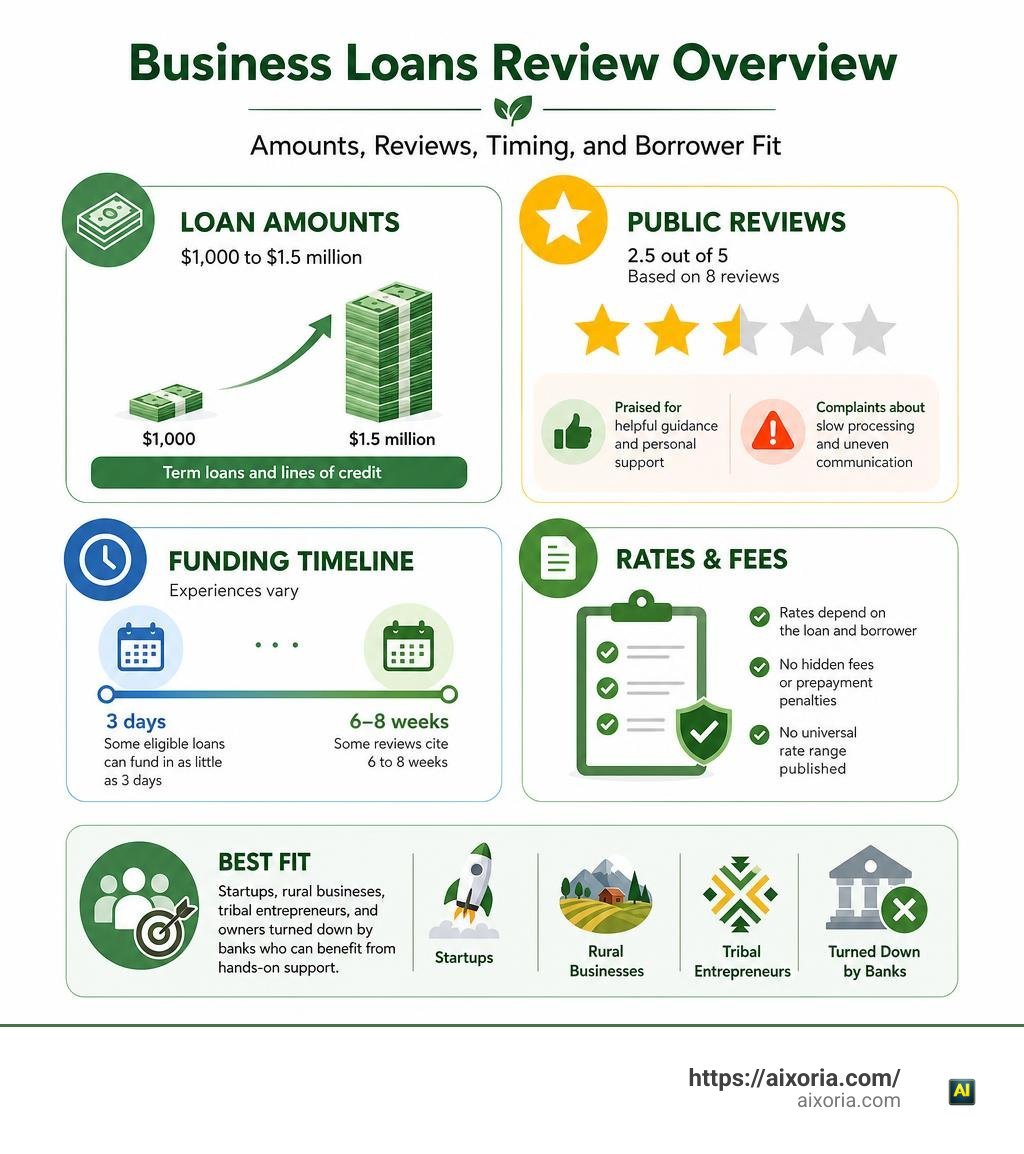
MoFi business loans reviews show a mission-driven lender that can be a useful option for small businesses that do not qualify for a traditional bank loan, especially across the Rocky Mountain West. Its public feedback is mixed: borrowers praise helpful guidance and personal support, while others report slow processing and uneven communication.
| What borrowers should know | Quick answer |
|---|---|
| What is MoFi? | A nonprofit Community Development Financial Institution (CDFI) that provides business financing and free technical assistance. |
| Loan amounts | Reported range of $1,000 to $1.5 million, including term loans and lines of credit. |
| Rates and fees | Rates depend on the loan and borrower. MoFi says it has no hidden fees or prepayment penalties, but it does not publish a simple universal rate range. |
| Public review signal | Birdeye lists a 2.5 out of 5 rating from 8 reviews, a small sample that includes both strong praise and serious complaints. |
| Funding speed | Experiences vary. Some reviews cite 6 to 8 weeks, while a technology case study says certain eligible loans can be funded in as little as 3 days. |
| Best fit | Startups, rural businesses, tribal entrepreneurs, and owners turned down by banks who can benefit from hands-on support. |
MoFi stands apart from many online lenders because its goal is not simply fast capital. It combines lending with free help in areas such as accounting, marketing, and legal needs, and it aims to help borrowers become ready for bank financing over time.
Still, the mixed reviews matter. A prospective borrower should compare the full offer, ask about timelines early, and request clear feedback if the application is declined. This guide looks at the terms, review patterns, process, and trade-offs behind MoFi business financing.
What is MoFi? Overview of CDFI Loans, Features, and Terms
When traditional financial institutions decline a loan application due to a lack of extended operating history, insufficient collateral, or unconventional business models, alternative mission-based lenders step in to bridge the capital gap. MoFi operates as a nonprofit Community Development Financial Institution (CDFI) headquartered in Missoula, Montana, with offices spanning the Rocky Mountain region including Boise, Idaho. Established decades ago, MoFi focuses on expanding economic opportunity by providing business financing and customized support to entrepreneurs who cannot secure capital through standard commercial banks.
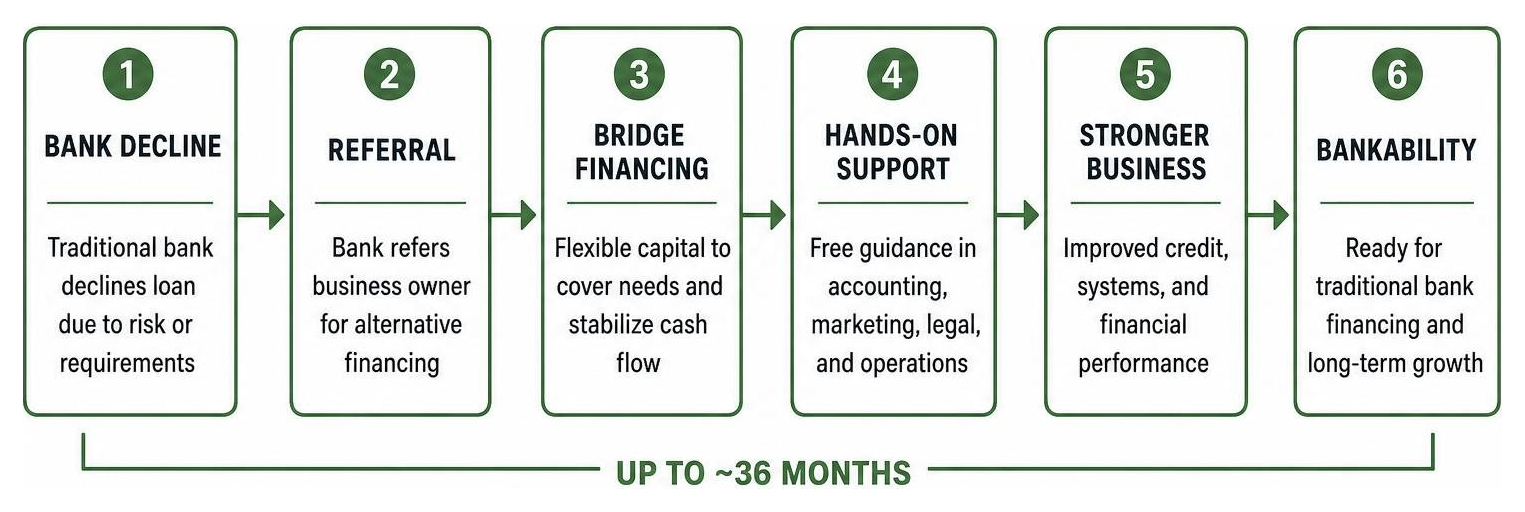
As detailed on the official Lenders – MoFi page, the organization position itself as a strategic partner to commercial banks rather than a direct competitor. When a bank turns down a small business owner, it can refer the client to MoFi. MoFi then provides flexible gap financing designed to help the borrower build credit, stabilize cash flows, and transition back to traditional banking within approximately 36 months.
MoFi offers versatile debt structures tailored to diverse operational needs:
- Loan Amounts: Financing starts as low as $1,000 for microloans and scales up to $1,500,000 for larger commercial expansions.
- Loan Types: Flexible structures include term loans for equipment and real estate, lines of credit for working capital, and startup growth packages.
- Fee Transparency: MoFi emphasizes transparent lending practices with no hidden fees and zero prepayment penalties, allowing business owners to pay off their debt early without financial penalty.
- Complimentary Business Support: Beyond capital, every loan is paired with free wrapper technical assistance. Borrowers gain access to expert consulting in critical business disciplines such as legal advisory, financial accounting, strategic marketing, and general operational management.
- Government-Backed Programs: MoFi actively participates in state and federal financing initiatives, including the State Small Business Credit Initiative (SSBCI)—such as Utah’s Capital Access Program (CAP) and Loan Participation Program (LPP)—as well as federal New Markets Tax Credits (NMTC) for large-scale economic development projects.
| Feature | MoFi Business Loans | Traditional Bank Loans |
|---|---|---|
| Primary Target Audience | Startups, underserved entrepreneurs, and unbankable businesses | Established businesses with strong credit and 24+ months history |
| Loan Amounts | $1,000 to $1,500,000 | $50,000 to $5,000,000+ |
| Risk Tolerance | Flexible underwriting; considers non-traditional factors | Strict debt-service and asset coverage requirements |
| Prepayment Penalties | None | Common on commercial fixed-rate loans |
| Added Value | Free technical assistance (accounting, marketing, legal) | Rare; strictly transactional lending |
| Goal | Bridge to bankability within 36 months | Long-term bank customer retention |
What MoFi Business Loans Reviews Reveal About Borrower Experiences

Analyzing MoFi business loans reviews across independent feedback channels reveals a dual narrative. On one hand, entrepreneurs praise MoFi’s educational mission, supportive consulting services, and willingness to back high-risk ventures. On the other hand, public rating profiles highlight notable operational friction, particularly regarding intake timelines and communication clarity during the application underwriting phase.
Public review platforms present a relatively thin but polarized sentiment footprint. For example, on MoFi – 8 Reviews – Financial Services in Boise, ID – Birdeye, MoFi holds a 2.5 out of 5-star aggregate rating based on 8 user submissions. Because the sample size is compact, individual negative or positive experiences swing the overall star rating significantly. Examining the specific details behind these user accounts provides a clearer understanding of what borrowers encounter.
Positive MoFi Business Loans Reviews and Success Stories
Positive feedback frequently originates from business owners who leveraged MoFi’s unique mission-driven flexibility after commercial banks turned them down. Key themes highlighted in positive borrower experiences include:
- Constructive Feedback Leads to Future Funding: One notable borrower review shared that while MoFi initially turned down their business loan request, the loan officer did not simply walk away. Instead, MoFi provided clear explanations, financial coaching, and actionable tips to fix weakness areas. The owner followed the recommendations and successfully secured startup refinancing capital from MoFi a year later.
- Streamlined Relief Processing: During crisis periods, such as the Paycheck Protection Program (PPP), small business owners reported that MoFi was highly responsive, setting up dedicated single-point-of-contact support that made the process straightforward and accessible.
- Dedicated Partnerships: Regional banking partners frequently praise MoFi’s collaborative approach. Social media updates like Awards season at MoFi demonstrate how commercial banks and MoFi co-finance complex projects—such as multi-million-dollar state credit initiative deals and regional infrastructure developments—that would otherwise stall without CDFI involvement.
- Impactful Demographic Expansion: Following back-end technology investments, MoFi modernized its intake portal. Case study data indicates that client satisfaction with its digital loan interface surged from 2/10 to 9/10, while expanding outreach to historically underbanked demographics, including reaching a 33% Hispanic client base.
Critical MoFi Business Loans Reviews and Common Complaints
Conversely, critical MoFi business loans reviews center around operational delays and frustration with underwriting decisions:
- Extended Turnaround Timelines: Multiple applicants reported that processing a standard business loan took between 6 to 8 weeks. In business environments, waiting nearly two months for a capital decision can disrupt operational planning.
- Initial Communication Delays: A recurring complaint mentions slow response times during initial intake. One borrower noted taking a week and a half just to receive a follow-up after submitting a complete document package.
- Perceived Lack of Transparency on Denials: Frustrated applicants described interactions where loan officers felt uncommunicative or refused to detail internal policy guidelines after declining an application. When borrowers expect hands-on coaching but receive an opaque denial, satisfaction drops sharply.
MoFi Loan Application Process, Eligibility, and Turnaround Times

Understanding how to navigate MoFi’s application ecosystem can help small business owners streamline their funding timeline and minimize unexpected bottlenecks.
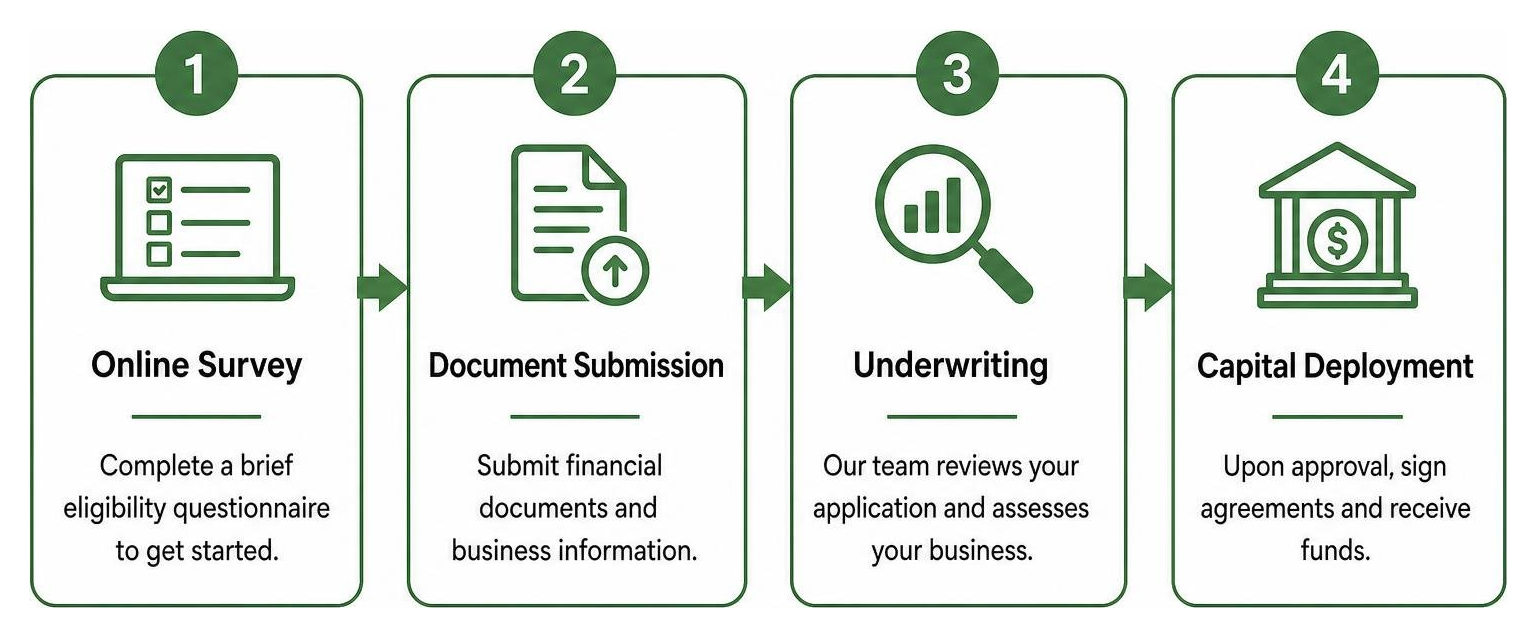
MoFi’s intake and evaluation process follows a structured workflow:
- Online Eligibility Survey: Applicants begin by completing a brief digital questionnaire on MoFi’s website. This screening tool checks basic geographic, operational, and financial parameters to determine whether the request aligns with CDFI mission guidelines.
- Document Intake: Once initial eligibility is confirmed, applicants submit standard financial verification materials. These typically include personal and business tax returns, income statements, balance sheets, bank statements, a detailed business plan, and financial projections.
- Underwriting and Consulting Assessment: MoFi’s underwriting team evaluates the submission. Unlike traditional banks that rely strictly on credit score cutoffs or 24-month operating history rules, MoFi reviews holistic factors. They evaluate the entrepreneur’s industry experience, community impact, and willingness to participate in wrapper technical assistance programs.
- Approval and Capital Deployment: Upon approval, final loan agreements are executed, and capital is disbursed into the business account.
The speed of this process varies significantly based on the loan type and technology integration:
- Historical & Complex Turnarounds: Traditionally, CDFI manual underwriting could extend up to 4 months, with standard complex business loans taking 6 to 8 weeks as documented in public borrower reviews.
- Modernized Fast-Track Turnarounds: Following MoFi’s implementation of modern fintech platforms like nCino and mobile-first SMS application pathways, streamlined loan requests can move from digital submission to account deposit in as little as 3 days.
- Capacity Impact: These technological upgrades have allowed MoFi to triple its lending capacity without increasing staff headcount, delivering capital to over 300 small business owners annually.
Pros and Cons of MoFi Business Loans
To evaluate whether a MoFi business loan fits your enterprise, consider this balanced summary of advantages and potential drawbacks based on borrower feedback and operational data.
Pros
- High Risk Tolerance for Unbankable Borrowers: Open to early-stage startups, rural enterprises, tribal reservation businesses, and applicants lacking traditional bank collateral.
- Free Wraparound Technical Assistance: Provides access to legal, accounting, and marketing consulting at no extra charge to enhance business viability.
- No Hidden Fees or Prepayment Penalties: Transparent fee structures allow borrowers to settle debt early without financial surcharges.
- Path to Bankability: Specifically designed to help businesses build credit profiles so they can qualify for conventional commercial bank financing within 36 months.
- State and Federal Program Integration: Enrolled partner in government-backed capital programs like SSBCI and NMTC, opening access to subsidized state funding pools.
Cons
- Mixed Public Review Record: Public rating profiles reflect a 2.5/5 rating, pointing to inconsistent applicant experiences.
- Inconsistent Intake Timelines: While tech-enabled microloans can close rapidly, complex loan packages may take 6 to 8 weeks to process.
- Communication Gaps During Underwriting: Some applicants report waiting over a week for document receipt confirmations and encountering opaque denial explanations.
- Regional Geographic Constraints: Services are focused primarily on small businesses operating within the Rocky Mountain West region.
Frequently Asked Questions About MoFi Business Loans
What are the main loan amounts and terms offered by MoFi?
MoFi offers business loans ranging from $1,000 for micro-borrowers up to $1,500,000 for expanding small businesses. Financing options include working capital lines of credit and fixed-term loans. Loans carry no prepayment penalties or hidden fees, and they include free ongoing business consulting to assist the borrower in reaching traditional bankability within 36 months.
How fast does MoFi process and approve business loan applications?
Processing times depend on loan complexity and documentation completeness. While public user reviews report that traditional business loan underwriting can take between 6 to 8 weeks, MoFi’s modern digital loan platform allows streamlined, fully documented applications to be processed and funded in as little as 3 days.
Who is the ideal borrower for a MoFi business loan?
MoFi is best suited for small business owners who cannot secure standard commercial bank financing due to limited operating history, lack of sufficient collateral, or operating in underserved rural or tribal areas. It is an ideal fit for entrepreneurs who want hands-on business guidance alongside capital to help scale their operations.
Conclusion
Navigating alternative business financing requires balancing accessible risk criteria against processing expectations. MoFi business loans reviews demonstrate that while the non-profit CDFI provides vital capital and valuable free consulting to entrepreneurs rejected by traditional banks, borrowers must be prepared for potential intake delays and proactive document management.
By taking advantage of MoFi’s free technical assistance and modern digital application portals, small business owners can leverage alternative capital as a stepping stone toward long-term financial stability and traditional bankability.