Which Bank Gives a Personal Loan at Low Interest in 2026?
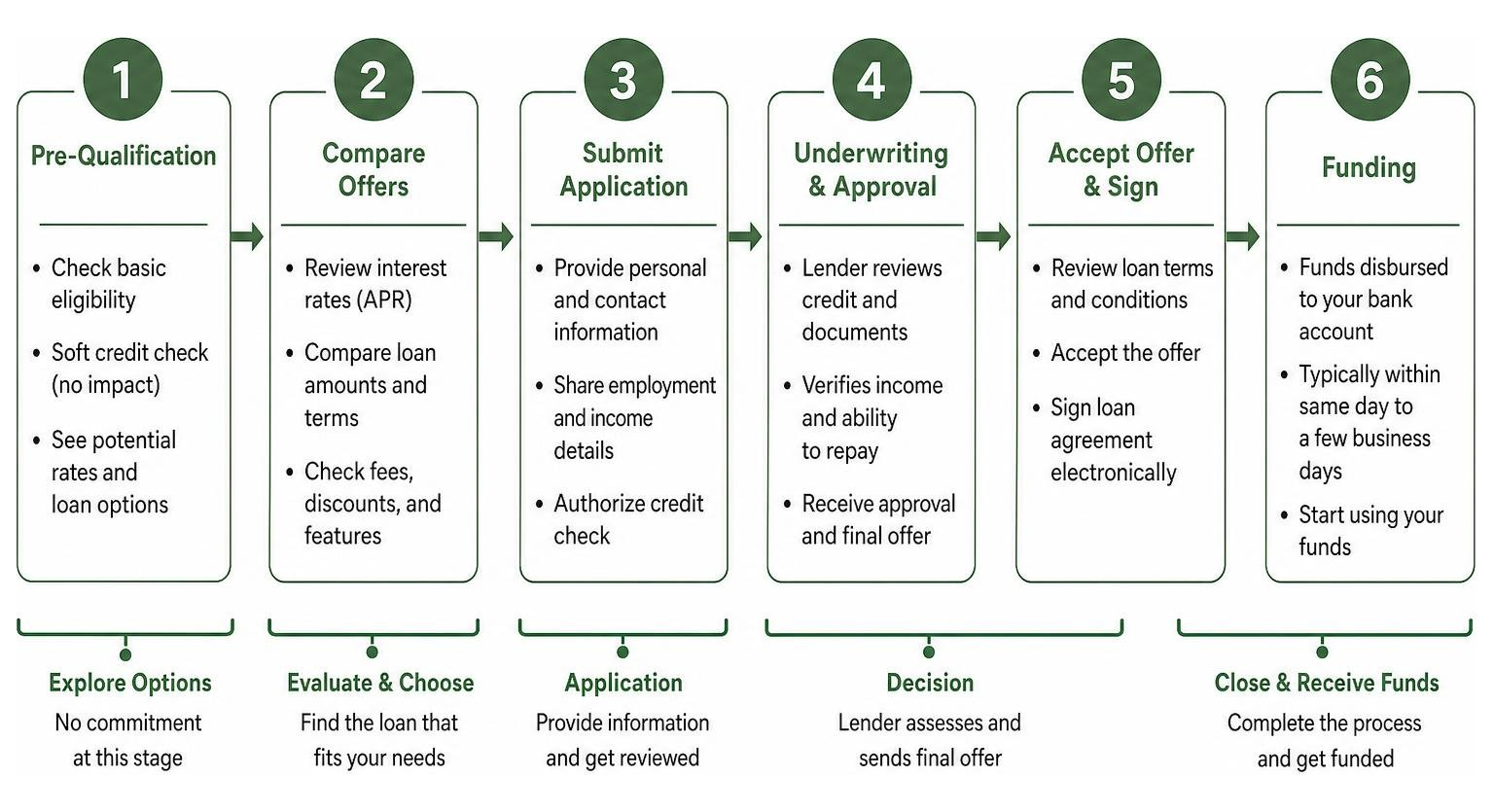
When you ask, “Which bank gives a personal loan at low interest?” the answer depends heavily on your credit profile and where you live. In the United States, traditional banks and specialized online lending arms compete aggressively for high-credit borrowers, driving starting Annual Percentage Rates (APRs) down significantly.
Leading the market in the US, PNC Bank features personal loan interest rates starting as low as 5.99% APR (with automatic payment discounts). Wells Fargo follows closely with rates as low as 6.74% APR, while American Express offers select credit card members rates starting at 6.91% APR. LightStream (a division of Truist) provides unsecured personal loan rates starting from 6.99% APR alongside a dedicated Rate Beat program.
In India, personal loan interest rates are quoted per annum (p.a.) on a reducing balance basis. Both HDFC Bank and IDFC FIRST Bank feature starting rates of 9.99% p.a. State Bank of India (SBI) offers competitive rates starting at 10.00% p.a., while Kotak Mahindra Bank and ICICI Bank start around 10.99% p.a.
Below is a direct comparison of the top banks offering low-interest personal loans:
| Bank / Institution | Region | Advertised Starting Rate | Max Loan Amount | Repayment Terms | Autopay Discount | Key Distinction |
|---|---|---|---|---|---|---|
| PNC Bank | US | 5.99% APR | $35,000 | 12 – 60 months | Yes (included) | Lowest advertised starting APR in US market |
| Wells Fargo | US | 6.74% APR | $100,000 | 12 – 84 months | 0.25% APR | Exclusive to existing bank account holders |
| American Express | US | 6.91% APR | $40,000 | 12 – 36+ months | Pre-selected | No origination fees; pre-approved card members |
| LightStream | US | 6.99% APR | $100,000 | 24 – 144 months | 0.50% APR | Rate Beat program (0.10% lower than rivals) |
| HDFC Bank | India | 9.99% p.a. | ₹50 Lakh | 12 – 72 months | Digital auto-debit | 10-second instant disbursal for existing clients |
Which Bank Gives a Personal Loan at Low Interest for Excellent Credit?
Borrowers holding an excellent credit profile—typically defined as a FICO score of 800 or above or a CIBIL score exceeding 750—access the absolute lowest rate tiers. Lenders reserve their prime pricing for applicants who demonstrate a multi-year track record of on-time payments, low revolving credit card balances, and a healthy debt-to-income (DTI) ratio (typically below 35% to 40%).
For top-tier US applicants, LightStream delivers an exceptional deal for strong credit profiles. Their Rate Beat Program guarantees to beat any competing lender’s qualifying fixed rate by 0.10 percentage points, provided the applicant meets their stringent credit, income, and liquid asset criteria. LightStream also charges zero origination fees, zero late fees, and zero prepayment penalties.
In India, borrowers with prime credit and stable salary histories can secure rates starting at 9.99% p.a. by applying for options like an HDFC Bank Personal Loan. High-earning salaried professionals with clean repayment histories often qualify for higher borrowing limits—up to ₹50 Lakh—with processing fee waivers or reduced interest margin tiers.
Which Bank Gives a Personal Loan at Low Interest for Existing Customers?
Many major retail banks restrict their personal loan offerings strictly to pre-existing deposit or credit card customers, or offer them substantial relationship perks. Maintaining an active checking, savings, or investment relationship with a financial institution yields two main benefits: lower interest rates and streamlined loan approvals.
- Relationship Discounts: Lenders like Wells Fargo, U.S. Bank, and Citi lower advertised interest rates by 0.25% to 0.50% APR when you set up automated recurring monthly loan payments (Autopay) directly from a linked checking or deposit account.
- Pre-Approved Digital Offers: Existing customers often bypass cumbersome document submission procedures. For instance, SBI Personal Loans provides pre-approved personal loans to existing salary account holders that can be activated in as few as four clicks on their mobile banking application.
- Higher Borrowing Limits: Banks frequently double the maximum borrowing ceiling for existing account holders compared to first-time applicants.
Key Loan Terms, Fees, and Rate Features Compared

Understanding the total cost of borrowing requires looking past the nominal interest rate and examining all associated loan terms and fee structures.
- Fixed vs. Variable Rates: Most low-interest personal loans carry a fixed interest rate, meaning your monthly payment remains unchanged over the entire life of the loan. Variable rates fluctuate according to underlying benchmark market indexes; while they may start lower, they introduce the risk of rising monthly payments over time.
- Origination Fees: An origination fee is an upfront administrative charge levied by the lender, calculated as a percentage of the total loan amount (typically 1% to 8% in the US, or up to 2% to 5% in India). Top-tier low-interest banks—such as PNC Bank, Discover, Citi, and LightStream—charge $0 origination fees.
- Prepayment Penalties: Prepayment penalties charge borrowers for paying off their installment loans early. Most reputable commercial banks have completely eliminated prepayment penalties, allowing you to pay down principal faster to save on overall interest.
- Soft Credit Checks for Prequalification: Modern lenders permit prospective applicants to submit an initial rate check using a “soft pull” on their credit report. Soft inquiries do not impact your credit score, letting you shop around and compare rates before committing to a formal application that triggers a hard inquiry.
Credit Unions vs. Traditional Banks vs. Online Lenders
When hunting for a low-interest personal loan, credit unions often match or beat traditional commercial banks. Because credit unions operate as member-owned, non-profit financial cooperatives, they return excess earnings to their members in the form of lower loan rates and lower account fees.
- PenFed Credit Union: Offers personal loan rates as low as 6.99% APR for loan amounts ranging from $600 to $50,000. Membership is open nationwide to anyone who opens a savings account with a minimal deposit.
- Navy Federal Credit Union: Provides personal loan rates starting at 8.74% APR for loans ranging from $250 up to $50,000. However, membership is exclusively restricted to military service members, veterans, Department of Defense personnel, and their immediate families.
While traditional banks excel at high borrowing limits ($50,000 to $100,000) and credit unions offer consumer-friendly rate caps, online lenders focus on rapid digital verification and quick funding speeds—often depositing approved loan proceeds into your bank account within one business day.
Loan Limits, EMI Calculations, and Reducing Balance Rates
In India, personal loan pricing relies on the “reducing balance interest rate” method. Rather than calculating interest against the original principal throughout the entire term, interest is calculated solely on the outstanding remaining principal balance at the end of each monthly payment cycle.
Borrowers looking to finance smaller amounts online can review options like an IDFC FIRST Bank ₹3 Lakh Loan, which features starting rates of 9.99% p.a. over flexible tenures. Meanwhile, Kotak Mahindra Bank Personal Loan Rates start at 10.99% p.a., supporting borrowing limits up to ₹1 Crore for tenures reaching 6 years (72 months).
To visualize how loan terms affect your Equated Monthly Installment (EMI) and total interest costs, look at this mathematical repayment breakdown for a ₹10 Lakh ($12,000 approx.) personal loan at 10.99% p.a. fixed rate:
- 3-Year Tenure (36 Months): Monthly EMI is roughly ₹32,731. Total interest payable over 3 years: ₹1,78,316.
- 5-Year Tenure (60 Months): Monthly EMI drops to ₹21,737. Total interest payable over 5 years: ₹3,04,220.
As shown above, extending your loan repayment tenure reduces your required monthly cash outlay, but increases the total cumulative interest paid over the life of the loan.
Strategies to Secure the Lowest Personal Loan Interest Rates
Securing the absolute lowest advertised interest rate from any bank isn’t a matter of luck; it requires proactive financial preparation. Here are key steps to position yourself for prime pricing:
- Optimize Your Credit Profile: Aim for a credit score of 750 or higher (FICO or CIBIL). Review your official credit reports for errors, settle overdue balances, and keep revolving credit card utilization below 30% prior to submitting a loan application.
- Leverage Pre-Existing Banking Relationships: Banks prefer lending to consumers they already know. Applying through the bank that hosts your primary salary account often unlocks direct relationship rate discounts ranging from 0.25% to 0.50% APR.
- Enroll in Automatic Payments (Autopay): Most institutions automatically reduce your interest rate when you authorize automated monthly electronic debit transfers from a deposit account upon loan origination.
- Apply with a Qualified Co-Signer: If your credit score falls into the fair or average range, adding a co-signer with excellent credit and stable income can significantly lower your interest rate and boost your approval odds.
- Consolidate High-Interest Revolving Credit: Using a personal loan at 7% to 10% APR to pay off credit cards charging 20%+ APR instantly saves money and streamlines your debt into a single monthly payment.
For salaried workers exploring tailored lending options, checking an ICICI Bank Personal Loan for Salaried Employees can yield quick approval turnarounds without collateral obligations. Similarly, those requiring small, micro-installment borrowing can check a Bajaj Finserv Personal Loan under Rs. 1 lakh for fast digital disbursal with flexible flexi-term repayment variants.
Frequently Asked Questions about Low Interest Personal Loans
What credit score is required to get the lowest advertised personal loan rate?
To qualify for a bank’s lowest advertised starting interest rate (such as 5.99% to 6.99% APR in the US or 9.99% p.a. in India), you generally need an excellent credit score. In the US, this usually requires a FICO score of 750 to 800+. In India, a CIBIL score of 750 or above is standard. Lenders also evaluate your debt-to-income (DTI) ratio, steady employment history, and annual gross income alongside your credit score.
Is a fixed interest rate better than a variable interest rate on a personal loan?
For most borrowers, a fixed interest rate is preferable. A fixed interest rate guarantees that your interest rate and monthly EMI remain identical throughout the entire loan tenure, protecting you from sudden benchmark rate increases and simplifying long-term household budgeting. Variable rates might start slightly lower, but they expose you to market volatility over multi-year terms.
How quickly can personal loan funds be disbursed after approval?
Disbursal speed varies significantly based on your relationship with the financial institution and whether you undergo digital verification:
- Pre-Approved Existing Customers: Disbursal can occur in as little as 10 seconds to a few minutes via direct automated deposit on mobile banking apps.
- Standard Online Applications: Electronic Automated Clearing House (ACH) funding typically takes between 1 to 4 business days following final document signature verification.
Conclusion
When asking “Which bank gives a personal loan at low interest?” the top contenders in the US market include PNC Bank (starting at 5.99% APR), Wells Fargo (6.74% APR), American Express (6.91% APR), and LightStream (6.99% APR). In India, top low-interest options begin at 9.99% p.a. with lenders like HDFC Bank and IDFC FIRST Bank, followed closely by SBI at 10.00% p.a.
To secure these prime interest rates, focus on maintaining a credit score above 750, keeping your existing debt utilization low, choosing fixed-rate terms, and taking advantage of autopay relationship discounts. Always prequalify using soft credit pulls when available to compare offers without hurting your credit score.
To discover how modern artificial intelligence tools are reshaping personal finance algorithms and lending automation, stay updated with latest financial technologies and AI developments with our expert insights.