Why Customer Expectations Are Forcing Businesses to Rethink Engagement
Scr0ll d0wn to D0VVNL0AD
The best AI-powered customer engagement software in 2026 can mean the difference between keeping a customer and losing them forever. In fact, 89% of customers who switch brands do so because of poor experience — not product quality.
Here are the top AI-powered customer engagement platforms to know right now:
| Platform | Best For |
|---|---|
| NICE CXone | Enterprise contact centers |
| Salesforce Einstein | CRM-integrated AI support |
| Respond.io | Omnichannel messaging & sales |
| Sobot | E-commerce & retail AI |
| Gupshup | Conversational marketing via messaging apps |
| ZoomInfo | GTM and sales signal-driven engagement |
| HubSpot | Small business CRM + engagement |
| Intercom | Product-led growth and support |
| Freshdesk | Scalable customer support |
| Zoho CRM | Affordable all-in-one engagement |
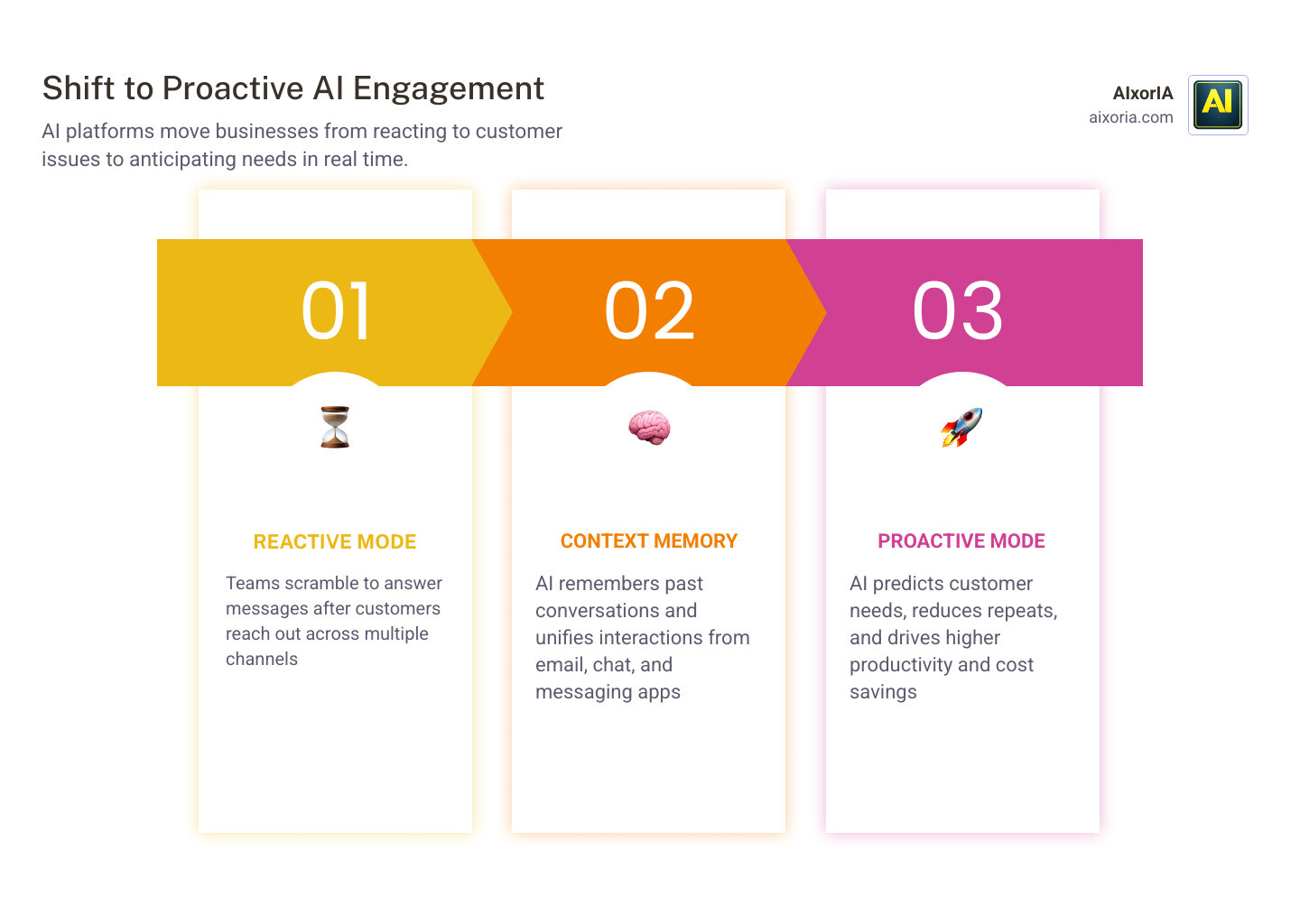
The market has changed fast. Early chatbots were clunky and frustrating. Today’s AI platforms understand context, remember past conversations, and respond across a dozen channels at once.
But here’s the problem many small business owners face: too many tools, not enough time, and no clear path forward.
- 82% of service professionals say customer demands have increased
- 78% of customers feel like service is rushed
- 73% of consumers expect AI to already know their history
That last one is the kicker. Customers don’t want to repeat themselves. They expect you to already know them.
AI-powered engagement platforms are built to solve exactly that. They shift your team from reactive — scrambling to answer messages — to proactive — anticipating needs before customers even ask.
And the results back it up. Organizations using AI engagement tools have reported saving over $1M in operational costs, handling 1.1 million AI conversations per month, and achieving a 26% jump in team productivity.
This guide breaks down the best platforms available today, what to look for, and how to pick the right one for your business — even if you have no technical background.
What is the Best AI-Powered Customer Engagement Software?
At its core, the best AI-powered customer engagement software is a system that unifies all your customer interactions — whether they happen via email, WhatsApp, SMS, or live chat — and uses artificial intelligence to manage, automate, and analyze them in real-time.
Unlike older tools that simply routed messages to a massive queue, modern AI platforms use natural language understanding (NLU) and machine learning to grasp the actual intent behind a customer’s message. This allows businesses to resolve up to 70% of inquiries instantly with conversational AI, while dramatically boosting conversion rates by up to 3x.
If you are looking to explore the broader landscape of engagement tools before diving deep into artificial intelligence, check out our guide on the 9 Best Customer Engagement Software In 2026.
Traditional CRM vs. AI-First Engagement Platforms
It is easy to confuse a Customer Relationship Management (CRM) platform with an AI-first engagement platform.
A traditional CRM acts as your sales team’s home base. It is a system of record designed to track deals, manage pipelines, and store contact details. However, many sales and support reps suffer from the “toggle tax” — constantly jumping between a dozen disconnected browser tabs just to find a customer’s recent email or chat history.
AI-first customer engagement platforms eliminate this friction. They sit on top of (or deeply integrate with) your CRM to pull every call, message, and behavior signal into a single, unified view. While a CRM records who your customer is, an engagement platform actively shapes how you interact with them in real-time. For a detailed breakdown of the leading providers in this space, see our analysis of the 9 Best Customer Engagement Software Vendors In 2026.
Core Capabilities of the Best AI-Powered Customer Engagement Software
To stand out in 2026, a platform must offer more than basic auto-responders. The leading tools provide:
- Predictive Analytics: Assessing historical data to forecast customer behavior, such as identifying accounts at risk of churning before they even submit a support ticket.
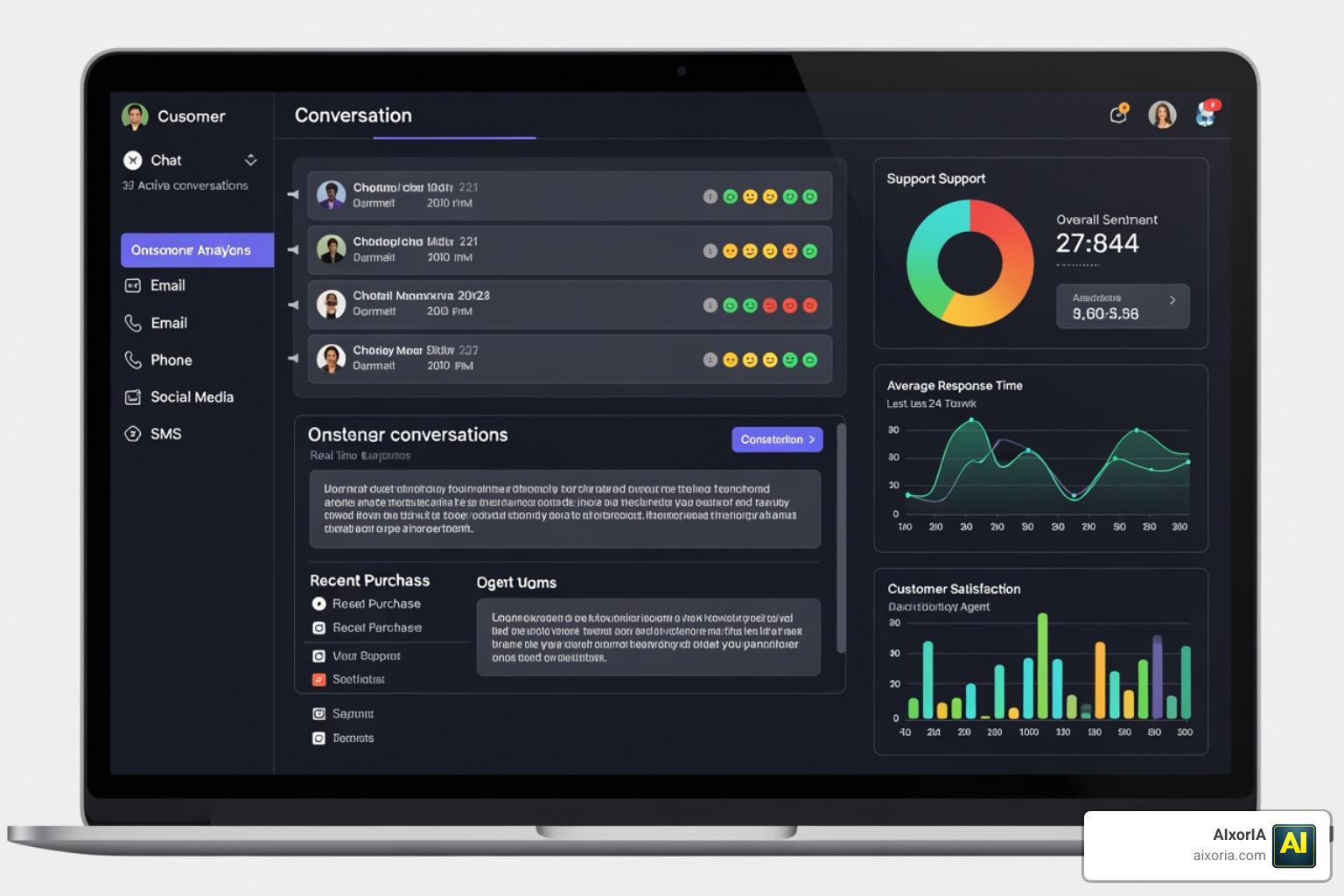
- Sentiment Analysis: Detecting the emotional state of a user (frustrated, neutral, excited) and adjusting the AI’s tone or triggering an immediate human handoff.
- Real-Time Intelligence: Analyzing live interactions to provide customer service reps with instant, step-by-step action plans.
For businesses looking to master these capabilities across popular messaging apps like WhatsApp, leveraging Respond.io | #1 AI-Powered Customer Conversation Management Software provides a reliable foundation to capture, convert, and retain customers through conversation-led growth.
Key Features to Look For in AI Engagement Platforms
When shopping for the best AI-powered customer engagement software, it is easy to get distracted by flashy vendor claims. To get real value, you need to focus on features that drive operational efficiency and keep your customers happy.
To compare the top-rated software options side-by-side, take a look at our comprehensive review of the 9 Best Ai Powered Customer Engagement Software In 2026.
Omnichannel Orchestration and Persistent Memory
We have all been there: you start a conversation with a brand on WhatsApp, only to be told to send an email, where you have to explain your entire problem all over again. It is incredibly frustrating.
True omnichannel orchestration ensures that a customer can switch from WhatsApp to email, and then to live chat, while their entire conversation history remains in a single continuous thread. This relies heavily on agent memory. When an AI platform has persistent memory, it remembers customer preferences, past purchases, and previous issues. This context preservation makes the customer feel known and valued.
To see how modern platforms handle this continuity, read our guide on Th 9 Best Customer Engagement Software In 2026.
Agentic AI and Generative Copilots
The latest wave of AI features is split into two main categories:
- AI Agents (Autonomous): These virtual assistants operate 2026-style. They don’t just follow static scripts; they use advanced reasoning to answer complex questions, qualify leads, recommend products, and book appointments. Implementing these autonomous agents can result in a 60% faster sales cycle and an outstanding 81% conversion rate, yielding up to 42.5x more ROI compared to legacy systems.
- Generative Copilots (Assistive): For cases that require a human touch, AI copilots assist your live reps behind the scenes. They generate instant chat summaries, draft response suggestions, and translate languages on the fly (supporting over 40+ languages with regional idioms).
Evaluating the Best AI-Powered Customer Engagement Software for Your Industry
Different businesses have completely different engagement needs. A sales team trying to close enterprise deals needs a different toolkit than a customer support team handling thousands of retail refunds.
| Feature / Focus | Sales & GTM-Focused Platforms (e.g., ZoomInfo, HubSpot) | Support & Service-Focused Platforms (e.g., NICE CXone, Sobot) |
|---|---|---|
| Primary Goal | Pipeline generation, outbound sequence personalization, lead scoring | Rapid resolution, ticket deflection, high CSAT scores |
| Key AI Capabilities | Intent signal tracking, predictive account prioritization | Generative response suggestions, automatic case routing, sentiment analysis |
| Core Channels | Email, LinkedIn, Phone, SMS | WhatsApp, Web Chat, Email, Voice, Social DMs |
| Real-World Impact | Saving 11.5 hours weekly per rep; driving 39% of pipeline from intent signals | 19% CSAT increase on voice; 28% improvement in payment completions |
For organizations in highly specific sectors, such as banking or wealth management, you will want to look at platforms tailored to your unique workflows. Check out our industry-specific breakdown of the 9 Best Financial Services Customer Engagement Software In 2026.
Selecting the Best AI-Powered Customer Engagement Software for Regulated Sectors
If you operate in healthcare, finance, or government, you cannot just plug in any AI tool. Data privacy is paramount.
When evaluating platforms, look for those with built-in “Trust OS” layers and robust guardrails. Your chosen software must hold top-tier security certifications, including GDPR, SOC 2, and HIPAA. The AI must be trained on industry-specific LLMs that respect data boundaries, ensuring customer data is never used to train public models.
Pricing Models and Total Cost of Ownership
Pricing for AI customer engagement software generally falls into three buckets:
- User-Based SaaS Pricing: You pay a flat monthly fee per agent seat.
- Usage-Based Pricing: You pay per conversation, per API call, or per resolved ticket.
- Value-Based (Performance) Pricing: You pay based on the successful outcomes the AI achieves (e.g., booked meetings or completed payments).
When calculating the Total Cost of Ownership (TCO), acquiring new customers costs 5x more than retaining existing ones. Investing in an intuitive platform that your team actually adopts will pay massive dividends in retention and lifetime value.
Frequently Asked Questions about AI Customer Engagement
What is the difference between AI customer engagement and a traditional CRM?
A traditional CRM acts as a static database to track contact details and sales pipelines. AI customer engagement software is an active, real-time interaction layer. It uses machine learning to analyze customer behavior, automate conversational support across channels, and guide the customer journey dynamically.
How do AI agents handle complex customer support escalations?
When an AI agent detects frustration (via sentiment analysis) or encounters a highly technical query outside its training, it initiates a smart human handoff. The live human agent receives the chat with a complete summary of the interaction, customer history, and recommended next actions, ensuring the customer never has to repeat themselves.
What security certifications should enterprise AI platforms have?
Enterprise-grade platforms should maintain SOC 2 Type II, GDPR, and ISO 27001 compliance. Depending on your industry, HIPAA (for healthcare) or PCI DSS (for payment processing) certifications are also essential to guarantee secure data encryption and strict privacy guardrails.
Conclusion
The era of clunky, disconnected customer tools is over. Navigating the customer journey in 2026 requires speed, personalization, and a unified workspace. By implementing the best AI-powered customer engagement software, your business can turn everyday conversations into a powerful engine for retention and growth.
At AIxorIA, we specialize in cutting through the noise. We help businesses build and implement custom AI solutions, host practical tool training workshops, write step-by-step tutorials, and run performance audits to make sure you are getting the absolute most out of your technology. We believe in simple language, affordable services, and fast, friendly support.
Ready to take your operations to the next level? Learn more about maximizing your ROI with autonomous agents and let us help you build an engagement strategy that keeps your customers coming back.