What Is SAP Software Used For — And Why It Matters
Scr0ll d0wn to D0VVNL0AD
What is SAP software used for across hundreds of thousands of businesses worldwide? Here’s the short answer:
SAP software is used to connect and manage core business operations — all in one place. It replaces scattered spreadsheets and disconnected tools with a single system where every department shares the same data in real time.
The main uses of SAP software include:
- Financial management — accounting, reporting, forecasting, and compliance
- Supply chain management — inventory, logistics, procurement, and warehousing
- Human resources — payroll, hiring, employee records, and talent development
- Sales and distribution — order management, customer relationships, and pricing
- Manufacturing and production — planning, scheduling, and quality control
- Business analytics — real-time dashboards, data insights, and performance tracking
SAP stands for Systemanalyse Programmentwicklung — German for “System Analysis Program Development.” It was founded in 1972 by five former IBM engineers, and today it’s used by over 437,000 businesses across 190 countries.
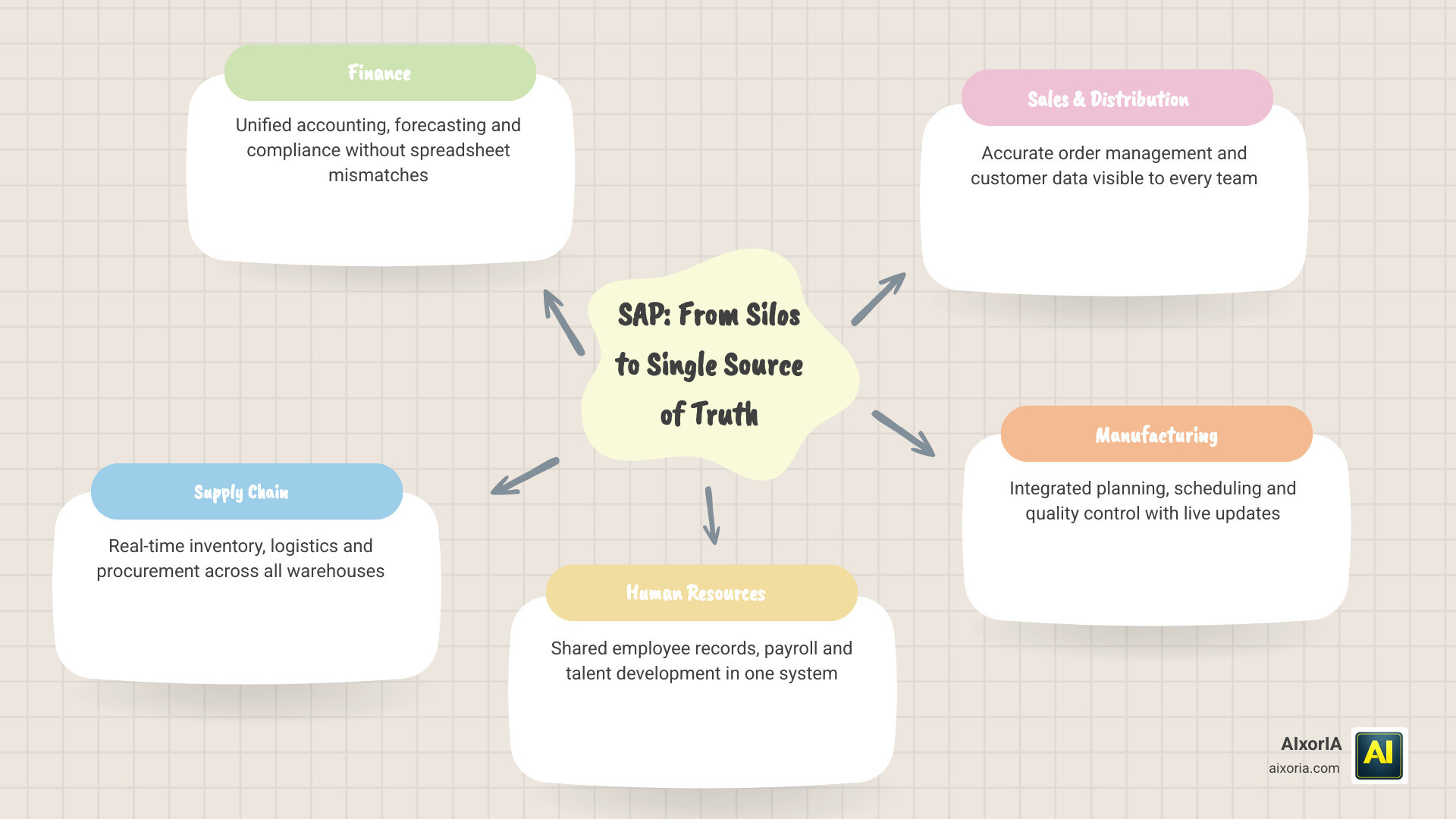
The core idea is simple: instead of each department running on its own separate tools, SAP gives everyone a single view of the truth. Finance, HR, sales, and operations all pull from the same data. That means fewer errors, faster decisions, and less time wasted chasing down information.
Whether you’re running a small business or a global enterprise, that kind of connected visibility can make a real difference.
Understanding What Is SAP Software Used For in Modern Business

To truly grasp What is SAP? | Definition and Meaning, we need to look at the concept of a “single source of truth.” In many traditional businesses, the accounting team uses one software, the warehouse uses another, and HR uses a third. These “data silos” lead to massive headaches—like a salesperson promising stock that the warehouse already sold.
By centralizing data management, SAP software provides multiple business functions with a unified view. This transparency is why SAP is one of the top five ERP providers globally, holding a 3.57% market share in a highly competitive field. As of May 2026, SAP remains the largest European company by market capitalization, a testament to how vital its tools are for global commerce.
When we talk about operational efficiency, we aren’t just using a buzzword. We mean that 98 of the 100 largest companies in the world rely on SAP to keep their lights on and their processes moving.
Core Business Functions and Integrated Modules
SAP isn’t just one program; it’s an ecosystem of over 100 solutions. Depending on the size of your company, you might use different versions of their software.
| Feature | SAP S/4HANA | SAP Business One | SAP Business ByDesign |
|---|---|---|---|
| Target Audience | Large Enterprises | Small Businesses | Mid-market (250-1,500 employees) |
| Key Strength | Real-time AI & Analytics | Customization (500+ integrations) | Rapid Cloud Deployment |
| Deployment | Cloud, On-premise, Hybrid | Mostly On-premise/Partner Cloud | Pure SaaS |
Beyond these versions, the software is broken down into “modules” that handle specific tasks. For example, the Materials Management (MM) module handles procurement, while Sales and Distribution (SD) manages everything from price quotes to final delivery. To make these modules even more effective, many businesses are now pairing them with the Best Ai Tools For Work to automate routine data entry.
What is SAP software used for in supply chain management?
In logistics, SAP is a game-changer. It provides real-time visibility into every moving part of a supply chain. Take a global tire company like Bridgestone, for example. By using SAP Extended Warehouse Management, they achieved a 25% reduction in errors.
The software allows managers to track inventory levels across multiple continents, automate warehouse picking processes, and predict when a shipment might be delayed due to weather or port congestion. This level of control turns a chaotic supply chain into a streamlined, predictable machine.
What is SAP software used for in human resources?
SAP’s HR suite, often known as SuccessFactors, manages the entire employee lifecycle. From the moment a candidate applies for a job to the day they retire, every interaction is recorded.
Vodafone is a prime example of this in action. They used SAP S/4HANA to standardize 85% of their core business processes—including HR and payroll—across 24 different countries. This ensures that an employee in London and an employee in New Delhi are managed with the same level of accuracy and compliance.
The Evolution of SAP: From R/1 to the Autonomous Enterprise
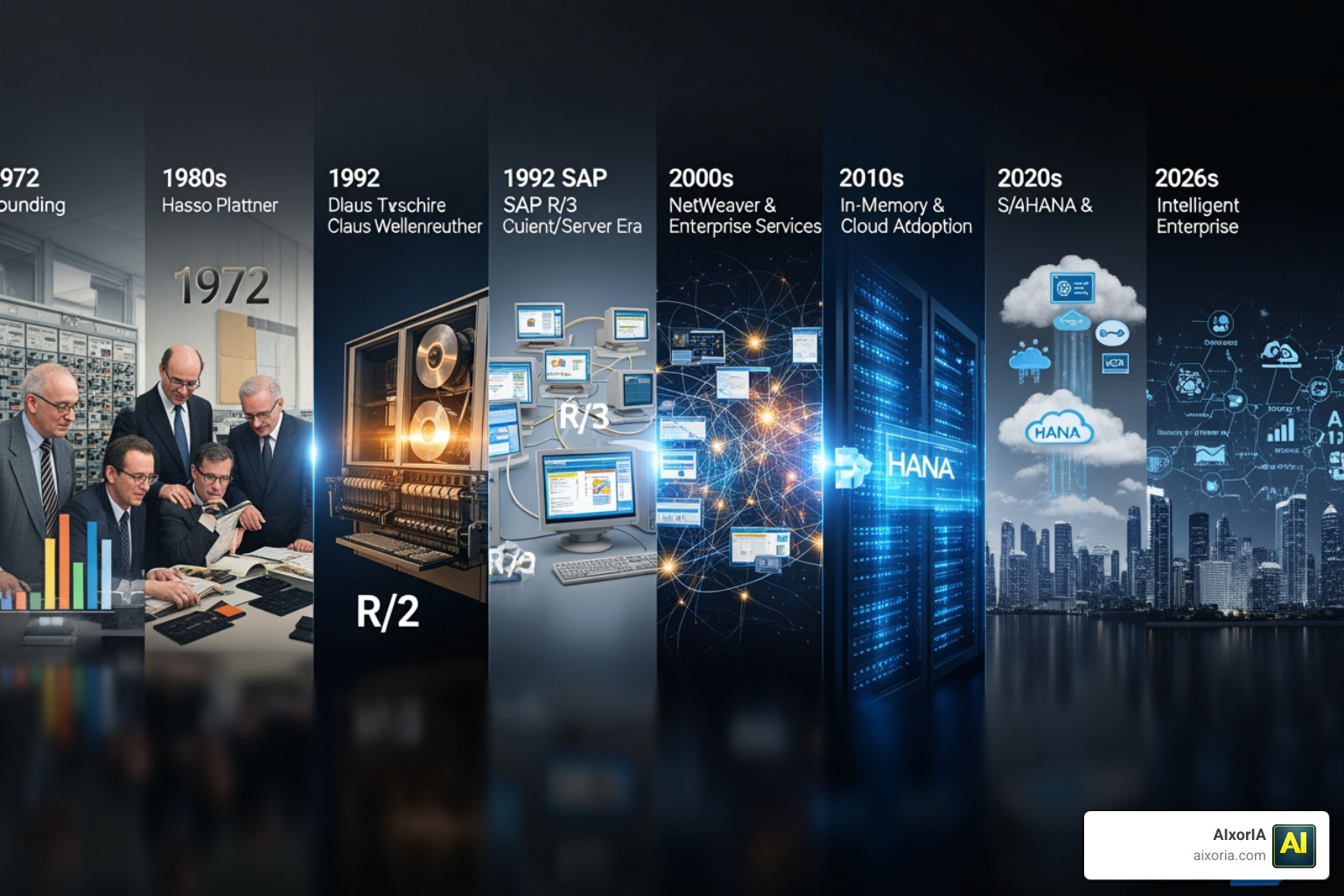
SAP has come a long way since its 1972 founding. It started with R/1 and R/2, which ran on massive mainframes. The 1990s brought SAP R/3, which introduced the “client-server” model we still recognize today.
The real revolution happened in 2010 with the launch of SAP HANA. This was an “in-memory” database, meaning it processed data in the computer’s RAM rather than on a slow hard drive. This made it possible to analyze millions of rows of data in seconds.
By May 2026, we have moved into the era of the Autonomous Suite | SAP. This features Joule, a generative AI copilot that doesn’t just show you data but actually executes work for you. Whether you are looking for the Best Ai Tools For Business In 2026 or trying to migrate to the cloud, SAP’s strategy has shifted toward a “cloud-first” approach, now boasting over 230 million cloud users.
Key Benefits and Professional Skills for 2026
Why do companies invest millions in SAP? The benefits are clear:
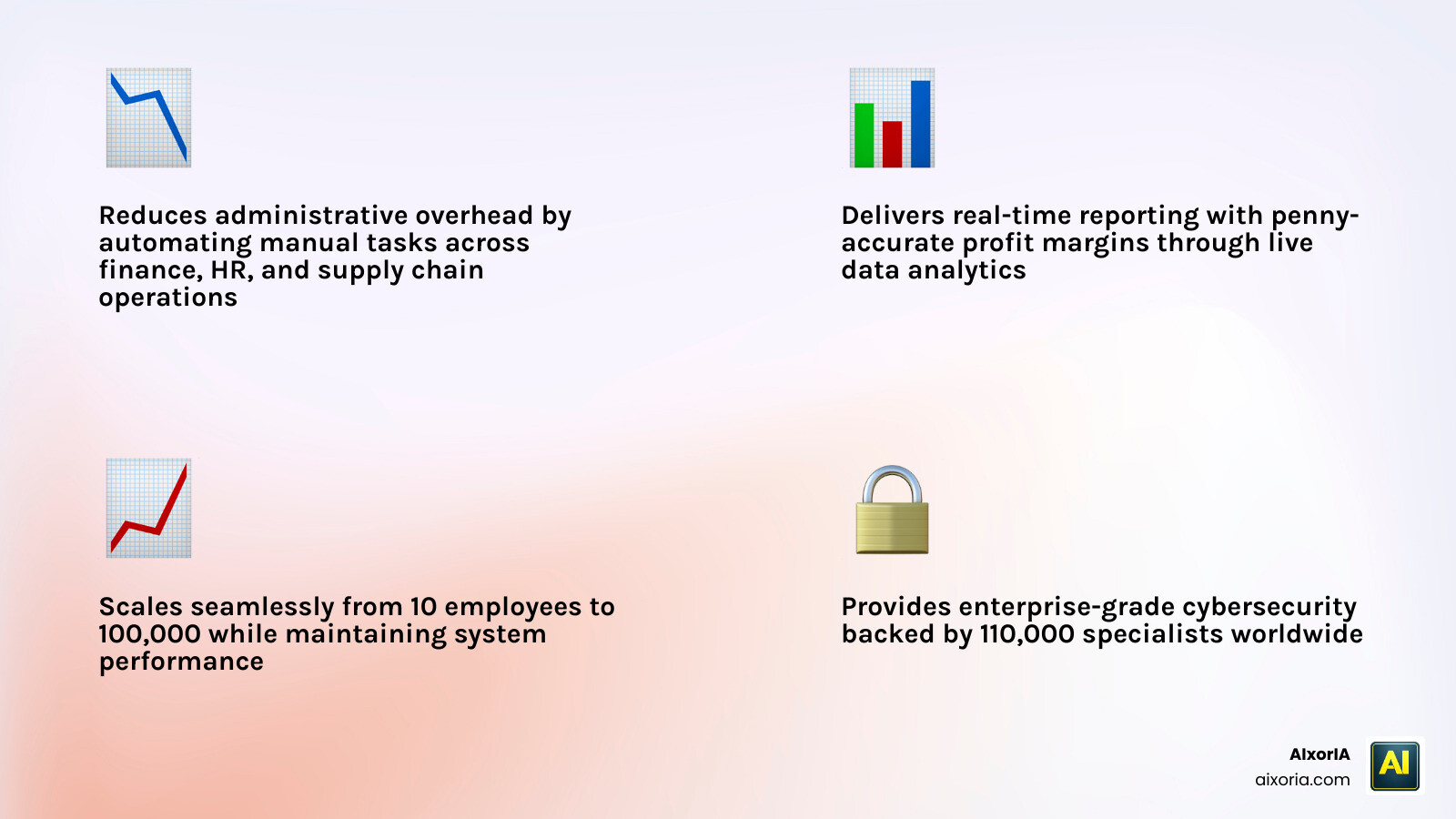
- Reduced Costs: By automating manual tasks, companies significantly lower their administrative overhead.
- Data-Driven Decisions: Real-time reporting means you aren’t guessing about your profit margins; you know them to the penny.
- Scalability: SAP grows with you. Whether you have 10 employees or 100,000, the system can handle the load.
- Cybersecurity: With 110,000 employees worldwide, SAP has one of the most robust security infrastructures on the planet.
If you are looking to boost your career, learning SAP is a smart move. Professionals use these tools to master Best Ai Tools For Business Productivity. SAP offers over 150 certifications ranging from Associate (the basics) to Professional (for those who can design entire systems). Common skills include transaction management, financial reporting, and advanced data analytics.
Integrating AI and Emerging Technologies
Modern SAP software is no longer just a database; it’s an AI powerhouse. According to What is ERP? The Essential Guide | SAP, the latest ERP systems use machine learning to spot patterns that humans might miss—like a supplier who is consistently three days late.
We are also seeing deep integration with the Internet of Things (IoT). Imagine a factory machine that tells the SAP system it’s about to break. SAP then automatically orders the replacement part and schedules a technician. This is the “autonomous enterprise” in action. For those managing complex data ecosystems, using the Best Ai Tools For Data Integration In 2026 ensures that these AI agents have the clean, reliable data they need to work effectively. Most companies see a return on investment (ROI) within just three years of implementing these smart technologies.
Frequently Asked Questions about SAP
What does the acronym SAP stand for?
As we mentioned earlier, it stands for Systemanalyse Programmentwicklung. In English, this translates to System Analysis Program Development. It was the name chosen by the five founders in Germany back in 1972 to describe their vision of software that could process data in real-time.
Is SAP software difficult to learn for beginners?
While it has a reputation for being complex, SAP has made huge strides in user-friendliness. The modern “Fiori” interface looks and feels like a standard web app. Because it is modular, you don’t need to learn the whole system—just the part that applies to your job. With over 150 certifications available in nine languages, there are plenty of pathways for beginners to become experts.
Which industries use SAP software most effectively?
Almost every industry you can think of! However, it is especially powerful in:
- Manufacturing: For tracking raw materials and production lines.
- Retail: For managing inventory across thousands of stores.
- Public Sector: For managing city budgets and social services.
- Telecommunications: For handling millions of customer billing records.
Conclusion
SAP software is the backbone of the modern digital economy. It turns fragmented data into a powerful asset, allowing businesses to run faster, smarter, and more sustainably. As we look toward the future of the autonomous enterprise, the integration of AI and real-time data will only become more critical.
At AIxorIA, we specialize in helping businesses navigate this complex technological landscape. Whether you need custom AI solutions, tool training workshops, or performance audits to ensure your systems are running at peak efficiency, we are here to help. Our mission is to provide simple language help and affordable services to empower your team.
Ready to take the next step in your digital transformation? Boost your business with AI productivity tools and discover how our expert-led performance audits can future-proof your operations. Let’s build something smarter together.