Business visibility has fundamentally changed. Traditional search rankings are no longer the only way brands get discovered. Today, visibility also depends on whether your content appears in AI-generated answers, recommendation engines, chat interfaces, and automated workflows.
AI visibility tools help marketers understand, monitor, and improve how their brand shows up across these systems. This includes large language models, AI search engines, content recommendation platforms, and automated decision layers that influence what users see.
For marketers targeting competitive markets like the United States, the challenge is no longer just ranking on search engines. It is ensuring your brand is consistently present wherever AI systems are generating answers, suggestions, and insights.
This guide breaks down the 7 best AI visibility tools for marketers in 2026, how they differ, and which one fits your use case.
Table of Contents
What Are AI Visibility Tools?
AI visibility tools are platforms that help marketers:
- Track how their brand appears in AI-generated responses
- Analyze content performance across AI-driven systems
- Optimize content for inclusion in AI answers and summaries
- Monitor competitors in AI environments
- Improve discoverability beyond traditional SEO
Unlike traditional SEO tools, which focus on rankings and keywords, AI visibility tools focus on presence inside AI-generated outputs.
What Makes the Best AI Visibility Tool for Marketers?
Not all tools in this category serve the same purpose. The best platforms typically excel in the following areas:
Coverage Across AI Systems
The tool should track visibility across:
- AI search engines
- Chat-based assistants
- Content recommendation systems
Data Transparency
Marketers need to understand:
- Why their content appears (or doesn’t)
- Which sources AI models are referencing
- How competitors are positioned
Content Optimization Insights
The platform should provide actionable recommendations, such as:
- Content gaps
- Structuring improvements
- Entity and topic coverage
Integration with Marketing Stack
Strong tools connect with:
- Analytics platforms
- Content management systems
- CRM and campaign tools
Enterprise-Ready Features
For US-based teams and larger organizations:
- Role-based access
- Reporting dashboards
- Compliance and data security
The Best AI Visibility Tools for Marketers
1. Profound — AI Search Visibility Intelligence
Best for: Tracking brand presence inside AI-generated answers
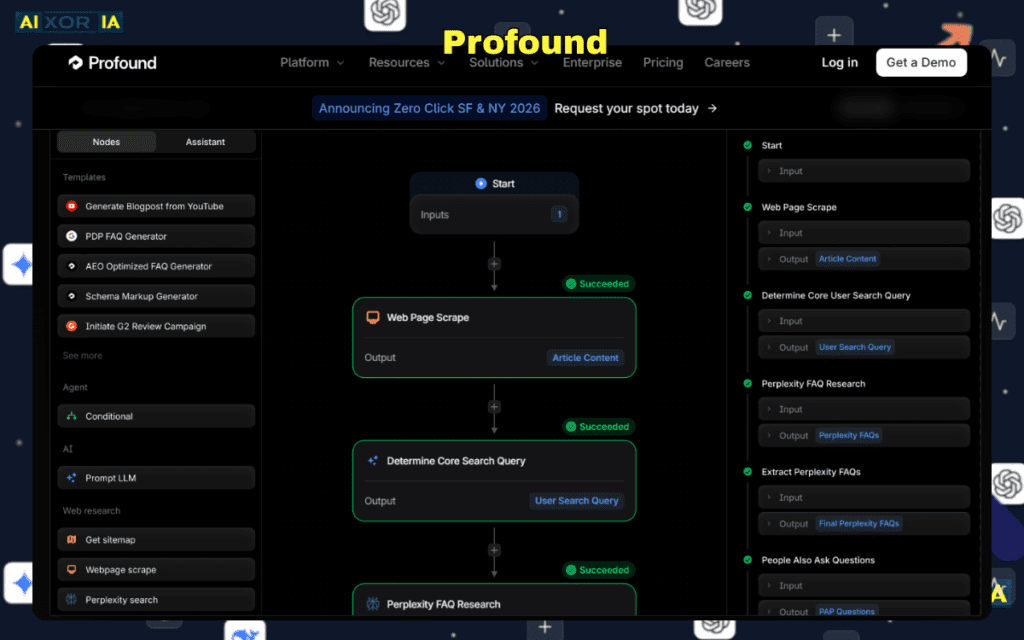
Profound focuses specifically on how brands appear inside AI responses. It monitors how AI systems reference your content, what competitors are being cited, and where your visibility is lacking.
Key features:
- AI answer tracking across platforms
- Brand mention analysis
- Competitive visibility benchmarking
- Source attribution insights
Why it stands out:
Profound is built for a new layer of marketing: optimizing for AI-generated answers, not just search rankings.
Limitations:
- Still evolving as a category
- Requires strategic interpretation of data
READ MORE – What is the Best AI Tool for Increasing Visibility?
2. Peec AI — AI Content Performance Monitoring
Best for: Measuring how content performs in AI-driven ecosystems
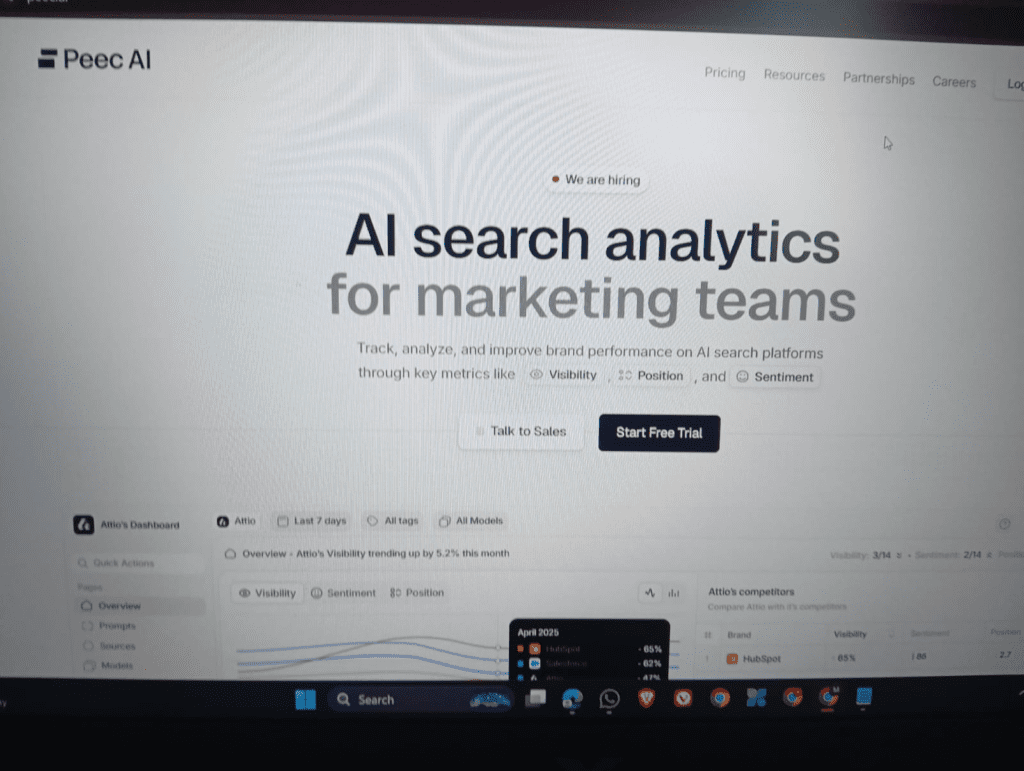
Peec AI focuses on understanding how content is interpreted and surfaced by AI systems. It provides insights into how well your content aligns with AI expectations.
Key features:
- Content scoring for AI readability
- Topic coverage analysis
- Visibility trends across AI outputs
- Recommendations for improvement
Why it stands out:
It bridges the gap between content creation and AI discoverability.
Limitations:
- Less focus on traditional SEO metrics
- Best used alongside other tools
3. AthenaHQ — AI Brand Monitoring and Insights
Best for: Enterprise-level AI visibility tracking
AthenaHQ provides deep insights into how brands are represented across AI systems, including sentiment, positioning, and competitive comparison.
Key features:
- AI-driven brand perception analysis
- Competitive intelligence
- Visibility tracking across multiple AI platforms
- Custom reporting dashboards
Why it stands out:
Strong fit for large US-based marketing teams needing high-level reporting and insights.
Limitations:
- Enterprise pricing
- Requires onboarding and setup
4. Otterly — AI Search Optimization Tool
Best for: Optimizing content for AI search engines
Otterly focuses on helping marketers structure content so it is more likely to be selected by AI systems when generating answers.
Key features:
- AI search optimization suggestions
- Content structure analysis
- Keyword-to-entity mapping
- Performance tracking
Why it stands out:
It translates SEO principles into AI-era optimization strategies.
Limitations:
- Narrow focus on optimization
- Limited broader analytics
READ MORE – Best AI Tools for Enhancing Visibility
5. Goodie AI — AI Visibility Tracking for Brands
Best for: Monitoring brand mentions in AI-generated content
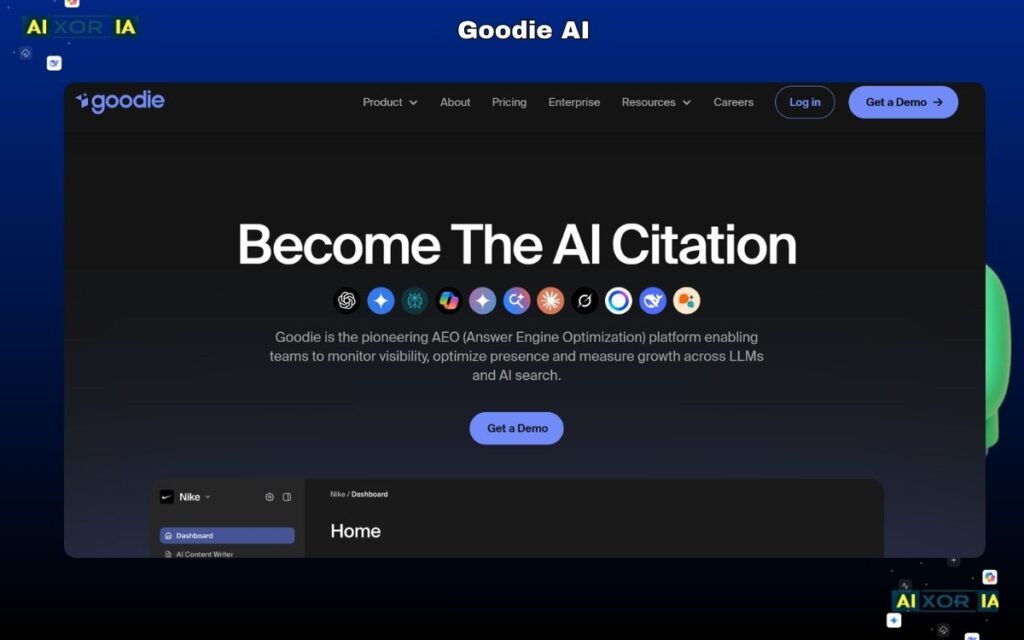
Goodie AI helps marketers track where and how their brand appears in AI outputs and provides alerts for changes.
Key features:
- Brand mention tracking
- AI visibility alerts
- Competitive comparisons
- Trend monitoring
Why it stands out:
Simple, focused approach to AI visibility monitoring.
Limitations:
- Fewer advanced features compared to enterprise tools
6. Scrunch AI — AI Content Optimization Platform
Best for: Improving content structure for AI systems
Scrunch AI focuses on optimizing content to increase its chances of being used in AI-generated answers.
Key features:
- Content restructuring recommendations
- Entity optimization
- AI readability scoring
- Performance analytics
Why it stands out:
Strong emphasis on actionable content improvements.
Limitations:
- Requires content updates to see results
- Limited tracking compared to monitoring tools
7. Nightwatch (AI Extensions) — Hybrid SEO + AI Visibility
Best for: Combining traditional SEO with AI visibility tracking

Nightwatch has expanded into AI-related insights, allowing marketers to track both search rankings and emerging AI visibility metrics.
Key features:
- Rank tracking
- AI visibility signals
- Competitor analysis
- Reporting dashboards
Why it stands out:
Ideal for teams transitioning from SEO to AI-driven visibility.
Limitations:
- AI features still developing
- Not fully AI-native
READ MORE – 9 Best AI Tools for Optimizing Product Visibility
How to Choose the Right Tool
The best tool depends on your specific marketing needs.
- For AI answer tracking: Profound or Goodie AI
- For content optimization: Otterly or Scrunch AI
- For enterprise insights: AthenaHQ
- For hybrid SEO + AI: Nightwatch
- For content performance analysis: Peec AI
In many cases, marketers use more than one tool to cover tracking, optimization, and reporting.
How AI Visibility Fits Into Modern Marketing
AI visibility is not a replacement for SEO—it is an extension of it.
Modern marketing now includes:
- Search engine optimization
- AI answer optimization
- Content authority building
- Cross-platform visibility
If your content is not structured for AI systems, you risk losing visibility even if you rank well on traditional search engines.
Limitations of AI Visibility Tools
Despite their potential, these tools still have limitations:
- AI systems are not fully transparent
- Data can vary across platforms
- Metrics are still evolving
- Results depend heavily on content quality
Marketers should treat these tools as guidance systems, not absolute indicators.
Final Thoughts
The rise of AI-generated content has changed how visibility works. Marketers who rely only on traditional SEO are already falling behind.
The best AI visibility tools for marketers help you:
- Understand how AI systems interpret your content
- Improve your chances of being featured in AI-generated answers
- Stay competitive in a rapidly evolving landscape
For most teams, the winning approach is a combination:
- A monitoring tool for visibility
- An optimization tool for content
- A strong foundation in SEO
As AI continues to shape discovery, visibility will belong to brands that are not just searchable—but also understandable by machines.
1 thought on “7 Best AI Visibility Tools for Marketers in 2026”