Product visibility has become one of the most competitive challenges for modern businesses. Whether you sell through search engines, marketplaces, or social platforms, getting your product in front of the right audience at the right time requires more than basic SEO or manual optimization.
AI has fundamentally changed how product visibility works. Instead of relying on static keywords and manual campaigns, businesses now use AI to analyze intent, optimize listings, personalize experiences, and automate distribution across channels.
For companies targeting the US market, where competition and customer expectations are high, AI-driven visibility is no longer optional. The right tools can directly impact impressions, click-through rates, and ultimately conversions.

This guide breaks down the best AI tools for optimizing product visibility in 2026, based on their strengths, use cases, and fit for different types of businesses.
Table of Contents
What Does “Product Visibility Optimization” Actually Mean?
Product visibility is not limited to ranking on search engines. It includes how easily and frequently your product appears across all digital touchpoints:
- Google Search and Shopping results
- Marketplaces like Amazon and Walmart
- Social platforms and discovery feeds
- Paid ad placements
- Internal site search results
AI tools improve visibility by:
- Understanding search and buyer intent
- Optimizing product titles, descriptions, and metadata
- Automating keyword targeting and bidding
- Personalizing product recommendations
- Connecting data across multiple platforms
The best tools don’t just improve rankings—they improve how your product is discovered and chosen.
What Makes an AI Tool Effective for Product Visibility?
Not all AI tools are built for visibility optimization. The most effective platforms typically excel in the following areas:
1. Data-Driven Optimization
They analyze large datasets (search trends, competitor listings, user behavior) and continuously refine strategies.
2. Multi-Channel Coverage
Visibility today spans multiple platforms. Strong tools integrate with search engines, marketplaces, ad networks, and CRM systems.
3. Automation with Control
AI should automate repetitive tasks like keyword updates or bid adjustments, while still allowing strategic control.
4. Content and Listing Intelligence
High-performing tools optimize product titles, descriptions, images, and structured data for better discoverability.
5. Real-Time Insights
Markets change quickly. Tools that provide real-time recommendations and performance tracking offer a competitive advantage.
The Best AI Tools for Optimizing Product Visibility
1. Jasper AI
Best for: AI-generated product content and SEO copy
Jasper is widely used for generating high-converting product descriptions, ad copy, and SEO content. It uses AI to create optimized text based on intent, tone, and keyword inputs.
Strengths:
- Fast generation of product descriptions at scale
- Built-in templates for eCommerce and ads
- Helps maintain consistency across large catalogs
Limitations:
- Requires human editing for accuracy and differentiation
- Does not directly manage distribution or analytics
Use case:
Ideal for brands managing large product inventories that need consistent, optimized descriptions for search and marketplaces.
READ MORE – Jasper AI Review
2. Surfer SEO
Best for: On-page SEO optimization and content scoring
Surfer SEO uses AI to analyze top-ranking pages and provide recommendations for optimizing content structure, keywords, and density.
Strengths:
- Data-backed keyword and content suggestions
- Real-time optimization scoring
- Competitive SERP analysis
Limitations:
- Primarily focused on content, not marketplaces or ads
- Requires integration with writing workflow
Use case:
Best for businesses focused on organic search visibility through blogs, landing pages, and product pages.
3. Helium 10
Best for: Amazon product visibility optimization
Helium 10 is a specialized platform for Amazon sellers, offering AI-powered tools for keyword research, listing optimization, and performance tracking.
Strengths:
- Deep Amazon keyword insights
- Listing optimization tools
- Competitor tracking and analytics
Limitations:
- Limited to Amazon ecosystem
- Learning curve for beginners
Use case:
Essential for brands that rely heavily on Amazon for product discovery and sales.
READ MORE – Best AI Tools for Tech Companies
4. Semrush
Best for: All-in-one visibility across SEO, ads, and competitive analysis
Semrush combines AI-driven insights for keyword research, competitor analysis, paid advertising, and content optimization.
Strengths:
- Comprehensive visibility across organic and paid channels
- Strong competitor intelligence
- Keyword tracking and trend analysis
Limitations:
- Can be overwhelming due to feature depth
- Higher pricing for advanced features
Use case:
Ideal for businesses that want a single platform to manage search visibility and competitive positioning.
5. Copy.ai
Best for: Fast AI content generation for marketing and product listings
Copy.ai focuses on generating marketing copy, including product descriptions, ads, and social media content.
Strengths:
- Quick content generation
- Easy-to-use interface
- Useful for testing multiple variations
Limitations:
- Less control over SEO depth compared to specialized tools
- Requires editing for uniqueness
Use case:
Best for startups and small teams needing fast content for multiple channels.
6. Feedonomics
Best for: Product feed optimization across multiple platforms
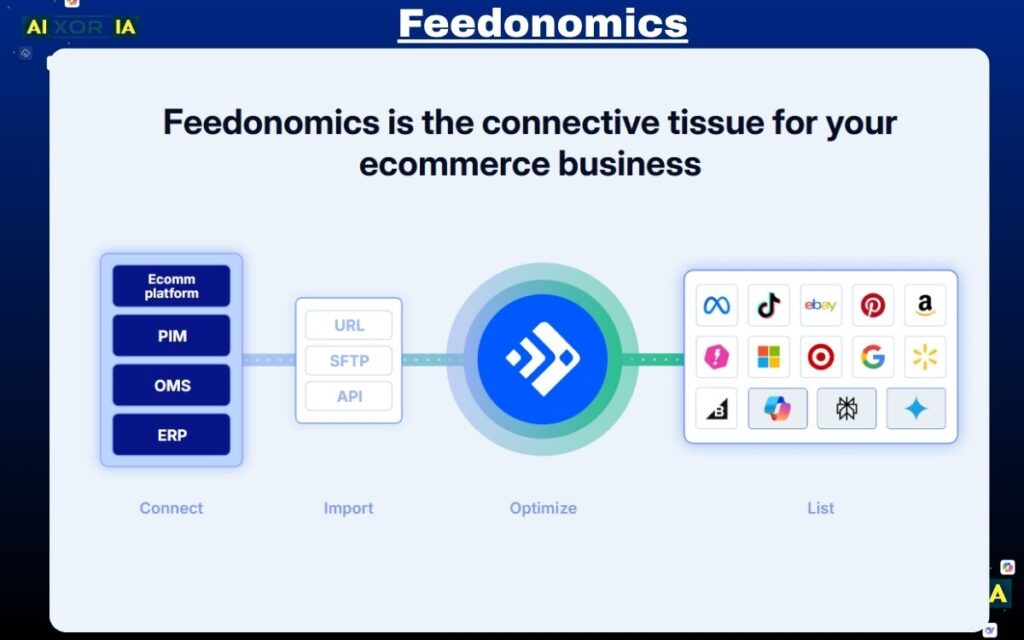
Feedonomics helps businesses optimize and distribute product data feeds to platforms like Google Shopping, Facebook, and marketplaces.
Strengths:
- Advanced feed management
- Automated data transformation
- Multi-channel distribution
Limitations:
- More technical setup
- Typically used by mid-to-large businesses
Use case:
Ideal for eCommerce brands managing large catalogs across multiple advertising and marketplace channels.
7. Dynamic Yield
Best for: Personalization and on-site product visibility
Dynamic Yield uses AI to personalize product recommendations, layouts, and user experiences based on behavior.
Strengths:
- Real-time personalization
- A/B testing capabilities
- Improves conversion alongside visibility
Limitations:
- Focuses on on-site experience, not external discovery
- Enterprise-level complexity
Use case:
Best for businesses that want to improve visibility within their own website through personalization.
8. ChatGPT
Best for: Intent-based product content and visibility strategy
ChatGPT is increasingly used by businesses to optimize product visibility through AI-assisted content creation, keyword understanding, and strategy planning. Unlike traditional tools that rely only on keyword data, it can interpret user intent and generate content aligned with how people actually search.
Strengths:
- Generates product descriptions, FAQs, and SEO content based on intent
- Helps identify content gaps and visibility opportunities
- Useful for structuring high-converting landing pages
Limitations:
- Requires manual validation and optimization
- Does not provide direct analytics or performance tracking
Use case:
Best for businesses that want to create human-like, intent-driven content that improves both search rankings and user engagement.
READ MORE – 13 Best Free Apps Similar to ChatGPT
9. MarketMuse
Best for: Content strategy and topical authority building
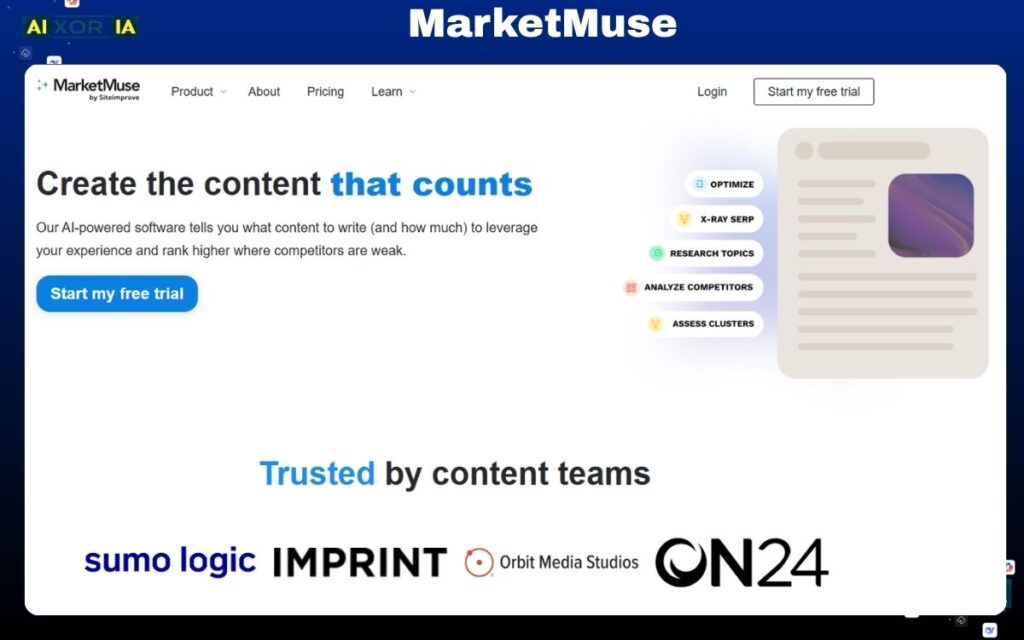
MarketMuse uses AI to analyze content depth, identify gaps, and recommend improvements that increase topical authority—an important factor for product visibility in competitive markets.
Strengths:
- Advanced content auditing and scoring
- Identifies missing topics and keyword opportunities
- Helps build authority around product-related content
Limitations:
- Premium pricing
- Requires time to fully implement recommendations
Use case:
Ideal for brands investing in long-term organic visibility through high-quality content and topic clusters.
How to Choose the Right Tool
The best AI tool depends on where your visibility challenges exist:
- If your focus is search engines, choose tools like Surfer SEO or Semrush
- If your focus is Amazon, Helium 10 is more relevant
- If you manage large product feeds, Feedonomics is critical
- If you need content at scale, Jasper or Copy.ai can help
- If you want on-site visibility and personalization, Dynamic Yield is the better fit
In many cases, businesses combine multiple tools to cover different parts of the visibility ecosystem.
Common Mistakes to Avoid
Even with AI tools, product visibility can fail if the strategy is flawed:
- Over-relying on automation without human review
- Using generic, low-quality AI-generated content
- Ignoring platform-specific optimization (e.g., Amazon vs Google)
- Failing to update listings based on performance data
- Not aligning content with actual user intent
AI enhances strategy—it does not replace it.
Final Thoughts
There is no single “best” AI tool for optimizing product visibility. The right choice depends on your business model, channels, and scale.
However, the most effective approach is often a combination:
- A content optimization tool
- A data and keyword intelligence platform
- A distribution or feed management system
Together, these create a system where your products are not only optimized for discovery but continuously improved based on real-world performance.
3 thoughts on “9 Best AI Tools for Optimizing Product Visibility in 2026”