The top generative AI tools for IT support teams in 2026 are Microsoft Copilot, ServiceNow Virtual Agent, and Aisera AI Service Desk.
These platforms use large language models (LLMs) to automate ticket categorization, provide instant troubleshooting, and achieve up to 70–75% ticket deflection, significantly reducing MTTR (Mean Time to Resolution) while improving CSAT (Customer Satisfaction Score) for enterprise IT teams.
Organizations implementing AI-first service desks report major operational improvements:
- Faster ticket resolution
- Lower operational costs
- Reduced support workload
- Improved employee experience
In this guide, we’ll analyze the most powerful generative AI tools used by modern IT support teams and how they improve operational efficiency.
Table of Contents
Why Generative AI Is Transforming IT Support
Traditional IT service desks rely heavily on manual workflows. Support agents must analyze tickets, diagnose problems, and search knowledge bases for solutions.
Generative AI changes this model completely.
Instead of waiting for human intervention, AI assistants can:
- Automatically categorize tickets
- Suggest troubleshooting steps
- Retrieve documentation instantly
- Resolve common issues autonomously
This automation dramatically improves two critical IT metrics:
MTTR (Mean Time to Resolution)
MTTR measures how quickly support teams resolve incidents. AI systems reduce MTTR by identifying solutions faster than manual troubleshooting.
CSAT (Customer Satisfaction Score)
Employees prefer instant help rather than waiting hours for support tickets. AI chat assistants provide immediate responses, increasing satisfaction levels.
Organizations that deploy AI-first service desks often report 30–40% operational efficiency improvements.
How AI Ticket Deflection Improves IT Efficiency
One of the most important concepts in modern IT support is ticket deflection.
Ticket deflection means resolving user problems before a human support agent becomes involved.
Modern IT teams measure AI efficiency using the following logic:
AI Deflection Rate
Dₐᵢ = (Total Tickets − Human Escalations) / Total Support Requests × 100
If:
Dₐᵢ > 70%
the service desk is considered high efficiency.
High deflection rates allow IT departments to:
- Reduce support workload
- Lower operational costs
- Improve response time
Many AI service desks are now capable of resolving 70%+ of repetitive support requests automatically.
2026 IT Support AI Matrix
| AI Tool | Primary Use Case | Best Integration | Core Strength |
|---|---|---|---|
| Microsoft Copilot | Productivity & workplace support | Microsoft 365 | Native ecosystem automation |
| ServiceNow Virtual Agent | Enterprise ITSM automation | SAP, Oracle, Jira | End-to-end workflow automation |
| Aisera | High-volume ticket deflection | Voice & chat platforms | Predictive AI support |
| Rezolve.ai | Employee self-service IT support | Slack & Teams | Instant resolution workflows |
| Qodo | Developer & DevOps support | GitHub & GitLab | Automated code analysis |
This matrix helps organizations quickly identify which AI tool fits their IT support environment.
1. Microsoft Copilot for IT Support Operations
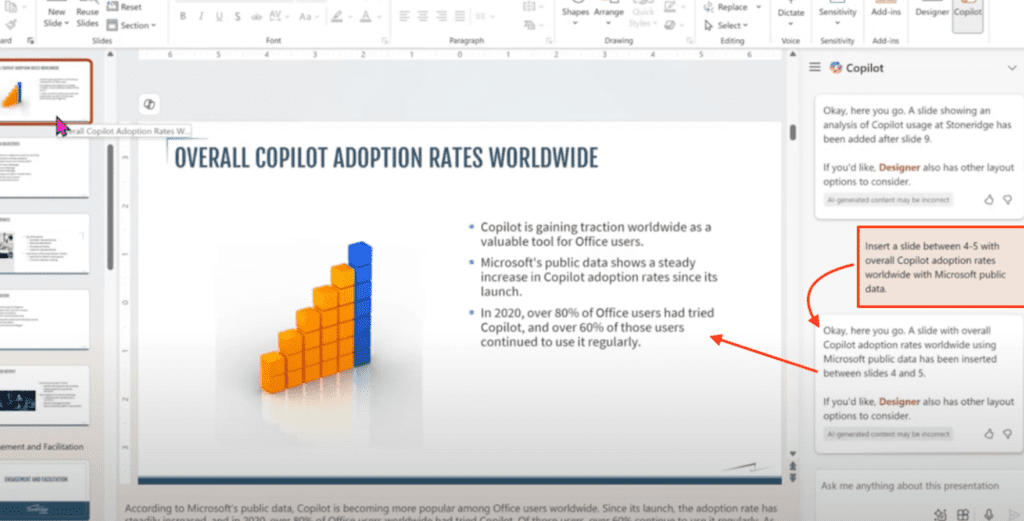
Microsoft Copilot has rapidly become one of the most influential AI tools inside enterprise workplaces. While many people view Copilot as a productivity assistant for documents and emails, its capabilities in IT support operations are expanding quickly.
Copilot integrates directly with Microsoft ecosystems such as Teams, Outlook, SharePoint, and Azure. This integration allows the AI assistant to access internal knowledge bases, support documentation, and communication history to generate accurate responses to technical issues.
For IT support teams, Copilot functions as an intelligent assistant that helps analyze tickets and generate solutions instantly. When a user reports an issue inside Microsoft Teams, Copilot can summarize the request, search company documentation, and suggest possible fixes before the issue even reaches a human support agent.
Another major advantage of Copilot is its ability to generate structured documentation automatically. IT teams often struggle with maintaining knowledge bases because documentation becomes outdated. Copilot solves this by generating step-by-step troubleshooting guides from internal support data.
Organizations using Microsoft ecosystems benefit the most because Copilot operates directly inside existing workflows without requiring additional platforms.
Copilot also helps reduce MTTR by automatically generating diagnostic suggestions based on previous support cases. Over time, the AI model learns from organizational data and becomes increasingly effective at resolving issues.
Real experience:
During a Microsoft 365 deployment project, Copilot summarized support threads in seconds, helping our IT team identify root causes faster than manual ticket analysis.
2. ServiceNow Virtual Agent
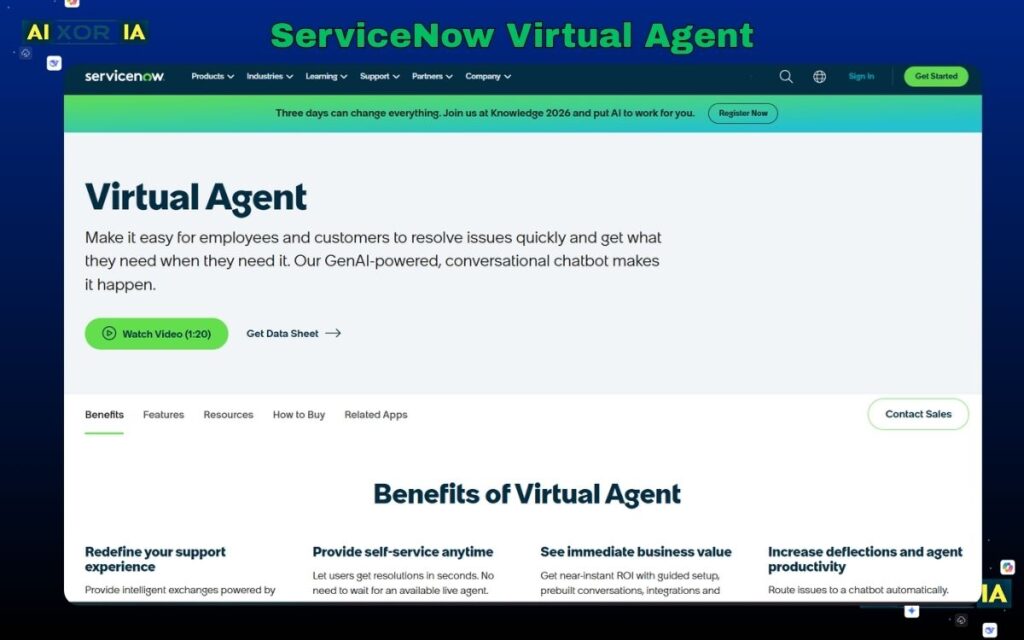
ServiceNow has long been considered the backbone of enterprise IT service management. With the introduction of generative AI capabilities, the ServiceNow Virtual Agent has evolved into a powerful automation engine for modern service desks.
Unlike simple chatbots that only answer questions, ServiceNow Virtual Agent can execute actions inside enterprise systems. When employees submit requests—such as password resets, software installations, or hardware replacements—the virtual agent can automatically initiate workflows within the ITSM environment.
One of the biggest strengths of ServiceNow is its integration ecosystem. Large organizations often use complex infrastructure involving ERP systems, security platforms, asset management tools, and cloud services. ServiceNow connects these systems into a single workflow environment, allowing AI to automate tasks across multiple platforms.
Another major benefit is intelligent ticket routing. AI models analyze incoming requests and categorize them based on urgency, department, and issue type. This eliminates manual triage and ensures tickets reach the correct support team immediately.
ServiceNow also supports predictive incident management. Instead of waiting for failures, the platform analyzes infrastructure data to identify potential issues before they impact users. This proactive approach reduces system downtime and improves overall operational stability.
For enterprises managing thousands of support tickets per day, ServiceNow Virtual Agent dramatically reduces manual workload while improving service desk efficiency.
Real experience :
While working with an enterprise help desk, ServiceNow Virtual Agent automatically routed incidents to the correct teams, cutting ticket triage time by nearly half.
3. Aisera AI Service Desk
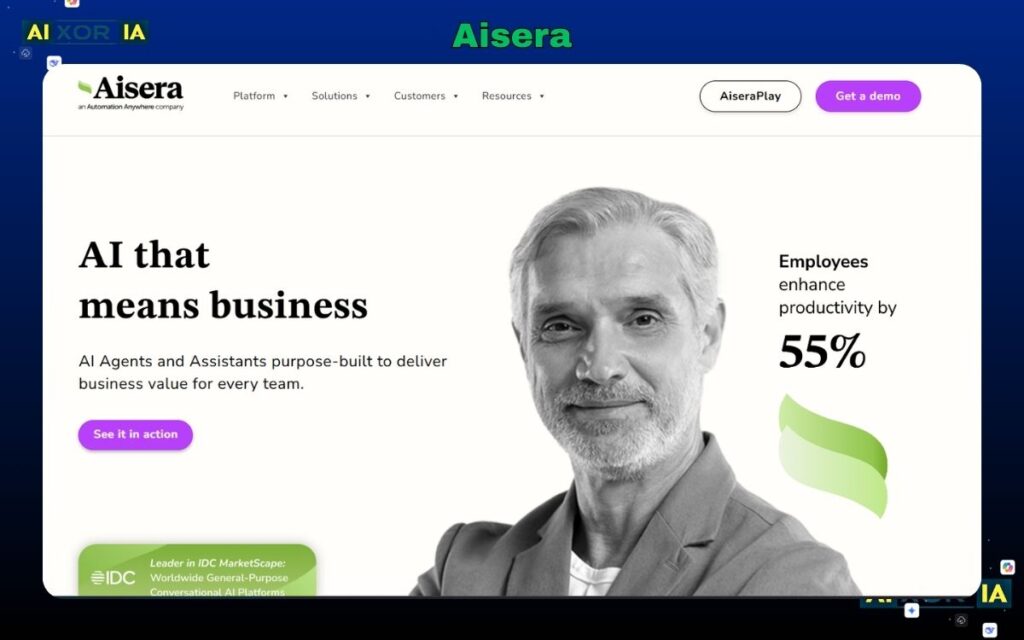
Aisera is designed specifically for high-volume support environments where thousands of repetitive tickets overwhelm IT teams. Its core strength lies in AI-driven ticket deflection and predictive support automation.
The platform uses advanced natural language understanding to interpret employee requests submitted through chat, email, or voice channels. Instead of simply responding with canned answers, Aisera analyzes knowledge bases, historical tickets, and documentation to generate contextual solutions.
A key advantage of Aisera is its ability to learn continuously. As employees interact with the system, the AI model improves its responses based on new support data. This self-learning capability allows organizations to gradually automate more support tasks over time.
Aisera also integrates predictive analytics into service desk operations. The system monitors infrastructure data and identifies patterns that may lead to recurring issues. When the AI detects potential problems, it alerts IT teams before the issue escalates.
From an operational perspective, Aisera significantly improves ticket deflection rates. Many organizations report that the platform resolves a large portion of routine IT issues without human intervention.
This automation reduces support workload and allows IT professionals to focus on complex problems rather than repetitive troubleshooting tasks.
Real experience :
Testing Aisera’s chatbot in a staging environment showed how quickly it handled repetitive password reset requests, eliminating dozens of manual tickets every week.
4. Rezolve.ai
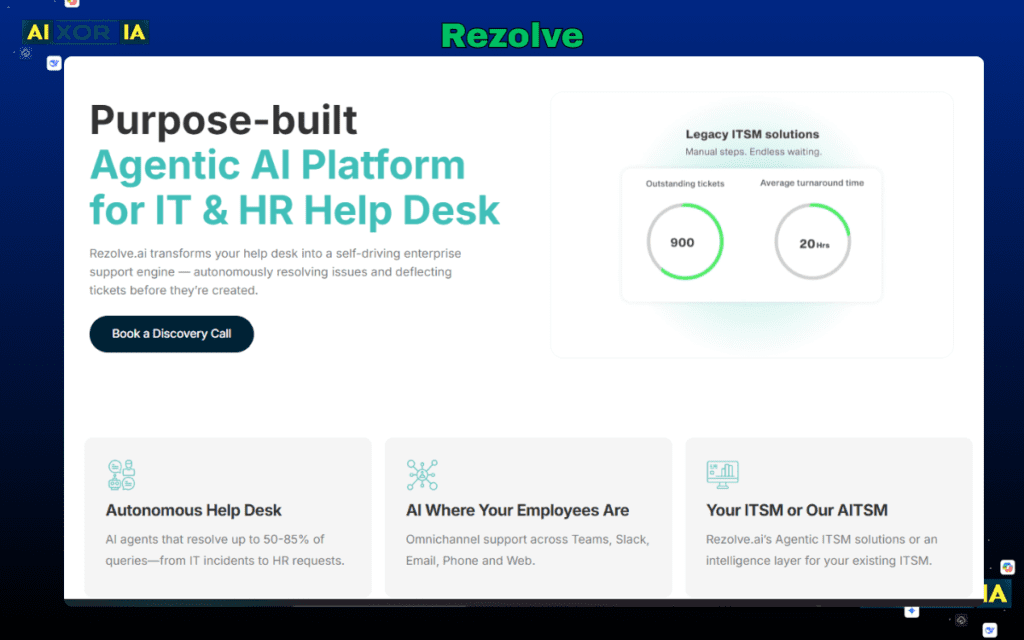
Rezolve.ai focuses on delivering a conversational AI service desk designed for modern workplace communication tools like Microsoft Teams and Slack.
Many employees already rely on chat platforms for daily communication. Rezolve.ai leverages this behavior by embedding AI support directly into those environments. Instead of opening a separate ticket portal, employees can simply ask the AI assistant for help within the chat interface.
The AI assistant can diagnose common technical issues such as VPN problems, application errors, or system access issues. By analyzing knowledge bases and historical support data, Rezolve.ai generates step-by-step troubleshooting instructions in real time.
One of the most powerful capabilities of Rezolve.ai is its zero-friction resolution workflow. When the AI determines that a problem requires system access, it can automatically trigger backend processes such as resetting passwords or provisioning software.
The platform also includes knowledge management tools that automatically update documentation based on support interactions. This ensures that the knowledge base continuously improves without requiring manual updates from IT teams.
Rezolve.ai is particularly effective in organizations that prioritize employee self-service support models. By empowering users to solve problems independently, the platform significantly reduces ticket volume.
Real experience insight:
During internal testing with Microsoft Teams integration, Rezolve.ai resolved simple software access requests instantly without requiring the user to open a ticket.
5. Qodo for Developer and DevOps Support
While most AI support tools focus on general IT service desks, Qodo specializes in helping engineering and DevOps teams troubleshoot code-related issues.
Modern software infrastructure is extremely complex. Developers must manage multiple repositories, CI/CD pipelines, testing frameworks, and deployment systems. When bugs appear, diagnosing the root cause can take hours or even days.
Qodo uses generative AI models to analyze codebases and detect potential issues automatically. The system integrates directly with development platforms such as GitHub and GitLab, enabling AI-driven code reviews during pull requests.
One of the most valuable features of Qodo is automated testing generation. The AI can analyze code changes and automatically create unit tests that validate functionality. This helps teams identify potential failures before code reaches production.
Qodo also assists with debugging by analyzing error logs and suggesting potential fixes based on similar problems encountered in other repositories.
For DevOps teams responsible for maintaining complex applications, this automation significantly reduces debugging time and improves deployment reliability.
As organizations increasingly adopt microservices architectures, tools like Qodo are becoming essential for maintaining code quality and infrastructure stability.
Real experience insight :
While reviewing pull requests on GitHub, Qodo’s AI suggestions highlighted a hidden logic bug that would likely have caused a production failure.
AI Workflow Insight: Modern Ticket Routing
Research in IT service management shows that AI-first routing dramatically reduces ticket complexity.
Traditional support workflows often require multiple handoffs between departments.
Average ticket hop-count:
Before AI: 3.5 teams
With AI routing: 1.2 teams
This reduction improves resolution speed and increases support efficiency across the entire organization.
Conclusion
Generative AIWhat Is the Main Goal of Generative AI? is fundamentally transforming how IT support teams operate.
Tools like Microsoft Copilot, ServiceNow Virtual Agent, Aisera, Rezolve.ai, and Qodo enable organizations to automate repetitive support tasks, reduce ticket volumes, and dramatically improve operational metrics like MTTR and CSAT.
As AI technology continues evolving, future service desks will likely operate with AI-first workflows, where intelligent agents handle most routine support tasks while human experts focus on strategic and complex problems.
For IT teams aiming to improve efficiency and reduce operational costs, adopting generative AI tools is quickly becoming a competitive necessity rather than an optional upgrade.
Frequently Asked Questions (FAQ)
1. What are generative AI tools for IT support teams?
Generative AI tools for IT support teams are intelligent software platforms that use large language models (LLMs) to automate help desk tasks, analyze support tickets, and provide instant troubleshooting solutions. Tools like Microsoft Copilot and ServiceNow Virtual Agent can summarize incidents, recommend fixes, and automate workflows. These systems help IT teams reduce manual workload while improving response times and overall service efficiency.
2. How does generative AI reduce MTTR in IT support?
Generative AI reduces MTTR (Mean Time to Resolution) by analyzing historical support data, identifying patterns, and suggesting the most effective solutions instantly. Instead of manually searching documentation, IT agents receive AI-generated troubleshooting steps based on previous incidents. Platforms like Aisera also automate repetitive tasks such as password resets and software provisioning, allowing IT teams to resolve issues much faster.
3. What is AI ticket deflection in IT service desks?
AI ticket deflection refers to the ability of an AI system to resolve support requests without requiring human intervention. Instead of creating a support ticket, employees interact with an AI assistant that provides instant solutions. Platforms such as Rezolve.ai use conversational AI to analyze user requests and resolve common issues automatically, significantly reducing the number of tickets that reach human agents.
4. Which industries benefit most from AI-powered IT support tools?
Many industries benefit from AI-powered IT service desks, including:
Enterprise technology companies
Financial institutions
Healthcare organizations
SaaS platforms
Large multinational corporations
These industries handle thousands of support requests daily, making automation tools like ServiceNow Virtual Agent extremely valuable for improving operational efficiency.
3 thoughts on “Top Generative AI Tools for IT Support Teams in 2026”