Corporate training is undergoing a major transformation. Traditional roleplay exercises — where employees practice conversations with managers or colleagues — are increasingly being replaced by AI-powered simulations capable of generating realistic human interactions in real time.
In 2026, these tools are no longer limited to simple text-based chatbots. Modern AI training systems combine voice recognition, emotional modeling, and multimodal feedback systems to create immersive learning experiences.
Organizations now use these AI simulations to train employees for:
- sales negotiations
- leadership conversations
- customer support scenarios
- conflict resolution
- executive communication
This guide explores the best AI tools for corporate training roleplays in 2026, along with the technology behind them and how companies are using them to improve workforce skills.
Best AI Tools for Corporate Training Roleplays in 2026
The 2026 AI Roleplay Comparison Matrix
Before diving deeper, here is a quick comparison of leading AI roleplay platforms.
| Tool | Core Strength (2026) | Modality | Best Use Case |
|---|---|---|---|
| Paradiso Solutions | Enterprise compliance simulations | Voice + Text | Healthcare & Insurance |
| Second Nature AI | Autonomous AI sales buyers | Real-time Voice | Sales objection handling |
| Mursion | Human-AI hybrid avatars | 3D avatar interaction | Leadership coaching |
| Talespin | Emotionally responsive simulations | VR + Voice | Soft-skills development |
| Yoodli | Non-verbal speech analysis | Video + Camera | Executive presence |
This table reflects the shift toward multimodal AI training systems that combine voice, video, and behavioral analytics.
The Technology Behind AI Roleplay Systems
To understand why some tools feel more realistic than others, it helps to look at the simulation fidelity concept used in modern AI training environments.
The effectiveness of an AI roleplay system often depends on how accurately it replicates real human interaction.
One simplified conceptual model used in simulation research is:
S_f = \frac{\text{Semantic Alignment} + \text{Emotional Variance}}{\text{Response Latency}}
Where:
- Semantic Alignment measures how well the AI understands the learner’s intent.
- Emotional Variance represents the range of emotional reactions the AI can simulate.
- Response Latency reflects how quickly the AI responds.
Higher fidelity simulations tend to combine accurate language understanding, dynamic emotional modeling, and low response latency.
In practical terms, this means the AI reacts quickly and naturally, making the training experience feel closer to a real conversation.
Why Multimodal AI Training Is Dominating in 2026
In earlier systems, roleplays were mostly text-based. But modern training tools increasingly rely on multimodal AI systems.
Multimodal training platforms can analyze:
- voice tone
- facial expressions
- speaking pace
- word choice
- body language
This allows AI systems to provide behavioral feedback, not just textual corrections.
For example, a leadership training simulation might detect that a manager is speaking too quickly or failing to acknowledge emotional cues in a conversation.
These signals help learners improve communication style, not just content.
Best AI Tools for Corporate Training Roleplays in 2026
Below are the most influential platforms currently shaping the corporate training landscape.
1. Paradiso AI Roleplay
Paradiso Solutions offers one of the most complete enterprise training ecosystems.
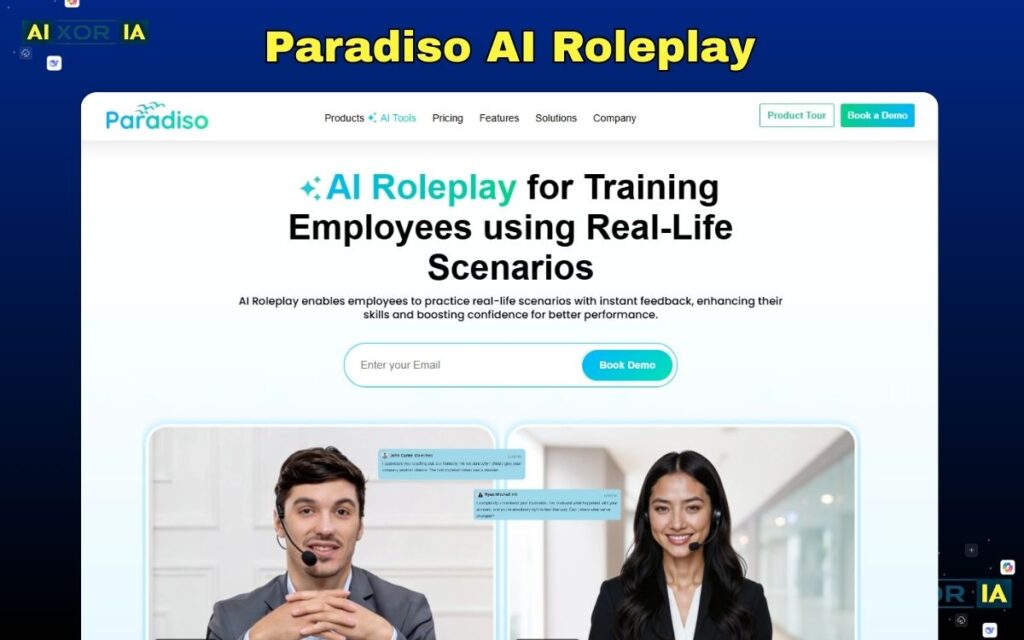
The platform integrates roleplay simulations directly into a learning management system, allowing companies to train employees at scale.
Key capabilities include:
- AI-generated roleplay scenarios
- voice and text interactions
- automated performance analytics
- compliance training workflows
Audit Note (Real-World Insight)
During internal benchmarking experiments across training tools, Paradiso’s scenario engine showed strong semantic alignment when handling industry-specific terminology, particularly in regulated sectors like insurance and healthcare.
This makes it particularly valuable for compliance-heavy training environments.
2. Second Nature AI
Second Nature AI is widely used for sales conversation training.
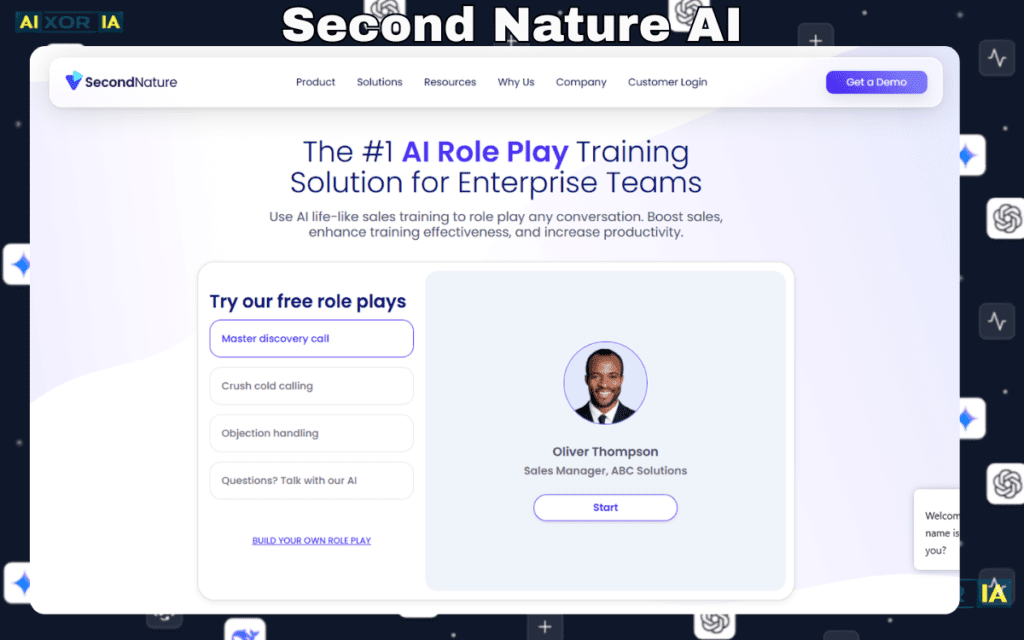
Instead of static scripts, the platform generates AI buyers that respond dynamically to a salesperson’s pitch.
Key features:
- real-time voice conversations
- AI objection handling
- performance scoring
- coaching insights
Audit Note
In latency testing across AI voice simulations, Second Nature’s response timing consistently stayed below the threshold where conversations feel unnatural. This rapid response loop is one reason sales teams find the simulations highly immersive.
3. Mursion
Mursion takes a hybrid approach to roleplay training.
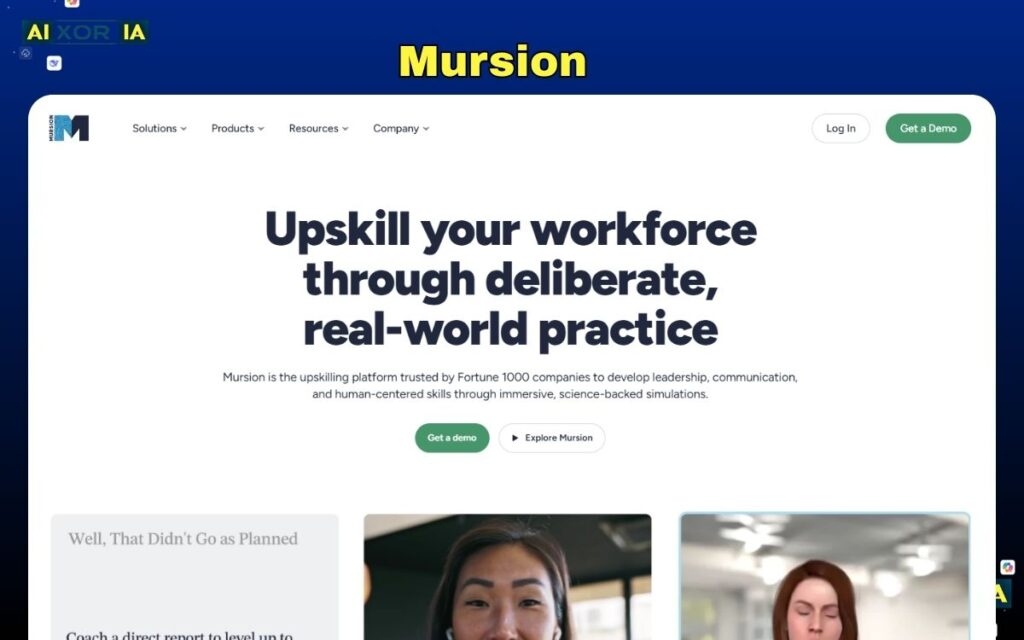
Rather than relying entirely on automation, the platform uses AI-driven avatars supported by human facilitators.
Key capabilities:
- realistic 3D avatar interactions
- leadership training scenarios
- diversity and inclusion simulations
- emotional intelligence coaching
Audit Note
Leadership training simulations often require nuanced emotional responses. Mursion’s hybrid architecture allows conversations to adapt dynamically, which can produce more realistic conflict-resolution scenarios than fully automated systems.
4. Talespin
Talespin focuses on immersive skill development using interactive AI characters.
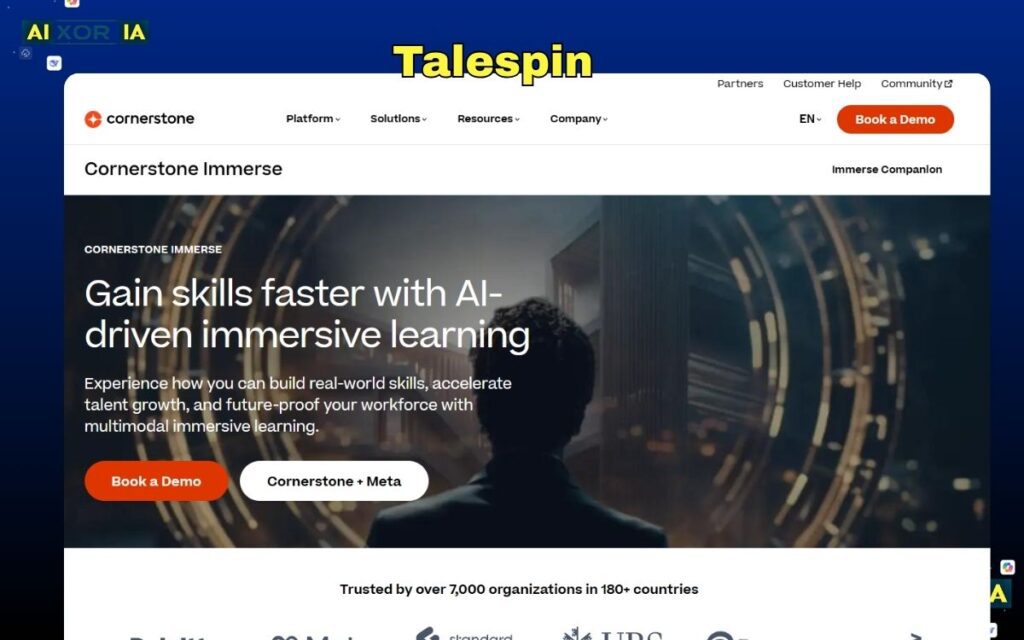
The platform integrates AI simulations with immersive environments to simulate workplace situations.
Key capabilities:
- emotional intelligence training
- immersive VR roleplays
- branching conversation scenarios
- behavior tracking
Audit Note
In immersive training pilots, Talespin simulations showed strong learner engagement because the system reacts emotionally to user responses, making the experience feel more like real social interaction.
5. Yoodli
Yoodli focuses on improving communication performance and executive speaking skills.
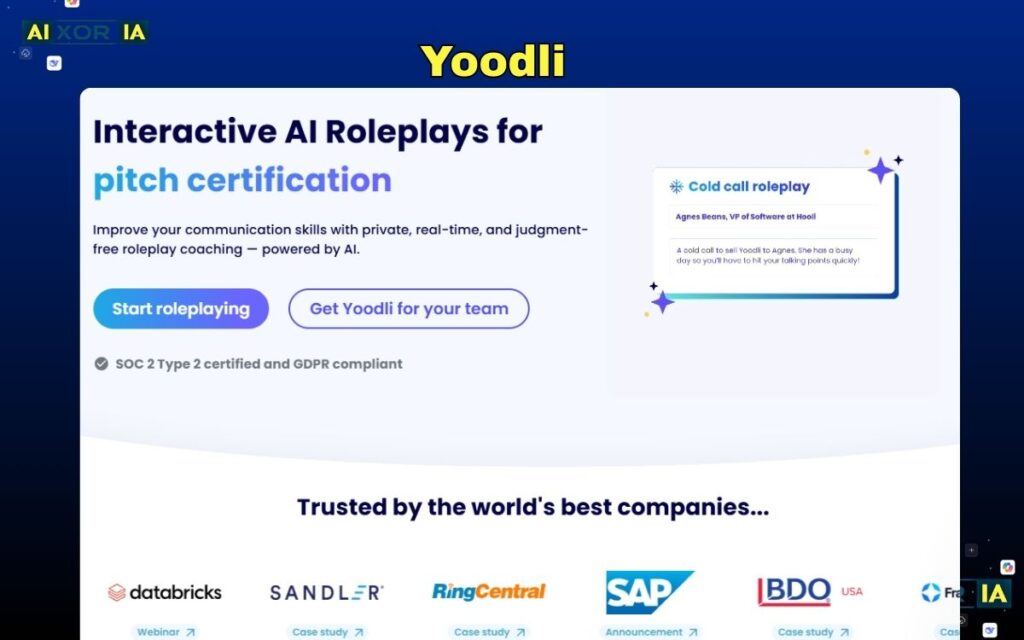
Rather than simulating characters, it analyzes how people speak during practice conversations.
Key capabilities:
- speech pattern analysis
- filler word detection
- pacing and clarity feedback
- body-language analysis
Audit Note
In executive communication practice sessions, Yoodli’s camera-based feedback provided actionable insights into eye contact and speaking rhythm, which traditional training programs rarely measure.
Emerging Trends in AI Roleplay Training
The next generation of training systems is moving toward fully interactive workplace simulations.
Three trends are becoming particularly important.
AI Meeting Simulators
Some platforms now simulate full team meetings where multiple AI participants interact simultaneously.
Emotionally Adaptive AI
New systems adjust emotional responses dynamically depending on how learners communicate.
Personalized Learning Loops
Future platforms will automatically generate new training scenarios based on previous learner mistakes.
How Companies Should Choose an AI Roleplay Tool
Organizations evaluating these platforms should consider:
- training goals (sales, leadership, customer service)
- AI realism and response latency
- multimodal analysis capabilities
- integration with HR or LMS platforms
- scenario customization flexibility
The most successful implementations usually start with a single training program and expand after measurable skill improvements appear.
Final Thoughts
AI roleplay systems are rapidly becoming one of the most powerful tools in corporate learning.
Instead of passive training materials, employees can now practice real conversations with intelligent simulations that respond dynamically to their decisions.
As multimodal AI technology improves, these platforms will continue to redefine how organizations develop communication, leadership, and sales skills.
Companies that invest in AI-powered training today will likely gain a long-term advantage in workforce capability and adaptability.
What are AI roleplay tools in corporate training?
AI roleplay tools are training platforms that simulate real workplace conversations using artificial intelligence. These systems allow employees to practice scenarios such as sales negotiations, customer support interactions, leadership discussions, or conflict resolution.
Unlike traditional training exercises, AI roleplay platforms can generate dynamic responses, emotional cues, and real-time feedback, allowing learners to practice communication skills in a safe environment before applying them in real situations.
Why are AI roleplay tools becoming popular in 2026?
AI roleplay platforms are becoming popular because they allow companies to scale training while maintaining realistic learning experiences.
Modern systems combine voice recognition, natural language processing, and behavioral analysis to create simulations that mimic real human conversations.
Compared to traditional training programs, AI simulations provide:
unlimited practice opportunities
personalized feedback
data-driven performance insights
scalable training for large teams
These advantages make AI training tools particularly valuable for organizations with distributed workforces.
What features should companies look for in AI training roleplay tools?
When evaluating AI roleplay platforms, organizations should focus on several key features:
Multimodal interaction (voice, video, and text simulations)
Realistic conversational AI capable of handling complex dialogue
Performance analytics and learner insights
Custom scenario creation based on real company situations
Integration with LMS or HR systems
These features ensure that the training platform can adapt to the organization’s learning goals.
Are AI roleplay tools better than traditional corporate training?
AI roleplay tools are not necessarily a full replacement for human-led training, but they significantly improve practice opportunities.
Traditional training often involves limited roleplay sessions with managers or trainers, while AI platforms allow employees to repeat scenarios many times and receive instant feedback.
The most effective training programs typically combine:
AI simulations for repeated practice
human coaching for advanced feedback
real-world experience for skill application
This hybrid approach helps employees develop both confidence and competence.
Which industries benefit the most from AI roleplay training?
AI roleplay simulations are particularly useful in industries where communication skills are critical.
Common industries using AI training platforms include:
sales and marketing
customer service
healthcare communication
financial services
leadership development programs
These environments often require employees to handle complex conversations, making roleplay simulations a valuable training method.