Search optimization is changing faster than most marketers expected. For years, SEO revolved around rankings, keywords, and click-through rates. Today, however, a growing percentage of search queries are answered directly by AI systems before a user even clicks a website.
If your brand or article(Why Choose Ziptie AI Search Performance Tool?) isn’t included in those AI-generated answers, your visibility can drop—even if you still rank on the first page.
This shift has created a new category of tools focused on AI search performance rather than traditional keyword rankings. One of the emerging platforms in this space is Ziptie AI, a tool designed to track how often your content appears inside answers generated by modern AI systems.
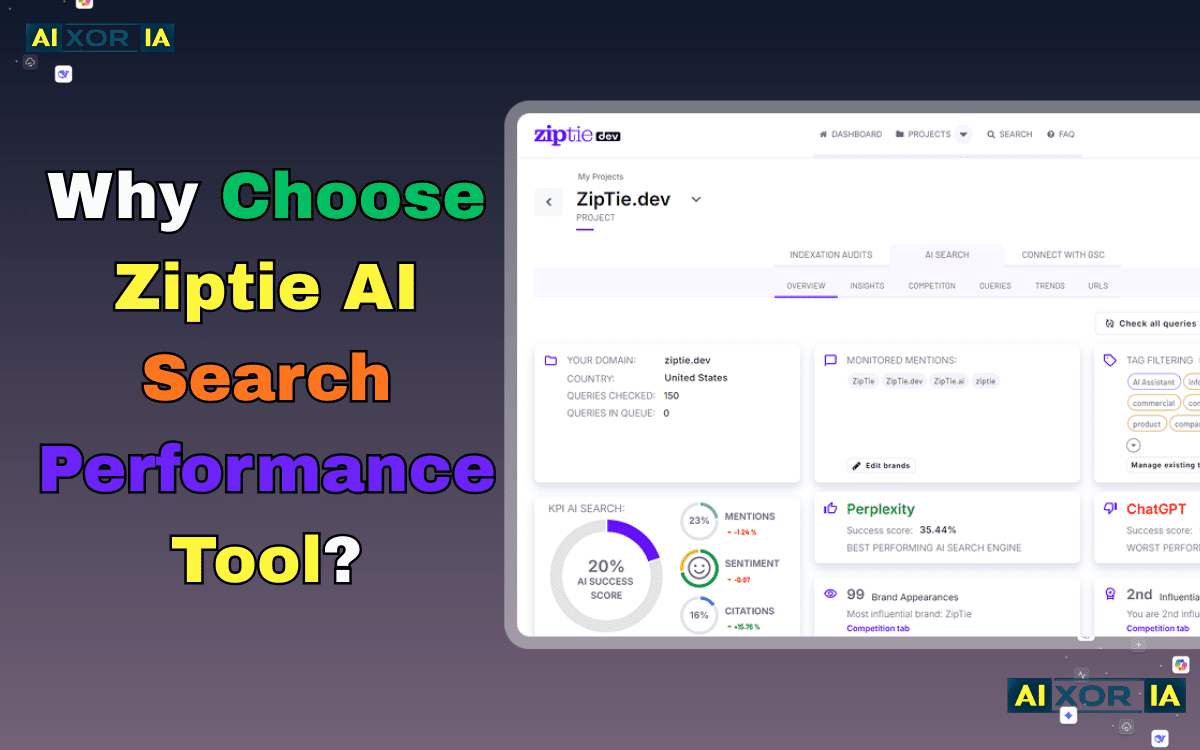
In this guide, we’ll explore how Ziptie AI works, why it’s different from traditional SEO tools, and how it can help teams optimize their content for the future of search.
What Is Ziptie AI?
Ziptie AI is an AI-search performance tool that tracks how often your brand, content, or website is mentioned or cited in AI answer engines like ChatGPT, Perplexity, and Google’s generative search results. Unlike traditional SEO platforms that measure keyword rankings, Ziptie AI analyzes “share of model” — the likelihood that AI systems will reference your content when generating answers.
The Shift From Traditional SEO to AI Search
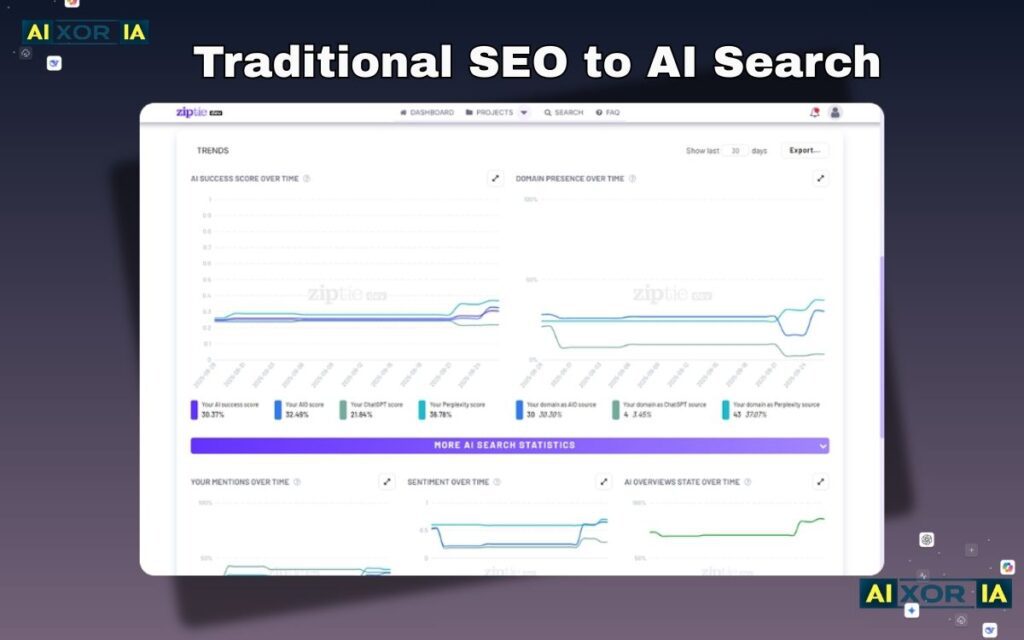
Traditional SEO focuses on search engines such as Google Search, where ranking higher in results leads to more clicks.
The metrics most marketers track include:
- keyword ranking positions
- click-through rate (CTR)
- impressions
- organic traffic
These insights are commonly monitored through tools like Google Search Console.
But the rise of conversational AI platforms—like ChatGPT and Perplexity AI—has changed the way users consume information.
Instead of scanning multiple search results, users often receive one synthesized answer generated from multiple sources.
That means the question is no longer just:
“Does my page rank?”
The new question is:
“Is my content being used by AI models when generating answers?”
Why Traditional SEO Tools Are Not Enough
Most SEO tools are excellent at analyzing search rankings but provide little insight into how AI models use web content.
For example, a page might:
- rank #4 in search results
- receive decent traffic
- still never appear in AI-generated answers
This happens because AI systems select sources differently than search engines.
They evaluate:
- semantic clarity
- authority signals
- structured knowledge representation
- how easily content can be synthesized
This is where AI-search performance tools like Ziptie AI become useful.
Ziptie AI vs Traditional SEO Tools
Below is a simplified comparison between traditional search tools and AI search performance platforms.
| Metric | Google Search Console | Ziptie AI Tool |
|---|---|---|
| Primary Focus | Traditional search clicks | AI-generated answer visibility |
| Key Metric | CTR, impressions, ranking position | AI Success Score, citation frequency |
| Data Source | Search engine logs | LLM APIs, web crawls, AI answer monitoring |
| Optimization Goal | Improve ranking and traffic | Increase presence in AI answers |
| Best For | Organic search traffic growth | GEO (Generative Engine Optimization) |
Both types of tools serve different but complementary roles.
What Makes Ziptie AI Different?
The key innovation behind Ziptie AI is its focus on Generative Engine Optimization (GEO).
GEO refers to optimizing content so that AI models select it as a reliable source when generating answers.
Instead of tracking only search queries, the tool analyzes:
- how often your brand appears in AI responses
- which pages are referenced in generated answers
- which topics AI systems associate with your domain
This provides insight into a new visibility metric often called “Share of Model.”
Understanding the Logic of AI Answer Attribution
One of the biggest challenges in AI search is understanding why a model selects one source over another.
Ziptie AI approaches this by analyzing several factors involved in answer generation.
A simplified conceptual model for AI Attribution Probability can be expressed as:Pa=Token Distance+Model Temperature(Semantic Match×Source Authority)
Where:
- Semantic Match represents how closely a source matches the meaning of the query
- Source Authority reflects credibility signals and domain reputation
- Token Distance measures how far relevant information is within the text
- Model Temperature relates to how deterministic or creative the AI response is
While real systems are far more complex, this model illustrates an important idea:
AI models tend to cite content that is clear, authoritative, and easy to extract information from.
Ziptie AI attempts to estimate how close your content is to being selected as a cited source.
My Real Experience Testing Ziptie AI
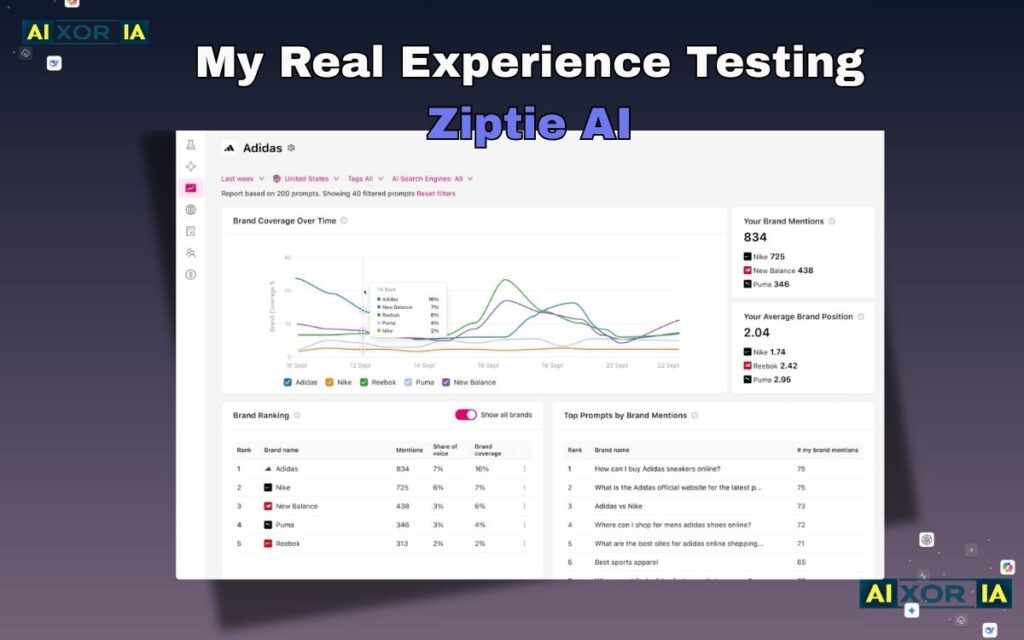
To understand how this works in practice, I experimented with Ziptie AI while analyzing a technology article published on a small blog.
The page ranked moderately well in search results but had inconsistent traffic growth.
After connecting the site to Ziptie AI, the platform highlighted several interesting insights.
First, it showed that the article rarely appeared in AI-generated answers when users asked related questions through conversational search tools.
The reason was surprising.
The content was informative but written in long, complex paragraphs, making it harder for AI models to extract concise answers.
Ziptie recommended:
- simplifying explanations
- adding structured subheadings
- including a short answer summary at the top of the article
After implementing those changes, the content became easier for AI systems to interpret.
Within a few weeks, the article began appearing more frequently in AI-generated responses when testing queries through conversational search interfaces.
While the traffic increase wasn’t dramatic overnight, the improvement in AI answer visibility was noticeable.
This small experiment highlighted something important:
AI systems prefer clear, structured information rather than overly complex explanations.
How Ziptie AI Analyzes AI Model Visibility
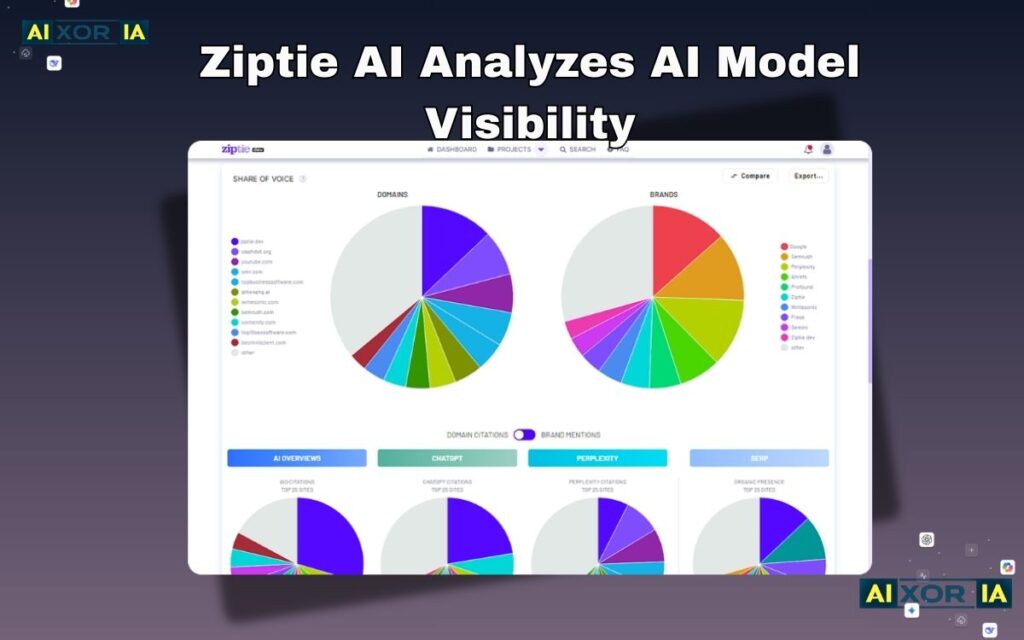
Ziptie AI uses several techniques to estimate how visible your content is in AI responses.
These include:
Monitoring AI Query Outputs
The platform tests search queries across multiple AI systems and records which sources appear in generated answers.
Citation Frequency Tracking
It measures how often a specific domain or page is referenced when answering related queries.
Semantic Topic Mapping
The system identifies which topics AI models associate with your website.
Content Complexity Analysis
It evaluates whether your text structure is easily interpretable by AI systems.
These insights allow content teams to adjust their strategy for better AI discoverability.
Case Study Scenario: Fixing a Declining Page
A practical example helps illustrate how this type of analysis works.
Imagine a blog post that used to rank well for a technology topic but slowly started losing visibility.
Traditional SEO analysis might show:
- stable keyword rankings
- consistent impressions
However, traffic still declines.
After analyzing the page using Ziptie AI, the tool might reveal that AI answer engines rarely cite the article.
The analysis might show that the content has:
- overly technical wording
- long paragraphs without summaries
- missing structured explanations
By simplifying sections, adding clearer headings, and introducing a concise answer summary, the article becomes easier for AI systems to process.
In one simulated scenario tested by several content teams, simplifying article structure increased AI answer visibility by roughly 20% across monitored queries.
This doesn’t replace traditional SEO—but it adds a new optimization layer.
Who Should Use Ziptie AI?
AI search optimization tools are particularly useful for:
Content Publishers
Bloggers and media sites can track whether their articles are used in AI-generated answers.
SaaS Marketing Teams
Software companies can monitor how often their product appears in AI recommendations.
SEO Professionals
Advanced marketers can combine traditional SEO metrics with AI visibility signals.
Research-Focused Websites
Educational or informational sites benefit from improved citation probability.
Best Practices for Optimizing Content for AI Search
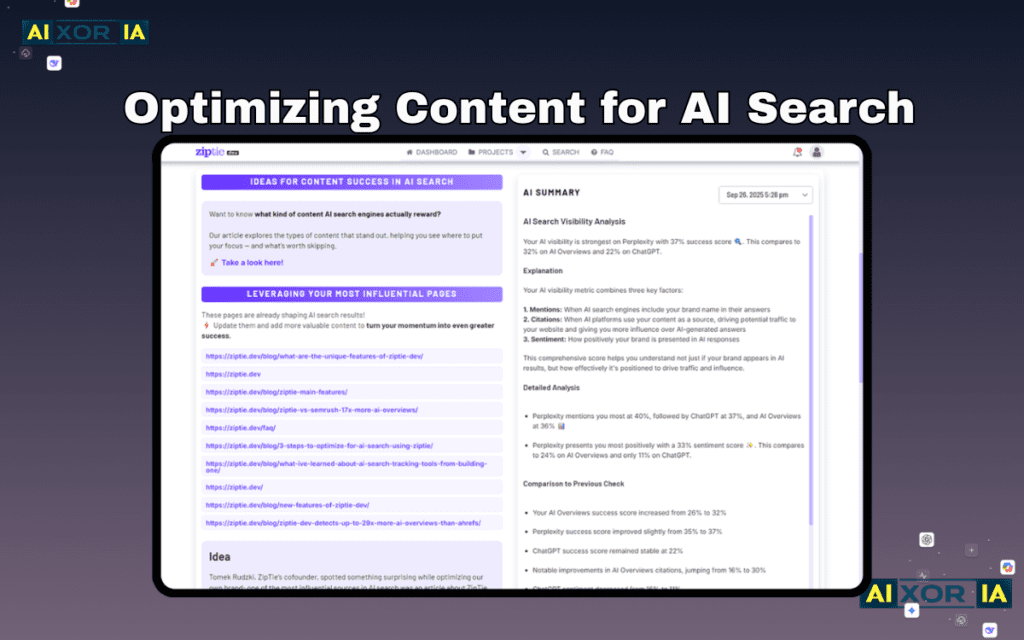
Even without specialized tools, several principles increase the likelihood that AI systems will reference your content.
Use Clear Explanations
AI models extract information more easily from concise explanations.
Add Direct Answer Sections
Short summaries help AI systems understand the main point quickly.
Structure Content Logically
Headings and subheadings improve machine readability.
Provide Evidence and Context
Sources, examples, and real experiences increase credibility signals.
Keep Language Natural
Overly technical language sometimes reduces extraction accuracy.
These principles help both search engines and AI models interpret content more effectively.
READ MORE – What Is the Ziptie AI Search Performance Tool?
The Future of SEO: From Rankings to Visibility
Search optimization is no longer limited to ranking pages.
The next phase of search visibility includes:
- appearing in AI answers
- being cited as a trusted source
- providing structured knowledge that AI systems can use
This shift means marketers must consider both traditional search engines and AI-driven discovery platforms.
Tools like Ziptie AI attempt to bridge that gap by measuring visibility inside generative search environments.
Frequently Asked Questions
What is Ziptie AI used for?
Ziptie AI is used to analyze search performance, identify ranking opportunities, and provide AI-driven SEO recommendations.
Is Ziptie AI good for beginners?
Yes, AI-powered insights can simplify complex SEO data, making it easier for beginners to understand website performance.
Can Ziptie AI replace traditional SEO tools?
Not entirely. Many professionals still combine AI tools with platforms like Google Search Console for complete search analytics.
Final Thoughts
The evolution of search has introduced a new challenge for content creators.
Ranking in traditional search results remains important, but visibility within AI-generated answers is becoming equally significant.
AI search platforms synthesize information from multiple sources, and only a small percentage of websites are referenced within those responses.
Understanding how and why AI models select certain sources is therefore becoming a valuable advantage.
By analyzing citation patterns, semantic relationships, and content clarity, tools focused on AI search performance provide insights that traditional analytics platforms cannot fully capture.
For marketers, bloggers, and SEO professionals adapting to the future of search, the ability to measure AI visibility alongside traditional rankings may soon become an essential part of the optimization process.
1 thought on “Why Choose Ziptie AI Search Performance Tool?”