The way people discover software is changing fast.
Five years ago, a user searching for an AI product would open a search engine, type a keyword, and scroll through results. Today, many users skip that process entirely and simply ask an AI assistant a question.
Instead of browsing links, they receive a direct synthesized answer.
That shift has created an entirely new discipline called Answer Engine Optimization (AEO).
If you’re building an AI SaaS product, your biggest visibility opportunity is no longer only ranking on search results. The real opportunity is becoming the source AI systems use when generating answers.
But achieving that requires understanding how AI models retrieve knowledge, how they interpret entities, and which tools help monitor that visibility.
In this guide, we’ll explore the best AEO tools for AI products in 2026, how AI answer engines actually work behind the scenes, and how companies are adapting their SEO strategy for the AI-first search ecosystem.
What Is Answer Engine Optimization (AEO)?
Answer Engine Optimization is the practice of structuring your content so that AI systems retrieve, trust, and cite your information when generating answers.
Traditional SEO focused on ranking pages.
AEO focuses on being referenced inside an answer.
Modern AI answer engines rely heavily on systems like Retrieval-Augmented Generation — a method where AI models retrieve factual information from trusted sources before generating a response.
This means when someone asks:
“What’s the best tool for monitoring AI search visibility?”
The AI does not guess. Instead it retrieves information from trusted documents, structured data, and authoritative sources before forming the answer.
For companies building AI products, that creates a completely different optimization target:
Your content must be structured, factual, and authoritative enough to become part of the AI’s retrieval dataset.
Another emerging concept is Large Language Model Optimization, which focuses on designing content so that LLMs understand and reference it clearly.
Together, these ideas form the foundation of AEO.
Why AEO Is About Entities, Not Keywords
For decades, SEO revolved around keywords.
But modern AI systems interpret the internet differently. Instead of focusing on isolated keywords, they build entity graphs — networks of connected concepts.
An entity is simply a uniquely identifiable concept such as:
- a product
- a company
- a person
- a technology
For example:
If your product is called PromptPilot AI, an AI system does not see it as a string of words.
It treats it as a distinct entity connected to related concepts such as:
- prompt engineering
- generative AI tools
- AI productivity software
- large language models
This process is often described as Neural Entity Mapping.
Instead of matching keywords, the AI connects entities through contextual relationships extracted from data sources, research papers, and trusted websites.
That means visibility in AI answers depends on whether your product is recognized as a clear entity in the knowledge ecosystem.
To achieve that, your content must:
• define your product clearly
• explain what problem it solves
• connect it with related concepts
• provide factual information about its functionality
When this information appears consistently across the web, AI systems start associating your product with a specific domain of expertise.
And once that happens, your product becomes a candidate for inclusion in AI-generated answers.
The AI Answer Pipeline: How Your Content Becomes an Answer
Understanding the AI search pipeline helps explain why AEO tools exist.
When a user asks a question, the process usually follows four stages.
1. Query Understanding
The AI model analyzes the user’s question and identifies the main entities and intent.
For example:
“Best tools to track AI product visibility?”
The AI identifies key entities such as:
- AI tools
- analytics platforms
- marketing visibility
2. Knowledge Retrieval
The model then retrieves relevant information from:
• indexed web content
• structured databases
• knowledge graphs
• trusted publications
This is the retrieval layer of Retrieval-Augmented Generation.
3. Evidence Ranking
Next, the system evaluates which sources appear most authoritative based on factors like:
• factual clarity
• entity relationships
• structured information
• external references
4. Answer Generation
Finally, the model synthesizes information into a single answer while citing or referencing trusted sources.
If your product appears within the retrieved evidence pool, it can be included in the final answer.
AEO tools help monitor this exact pipeline.
They show when and where AI models mention your brand and which prompts trigger those mentions.
Best Answer Engine Optimization Tools for AI Products (2026)
The AEO ecosystem is still emerging, but several tools have already become essential for AI product marketing teams.
Each tool focuses on a different part of the AI visibility pipeline.
Updated Comparison Matrix (2026)
| Tool (2026) | Primary AI Logic | Best For | 2026 Killer Feature |
|---|---|---|---|
| Semrush One | Predictive Search AI | Hybrid SEO + AEO strategy | AI Answer Share of Voice |
| Profound | Neural Attribution | Enterprise AEO monitoring | Real-time LLM Mention Alerts |
| Writesonic GEO | RAG-based analysis | Citation optimization | Semantic Gap Identification |
| Ahrefs | Knowledge Graph AI | Competitor citation audit | Entity ranking insights |
READ MORE – What are the Best AI Search Monitoring Tools
1. Semrush One
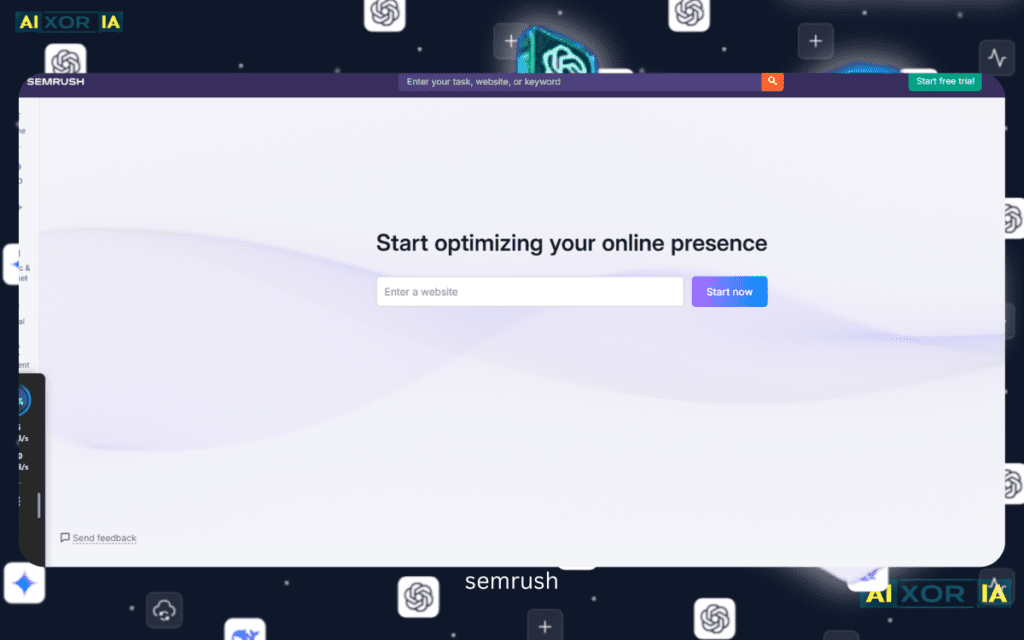
Semrush has long been known as one of the most comprehensive SEO platforms. Over the past two years, however, the company has expanded its analytics stack to track AI search visibility.
Instead of focusing solely on keyword rankings, the platform now analyzes how brands appear across AI-generated search results.
The most interesting metric introduced recently is AI Answer Share of Voice.
This metric measures how frequently your brand appears in answers generated by AI systems compared with competitors.
For AI product companies, this can reveal insights that traditional SEO dashboards cannot.
Example of a real workflow
During a recent product launch campaign for an AI writing tool, the marketing team used Semrush to analyze informational queries such as:
“best AI writing assistants for startups”
The tool showed that several competitor brands were appearing in AI-generated summaries, even though they did not dominate organic rankings.
This revealed something important: AI answers were relying on structured content rather than keyword ranking alone.
By restructuring product documentation and publishing factual comparison pages, the company gradually increased its visibility within AI-generated answers.
Semrush tracked this improvement through the AI answer share metric.
For teams that want one platform covering both traditional SEO and AI visibility, this makes it one of the most practical tools available.
2. Profound
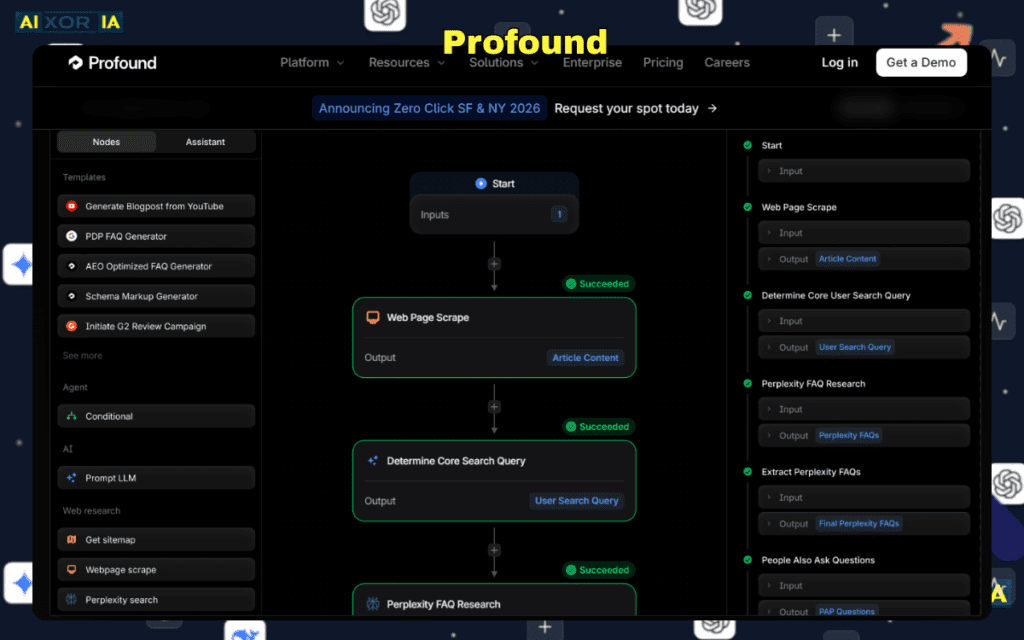
Profound is one of the first analytics platforms built specifically for AEO.
While traditional SEO tools analyze web rankings, Profound analyzes how large language models reference brands.
One of its most powerful features is the Share of Model (SoM) metric.
This metric measures how frequently an AI model references your product compared with competitors when answering relevant prompts.
For example, if a user asks:
“Which AI analytics tools monitor chatbot visibility?”
Profound can detect whether your brand appears in the answer and which competing products appear alongside it.
Real experience from product teams
AI SaaS companies often run hundreds of prompts through the platform to understand how AI models describe their products.
In one case, a startup discovered that language models frequently categorized its platform incorrectly.
Instead of being described as an AI observability tool, the model associated it with AI monitoring software.
This subtle difference affected visibility.
By publishing clearer definitions and documentation describing the product’s purpose, the company gradually shifted how AI models categorized it.
That adjustment increased the product’s presence in relevant AI answers.
This type of insight is difficult to obtain without a dedicated AEO analytics tool.
3. Writesonic GEO
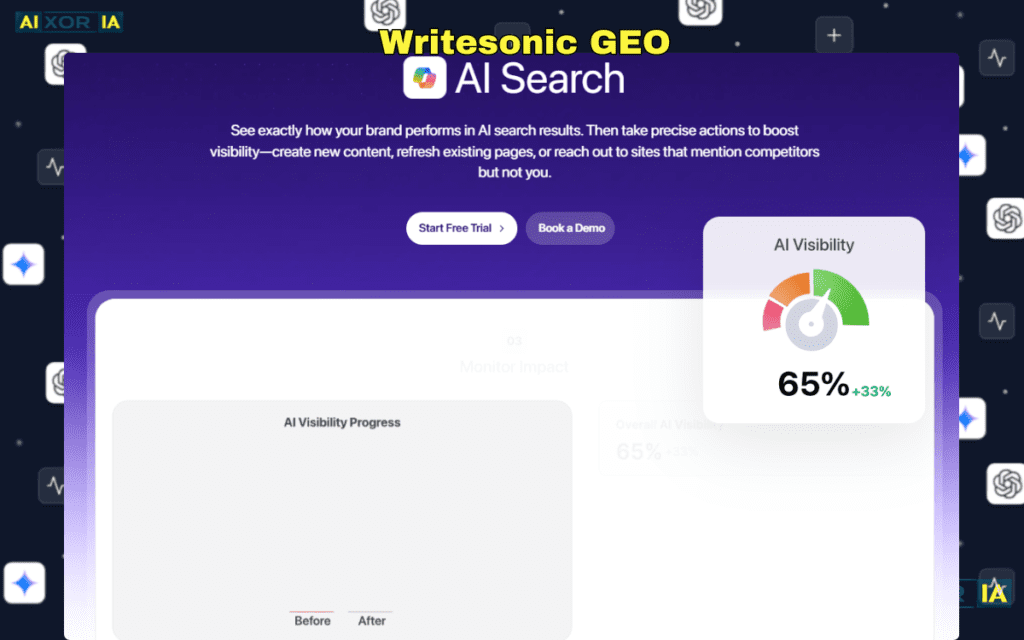
Writesonic introduced a specialized platform focused on Generative Engine Optimization.
The system analyzes how AI engines retrieve and cite information during answer generation.
One of its most interesting capabilities is Semantic Gap Identification.
This feature identifies knowledge gaps between your content and the content AI models typically reference.
For example:
If AI models frequently reference research studies or statistical data when answering questions about AI tools, but your website lacks that information, the system highlights the gap.
This helps teams adjust their content so it becomes more compatible with AI retrieval systems.
Practical experience using GEO tools
During an experiment analyzing AI tool comparison queries, the platform revealed that most AI answers relied heavily on structured product specifications.
Many websites described features narratively but lacked clear specification tables.
After adding technical comparison tables, AI-generated answers started referencing those pages more frequently.
This illustrates how small structural changes can significantly affect AEO visibility.
4. Ahrefs
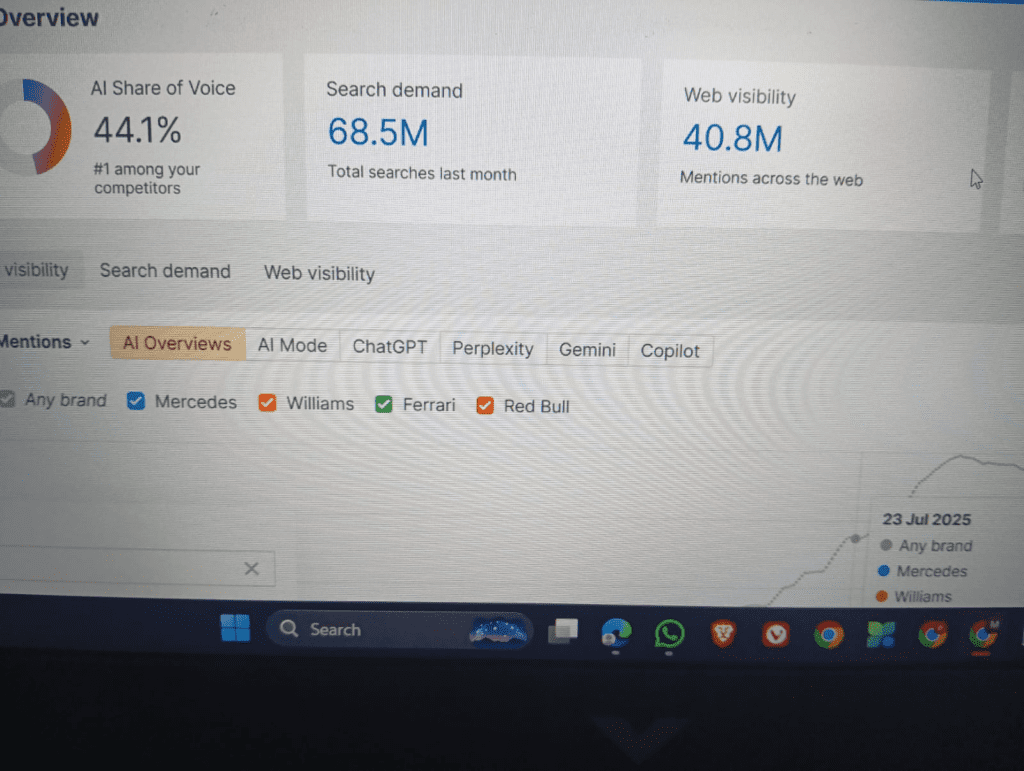
Although Ahrefs was originally designed as a backlink analysis tool, its dataset has evolved into a powerful knowledge graph of web entities.
This allows the platform to analyze relationships between brands, topics, and citations.
For AEO strategy, one particularly useful feature is entity ranking analysis.
Instead of simply showing which pages rank for keywords, the tool can reveal:
• which brands dominate specific knowledge topics
• which sources AI models are likely to retrieve
• how competitor entities are connected across the web
Real research workflow
When analyzing the AI design tools market, marketers often use Ahrefs to identify which websites consistently appear in informational queries such as:
“best AI design tools for social media”
These sources often become reference material for AI answer engines.
By studying those pages, teams can identify patterns in structure, terminology, and data presentation.
Then they can replicate similar structures within their own content.
This approach focuses on entity authority rather than keyword ranking.
READ MORE – Best AI Search Monitoring Tools
AEO Checklist for AI SaaS Products
Optimizing for AI answer engines requires more than publishing blog posts.
Successful AI SaaS companies typically focus on three pillars.
1. Structured Schema
Structured data helps AI systems interpret your content accurately.
Important schema types include:
• Product schema
• FAQ schema
• Organization schema
• Software application schema
These schemas clarify relationships between entities.
2. Verified Facts and Data
AI models prioritize factual information.
High-value signals include:
• statistics
• benchmark results
• product specifications
• technical documentation
Content that includes measurable facts is more likely to be retrieved during AI answer generation.
3. Fast and Accessible Content
Retrieval systems prioritize sources that are:
• easily crawlable
• structured logically
• fast to load
Technical performance still matters because it affects how easily retrieval systems process your content.
The Future of AI Search Visibility
A few years ago, the goal of SEO was simple:
Rank on the first page of search results.
But AI search changes the equation entirely.
Instead of showing a list of links, answer engines synthesize information from multiple sources and present a single response.
This means visibility now depends on whether your content becomes part of the knowledge foundation that AI models use to construct answers.
Companies that understand entity relationships, structured information, and AI retrieval systems will have a significant advantage.
And as AI search continues to evolve, tools that monitor these systems will become an essential part of digital strategy.
For AI product teams, the real challenge is no longer just ranking pages.
It’s becoming the trusted entity that AI systems reference when explaining an industry.