Search engines are no longer just matching keywords. They are interpreting meaning, context, and entities to decide which pages deserve visibility.
In 2026, websites that rely on traditional SEO tactics often struggle to compete because modern search systems prioritize semantic relevance, entity coverage, and topical authority.
This shift has made AI-powered search optimization tools one of the most powerful resources for growing organic traffic.
These tools no longer just suggest keywords. They analyze search intent, map entities, evaluate topical depth, and predict how content will perform against modern search features such as AI-generated summaries and overview answers.
In this guide, we’ll explore how AI SEO tools actually increase organic traffic, the underlying logic behind modern search growth, and how different tools approach optimization from unique angles.
Why SEO Changed: From Keywords to Semantic Entities
In earlier SEO strategies, ranking was largely based on how well a page used a target keyword.
Today, search engines evaluate something much deeper:
- Semantic context
- Entity relationships
- Content depth
- Topical authority
- User engagement signals
Instead of simply asking “Does this page contain the keyword?”, search systems analyze whether the page fully explains the topic.
For example, if a page targets AI SEO tools, the algorithm expects related entities such as:
- machine learning
- semantic search
- keyword clustering
- content optimization
- search intent
Pages that cover these interconnected concepts tend to perform better because they demonstrate topical completeness.
AI SEO tools help identify these relationships automatically.
How AI SEO Tools Increase Organic Traffic
AI tools influence organic growth through several key mechanisms.
1. Semantic Topic Mapping
Traditional keyword research only reveals what people search.
AI-driven tools analyze topic relationships across thousands of pages to determine:
- which entities must appear in content
- which subtopics competitors cover
- which contextual signals search engines expect
Instead of writing random blog posts, this allows publishers to build structured topic clusters.
When a site covers an entire topic ecosystem, search engines begin recognizing it as an authority.
2. Entity Optimization
Search engines rely heavily on entity recognition.
An entity is a clearly identifiable concept, person, product, or organization.
For example:
The term “Apple” could refer to
- a fruit
- a technology company
- a brand ecosystem
Without context, the search engine cannot determine which meaning the page intends.
AI optimization tools detect this ambiguity and recommend additional context signals such as:
- related entities
- structured topic mentions
- semantic clarifications
This ensures that search engines interpret the page correctly.
3. Content Gap Discovery
One of the fastest ways to grow organic traffic is identifying topics competitors missed.
AI tools scan entire search ecosystems to reveal:
- missing subtopics
- overlooked keyword clusters
- questions users ask but few sites answer
By filling these gaps, websites can rank faster because they compete in less saturated search spaces.
4. Search Intent Alignment
Not every search query expects the same type of content.
AI systems analyze ranking patterns to identify the dominant intent type:
- informational
- commercial
- transactional
- navigational
If most top-ranking pages are tutorials, publishing a product comparison page will rarely rank well.
AI SEO tools analyze search results and recommend content structures aligned with intent.
5. Predictive Content Performance
Some advanced AI tools simulate how content might perform before it is even published.
They evaluate factors such as:
- topic coverage
- semantic similarity to top results
- authority signals
- readability and engagement metrics
This predictive approach reduces guesswork and helps creators focus on high-probability ranking opportunities.
Read More – What is the Best AI Tool for Increasing Visibility?
How AI Tools Help Content Appear in AI Overviews
A growing portion of search results now display AI-generated summaries at the top of the page.
These summaries gather information from multiple trusted sources.
For a website to be referenced within these answers, its content must be structured in a way that AI systems can easily extract.
AI SEO tools help by recommending:
- concise answer paragraphs
- question-based headings
- structured lists and definitions
- entity-rich explanations
These elements make it easier for search systems to identify direct answers worth citing.
When a site becomes a source for these summaries, it often gains significant visibility even without occupying the first traditional ranking position.
The AI-Driven SEO Cycle
Organic traffic growth powered by AI typically follows a repeating cycle:
Data Analysis → Topic Discovery → Entity Mapping → Content Creation → Performance Monitoring → Content Expansion
- AI analyzes search data
- New topics and clusters are discovered
- Entity relationships are mapped
- Optimized content is created
- Performance data reveals opportunities
- The site expands into new subtopics
Over time, this cycle builds topical authority, which significantly improves ranking stability.
Real-World Experience Using AI SEO Tools
Different AI platforms approach optimization in unique ways. Below are insights from practical usage of several popular tools.
Surfer SEO – Precision Content Optimization

One of the most noticeable strengths of Surfer SEO is its real-time optimization feedback while writing content.
During a content experiment on a niche technology blog, Surfer suggested including several overlooked entities such as:
- natural language processing
- topic clustering
- semantic indexing
After expanding the article with those entities, the content became significantly more comprehensive.
Within a few weeks, the page began ranking for multiple secondary keywords that were never directly targeted.
The tool’s strongest capability is helping writers achieve semantic completeness without overusing keywords.
MarketMuse – Authority and Topic Depth
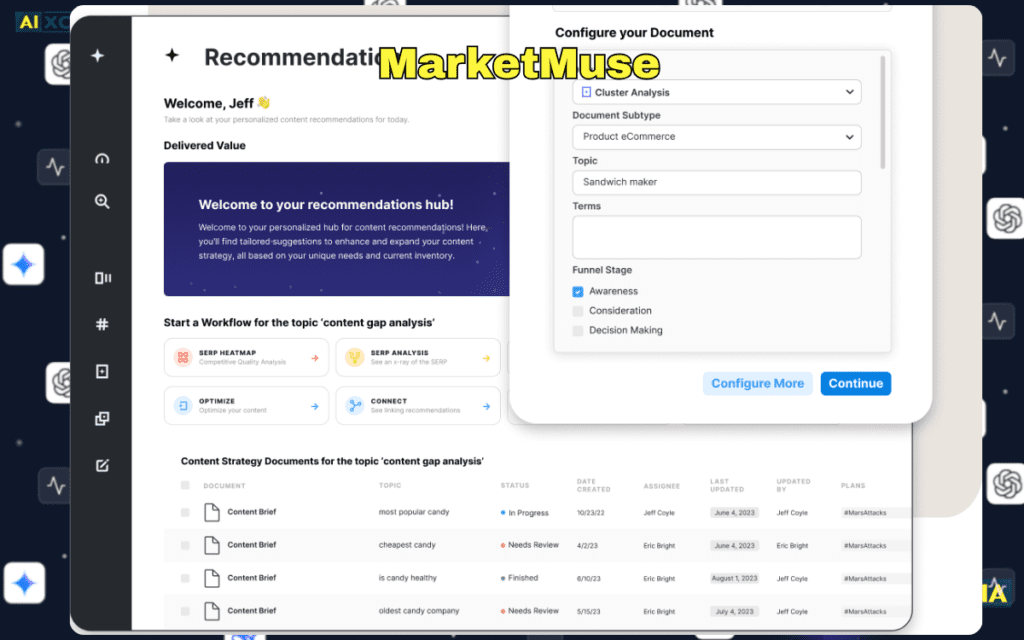
MarketMuse takes a completely different approach compared to traditional SEO tools.
Instead of focusing on individual pages, it analyzes entire topic ecosystems.
While planning a long-form content series on AI marketing strategies, MarketMuse revealed that several important subtopics were missing from the site’s coverage.
These included areas such as:
- predictive analytics
- automated segmentation
- conversational AI
By building dedicated articles around those gaps, the site gradually developed deeper topical authority.
Traffic growth was slower at first but became more stable over time, indicating stronger search authority.
Semrush – Strategic SEO Intelligence
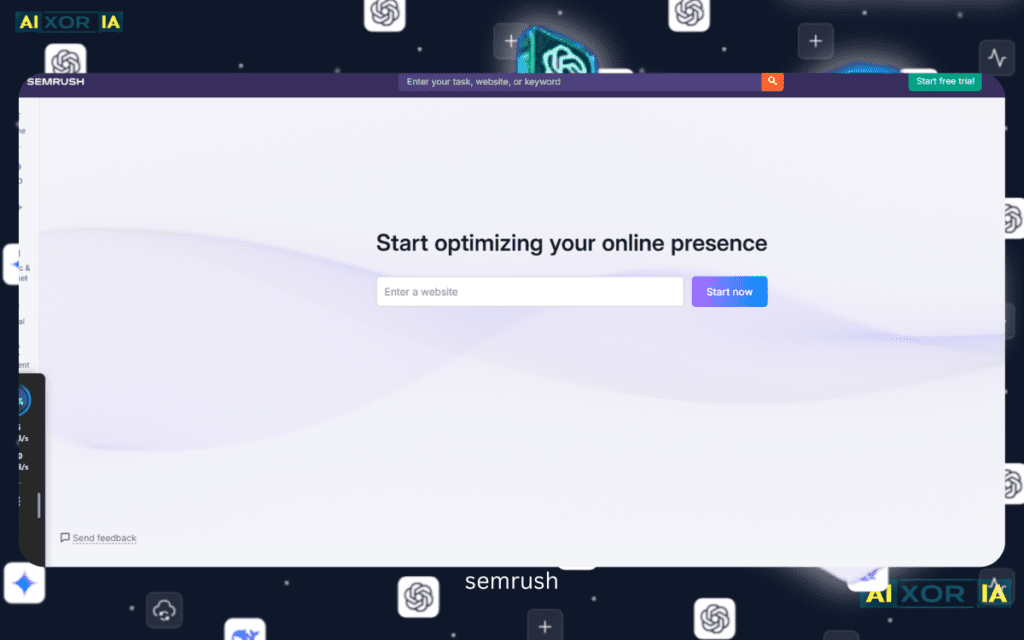
Semrush is widely known for its extensive database and competitive analysis features.
During a competitor audit for a digital marketing website, Semrush revealed several keywords where competitors ranked with thin content pages.
Instead of targeting the same keywords directly, the strategy was to create more detailed guides covering those topics with deeper context.
Over time, those pages replaced the competitor pages in search results because they provided more comprehensive information.
The platform’s strength lies in its ability to identify strategic opportunities through competitive data.
Jasper and Frase – Accelerating Research and Drafting
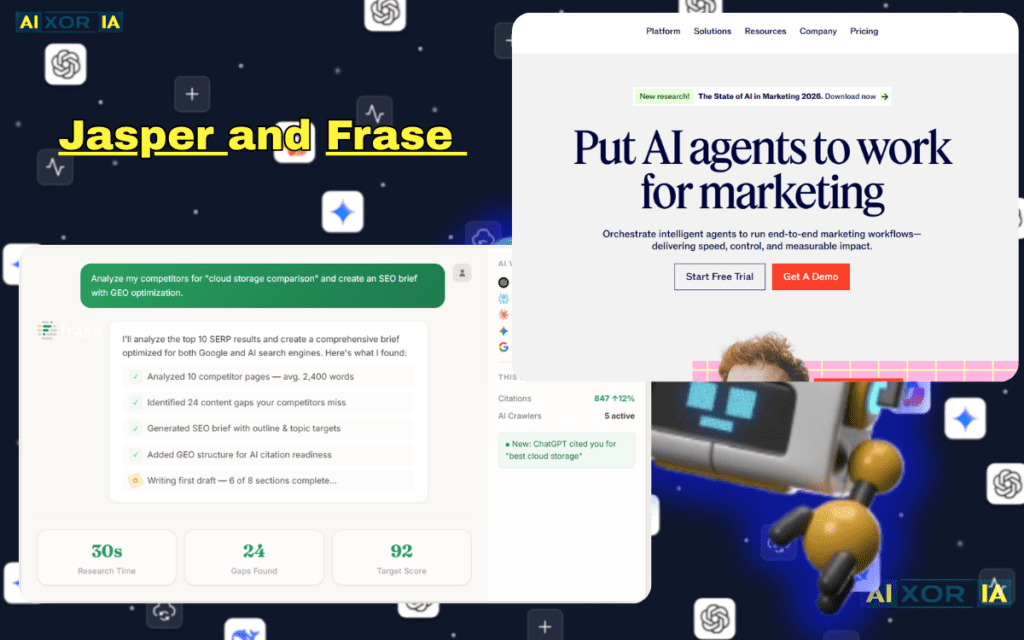
AI writing assistants like Jasper and Frase are often misunderstood as content generators.
Their most useful function is actually research acceleration.
When preparing a large article, Frase can quickly summarize the main themes found across top-ranking pages.
This allows writers to identify:
- important subtopics
- frequently mentioned entities
- common user questions
Instead of spending hours analyzing search results manually, writers can focus on expanding ideas and adding unique insights.
When used responsibly, these tools dramatically reduce research time while maintaining content depth.
Read More – What are the Best AI Search Monitoring Tools
AI SEO Tools Comparison (2026)
| AI SEO Tool | Primary AI Logic | Best For | 2026 Key Feature |
|---|---|---|---|
| Surfer SEO | NLP & Semantic Analysis | Content Optimization | Real-time AI Overview prediction |
| MarketMuse | Topic Modeling AI | Content Strategy | Authority scoring for topic coverage |
| Semrush | Machine Learning Analytics | Competitive SEO research | AI-powered backlink audit |
| Jasper / Frase | Generative AI & NLP | Content drafting | Brand voice consistency |
Each tool approaches optimization differently, and combining multiple tools often produces the best results.
The Role of Content Freshness and Decay
Even well-optimized content gradually loses visibility over time.
This phenomenon is often referred to as content decay.
AI SEO tools track ranking changes and alert publishers when pages begin losing traction.
Updating these pages with:
- new statistics
- additional entities
- expanded sections
- improved internal linking
can often restore their ranking potential.
Instead of constantly publishing new articles, maintaining existing high-performing pages is often a more efficient strategy for sustaining traffic growth.
Building Topical Authority with AI Assistance
The most successful websites rarely rely on isolated articles.
Instead, they build interconnected content ecosystems around specific topics.
AI tools help structure these ecosystems by identifying relationships between queries.
For example, a website covering AI search optimization might eventually build articles about:
- semantic search principles
- entity-based indexing
- machine learning ranking signals
- AI-driven keyword clustering
- content authority modeling
When these topics are interconnected through internal linking, the site becomes a recognized authority on the subject.
Search engines tend to reward this depth with stronger rankings.
The Future of AI Search Optimization
Search systems are evolving toward contextual understanding rather than keyword matching.
Future optimization strategies will likely revolve around:
- entity graph modeling
- real-time search personalization
- AI-generated answer engines
- predictive ranking analytics
AI SEO tools will continue evolving to help content creators understand these complex systems.
However, technology alone will never replace original insights, real experience, and human creativity.
The websites that combine data-driven optimization with genuinely helpful content will continue gaining the largest share of organic traffic.
Conclusion
AI search optimization tools have fundamentally changed how websites grow organic traffic.
Rather than focusing on isolated keywords, these tools analyze semantic depth, entity relationships, and topic authority.
By leveraging AI-driven insights, content creators can identify overlooked opportunities, structure their articles more effectively, and build stronger topical coverage.
When combined with consistent publishing and thoughtful content updates, AI-powered SEO strategies can create sustainable organic growth that continues expanding over time.
2 thoughts on “How AI Search Optimization Tools Increase Organic Traffic”