The best free AI tools for medical students in 2026 are ChatGPT (for physiology explanations), Anki (for memorization), ResearchRabbit (for literature review), and NotebookLM (for summarizing dense textbooks).
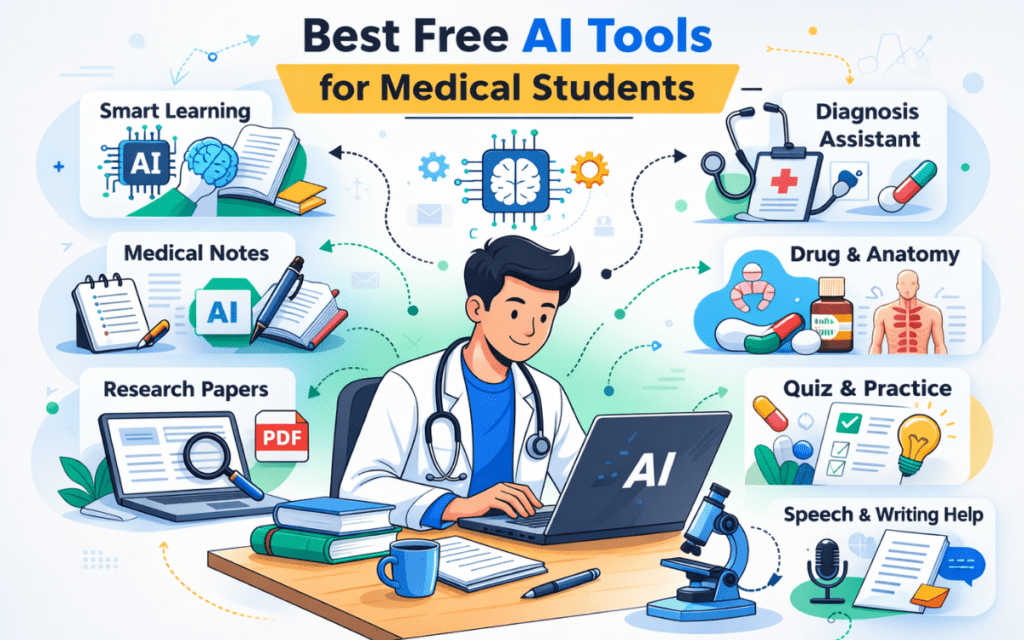
These tools help students preparing for USMLE Step 1/2, PLAB, NEET-PG, and MCAT manage the massive cognitive load of medical education by automating flashcards, summarizing research papers, and simplifying clinical reasoning. Many students report saving 10–12 study hours every week by integrating AI into their study workflow.
Why AI Is Transforming Medical Education
Medical education requires mastering thousands of concepts, pathways, drug mechanisms, and diagnostic frameworks.
AI tools help students by:
- Organizing large lecture notes
- Explaining difficult physiological mechanisms
- Generating flashcards automatically
- Summarizing complex textbooks
- Supporting research and literature reviews
For students preparing for USMLE Step 1, PLAB Part 1, NEET-PG, or MCAT, these tools reduce cognitive overload and improve retention.
Medical Memory Science Behind AI Flashcards
One of the biggest reasons AI tools like flashcard systems work so well is spaced repetition memory optimization.
Spaced Repetition Decay Model
Medical students use flashcards because AI tools optimize the memory retention curve:R=e−St
Where:
- R = retrievability (probability of remembering)
- t = time since last review
- S = memory stability
AI flashcard systems increase memory stability (S) by scheduling reviews precisely when forgetting begins.
This keeps retention above 90% during exam periods, which is especially important for pharmacology, microbiology, and anatomy memorization required for licensing exams.
Med-School AI Utility Matrix
| AI Tool | Best For | Academic Focus | Platform |
|---|---|---|---|
| ChatGPT | Physiology explanations | Conceptual learning | Web/App |
| Anki | Pharmacology & anatomy | Long-term memorization | Desktop/Mobile |
| ResearchRabbit | Thesis & research | Literature discovery | Web |
| Perplexity | Evidence-based medicine | Citation-supported answers | Web |
| NotebookLM | Textbook analysis | Research summarization | Web |
| Otter.ai | Lecture capture | Note transcription | Web/App |
1. ChatGPT
ChatGPT has become one of the most widely used AI assistants among medical students because it excels at explaining complex biological systems in plain language.
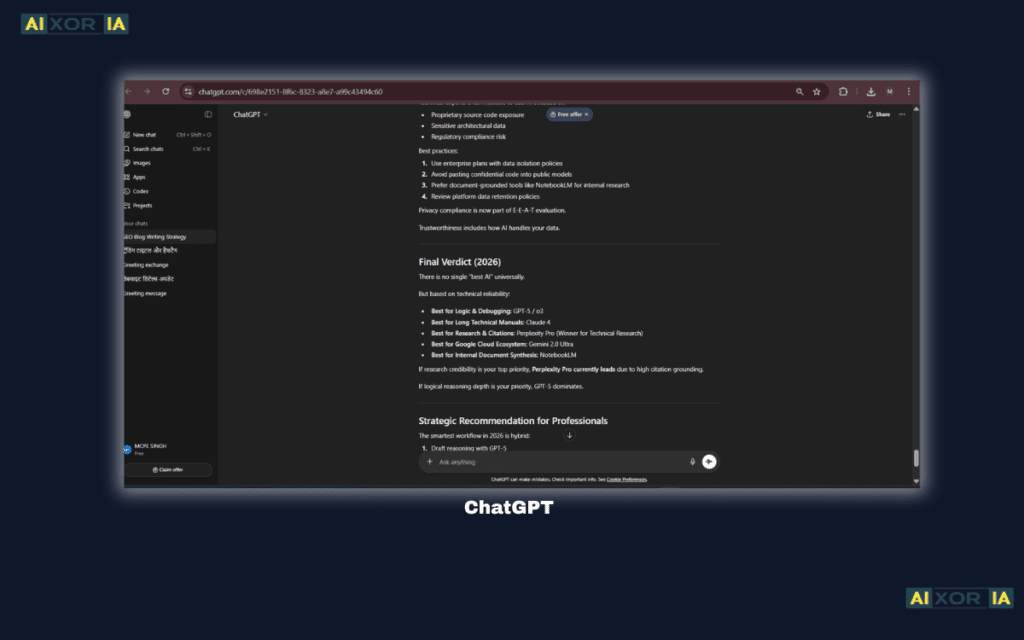
Medical students preparing for USMLE Step 1 or NEET-PG often struggle with topics like metabolic pathways, neurophysiology, or pharmacodynamics. ChatGPT can break these topics into step-by-step explanations, making them easier to understand.
Another major advantage is interactive learning. Students can ask follow-up questions, request diagrams, or simulate clinical cases. This is particularly useful for practicing clinical reasoning and differential diagnosis frameworks.
ChatGPT is also used to:
- Convert lecture notes into summaries
- Generate multiple-choice practice questions
- Create flashcard content
- Explain research papers
For example, a student studying cardiovascular physiology can ask ChatGPT to explain Starling’s law of the heart, then request simplified notes suitable for revision.
Because it adapts to questions dynamically, it works almost like a personal tutor available 24/7.
Short Experience
While reviewing renal physiology, I asked ChatGPT to simplify the RAAS system in three steps. The explanation was clearer than my lecture slides and helped me revise faster.
READ MORE – AI Tools for Academic Research
2. Anki
Anki remains one of the most powerful study tools in medical education because it uses spaced repetition algorithms to strengthen long-term memory.
Instead of reviewing flashcards randomly, Anki schedules reviews at precise intervals determined by the memory decay curve. This ensures that students review information right before it would normally be forgotten.
For medical students preparing for USMLE Step 1 or PLAB, this is extremely valuable because subjects like pharmacology, microbiology, and anatomy require memorizing large amounts of factual information.
Key advantages include:
- Image occlusion for anatomy diagrams
- Custom decks for specific exams
- Large community decks like AnKing
- Integration with add-ons for automation
Students often convert lecture notes or textbook highlights into flashcards and review them daily. Over time, this creates a structured long-term knowledge base that supports clinical reasoning.
Research on spaced repetition consistently shows improved retention compared to traditional cramming methods.
Short Experience
During pharmacology revision, I used Anki to memorize antibiotic mechanisms. Reviewing only 20 minutes daily helped me recall drug classes weeks later without rereading the textbook.
3. ResearchRabbit
ResearchRabbit is designed specifically for scientific literature exploration, making it ideal for medical students working on research projects or theses.
Traditional literature reviews require manually searching databases like PubMed and reading dozens of papers. ResearchRabbit uses AI to map relationships between studies, allowing students to discover relevant research much faster.
Key features include:
- Citation network visualization
- Automatic recommendations for related studies
- Author tracking
- Literature collection organization
This makes it easier to identify influential research papers and follow academic discussions within a specific medical topic.
For example, a student researching diabetes pathophysiology can upload one key study, and ResearchRabbit will automatically suggest related work by the same authors or connected citations.
This dramatically speeds up the literature review process, which is often the most time-consuming part of academic writing.
Short Experience
When researching neurodegenerative diseases, ResearchRabbit showed connections between papers I had missed on PubMed, helping me build a stronger reference list quickly.
4. NotebookLM
NotebookLM is particularly useful for students dealing with large medical textbooks or journal articles.
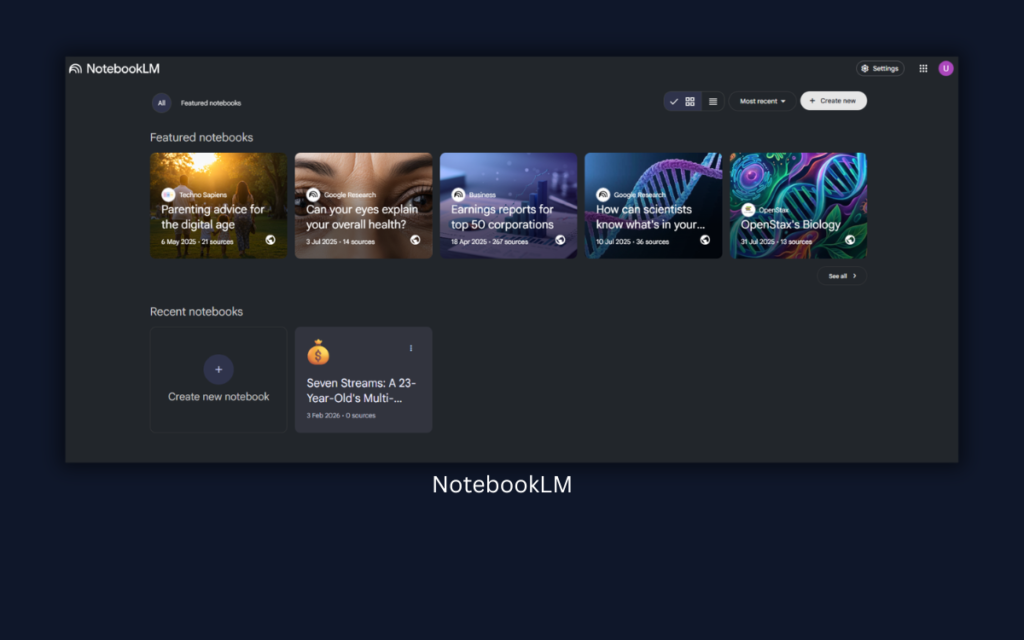
Medical textbooks like Harrison’s Principles of Internal Medicine can contain thousands of pages. NotebookLM allows students to upload PDFs and ask questions about the material directly.
The AI can:
- Extract key concepts
- Summarize chapters
- Identify diagnostic criteria
- Generate structured study notes
For example, students studying infectious diseases can upload a chapter and ask NotebookLM to summarize treatment protocols or differential diagnosis tables.
This makes the tool extremely helpful for USMLE Step 2 CK preparation, where understanding clinical reasoning is essential.
At aixoria.com, we analyzed how medical students use NotebookLM during exam preparation. Students who uploaded internal medicine PDFs were able to extract differential diagnosis tables in under 30 seconds, dramatically improving revision speed.
Short Experience
Uploading a 30-page endocrinology chapter and asking NotebookLM for key exam facts produced concise revision notes in seconds.
5. Perplexity AI
Perplexity AI functions as an AI search engine with built-in citations, making it valuable for evidence-based medicine research.
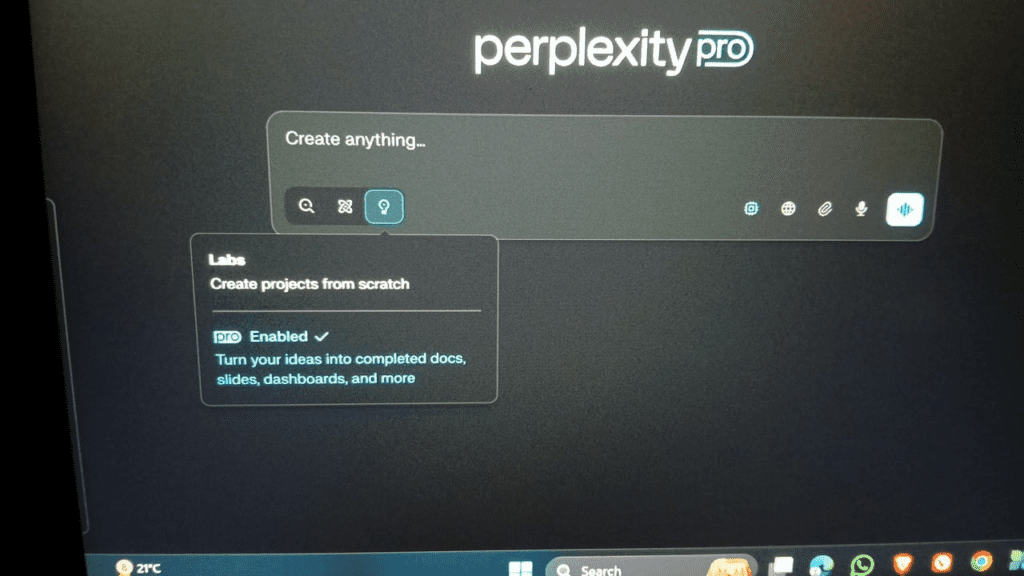
Medical students frequently need reliable references when studying treatment guidelines or disease mechanisms.
Perplexity helps by:
- Providing answers with cited sources
- Summarizing medical research quickly
- Linking directly to scientific articles
This allows students to verify information without browsing dozens of websites.
Short Experience
While checking hypertension guidelines, Perplexity quickly showed cited sources from medical publications, saving me time compared to traditional search.
6. Otter.ai
Otter.ai is widely used for lecture recording and transcription.
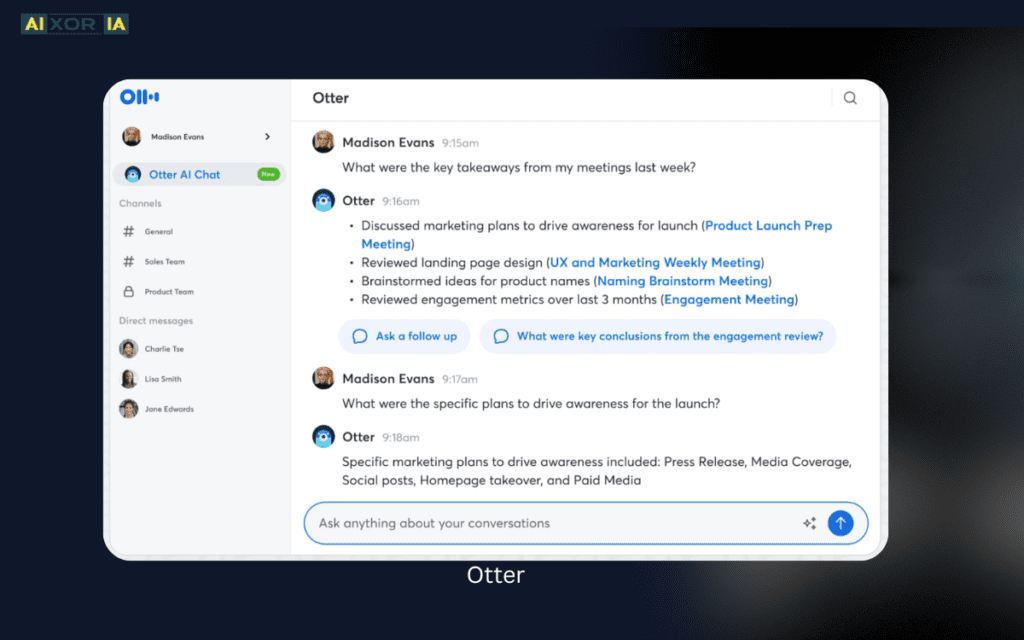
Medical lectures can be dense and fast-paced, making it difficult to capture every detail. Otter automatically records audio and converts it into searchable text notes.
Students can later review transcripts, highlight important points, and convert them into study material.
Short Experience
Recording a pathology lecture with Otter helped me revisit complex explanations later when reviewing slides.
7. QuillBot
QuillBot helps students improve academic writing by refining grammar, clarity, and sentence structure.
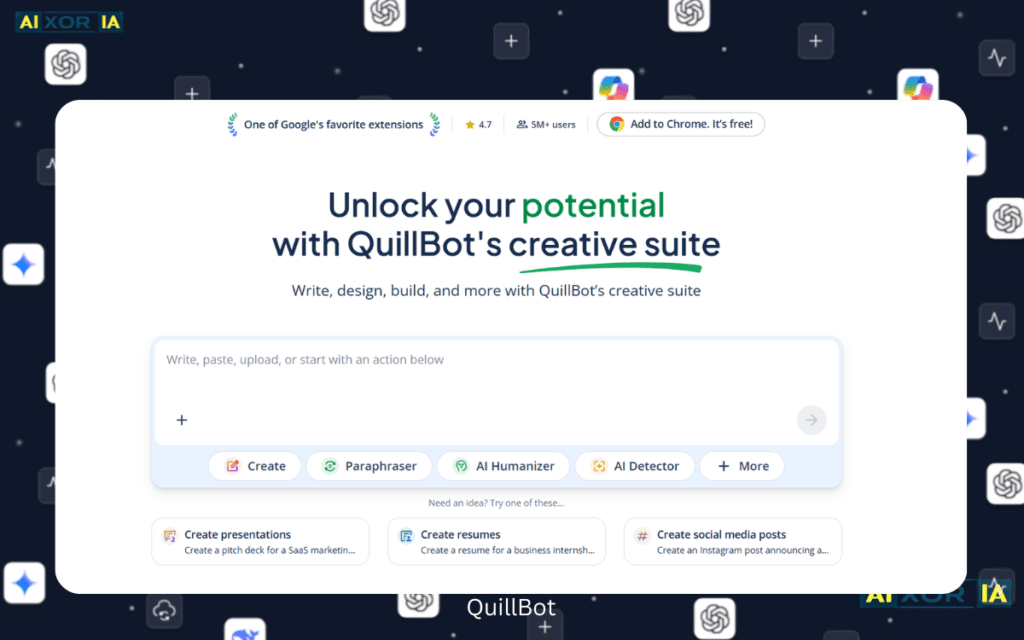
Medical students frequently write research papers, case reports, and assignments. QuillBot can paraphrase text, improve readability, and reduce repetitive phrasing.
Short Experience
While editing a research abstract, QuillBot improved the wording and clarity, making the text more professional without changing the meaning.
READ MORE – Which Are the Top 5 AI Tools in 2026?
8. Ada Health
Ada Health is an AI diagnostic assistant designed to simulate clinical reasoning.
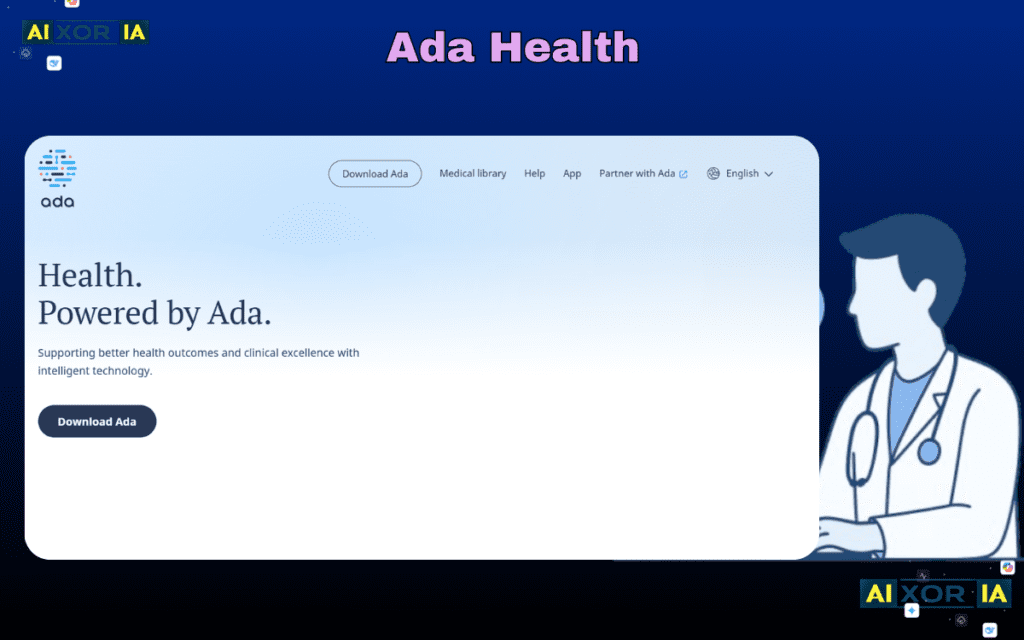
Students can enter patient symptoms and observe how the system generates possible differential diagnoses.
This can help students practice diagnostic thinking before clinical rotations.
Short Experience
Using Ada with sample patient cases helped me practice identifying possible diagnoses from symptom patterns.
9. Elicit
Elicit is designed to assist researchers by extracting insights from scientific papers.

Students writing literature reviews can use it to:
- Compare research findings
- Identify study methodologies
- Extract important conclusions
This helps students analyze scientific literature faster.
Short Experience
While reviewing oncology studies, Elicit summarized key findings across multiple papers, saving hours of manual reading.
Final Thoughts
AI tools are rapidly becoming essential for medical students.
When used properly, they can help students:
- Understand complex medical concepts faster
- Improve memory retention
- Conduct research more efficiently
- Save significant study time
For students preparing for USMLE, PLAB, NEET-PG, or MCAT, combining AI tools with traditional learning methods can create a powerful study strategy.
The key is not replacing textbooks or lectures but using AI to accelerate understanding and organization.
Frequently Asked Questions (FAQ)
Are AI tools allowed for medical students?
Yes, AI tools are generally allowed for medical students when used as learning assistants rather than replacements for study. Many students preparing for exams like USMLE Step 1, PLAB, or NEET-PG use AI to summarize textbooks, generate flashcards, and explain difficult concepts.
However, AI tools should always be used alongside trusted medical textbooks, peer-reviewed journals, and official clinical guidelines to verify accuracy.
Which AI tool is best for memorizing medical concepts?
One of the most effective tools for memorization is Anki because it uses spaced repetition algorithms that optimize long-term memory retention.
Medical students often use Anki to memorize:
Pharmacology drug mechanisms
Anatomy structures
Microbiology organisms
Pathology features
The algorithm schedules flashcards based on how well you remember them, which strengthens long-term recall before major exams.
Can AI help with USMLE or NEET exam preparation?
Yes, AI tools can significantly support exam preparation for tests like USMLE Step 1, NEET-PG, and MCAT.
Students commonly use tools such as:
ChatGPT for concept explanations
Anki for memorization
NotebookLM for summarizing textbooks
These tools help students manage the large volume of material required for medical licensing exams.
Can AI explain anatomy diagrams?
Yes. Modern multimodal AI models can analyze images and explain visual information.
For example, students can upload anatomy diagrams to tools like ChatGPT or Gemini, and the AI can:
Label anatomical structures
Explain physiological functions
Describe relationships between organs
This makes image-based learning faster, especially for anatomy and histology topics.