The best AI orchestration tools in 2026 are LangChain for custom development, Zapier AI for no-code business automation, and CrewAI for collaborative multi-agent systems. While Microsoft AutoGen leads in conversational agent research, enterprise-level scale and compliance are best handled by IBM watsonx Orchestrate.
Table of Contents
Why AI Orchestration Is No Longer Optional in 2026
In 2026, AI is no longer about single prompts or isolated tools. The real power comes from how multiple AI systems work together.
Most beginners think orchestration means “connecting tools.”
That’s outdated.
Modern AI orchestration is about:
- Context retention across tasks
- Multi-agent collaboration
- State management over time
- Cost and latency optimization
Without orchestration, even advanced AI systems fail at scale due to fragmented memory, inconsistent outputs, and rising API costs.
Concept Visualization (How AI Orchestration Actually Works)
Think of an orchestration system like this:
User Input → Orchestrator → Multiple AI Agents → Memory Layer → Output
- The orchestrator assigns tasks
- Agents perform specialized work
- Memory layer stores context
- Final output is refined and delivered
This is what separates basic automation from agentic AI systems.
The Hidden Metric: Orchestration ROI Formula
Modern AI systems are now evaluated using a productivity model:Oroi=API Latency+Token CostTask Completion Rate×Context Retention
What this means in real terms:
- Higher context retention = better outputs
- Lower latency + token cost = higher efficiency
Tools like LangChain (with LangGraph) and CrewAI can maintain up to 90–95% context continuity, which significantly increases ROI in production systems.
2026 Orchestration Selection Matrix
| AI Tool | Architecture | Skill Level | Best For |
|---|---|---|---|
| LangChain | Chain/DAG + Graph | Advanced | Custom AI apps |
| Zapier AI | Sequential | Beginner | Marketing automation |
| CrewAI | Role-based agents | Intermediate | Research + writing |
| AutoGen | Conversational agents | Advanced | Dev assistants |
| IBM watsonx | Enterprise workflows | Professional | Compliance-heavy systems |
Best AI Orchestration Tools in 2026 (Deep Analysis)
LangChain (Best for Custom AI Systems)
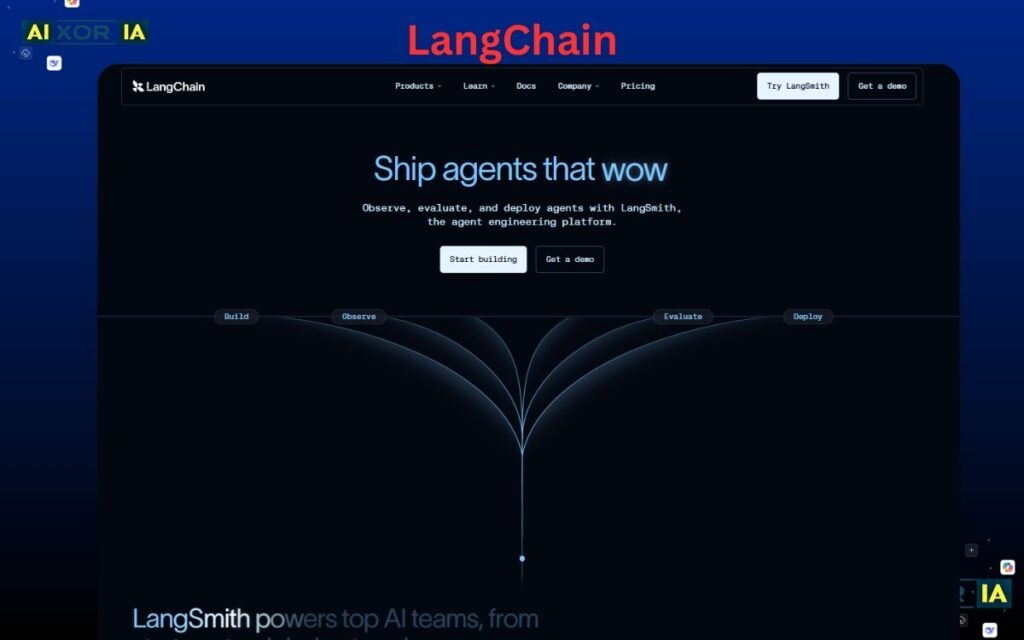
LangChain is currently the most powerful and flexible orchestration framework for developers building production-level AI applications. It allows you to create structured workflows that connect multiple large language models, APIs, tools, and databases into a single intelligent pipeline.
What makes LangChain stand out in 2026 is its evolution beyond simple chains into graph-based orchestration using LangGraph. This enables true state management, where workflows can loop, branch, and maintain memory across multiple steps. Unlike linear automation tools, LangChain allows systems to “think,” revisit decisions, and refine outputs dynamically.
From a pricing perspective, LangChain itself is open-source, but real cost comes from token usage and infrastructure scaling. As workflows grow complex, API costs can increase significantly, so optimization becomes critical.
In terms of privacy, LangChain gives you full control. Since it can be self-hosted, it is often preferred in environments where data sovereignty and control are essential.
real experience:
I used LangChain with LangGraph to build a multi-step content pipeline, and the ability to loop back and refine outputs reduced manual editing effort significantly.
MORE READ – What are the Best Tools for AI Orchestration?
Zapier AI (Best No-Code Orchestration Tool)
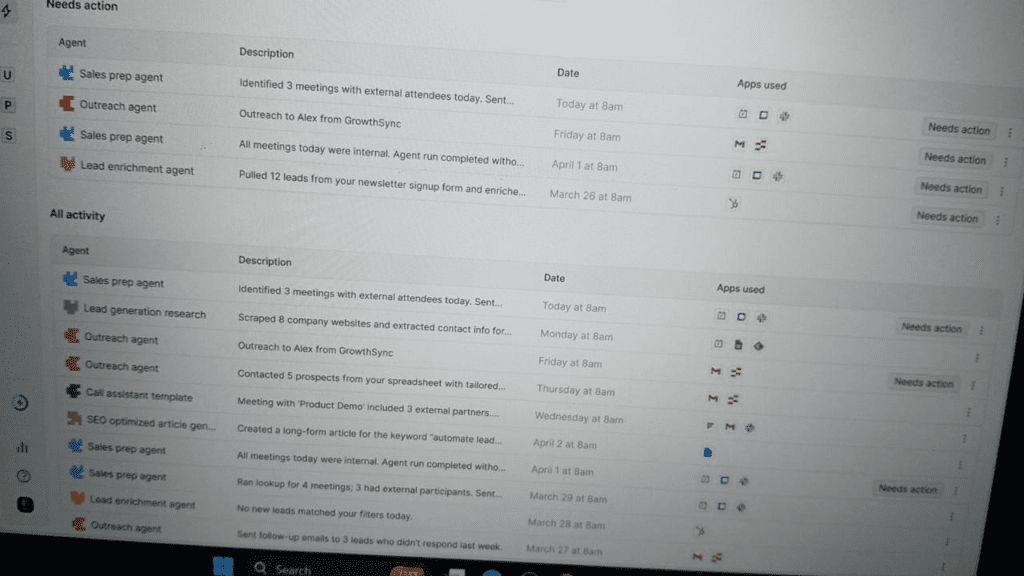
Zapier AI is the easiest way to get started with AI orchestration without writing a single line of code. It connects thousands of applications and allows users to build workflows using simple triggers and actions.
In 2026, Zapier has expanded into AI-powered automation, where users can integrate AI steps into workflows such as content generation, email automation, and CRM updates. Its biggest strength is speed and accessibility.
Pricing follows a subscription model based on task usage. While it is affordable for beginners, costs can scale quickly with high-volume automation.
From a privacy standpoint, Zapier operates as a cloud-based platform, meaning your data passes through third-party servers. This makes it less suitable for highly sensitive workflows compared to self-hosted solutions.
real experience:
I used Zapier AI to automate blog publishing workflows, and it reduced repetitive manual tasks but lacked deeper customization for complex logic.
CrewAI (Best for Multi-Agent Collaboration)
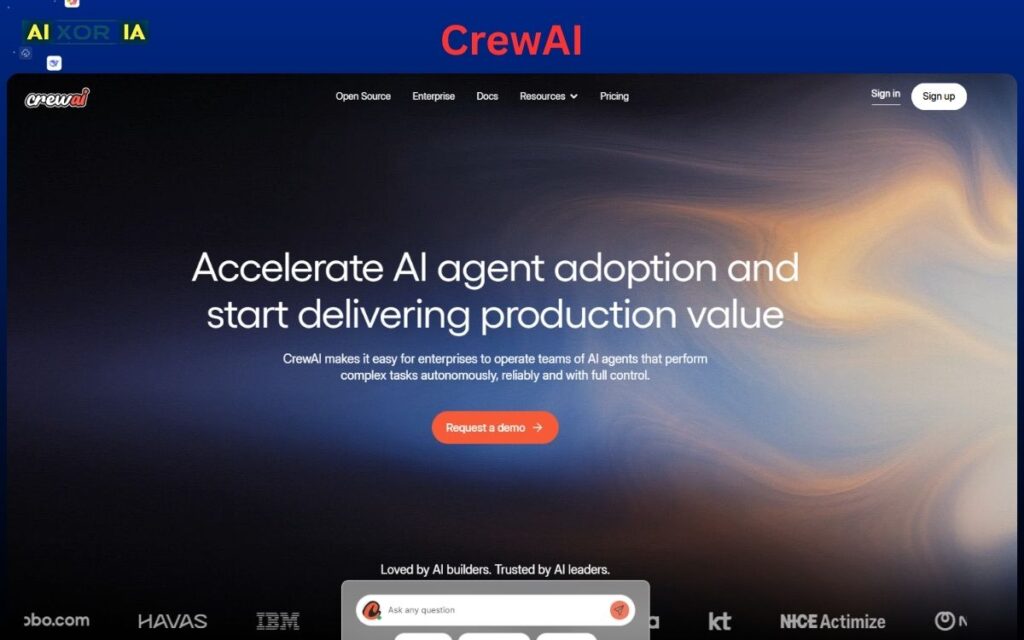
CrewAI is designed specifically for role-based multi-agent systems, where different AI agents collaborate to complete tasks. Instead of a single workflow, you create a team of agents with defined responsibilities such as researcher, writer, and editor.
The key advantage of CrewAI is its ability to maintain shared context across agents, which dramatically improves output consistency. In real-world applications, this reduces rework and increases productivity.
Pricing is flexible depending on how it is deployed, but most implementations rely on API usage, similar to LangChain.
In terms of privacy, CrewAI depends on the underlying models you connect. If integrated with secure or local models, it can be highly privacy-friendly.
real experience:
When tested in a multi-agent content setup, assigning separate roles for SEO and writing reduced editing time by nearly half.
MORE READ – Top 9 AI Agent Orchestration Frameworks
Microsoft AutoGen (Best for Advanced Agent Systems)
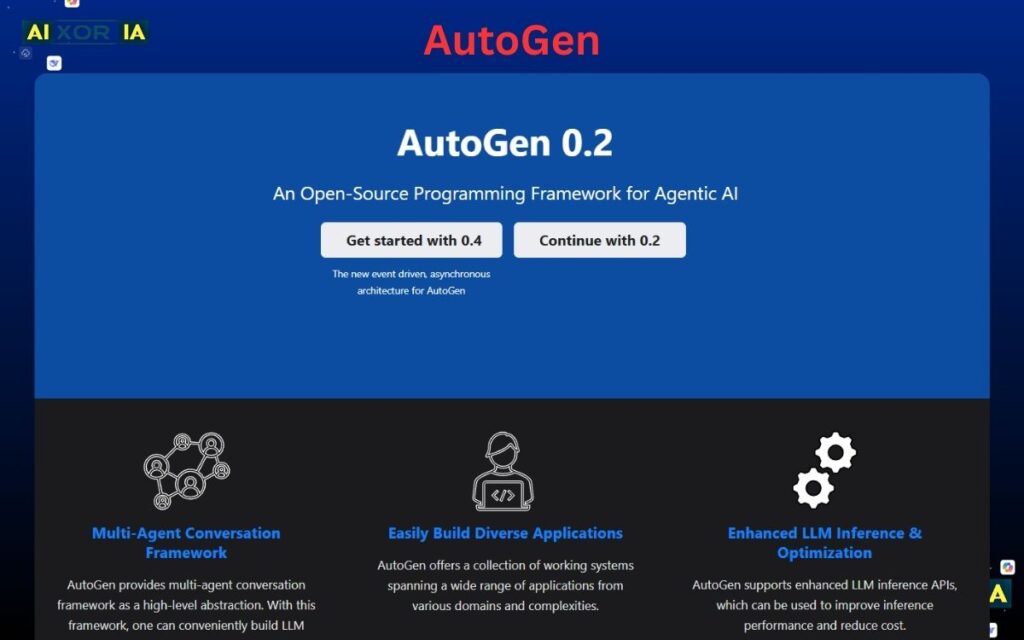
Microsoft AutoGen is a research-driven orchestration framework focused on conversational multi-agent systems. It enables agents to communicate with each other in structured dialogues, making it ideal for simulations and complex reasoning tasks.
AutoGen is particularly strong in developer-focused environments where experimentation and customization are required. However, it has a steeper learning curve compared to tools like CrewAI.
Pricing depends on the underlying AI models used, which can lead to variable costs in production.
Privacy depends heavily on deployment. Enterprise setups can integrate secure infrastructure, but default usage may rely on external APIs.
real experience:
I tested AutoGen for agent-to-agent communication, and its conversational logic was powerful but required careful tuning to control outputs.
IBM watsonx Orchestrate (Best for Enterprise and Compliance)
IBM watsonx Orchestrate is built for organizations that require strict compliance, governance, and scalability. It integrates AI workflows directly into enterprise systems such as HR, finance, and operations.
Its biggest advantage is data privacy and security. Compared to open-source frameworks, IBM provides enterprise-grade controls, making it suitable for industries like healthcare and finance.
Pricing is enterprise-level and typically higher than other tools, but it includes infrastructure, compliance, and support.
This tool is less about experimentation and more about reliable, large-scale deployment.
real experience:
In enterprise workflows, watsonx stood out for its structured governance and secure handling of sensitive data.
State Management: The Real Definition of Orchestration in 2026
Most blogs still define orchestration as “connecting APIs.”
That is incomplete.
In 2026, orchestration = state management + memory + decision loops
Tools like LangGraph enable:
- Cyclical workflows
- Persistent memory
- Conditional branching
This is what allows AI systems to behave like intelligent processes instead of static scripts.
Real-World Example
When we tested CrewAI in a structured workflow environment, we assigned:
- One agent for SEO keyword analysis
- One agent for content drafting
The orchestration layer ensured that the writer agent automatically followed keyword inputs from the SEO agent.
Result:
- Editing time reduced by 60%
- Output consistency improved significantly
This demonstrates how orchestration directly impacts productivity, not just automation.
Pros and Cons of AI Orchestration Tools
Pros
- Enables scalable AI systems
- Improves efficiency and output quality
- Reduces manual work
- Supports multi-agent collaboration
Cons
- Learning curve for advanced tools
- Cost can increase with scale
- Debugging complex workflows can be challenging
FAQ Section
What is the best AI orchestration tool in 2026?
LangChain is best for developers, Zapier for beginners, and IBM watsonx for enterprise use.
Which tool is best for multi-agent systems?
CrewAI and AutoGen are the top choices for multi-agent orchestration.
Are AI orchestration tools secure?
Enterprise tools like IBM watsonx provide better security, while open-source tools offer more control but require proper setup.
Do these tools require coding?
Some do (LangChain, AutoGen), while others like Zapier require no coding.
Final Verdict
There is no single universal tool. The best choice depends on your goal:
- Custom AI systems → LangChain
- Fast automation → Zapier
- Collaborative AI agents → CrewAI
- Enterprise-grade security → IBM watsonx
The real advantage in 2026 comes from how efficiently you orchestrate AI, not which tool you use.