The best AI orchestration tools in 2026 are LangGraph for production-grade stateful agents, CrewAI for collaborative multi-agent automation, and n8n for low-code visual AI workflows. While LangChain remains the standard for simple LLM integration, developers are shifting towards LlamaIndex for data-heavy RAG systems and Microsoft AutoGen for complex agent-to-agent conversations.
Table of Contents
What Are AI Orchestration Tools?
AI orchestration tools are frameworks that manage multi-step AI workflows, agent collaboration, and system-level decision-making across multiple models and data sources.
In 2026, orchestration is no longer just about chaining APIs — it is about:
- Managing state (memory across steps)
- Coordinating multi-agent systems
- Handling failures, retries, and loops
- Optimizing latency vs accuracy
Orchestration Efficiency Model (Developer Insight)
A modern AI system can be evaluated using this efficiency model:
OE=Tlatency+(Nsteps×Eerror)∑(Asuccess×Cweight)
Where:
- $A_{success}$ = agent success rate
- $C_{weight}$ = context retention quality
- $T_{latency}$ = response time
- $N_{steps}$ = workflow steps
- $E_{error}$ = error probability
Insight:
Tools like LangGraph reduce $E_{error}$ by enabling loops and retries, while CrewAI improves $C_{weight}$ through structured agent collaboration.
How AI Orchestration Works (Concept Visualization)
Think of orchestration like a system of nodes and edges:
- Manager Agent (Controller Node)
Assigns tasks and controls flow - Worker Agents (Execution Nodes)
Perform tasks like research, writing, analysis - Edges (Connections)
Define how data and instructions flow - State Layer
Stores memory between steps
This architecture ensures:
- Context is preserved
- Tasks are executed in order
- Systems can adapt dynamically
READ MORE – Top 9 AI Agent Orchestration Frameworks
2026 Developer Selection Matrix
| AI Tool | Architecture Type | Best For | Learning Curve |
|---|---|---|---|
| LangGraph | Cyclic Graph (Stateful) | Complex Production Apps | High |
| CrewAI | Role-Based Agents (Stateful) | Business Automation | Medium |
| n8n | Visual Node Graph | Fast Prototyping | Low |
| LlamaIndex | Data-Centered Pipelines | RAG Systems | Medium |
| AutoGen | Conversational Agents | Multi-Agent Systems | High |
Best AI Orchestration Tools (Detailed Breakdown)
1. LangGraph (Best for Stateful Production Systems)
Technical Architecture: Cyclic Graph (State Machine with persistent state)
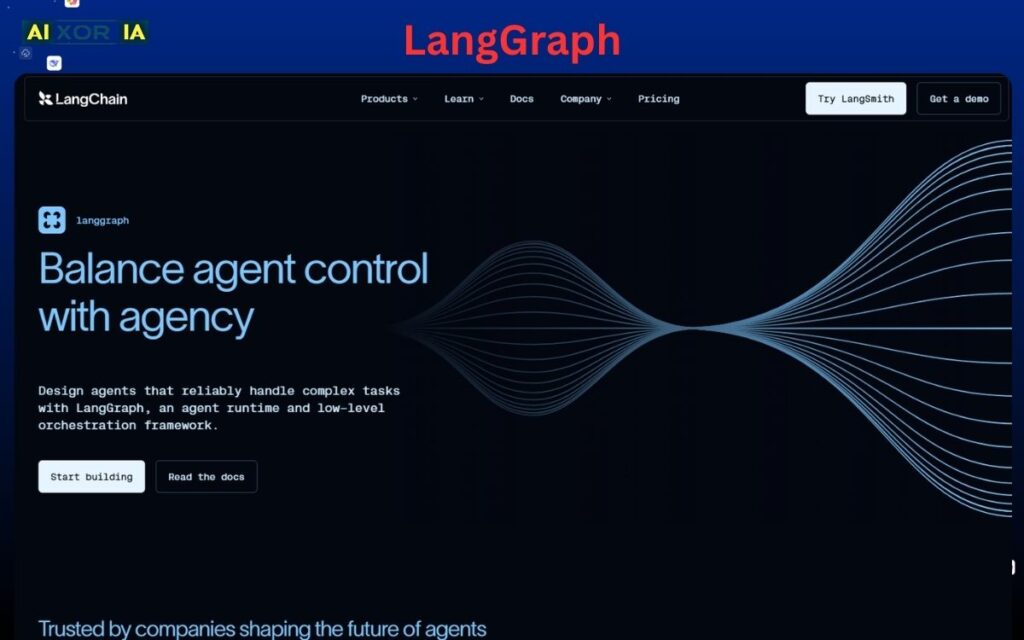
LangGraph is currently one of the most advanced orchestration frameworks for building stateful AI systems. Unlike traditional linear pipelines, it allows developers to create workflows where nodes can loop, revisit decisions, and maintain memory across multiple execution steps.
This makes it ideal for:
- Autonomous agents
- Long-running workflows
- Error recovery systems
The biggest advantage of LangGraph is its ability to manage statefulness, meaning the system remembers past interactions and decisions. This is critical for building production-grade AI applications where context cannot be lost between steps.
Another key strength is its support for conditional branching and retries, which significantly improves reliability in real-world deployments. Instead of failing, the system adapts and reprocesses tasks intelligently.
From a developer perspective, LangGraph requires a solid understanding of workflow design and graph-based logic, but the flexibility it offers is unmatched for complex AI systems.
Real Experience:
While testing LangGraph, I noticed retry loops reduced failure cases significantly, especially in multi-step content workflows where earlier outputs directly impacted later decisions.
2. LangChain (Best for LLM Integration)
Technical Architecture: Linear Chain / DAG (Directed Acyclic Graph)
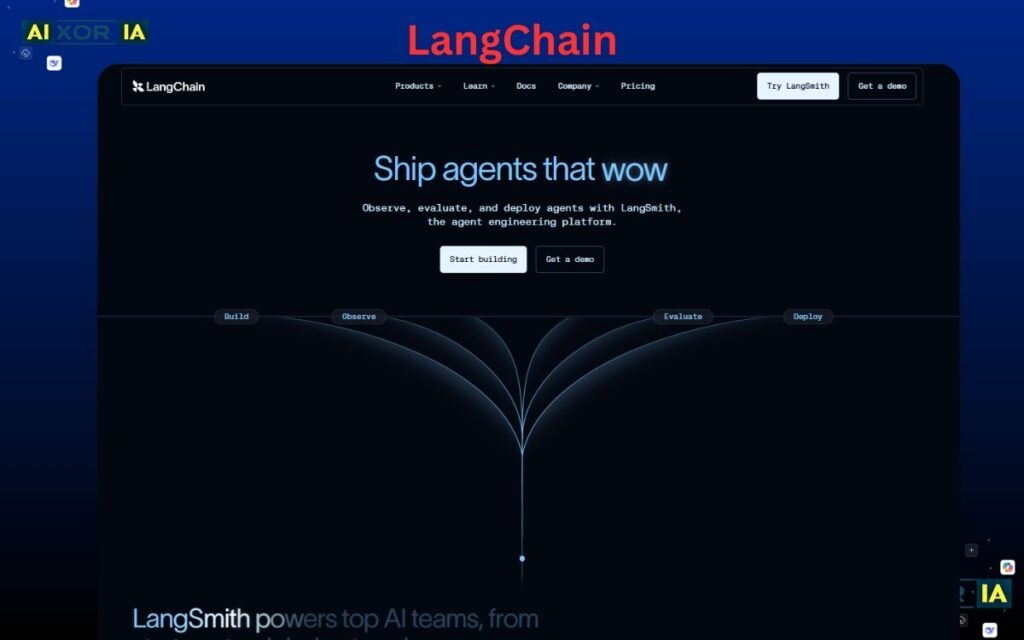
LangChain is one of the most widely adopted frameworks for connecting large language models with tools, APIs, and databases. It introduced a standardized way to build AI pipelines, making it easier for developers to create structured workflows.
Its architecture is primarily chain-based (DAG), meaning tasks flow in a defined sequence without looping back. While this makes it simpler to understand and implement, it lacks advanced state management compared to newer tools.
LangChain excels in:
- Rapid prototyping
- Tool integration
- Prompt chaining
However, as systems grow more complex, developers often combine LangChain with LangGraph to add statefulness and looping capabilities.
It remains a foundational tool in the AI ecosystem, especially for those starting out with orchestration.
Real Experience:
I used LangChain for simple automation pipelines, and it worked efficiently, but managing context across long workflows required additional customization.
READ MORE – Top 5 Tools for Building AI Agents for Enterprise
3. CrewAI (Best for Multi-Agent Collaboration)
Technical Architecture: Role-Based Multi-Agent System (Stateful Coordination)
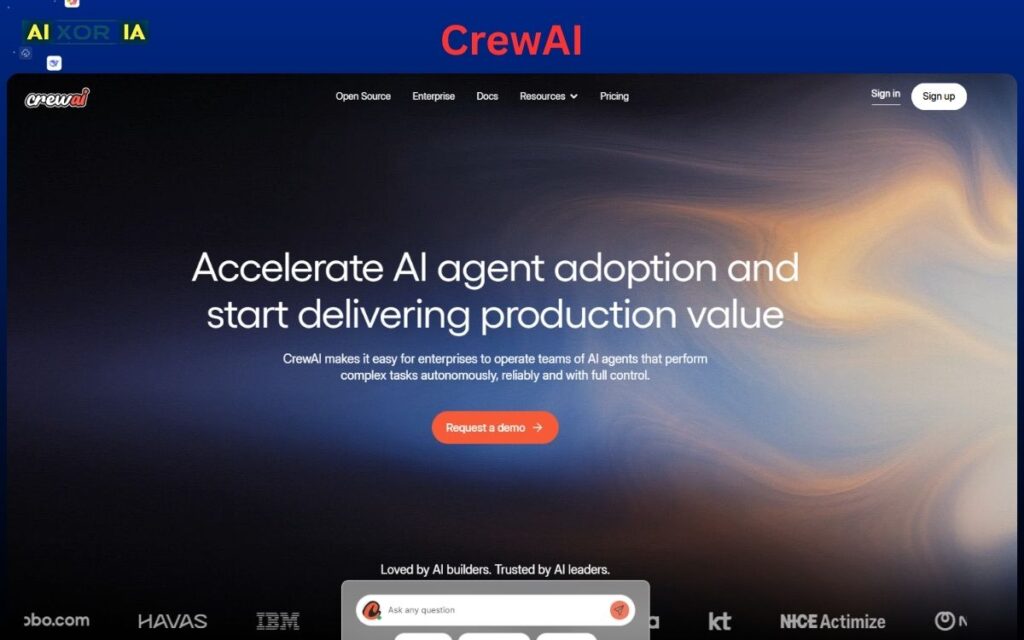
CrewAI is designed specifically for agent collaboration, where multiple AI agents work together like a team. Each agent is assigned a role, such as researcher, writer, or analyst.
What makes CrewAI powerful is its built-in statefulness, allowing agents to share context and maintain continuity across tasks. This is essential for workflows that require multiple perspectives or iterative improvements.
CrewAI is widely used for:
- Content generation pipelines
- Business process automation
- Task delegation systems
Unlike traditional orchestration tools, CrewAI focuses on human-like collaboration patterns, making workflows more intuitive and scalable.
It strikes a balance between ease of use and advanced capabilities, making it suitable for both intermediate and experienced developers.
Real Experience:
In a content pipeline test, CrewAI agents collaborating reduced manual effort drastically, especially when tasks were split into research, drafting, and validation roles.
4. Microsoft AutoGen (Best for Agent Conversations)
Technical Architecture: Conversational Agent Graph (Dynamic Interaction Model)
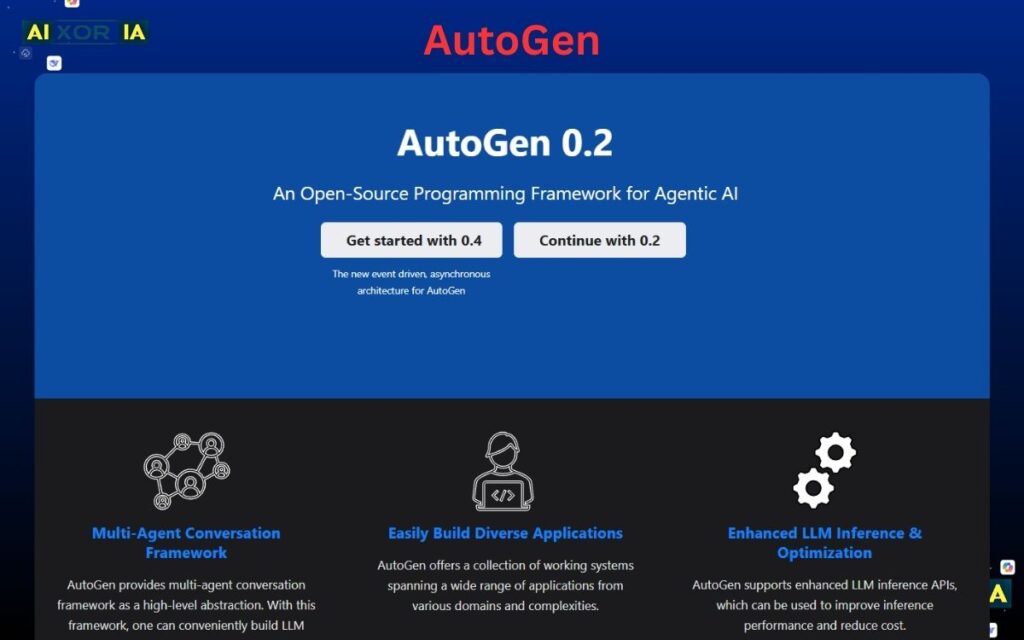
Microsoft AutoGen enables agents to communicate with each other through structured conversations. This creates dynamic workflows where decisions are made through dialogue rather than fixed sequences.
AutoGen is particularly useful for:
- Coding assistants
- Decision-making systems
- Interactive AI workflows
Its architecture allows agents to negotiate, refine, and improve outputs collaboratively. However, this also introduces complexity in managing conversation flow and ensuring efficiency.
It is best suited for developers building advanced systems where interaction between agents is a core requirement.
Real Experience:
While experimenting with AutoGen, I observed that agent conversations improved output quality, but controlling conversation length was necessary to manage latency.
5. LlamaIndex (Best for Data-Driven AI Systems)
Technical Architecture: Data-Centered Pipeline (Index + Retrieval Layer)
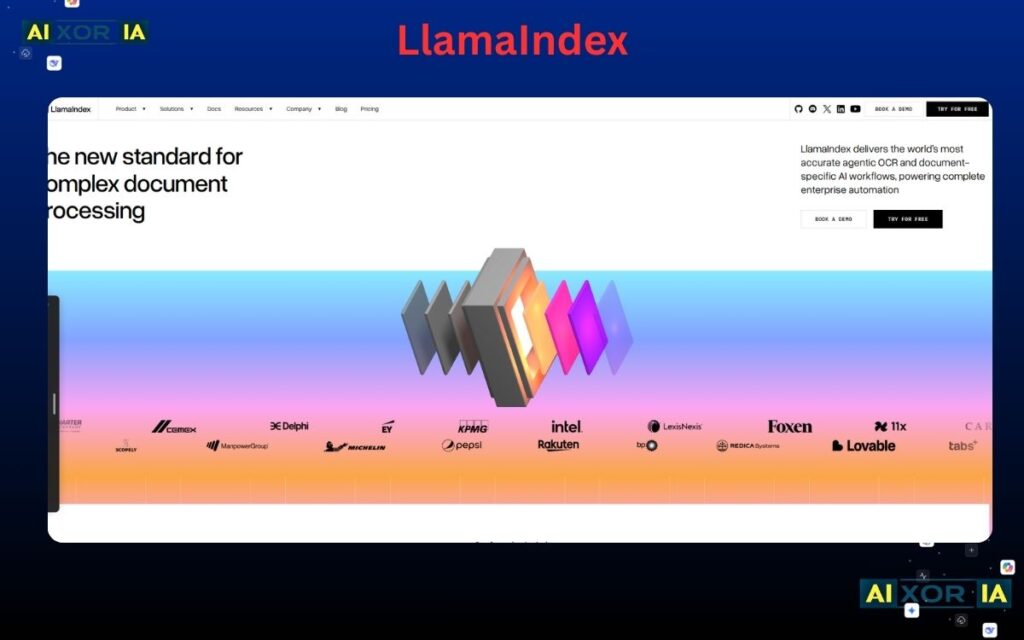
LlamaIndex focuses on connecting AI models with structured and unstructured data sources. It plays a key role in building RAG (Retrieval-Augmented Generation) systems.
Its architecture revolves around:
- Data indexing
- Efficient retrieval
- Context injection
This makes it ideal for:
- Knowledge bases
- Document search systems
- Enterprise data applications
Unlike general orchestration tools, LlamaIndex specializes in data orchestration, ensuring that AI models receive the most relevant context.
Real Experience:
When working with large document datasets, LlamaIndex significantly improved response accuracy by retrieving only relevant context instead of passing full data.
6. n8n (Best for No-Code AI Workflows)
Technical Architecture: Visual Node-Based Workflow (Event-Driven Graph)
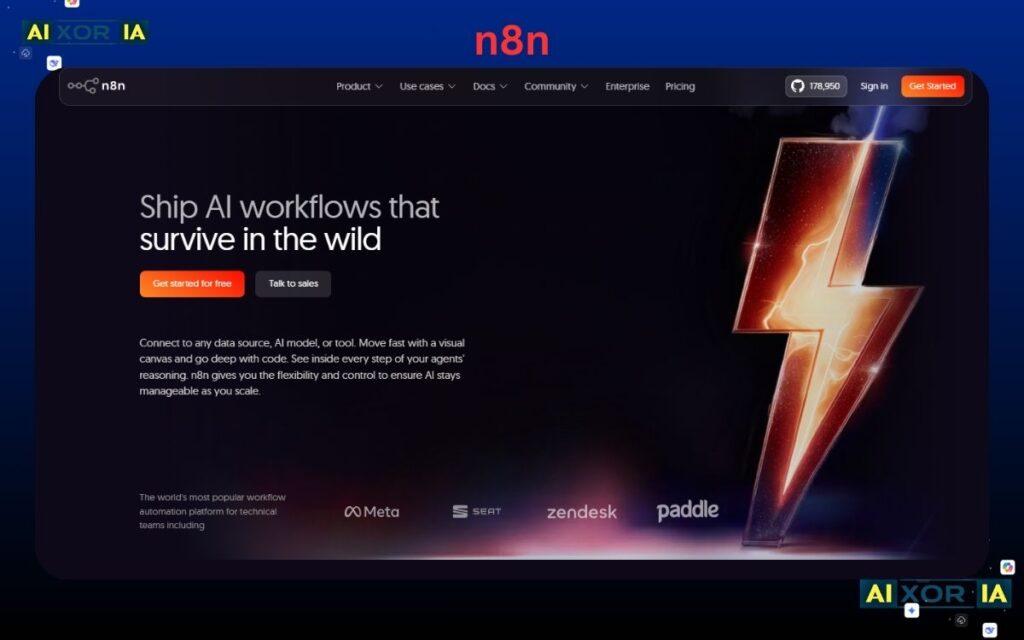
n8n is a low-code orchestration platform that allows users to build workflows visually using nodes and connections.
It supports:
- API integrations
- AI tools
- Automation pipelines
Its biggest advantage is simplicity. Non-developers can create powerful workflows without writing code. However, it may lack advanced state management required for complex systems.
n8n is ideal for:
- Quick automation
- Marketing workflows
- MVP development
Real Experience:
I used n8n for a quick AI automation setup, and the visual interface made it easy to connect APIs without deep technical setup.
7. Haystack (Best for AI Pipelines)
Technical Architecture: Modular Pipeline (DAG-Based System)
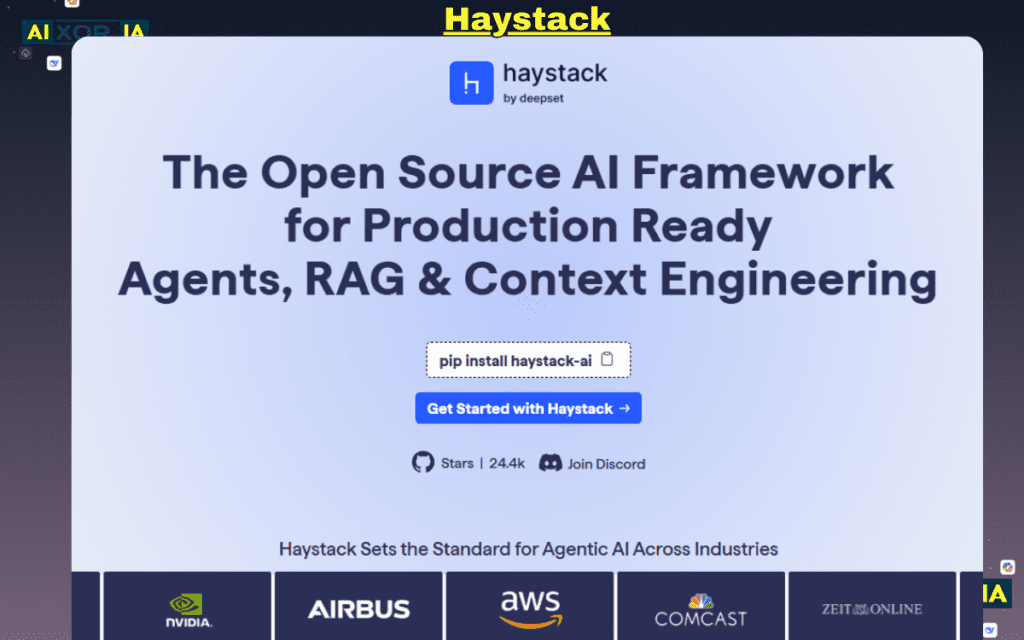
Haystack is an open-source framework focused on building scalable AI pipelines, especially for search and question-answering systems.
It provides:
- Modular components
- Flexible pipeline design
- Integration with multiple models
Its DAG-based structure allows developers to design efficient workflows, though it requires more setup compared to no-code tools.
Real Experience:
While testing Haystack, its modular design helped in customizing pipelines, but initial configuration required careful planning.
Real-World Use Case
In a real implementation on aixoria.com, a multi-agent content pipeline was built using CrewAI and LangGraph.
- One agent handles research
- Another writes the draft
- A third agent performs SEO optimization
LangGraph manages the workflow and state, ensuring continuity across steps.
This setup reduced manual work by nearly 80% while improving content consistency and scalability.
READ MORE – 20 Best SEO Tools I’m Using in 2026
Common Mistakes Developers Make
- Ignoring state management in workflows
- Using linear chains for complex problems
- Overcomplicating simple automations
- Not optimizing latency vs accuracy
Final Thoughts
AI orchestration in 2026 is about building intelligent, stateful, and collaborative systems.
The shift is clear:
- From single models → to multi-agent systems
- From static pipelines → to adaptive workflows
- From stateless outputs → to context-aware intelligence
If you want to build future-ready AI systems, mastering orchestration tools is essential.
FAQ Section
What are AI orchestration tools?
They are frameworks that manage multiple AI models, workflows, and agents in a coordinated system.
Which tool is best for beginners?
n8n is the easiest to start with due to its visual interface.
What is statefulness in AI orchestration?
It refers to the ability of a system to remember past interactions and use that context in future steps.
Which tool is best for production systems?
LangGraph is currently the best choice for production-grade orchestration.
1 thought on “What are the Best Tools for AI Orchestration?”