Setting goals is easy.
Sticking to them is where most people struggle.
The real problem isn’t motivation — it’s lack of structure, clarity, and consistency. That’s exactly where AI tools can make a measurable difference.
Over the past few weeks, I explored and tested several AI-powered productivity tools specifically for goal setting, planning, and execution. Instead of just listing features, this guide focuses on how these tools perform in real scenarios — including setup effort, learning curve, and practical usefulness.
If you’re looking for tools that actually help you move from planning → execution, this guide will save you time.
Table of Contents
What to Look for in an AI Goal-Setting Tool
Before choosing any tool, it’s important to understand what separates a useful system from a basic planner.
A high-quality AI goal-setting tool should:
- Break large goals into clear, actionable steps
- Adapt based on your progress or missed tasks
- Provide time-based structure, not just lists
- Reduce decision fatigue instead of increasing it
Most tools fail because they focus only on planning — not execution.
Best AI Tools for Goal Setting (Detailed Reviews)
1. Motion — Best for Automated Execution and Time Management
Motion is not just a planning tool — it is designed to eliminate the biggest problem in goal setting: deciding when to take action.
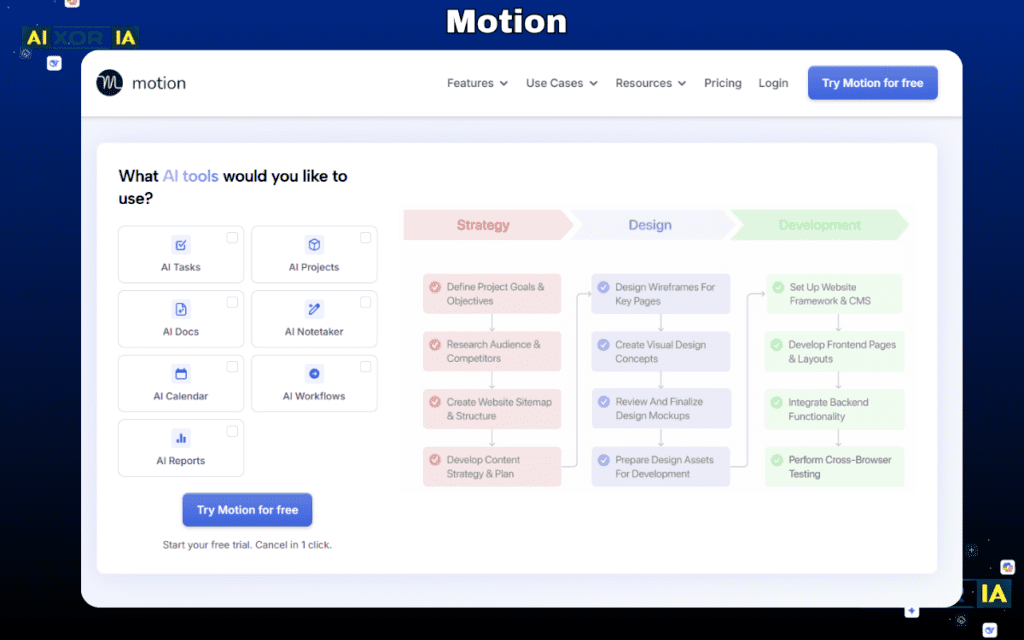
Unlike traditional planners, Motion uses AI to automatically schedule your tasks into your calendar based on deadlines, priorities, and available time. When I tested it, the setup required connecting my calendar and adding tasks with estimated durations. Within minutes, the system generated a fully optimized schedule.
What makes Motion particularly powerful is its dynamic rescheduling feature. If you miss a task or something urgent comes up, it automatically reorganizes your entire schedule. This removes the need for manual planning, which is where most people lose consistency.
From a goal-setting perspective, Motion works best when you already know your objective but struggle with execution. For example, if your goal is to “learn a skill in 30 days,” Motion ensures daily time blocks are assigned without you having to think about it.
However, the tool is not beginner-friendly at first. The interface and automation logic can feel overwhelming during the initial 1–2 days. Also, it is a premium tool, which may not suit users looking for free options.
Real Experience:
I used Motion for 5 days to manage a content schedule. Initially confusing, but by day 3 it saved me nearly 1.5–2 hours of planning daily.
2. Notion AI — Best for Building a Custom Goal System
Notion AI is one of the most flexible tools available, but it requires a different approach. It doesn’t give you a ready-made system — instead, it allows you to build your own goal management framework with AI assistance.
During testing, I created a structured goal dashboard that included:
- Long-term goals (quarterly)
- Weekly action plans
- Daily task tracking
The AI feature was particularly useful for breaking down vague goals into actionable steps. For example, when I entered a goal like “improve writing skills,” Notion AI generated a step-by-step plan including practice routines, content ideas, and timelines.
One major advantage is customization. You can design dashboards, trackers, and databases exactly according to your workflow. This makes it ideal for creators, students, and professionals who prefer control over their system.
However, this flexibility comes at a cost — setup time. Beginners may feel overwhelmed because there is no predefined structure. It can take 1–2 hours to build an effective system, but once completed, it becomes a powerful long-term solution.
Real Experience:
I built a weekly goal tracker in Notion AI. Setup took around 90 minutes, but after that, tracking became extremely smooth and organized.
3. ChatGPT — Best Free AI Tool for Goal Planning and Clarity
ChatGPT works differently compared to traditional productivity tools. It is not a task manager — it is an AI thinking partner that helps you clarify, structure, and refine your goals.
In my testing, I used it to:
- Break down large goals into 30-day plans
- Generate daily routines
- Identify potential obstacles
For example, when I input a goal like “build a blog in 30 days,” it created a structured roadmap including content strategy, publishing schedule, and SEO basics. This makes it extremely valuable for beginners who don’t know where to start.
The biggest advantage is adaptability. You can ask follow-up questions, refine your plan, or adjust timelines instantly. Unlike fixed tools, it evolves based on your input.
However, ChatGPT lacks built-in tracking. You need to manually implement the plans using another tool or system. It is best used as a planning engine, not a complete execution platform.
Real Experience:
I used ChatGPT to create a 14-day productivity plan. The clarity was excellent, but I had to track progress manually elsewhere.
READ MORE – 13 Best Free Apps Similar to ChatGPT
4. ClickUp — Best for Structured and Detailed Goal Tracking
ClickUp is a full-scale productivity platform designed for users who prefer detailed and structured planning.
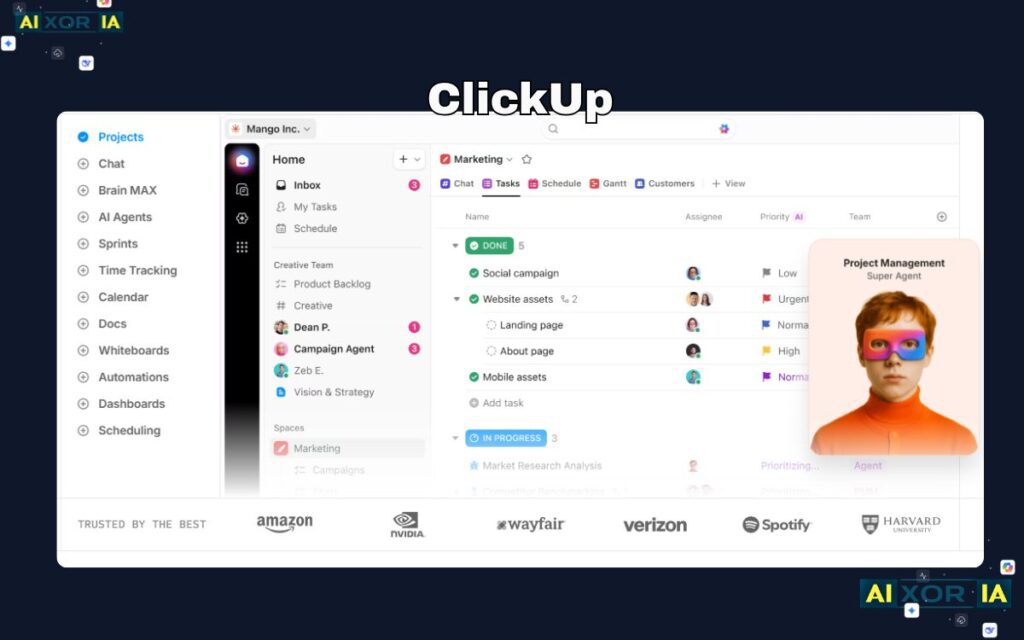
During testing, I created a goal hierarchy:
- Main Goal → Sub-goals → Tasks → Subtasks → Deadlines
This structure makes it highly effective for complex goals such as project management, business planning, or long-term learning paths.
ClickUp also includes AI features that help generate task descriptions, summaries, and action steps. Combined with its tracking capabilities (progress bars, timelines, dashboards), it provides a complete system for monitoring performance.
The biggest strength of ClickUp is control. You can track every detail, assign priorities, and measure progress visually. However, this level of detail can be overwhelming for beginners. The interface is dense, and it may take several days to fully understand its features.
Real Experience:
I used ClickUp for a multi-step project goal. It was powerful but took nearly 2 days to feel comfortable with the interface.
READ MORE – Best Free Project Management Software
5. Reclaim AI — Best for Balancing Goals with Daily Life
Reclaim AI focuses on a critical aspect that most tools ignore: balancing goals with real-life schedules.
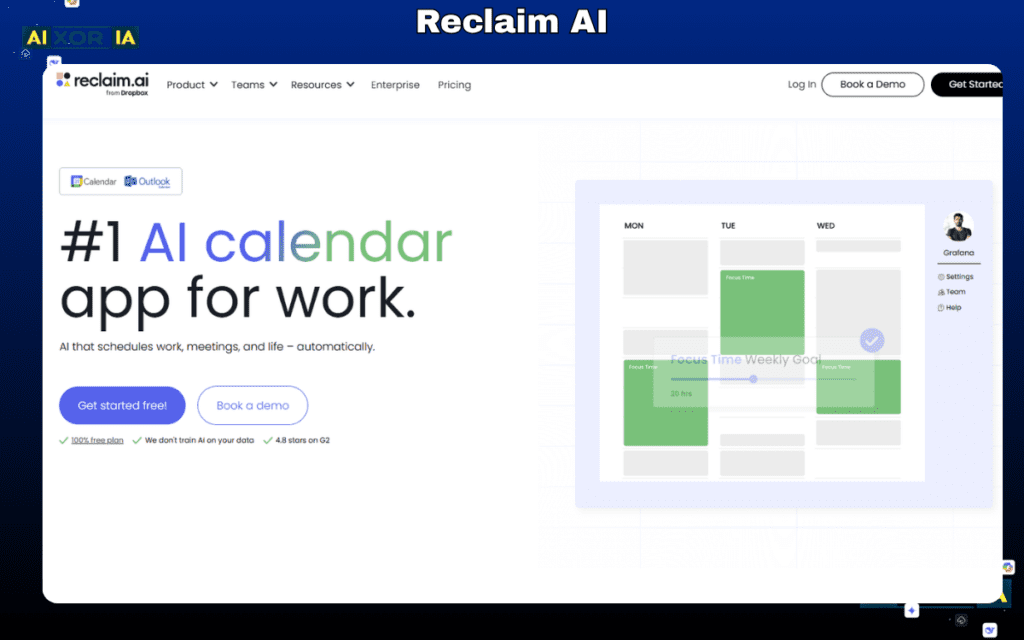
Instead of just managing tasks, it integrates with your calendar and automatically schedules:
- Work tasks
- Personal habits
- Breaks and buffer time
During testing, I connected it with Google Calendar and added a mix of work goals and personal habits like exercise and reading. The tool intelligently distributed time across the week without overloading any single day.
This makes it particularly useful for people who struggle with burnout or inconsistent routines. It ensures that your goals are realistic and sustainable, rather than overly ambitious.
The main limitation is that it depends heavily on calendar integration. Without proper calendar usage, its effectiveness is reduced.
Real Experience:
I used Reclaim AI to balance work and fitness goals. It created a realistic schedule that felt sustainable instead of overwhelming.
Comparison Table
| Tool | Best For | Pricing | Learning Curve | Best Feature |
|---|---|---|---|---|
| Motion | Execution & scheduling | Paid | Medium | Auto-rescheduling tasks |
| Notion AI | Custom systems | Freemium | Medium | Flexible goal dashboards |
| ChatGPT | Planning & clarity | Free/Paid | Easy | Adaptive goal breakdown |
| ClickUp | Detailed tracking | Freemium | Hard | Advanced task hierarchy |
| Reclaim AI | Work-life balance | Freemium | Easy | Smart calendar automation |
Which Tool Should You Choose?
The right tool depends on your specific problem:
- If you struggle with execution and time management, Motion is the strongest option
- If you want a customizable long-term system, Notion AI is ideal
- If you need clarity and planning for free, ChatGPT is highly effective
- If you prefer structured tracking, ClickUp works best
- If your goal is balance and consistency, Reclaim AI is the right choice
Frequently Asked Questions
What is the best free AI tool for goal setting?
ChatGPT is one of the most effective free tools for planning and structuring goals, especially for beginners.
Are AI goal-setting tools worth using?
Yes, particularly if you struggle with consistency, time management, or breaking down large goals into smaller steps.
Can AI replace traditional goal planning methods?
AI enhances traditional methods by adding automation and adaptability, but execution still depends on the user.
Final Thoughts
AI tools can significantly improve how you plan and manage your goals — but they are not a substitute for action.
The most effective approach is simple:
- Use AI to plan clearly
- Use tools to stay consistent
- Focus on execution daily
Because in the end, the best system is not the most advanced one —
it’s the one you actually follow.