Luxury interior design has evolved dramatically in the last few years. What once required months of consultations with architects, expensive mood boards, and physical prototypes can now be visualized in minutes using powerful digital design platforms.
But the real shift isn’t just convenience — it’s precision.
Modern luxury design is no longer based only on intuition or aesthetic taste. Today’s best interiors combine mathematical balance, spatial intelligence, and AI-powered visualization to create rooms that feel naturally elegant.
Design platforms now analyze layout balance, lighting angles, furniture scale, and negative space to help homeowners design interiors that feel harmonious without guesswork.

In this guide, we explore the most powerful tools for effortless luxury interior design in modern homes, how professionals use them, and the emerging technologies transforming home design in 2026.
Along the way, we’ll also look at a fundamental design concept used by architects and interior designers for centuries — the Golden Ratio, and how modern tools help achieve it automatically.
The Hidden Rule Behind Luxury Interiors: Spatial Intelligence
One reason luxury homes feel different from ordinary interiors is proportion.
Professional designers rarely place furniture randomly. Every element — sofas, lighting fixtures, wall spacing — follows spatial balance principles that create harmony.
One commonly referenced principle is the Golden Ratio, approximately 0.618, which appears throughout architecture, art, and nature.
To understand this mathematically in modern interior design, we can define a simplified balance metric.
Luxury Aesthetic Balance
Ab=Visual Noise Density(Negative Space×Material Contrast)
Where:
- Negative Space refers to open areas that allow the room to breathe
- Material Contrast represents the combination of textures like marble, wood, and glass
- Visual Noise Density measures clutter and competing design elements
When the A₍b₎ value approaches 0.618, a space typically feels visually balanced and comfortable.
Interestingly, many modern design tools now incorporate AI-driven balance systems that approximate these spatial relationships automatically.
Instead of manually calculating proportions, the software adjusts layouts and lighting until the room reaches a natural visual harmony.
Advanced Interior Design Tools for Modern Luxury Homes
Below are some of the most powerful platforms used by homeowners, architects, and professional interior designers today.
Each one offers unique capabilities for designing elegant modern spaces.
Planner 5D
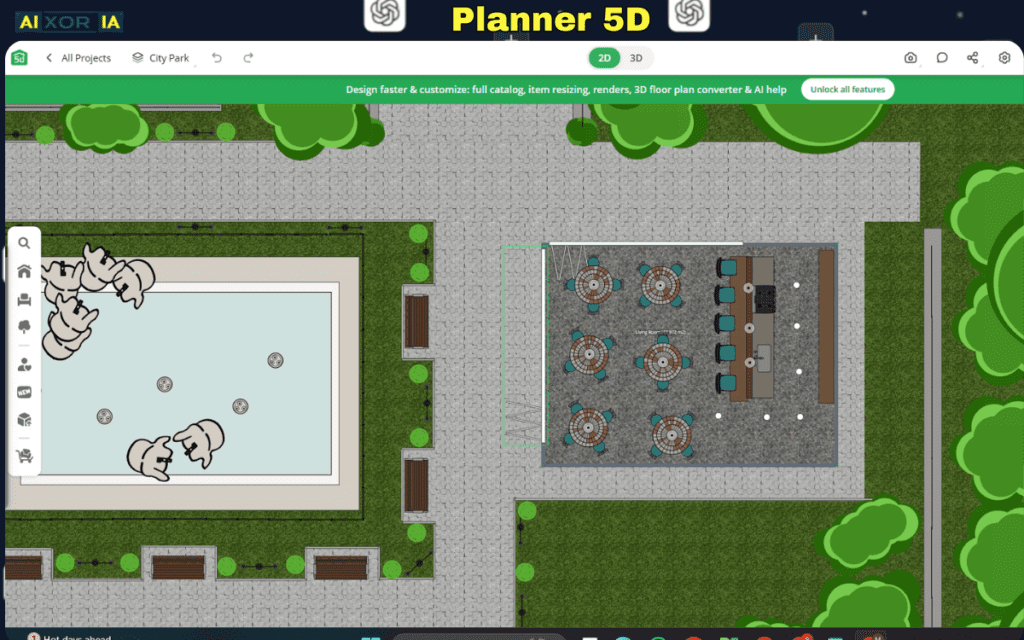
Planner 5D has become one of the most accessible tools for visualizing luxury interiors without technical training.
The platform allows users to create detailed 2D floor plans and photorealistic 3D interiors using a simple drag-and-drop interface.
Key Features
- AI floor plan recognition
- Real-time 3D rendering
- Extensive furniture catalog
- Smart layout recommendations
- Spatial AI sync for balance optimization
Planner 5D analyzes furniture placement and automatically suggests spacing adjustments that reduce visual clutter.
For homeowners experimenting with luxury aesthetics — such as marble kitchens, modern glass staircases, or minimalist living rooms — this automation dramatically simplifies the design process.
Real Experience Insight
When designing a luxury living room layout using Planner 5D, I noticed the software repeatedly suggested increasing the distance between the sofa and the central coffee table.
Initially the adjustment seemed minor, but after applying it and switching to the 3D render view, the room instantly felt more open and balanced.
The change effectively increased negative space, improving the overall spatial harmony of the room.
Expert Tip for 2026
When using Planner 5D, enable AI floorplan recognition when uploading scanned room layouts. It dramatically improves furniture scaling accuracy and prevents oversized furniture from disrupting spatial balance.
SketchUp
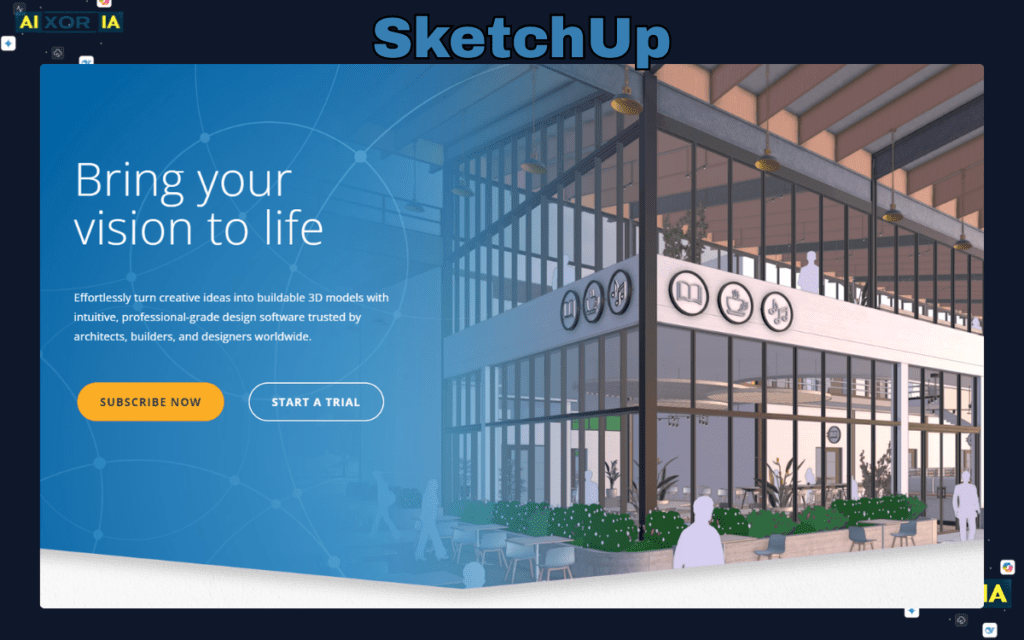
SketchUp is widely used by architects and professional interior designers because it offers far greater control over geometry, lighting, and custom structures.
While it has a steeper learning curve than beginner tools, it allows users to model highly detailed architectural interiors.
Key Features
- Professional CAD-style modeling
- Custom architectural components
- Massive 3D object library
- Real-time ray tracing integrations
- Spatial computing compatibility
SketchUp is particularly useful when designing complex luxury interiors, including:
- multi-level ceilings
- curved staircases
- built-in lighting structures
- custom cabinetry
The precision modeling tools allow designers to experiment with exact dimensions and proportions.
Real Experience Insight
While experimenting with a modern open-concept apartment layout in SketchUp, adjusting ceiling height by just 15 centimeters dramatically changed the perception of the room.
The slightly higher ceiling allowed natural light simulations to spread more evenly across the floor, making the interior feel far more spacious and premium.
This type of subtle spatial adjustment is difficult to visualize without a detailed modeling platform.
Expert Tip for 2026
Use SketchUp with real-time ray tracing plugins to simulate how natural sunlight interacts with polished materials like marble or brushed brass. This helps avoid overly reflective surfaces that could create visual noise.
Roomstyler 3D Home Planner
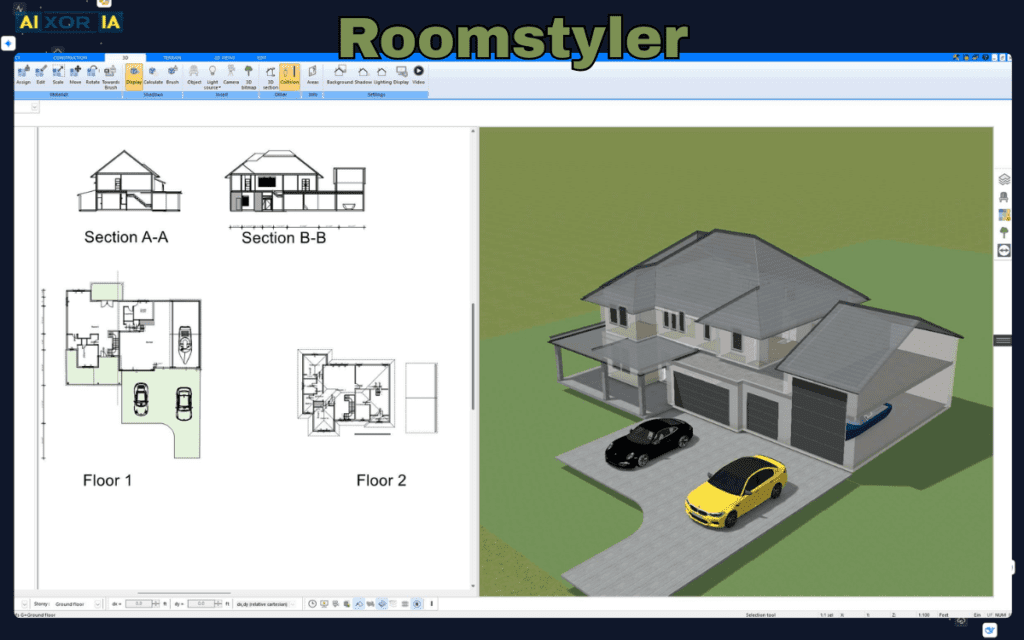
Roomstyler focuses on simplicity while still producing surprisingly realistic results.
The platform allows users to design interiors quickly by selecting furniture from a large catalog and arranging items directly within a virtual room.
Key Features
- Instant 3D room rendering
- Real-world furniture models
- drag-and-drop interface
- photorealistic lighting presets
Roomstyler is especially helpful for homeowners testing multiple layout variations before committing to a renovation.
You can experiment with dozens of furniture arrangements within minutes.
Real Experience Insight
While redesigning a compact bedroom layout, moving the wardrobe slightly closer to the wall revealed an unexpected improvement in the room’s flow.
The extra walking space between the bed and wardrobe made the entire room feel larger — something that wasn’t obvious until seeing the layout rendered in 3D.
Expert Tip for 2026
Use the lighting preset adjustments to simulate evening lighting conditions. Luxury interiors often rely on layered lighting, and Roomstyler makes it easy to test how ambient lighting changes the mood of a room.
Homestyler
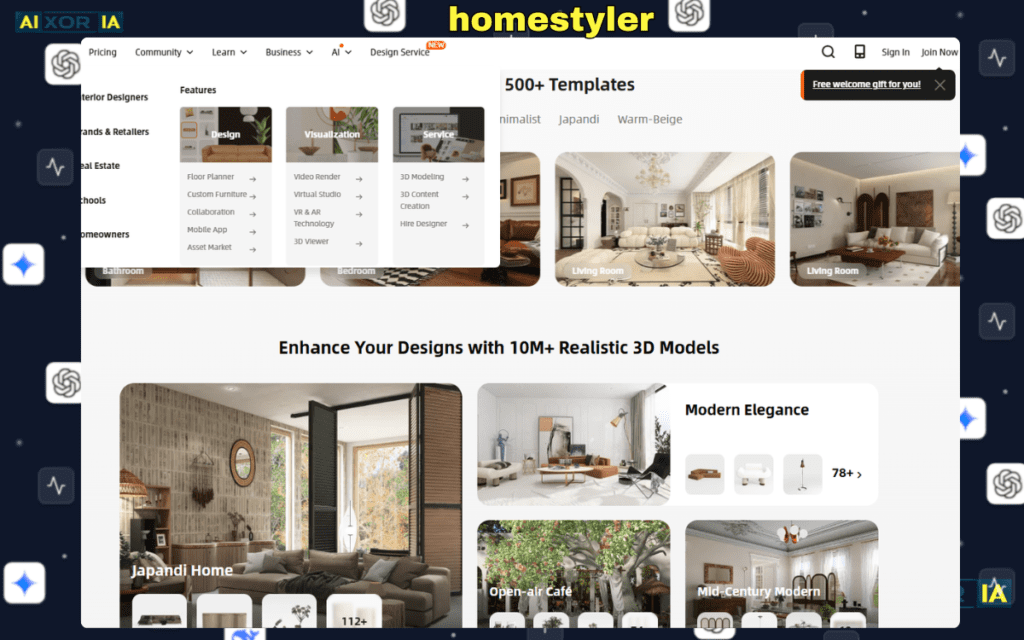
Homestyler stands out because of its advanced AI-assisted interior design capabilities.
Instead of manually designing everything, users can upload a photo of a room and allow the AI to generate complete interior styling concepts.
Key Features
- AI room redesign suggestions
- photorealistic rendering
- global illumination simulation
- automated furniture placement
- spatial AI scene detection
This makes Homestyler extremely helpful for homeowners who want professional-looking design ideas without learning complex design software.
Real Experience Insight
When testing Homestyler with a simple living room photo, the AI generated three design variations — minimalist modern, Scandinavian luxury, and contemporary marble-themed interiors.
The Scandinavian layout surprisingly produced the most balanced design because it maximized natural light while reducing furniture density.
This confirmed how important negative space is in achieving luxury aesthetics.
Expert Tip for 2026
Enable Global Illumination rendering when previewing interiors with reflective materials like marble or polished stone. It produces more accurate light reflections and reveals potential glare issues before construction begins.
Houzz
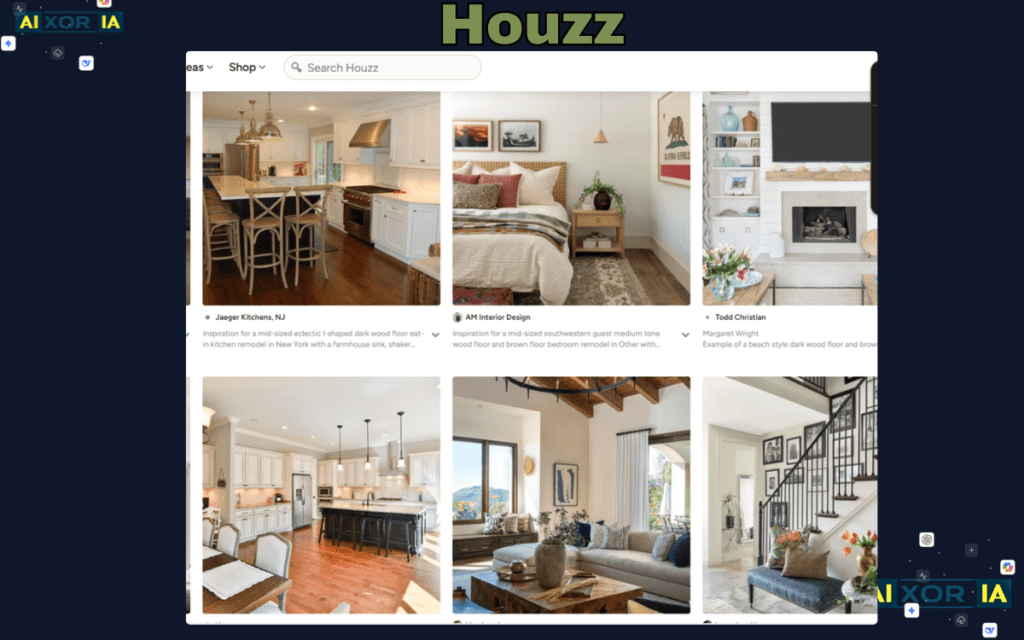
While the previous tools focus on designing spaces, Houzz excels at helping users discover ideas and plan renovations.
The platform contains millions of interior design photos, curated projects, and product listings.
Key Features
- global interior design inspiration
- mood board creation
- professional designer directories
- product sourcing tools
Houzz allows homeowners to build visual inspiration boards before starting a design project.
This is extremely useful when communicating design ideas to architects or contractors.
Real Experience Insight
While browsing Houzz collections, I noticed that many luxury living rooms consistently followed a similar principle — large open floor areas with only a few statement furniture pieces.
This reinforced the concept that luxury interiors rely more on space and proportion than excessive decoration.
Expert Tip for 2026
Create a dedicated mood board for each room rather than saving random inspiration images. Grouping similar styles together makes it easier to identify recurring design patterns.
Advanced Tool Comparison (2026 Overview)
| Tool | Best For | Technical Edge | Pricing |
|---|---|---|---|
| Planner 5D | Quick 3D room visualization | AI floor plan recognition | Freemium |
| SketchUp | Custom architectural interiors | Professional CAD integration | Paid |
| Roomstyler | Fast layout experiments | Real-world furniture models | Free |
| Homestyler | AI-powered interior design | Photorealistic ray tracing | Freemium |
| Houzz | Design inspiration and planning | Designer marketplace integration | Free / Subscription |
The Rise of Spatial Computing in Interior Design
Another emerging trend transforming interior design is spatial computing.
Advanced headsets such as the Apple Vision Pro and the Meta Quest 3 allow users to walk through virtual interiors before construction even begins.
Instead of looking at a flat screen, homeowners can explore a fully immersive digital model of their home.
This makes it easier to evaluate:
- room proportions
- lighting direction
- furniture spacing
- ceiling height perception
Some design tools now support real-time spatial previews, allowing users to evaluate whether a room truly feels balanced.
Matterport and Real Home Scanning
Another breakthrough in interior design workflows involves 3D home scanning technology.
Platforms like Matterport allow users to scan real spaces using a smartphone or depth camera.
The captured model can then be imported into design software.
This means you can:
- scan your real living room
- upload the model
- test furniture layouts digitally
Instead of guessing room dimensions, the software works with exact spatial measurements.
This dramatically improves accuracy when planning luxury renovations.
Practical Design Principles for Luxury Interiors
Even with advanced software, great design still depends on fundamental principles.
Embrace Negative Space
Luxury interiors rarely feel crowded. Leaving intentional empty space allows materials and furniture to stand out.
Choose Fewer, Higher-Quality Materials
Combining too many materials can create visual noise.
Many luxury interiors rely on just three core elements:
- natural stone
- wood
- metal accents
Focus on Lighting Layers
Lighting dramatically affects the perception of space.
Luxury interiors often combine:
- ambient lighting
- task lighting
- decorative accent lighting
The combination adds depth and warmth to the room.
Final Thoughts
Modern interior design tools have made luxury home design more accessible than ever.
Platforms like Planner 5D, SketchUp, Roomstyler, Homestyler, and Houzz allow homeowners to experiment with layouts, lighting, and materials in ways that were once limited to professional studios.
Combined with emerging technologies like spatial computing and real-time 3D scanning, designing elegant modern interiors has become a much more intuitive process.
By focusing on proportion, balance, and material harmony — and using the right digital tools — anyone can create a home that feels sophisticated, comfortable, and visually timeless.
FAQ
What is the best tool for beginners in interior design?
Tools like Planner 5D and Roomstyler are ideal for beginners because they provide drag-and-drop design features with simple interfaces.
Can AI help with interior design?
Yes. AI tools such as Homestyler can analyze room images and generate design suggestions automatically.
Do professionals use these tools?
Yes. Many professional designers use platforms like SketchUp to create detailed 3D interior design models.