Modern software systems don’t fail because teams can’t build—they fail because teams can’t maintain, scale, and evolve code efficiently. As codebases grow across microservices, legacy systems, and distributed teams, refactoring becomes a continuous necessity rather than a one-time task.
This is where AI-driven code refactoring tools come in.
These platforms go beyond traditional static analysis. They analyze patterns, suggest structural improvements, automate repetitive changes, and in some cases, refactor entire code segments with minimal human input. For enterprise teams, the goal isn’t just cleaner code—it’s faster delivery, reduced technical debt, and consistent engineering standards at scale.
This guide breaks down the top-rated AI-driven code refactoring tools for enterprise teams in 2026, with a focus on real-world usability, scalability, and governance.
Table of Contents
What Makes a Great AI Code Refactoring Tool for Enterprises?
Not all tools labeled “AI-powered” are built for enterprise use. At scale, refactoring impacts performance, security, and compliance.
Here’s what actually matters:
1. Codebase Awareness at Scale
Enterprise tools must handle:
- Large monolithic systems
- Microservices architectures
- Multi-language environments
AI should understand context across repositories, not just isolated files.
2. Safe Automation with Human Control
Refactoring is risky if uncontrolled.
Look for:
- Review workflows
- Pull request integration
- Rollback capabilities
- Audit logs
3. Integration with Developer Workflows
The best tools fit into:
- IDEs (VS Code, JetBrains)
- CI/CD pipelines
- Version control systems (GitHub, GitLab)
4. AI That Goes Beyond Linting
Basic tools flag issues. Advanced tools:
- Suggest architectural improvements
- Detect anti-patterns
- Rewrite code intelligently
5. Security and Compliance
For US-based enterprises especially:
- SOC 2 compliance
- Secure code handling
- No data leakage to external models
With these criteria in mind, here are the best tools available today.
The Top-Rated AI-Driven Code Refactoring Tools for Enterprise Teams
1. GitHub Copilot for Enterprise
Best for: AI-assisted refactoring inside daily development workflows
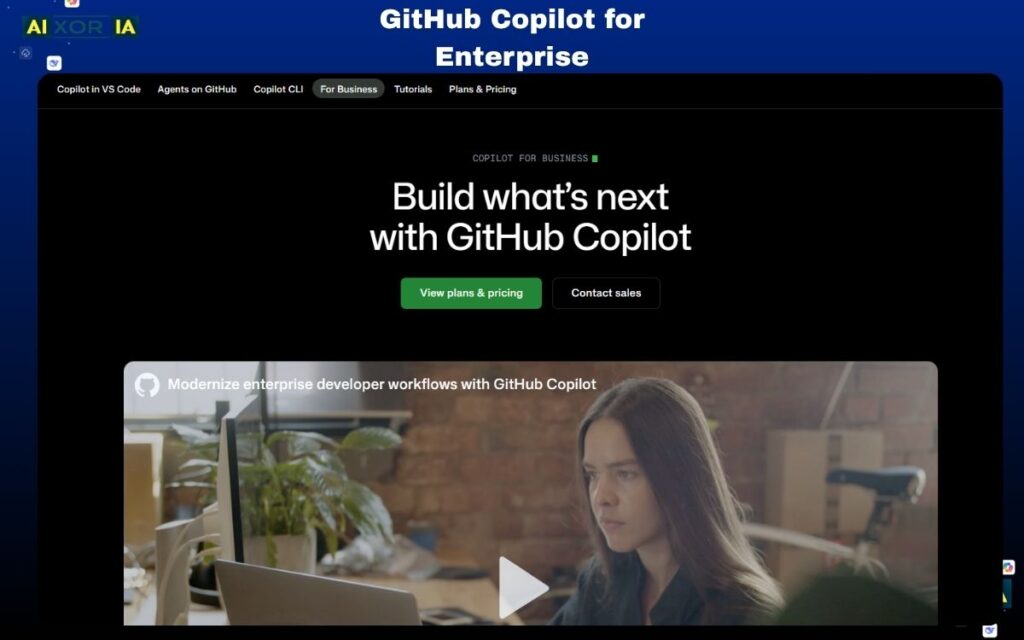
GitHub Copilot has evolved from a code completion tool into a practical refactoring assistant. For enterprise teams, its biggest advantage is deep integration with existing development environments.
Key capabilities:
- Suggests refactored code in real time
- Helps simplify complex logic and remove redundancy
- Assists in migrating legacy code patterns
- Works inside IDEs without disrupting workflow
Why it works for enterprises:
Copilot reduces the friction of refactoring by embedding suggestions directly where developers work. It’s especially effective for incremental refactoring, where small improvements accumulate over time.
Limitations:
- Less effective for large-scale architectural refactoring
- Requires strong code review practices
READ MORE – The 7 Best AI Coding Tools for Developers
2. Amazon CodeWhisperer
Best for: Secure, cloud-integrated refactoring in AWS environments
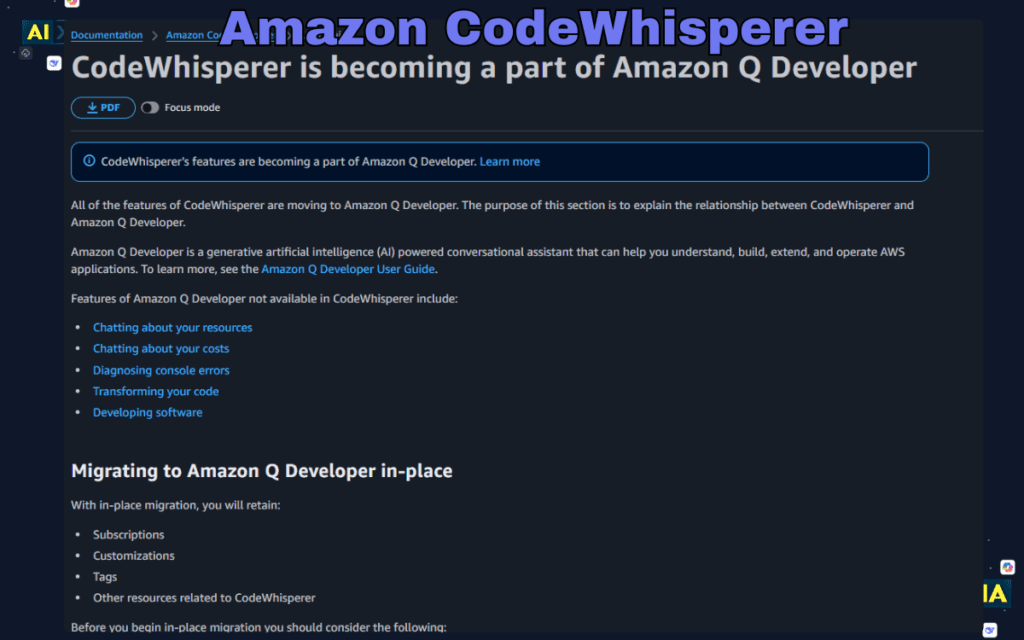
Amazon CodeWhisperer focuses heavily on security-aware code suggestions, which is critical for enterprise refactoring.
Key capabilities:
- AI-driven code recommendations with security scanning
- Refactoring suggestions aligned with AWS best practices
- Supports multiple languages and frameworks
Enterprise advantage:
For teams operating in AWS ecosystems, this tool ensures refactoring aligns with cloud architecture standards and security policies.
Limitations:
- Less ecosystem flexibility outside AWS
- Refactoring depth depends on context
3. JetBrains AI Assistant
Best for: Deep IDE-level refactoring for complex codebases
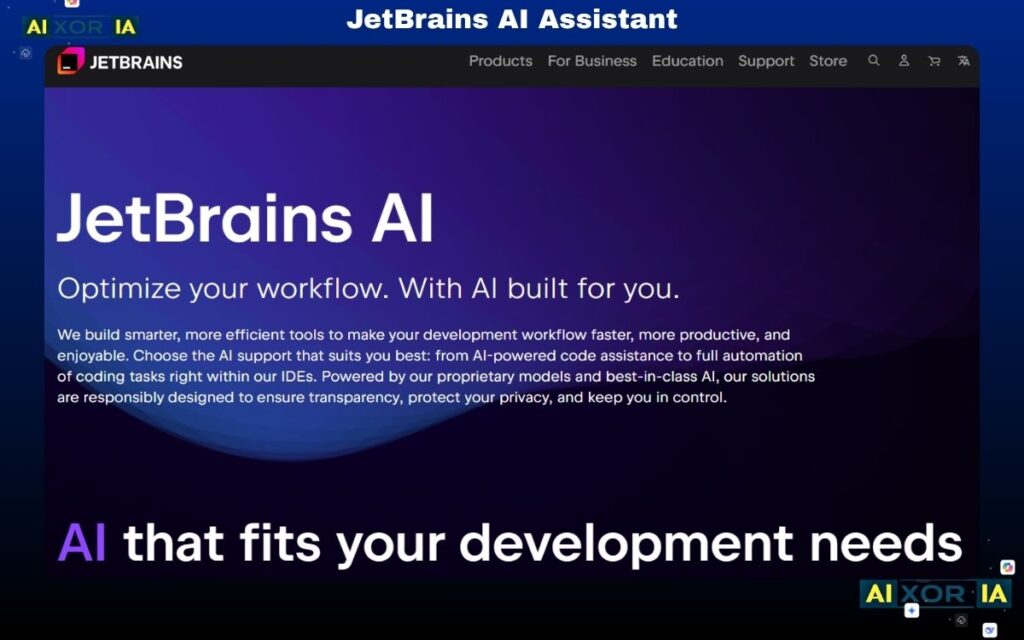
JetBrains has long been known for powerful refactoring tools. Its AI Assistant extends this with context-aware suggestions across entire projects.
Key capabilities:
- Advanced refactoring suggestions inside JetBrains IDEs
- Code transformation across files and modules
- Smart detection of code smells and inefficiencies
Why enterprises choose it:
It combines traditional static analysis strength with AI intelligence, making it ideal for teams already using IntelliJ, PyCharm, or WebStorm.
Limitations:
- Requires JetBrains ecosystem
- Learning curve for advanced features
4. Sourcegraph Cody
Best for: Large-scale codebase understanding and transformation
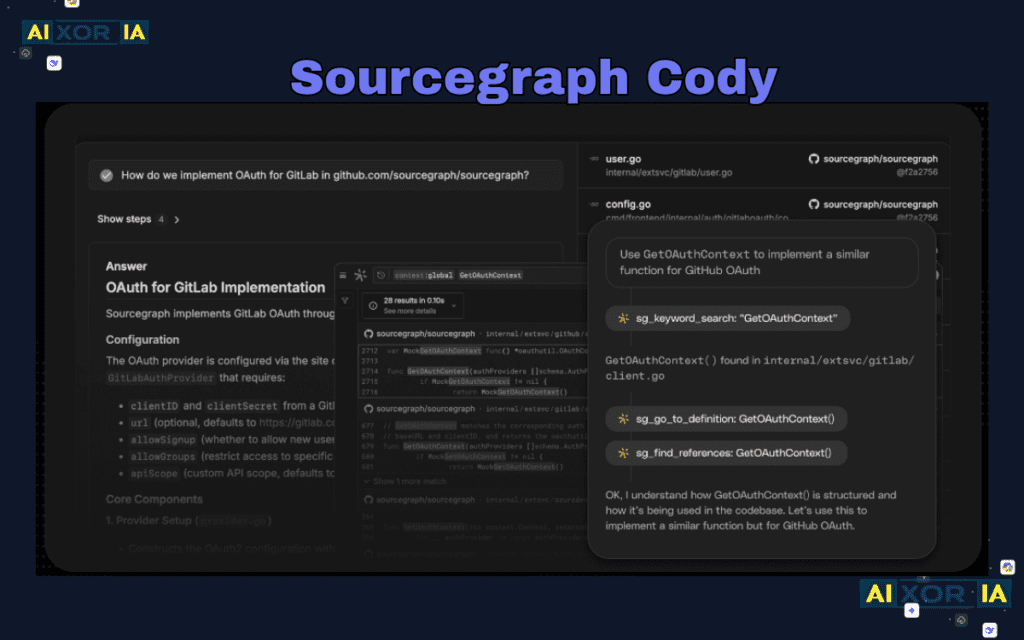
Sourcegraph Cody is designed specifically for enterprise-scale code intelligence.
Key capabilities:
- Understands entire repositories, not just files
- AI-powered search and refactoring suggestions
- Cross-repo insights and transformations
Enterprise strength:
Cody excels where most tools fail—massive, distributed codebases. It enables teams to refactor consistently across services.
Limitations:
- Requires setup and indexing
- Best suited for larger organizations
READ MORE – AI Tools to Understand Code
5. Tabnine Enterprise
Best for: Privacy-first AI refactoring
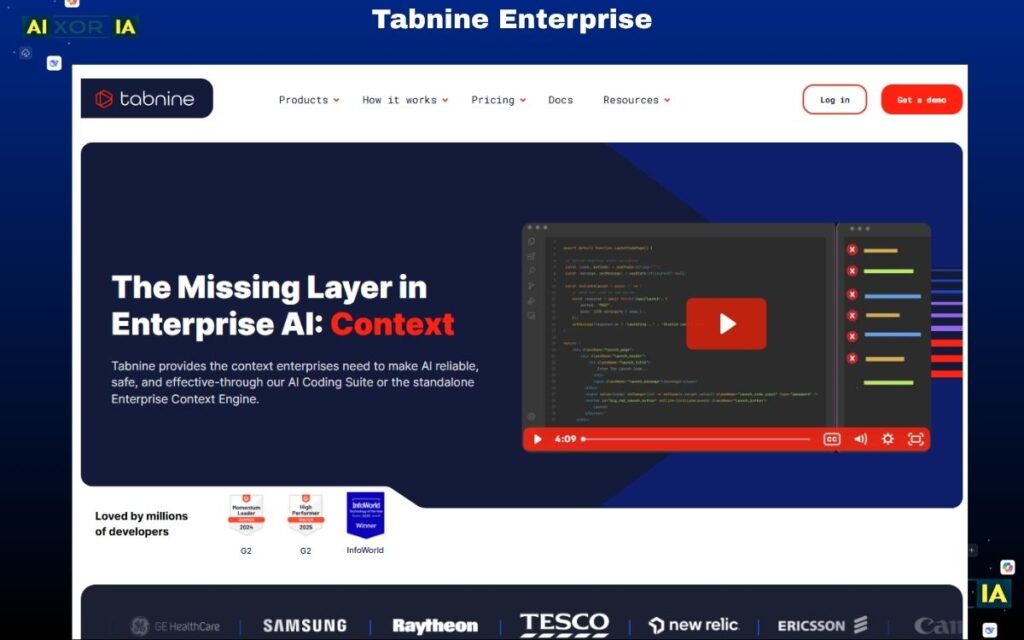
Tabnine focuses on secure, private AI models, which is a major concern for enterprises.
Key capabilities:
- On-prem or private deployment
- AI suggestions trained on your codebase
- Refactoring assistance with data control
Why it stands out:
Enterprises that cannot send code to external APIs benefit from Tabnine’s data isolation approach.
Limitations:
- Slightly less advanced than cloud-based AI models
- Requires infrastructure setup
Choosing the Right Tool for Your Enterprise
There is no single “best” tool—only the best fit for your environment.
Choose based on your needs:
- For daily developer productivity: GitHub Copilot
- For AWS-heavy environments: Amazon CodeWhisperer
- For deep IDE refactoring: JetBrains AI Assistant
- For large-scale codebases: Sourcegraph Cody
- For privacy-first deployments: Tabnine Enterprise
- For automation-heavy workflows: Refact.ai
- For security-focused refactoring: Snyk Code
A Practical Enterprise Approach
Most large organizations don’t rely on just one tool.
A common pattern is:
- Use IDE-level AI (Copilot / JetBrains) for daily work
- Add code intelligence tools (Sourcegraph) for large-scale understanding
- Integrate security tools (Snyk) for safe refactoring
This layered approach ensures:
- Developer efficiency
- Code consistency
- Enterprise-grade governance
Limitations of AI-Driven Refactoring
Despite rapid progress, AI tools are not perfect.
Enterprises should be aware of:
- Incomplete context in complex systems
- Risk of introducing subtle bugs
- Over-reliance without human review
- Variability in code quality suggestions
The best results come from AI + human expertise, not AI alone.
Final Thoughts
AI-driven refactoring is no longer optional for enterprise teams—it’s becoming a core part of modern software development workflows.
The right tool can:
- Reduce technical debt
- Improve code quality
- Accelerate development cycles
But success depends on how well the tool fits your architecture, workflows, and governance requirements.
For most enterprises, the future isn’t a single platform—it’s a connected ecosystem of AI tools working together to continuously improve code.
Frequently Asked Questions
What is AI-driven code refactoring?
AI-driven code refactoring uses machine learning models to analyze and improve code structure, readability, and performance automatically or semi-automatically.
Is AI refactoring safe for enterprise use?
Yes, but only when combined with code reviews, testing, and proper governance controls.
Can AI tools refactor legacy systems?
Some tools can assist, especially those with large codebase awareness, but full automation is still limited.
Which tool is best for large enterprises?
Tools like Sourcegraph Cody and JetBrains AI Assistant are better suited for large, complex environments, often combined with other platforms.