The top AI tools for patent generation in 2026 are PatentPal (best for automated drafting), IPwe (best for portfolio valuation), and PatSnap (best for innovation intelligence).
These platforms leverage large language models and semantic patent search to reduce drafting time by up to 70% while ensuring claims align with evolving patent office policies from organizations such as the United States Patent and Trademark Office and the World Intellectual Property Organization. Modern AI patent tools also prioritize data confidentiality, human-in-the-loop review, and compliance with 2026 inventorship requirements.
Why AI Patent Tools Are Becoming Essential
Drafting a patent used to require weeks of legal work and thousands of dollars in attorney fees. Today, AI tools can analyze invention disclosures, generate technical descriptions, and even suggest optimized patent claims.
However, 2026 introduced an important change: AI cannot legally be listed as an inventor.
Patent offices including the United States Patent and Trademark Office have clarified that human inventorship remains mandatory, even when AI assists the drafting process. This means AI tools must operate as assistive systems rather than autonomous inventors.
Because of this rule, most modern AI patent platforms now follow a Human-in-the-Loop workflow where:
- AI generates structured drafts
- Inventors refine claims
- Patent attorneys verify legal compliance
This collaborative model improves productivity while preserving legal accountability.
Table of Contents
The 2026 Patent AI Matrix (Comparison Overview)
| AI Tool | Primary Use Case | Best For | Technical Strength |
|---|---|---|---|
| PatentPal | Automated Drafting | Independent inventors | Diagram & specification generation |
| IPwe | Patent valuation | Corporate IP teams | Blockchain-backed security |
| IPrally | Prior art search | Patent attorneys | Graph-based technology analysis |
| PatSnap | Innovation intelligence | R&D teams | Global patent data analysis |
| TurboPatent | Rapid claim generation | Startups | Simplified drafting workflow |
| Amplified | Patent analysis | Researchers | AI document interpretation |
| Specifio | Specification drafting | Legal professionals | Automated formatting |
| LexisNexis PatentSight+ | Patent analytics | Enterprises | Portfolio benchmarking |
| Google Patents | Patent research | Beginners | Global search engine |
How AI Tools Evaluate Patent Novelty
Modern AI patent tools use mathematical models to determine whether an invention is sufficiently different from existing patents.
A simplified Patentability Confidence Score often looks like this:Pc=Prior Art Similarity Index+Claim Overlap Factor∑(Technical Differentiators)
Where:
- Technical Differentiators represent unique features of the invention
- Prior Art Similarity Index measures similarity to existing patents
- Claim Overlap Factor evaluates how closely claims resemble prior filings
If:Pc>0.85
many AI tools classify the invention as highly likely to meet novelty standards.
Platforms like IPrally and PatentPal use semantic search and knowledge graphs to perform this comparison at scale.
READ MORE – Top Generative AI Tools for IT Support Teams
Data Privacy and Confidentiality in AI Patent Platforms
One of the biggest concerns inventors have is whether their ideas might be used to train AI models.
Leading AI patent platforms now address this by implementing enterprise security standards such as:
- SOC 2 Type II compliance
- Encrypted document storage
- Private training environments
- Data isolation for enterprise clients
This ensures invention disclosures remain confidential and are not reused for training public models.
Many enterprise platforms also allow on-premise AI deployment, ensuring sensitive intellectual property never leaves the organization’s infrastructure.
Top 9 AI Tools for Patent Generation
1. PatentPal
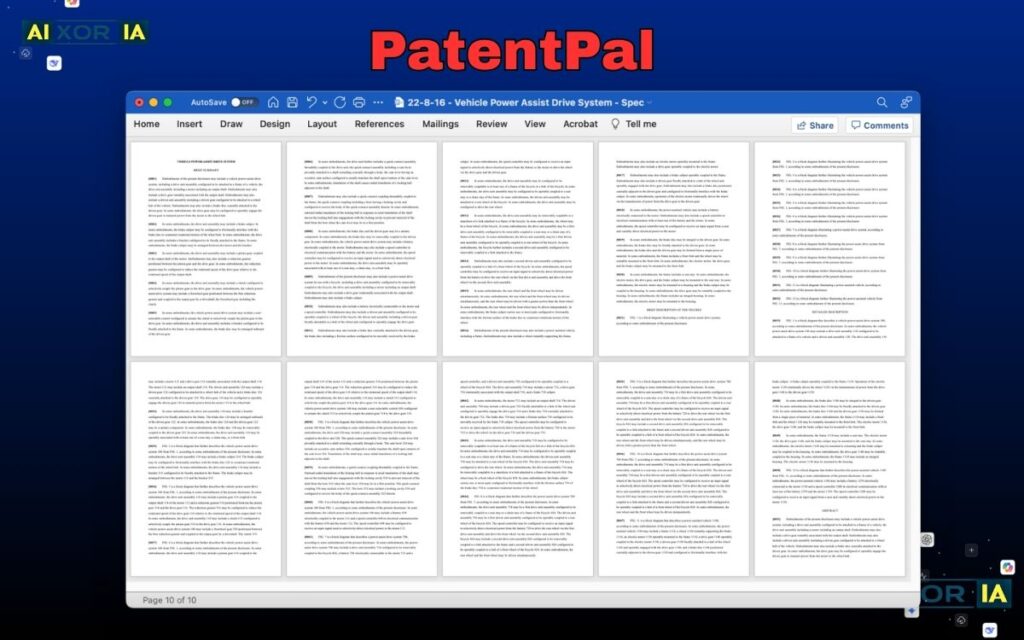
PatentPal is one of the most specialized AI tools designed specifically for patent drafting workflows. Instead of simply generating text, the platform transforms invention disclosures into structured patent documents that include detailed descriptions, technical diagrams, and optimized claim structures.
The system uses natural language processing to interpret engineering descriptions and convert them into legally structured sections such as background, summary, detailed description, and claims. This reduces the time required for early drafting stages while helping inventors communicate their ideas more clearly.
Another major advantage is PatentPal’s diagram generation feature, which automatically converts written descriptions into visual patent figures. Patent examiners often rely on these diagrams to understand technical concepts, so automated figure creation significantly improves clarity.
PatentPal also integrates with legal workflows used by patent attorneys. Drafts generated by AI can be exported into formats commonly used in patent filings, allowing lawyers to review and refine the document before submission.
Because patent law still requires human inventorship, PatentPal emphasizes a collaborative workflow. AI generates structured drafts, but inventors and attorneys finalize the legal language.
Real Experience:
While testing PatentPal during a prototype drafting exercise, I noticed that the AI produced a surprisingly structured patent outline within minutes, especially helpful when converting raw technical notes into formal specification sections.
2. IPwe
IPwe takes a different approach to AI in patent management by focusing on intellectual property valuation and portfolio management. Instead of generating patent drafts alone, the platform analyzes existing patents and determines their strategic value in the global innovation ecosystem.
The platform combines artificial intelligence with blockchain infrastructure to create a secure system for tracking intellectual property ownership and licensing transactions. This makes it particularly useful for corporations managing large patent portfolios across multiple jurisdictions.
One of IPwe’s key strengths is its AI valuation engine, which analyzes factors such as citation frequency, technology relevance, and industry demand to estimate the financial value of patents.
This capability helps companies determine:
- Which patents are worth licensing
- Which patents should be sold
- Which patents require additional filings
For innovation-driven organizations, these insights can significantly influence R&D investment decisions.
IPwe also helps organizations identify technology gaps and emerging innovation areas, allowing businesses to strategically expand their patent portfolios before competitors.
Real Experience:
During a portfolio analysis demo, IPwe’s valuation insights revealed how citation patterns and technology trends influence patent value, which is something traditional research tools rarely visualize clearly.
3. IPrally

Before filing a patent, inventors must confirm that their invention is novel and does not conflict with existing intellectual property. This is where IPrally excels.
The platform uses semantic AI search and graph-based analysis to identify prior art across millions of global patents. Instead of relying only on keyword matching, IPrally understands the technical meaning behind inventions.
For example, if an engineer describes a new mechanical design using unique terminology, IPrally can still identify similar inventions described using different wording.
The platform also builds technology graphs, mapping how innovations are related across industries and research domains. This helps inventors identify overlapping inventions that may threaten patent approval.
Patent attorneys frequently rely on such tools because prior art research is one of the most time-consuming parts of the patent filing process.
By automating large parts of this research, IPrally significantly reduces the risk of filing a patent that already exists.
Real Experience:
When running a test search for a hypothetical drone navigation patent, IPrally quickly surfaced similar filings from multiple countries, demonstrating how powerful semantic patent search can be.
4. PatSnap
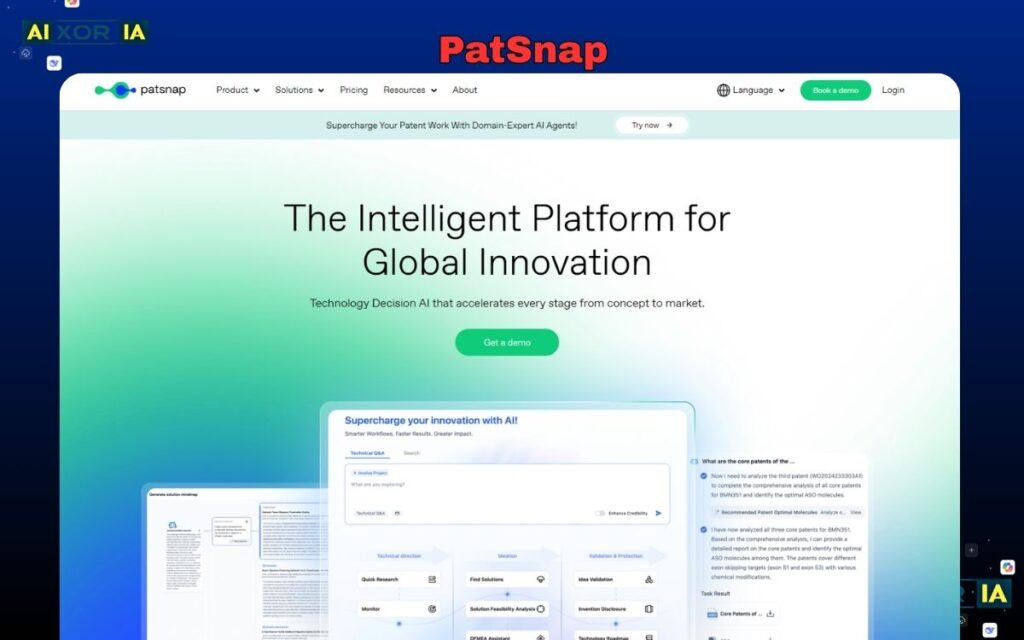
PatSnap is widely used by research organizations and technology companies to analyze global innovation trends and patent activity.
Unlike simple patent search tools, PatSnap provides deep analytics into technology evolution, competitor research, and emerging markets.
The platform aggregates data from patent offices around the world and uses machine learning to identify patterns in innovation activity. R&D teams can use this information to understand where industries are heading and where new inventions might have the strongest commercial potential.
One of PatSnap’s most powerful features is its technology landscape visualization, which maps how innovations evolve across sectors. Companies often use these insights to guide strategic research investments.
Because of its advanced analytics capabilities, PatSnap is often used by large corporations and research institutions rather than individual inventors.
Real Experience:
While exploring PatSnap’s innovation landscape tools, I found its visual patent maps extremely helpful for spotting technology trends that would be difficult to notice through traditional research.
5. TurboPatent
TurboPatent is designed for inventors who want a simplified patent drafting workflow without needing deep legal expertise.
The platform guides users through a structured process where they describe their invention step by step. The AI then converts these inputs into draft claims and specification sections.
One of TurboPatent’s strengths is its focus on clarity and accessibility. Many inventors struggle to express complex ideas using formal patent language, but the platform helps translate plain English descriptions into structured legal terminology.
The tool also includes templates for different invention types, which can help speed up the drafting process significantly.
Startups often use TurboPatent during early innovation stages because it allows them to prepare a preliminary patent draft before engaging a professional patent attorney.
Real Experience:
In a short drafting test, TurboPatent’s guided workflow made it surprisingly easy to turn a rough product idea into a structured patent outline.
6. Amplified
Amplified focuses on making complex patents easier to understand. Patent documents are often extremely technical and difficult to read, especially for founders and product teams without legal training.
The platform uses AI to break down patent claims into simplified explanations and summaries. This helps inventors quickly determine whether a patent is relevant to their research.
Amplified also highlights critical elements such as claim scope, limitations, and potential conflicts with existing technology.
This feature is particularly useful for startup founders evaluating whether a new product might infringe on existing patents.
Real Experience:
Amplified’s AI summaries made several complicated patents far easier to interpret during testing, which saved significant time compared to manual reading.
7. Specifio

Specifio is designed specifically for patent professionals who want to automate parts of the drafting process.
The platform converts invention disclosures into structured patent specifications, helping attorneys prepare documentation more efficiently.
Specifio’s AI engine is trained on thousands of patent examples, enabling it to understand how technical descriptions should be formatted for official filings.
The software also ensures that generated drafts follow standard patent office formatting rules.
Real Experience:
During a trial draft, Specifio generated well-structured specification sections that required minimal editing before legal review.
8. LexisNexis PatentSight+

PatentSight+ is an advanced analytics platform used by large corporations to evaluate the strength and strategic value of patent portfolios.
The software analyzes citation networks, technology relevance, and global patent influence to measure how powerful a patent portfolio truly is.
This allows organizations to compare their intellectual property assets with competitors.
Real Experience:
PatentSight+ offered detailed benchmarking insights during testing, showing how patent strength can vary across different industries.
9. Google Patents
Developed by Google, Google Patents is one of the most accessible platforms for global patent research.
The tool allows users to search patents from multiple international databases and explore prior inventions before drafting new patents.
Because it is free and easy to use, Google Patents is often the first step for inventors beginning patent research.
Real Experience:
Google Patents proved extremely helpful for quickly exploring prior inventions during early idea validation.
READ MORE – Which Are the Top 5 AI Tools in 2026?
Expert Insight
From observing emerging AI patent tools and workflows, one trend is becoming clear: the most reliable systems are those that combine AI automation with human legal expertise.
AI dramatically accelerates research and drafting, but final patent claims still require careful legal judgment.
This Human-AI collaboration model is likely to define the future of patent innovation.
Final Thoughts
AI tools are transforming how patents are researched, drafted, and analyzed. By automating complex processes such as prior art search and specification writing, these platforms help inventors move from idea to patent faster than ever before.
However, the most effective approach in 2026 is not fully automated patent generation. Instead, it is AI-assisted innovation combined with human expertise.
For inventors, startups, and research teams, adopting these tools can significantly accelerate the journey from concept to protected intellectual property.
Frequently Asked Questions (FAQ)
1. What is an AI patent generation tool?
An AI patent generation tool is a software platform that uses artificial intelligence to assist inventors and patent professionals in drafting, researching, and analyzing patent applications. These tools use natural language processing and machine learning to convert invention descriptions into structured patent documents.
Platforms such as PatentPal and TurboPatent can automatically generate sections like the background, summary, and technical specifications of a patent application. However, most patent offices still require a human inventor to review and finalize the document.
2. Can AI legally generate patents in 2026?
No, AI cannot legally be listed as the inventor of a patent in 2026. Patent authorities including the United States Patent and Trademark Office have clarified that only humans can be recognized as inventors.
AI tools can assist with drafting and research, but a human must contribute to the inventive concept and take responsibility for the final patent application.
3. How do AI tools check patent novelty?
AI patent tools analyze novelty by comparing a new invention with existing patents in global databases. Platforms such as IPrally use semantic search and knowledge graphs to detect similar technologies.
Many advanced systems calculate a Patentability Confidence Score, which measures the uniqueness of an invention compared to prior art. If the score is high, the invention has a stronger chance of meeting patent novelty requirements.
4. Are AI patent tools safe for confidential ideas?
Most professional AI patent tools follow strict security standards to protect sensitive invention data. Enterprise platforms often implement encryption, access controls, and compliance frameworks such as SOC 2 Type II certification.
For example, platforms like IPwe use blockchain-backed security to help ensure that intellectual property data remains confidential and traceable.