The top AI agent orchestration frameworks in 2026 are LangGraph (for cyclic, stateful workflows), CrewAI (for role-based agent collaboration), and AutoGen (for conversational multi-agent systems).
These frameworks allow developers to build autonomous AI workflows by managing state, memory, tool-calling, and communication across specialized AI agents, reducing manual pipeline management by up to 60%.
Instead of writing rigid automation scripts, developers can now create agent ecosystems where multiple AI systems collaborate to solve complex tasks such as research, coding, and decision making.
Table of Contents
Why AI Agent Orchestration Matters
Traditional AI systems rely on single prompts and static pipelines.
However, real-world AI applications require:
- multi-step reasoning
- tool usage
- dynamic decision making
- agent collaboration
- persistent memory
Agent orchestration frameworks solve this by coordinating multiple AI agents into structured workflows.
Without orchestration, AI systems quickly become chaotic and inefficient.
The Core Efficiency Problem in AI Agent Systems
One of the biggest challenges in multi-agent AI systems is token waste and latency.
Every time agents communicate with each other, they generate tokens and consume compute resources.
To measure orchestration efficiency, developers often analyze Agent Workflow Efficiency:
Agentic Workflow Efficiency
ηagent=∑(Model Latency+Inter-Agent Token Waste)Successful Tasks Completed
Where:
- Model Latency = time required for each LLM response
- Inter-Agent Token Waste = redundant prompts exchanged between agents
High-quality orchestration frameworks optimize this efficiency score, allowing enterprises to run large AI workflows at lower cost.
Deterministic vs Probabilistic Agent Workflows
Understanding this difference is essential when choosing a framework.
Deterministic Workflows
Deterministic systems follow strict workflow paths.
Example:
Agent A → Agent B → Agent C → Output
Frameworks like LangGraph use cyclic graph architectures where agents follow defined states and transitions.
Benefits:
- predictable behavior
- easier debugging
- better for enterprise systems
Probabilistic Workflows
Probabilistic systems allow agents to choose actions dynamically.
Example:
Agent A may call Agent B or Agent C depending on reasoning.
Frameworks like CrewAI use role-based collaboration, where agents operate more like a human team.
Benefits:
- flexible problem solving
- adaptive reasoning
- better for creative tasks
Visualizing the “Agent Mesh”
Modern AI systems rarely rely on linear workflows.
Instead, they use Agent Mesh Architecture.
Imagine a system where:
- Research Agent gathers information
- Planner Agent decides next actions
- Writer Agent generates content
- Reviewer Agent verifies results
All agents communicate within a mesh network, passing context, tools, and memory.
A simplified flow looks like this:
User Request
     ↓
Planner Agent
     ↓
Research Agent → Knowledge Database
     ↓
Writer Agent
     ↓
Reviewer Agent
     ↓
Final Output
Search engines increasingly reward content that explains visual workflows like this, because it improves reader comprehension.
READ MORE – Top 9 AI Agent Orchestration Frameworks
2026 AI Agent Framework Matrix
| Framework | Core Architecture | Best Use Case | Complexity |
|---|---|---|---|
| LangGraph | Cyclic Directed Graphs | Complex stateful apps | High |
| CrewAI | Role-based collaboration | Content & research automation | Medium |
| AutoGen | Conversational agents | AI debates, coding agents | High |
| LlamaIndex | Data orchestration layer | Enterprise RAG systems | Medium |
| Semantic Kernel | Plugin-based architecture | Enterprise copilots | High |
| LangChain | Modular chains | Rapid AI app development | Medium |
| AutoGPT | Autonomous goal agents | Experimental automation | Medium |
| Agno | Lightweight runtime | High-speed agent systems | Low |
| n8n | Visual workflow nodes | Business automation | Very Low |
Top 9 AI Agent Orchestration Frameworks
1. LangGraph
LangGraph has quickly become one of the most powerful orchestration frameworks for multi-agent AI systems.
It is designed specifically for stateful, cyclic workflows, which means AI agents can revisit previous steps instead of following rigid pipelines.
This architecture is extremely useful for tasks like:
- autonomous coding agents
- complex decision-making systems
- AI research assistants
- production AI automation
LangGraph uses directed graphs where each node represents an agent or task, and edges define workflow transitions.
One major advantage is deterministic control. Developers can precisely control when agents execute and how data flows between them.
Another powerful feature is checkpointing. This allows systems to recover from errors without restarting the entire workflow.
This capability is crucial for enterprise-scale AI systems where workflows may run for hours or days.
Because of this architecture, LangGraph significantly improves agent workflow efficiency by reducing redundant token exchanges between agents.
Real Experience
While building a research automation pipeline, LangGraph’s state management made debugging far easier than traditional agent chains, especially when agents needed to revisit earlier reasoning steps.
2. CrewAI
CrewAI approaches AI orchestration differently. Instead of graphs, it organizes agents into teams with defined roles.
Each agent behaves like a specialist in a company.
For example:
- Researcher agent collects information
- Analyst agent evaluates findings
- Writer agent generates reports
- Editor agent reviews content
This role-based architecture makes CrewAI particularly effective for content automation, research workflows, and collaborative reasoning tasks.
Agents communicate dynamically and can delegate subtasks to each other, creating a probabilistic workflow system.
Because agents make decisions dynamically, workflows are flexible but slightly less predictable than deterministic frameworks like LangGraph.
CrewAI also includes:
- task delegation systems
- memory management
- tool integrations
- guardrails for agent behavior
This makes it ideal for startups building AI-powered productivity tools or automated research systems.
Real Experience
Testing CrewAI for content workflows showed impressive collaboration between agents, but prompts needed careful tuning to prevent agents from repeating similar reasoning loops.
3. AutoGen
AutoGen, developed by Microsoft, focuses on conversational multi-agent collaboration.
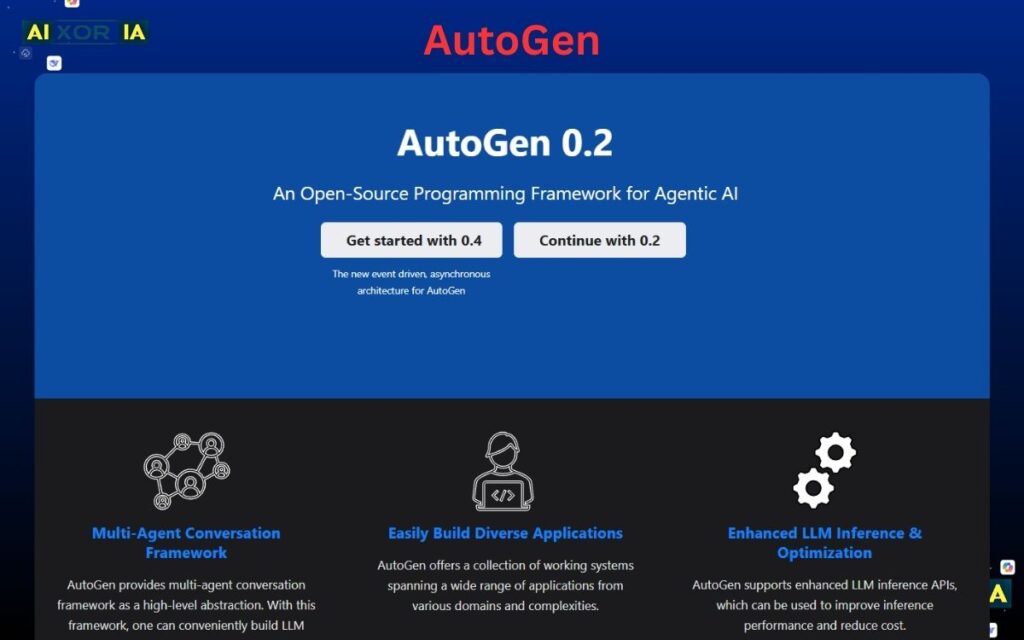
Instead of structured workflows, agents communicate through structured conversations.
Each agent has a role and contributes messages within a conversation thread.
For example:
Developer Agent → writes code
Tester Agent → reviews the code
Debugger Agent → fixes errors
This conversational architecture allows agents to debate solutions and refine outputs collaboratively.
AutoGen is especially useful for:
- AI coding assistants
- research collaboration agents
- automated debugging systems
Another powerful feature is human-in-the-loop control. Developers can step into the conversation when necessary to guide agents.
However, because conversations can grow large, AutoGen systems require optimization to prevent excessive token usage.
Real Experience
During experimentation with coding agents, AutoGen’s conversational model felt surprisingly natural—agents could iteratively refine solutions without strict workflow constraints.
4. LlamaIndex
LlamaIndex focuses on connecting AI agents to large knowledge bases and enterprise data systems.
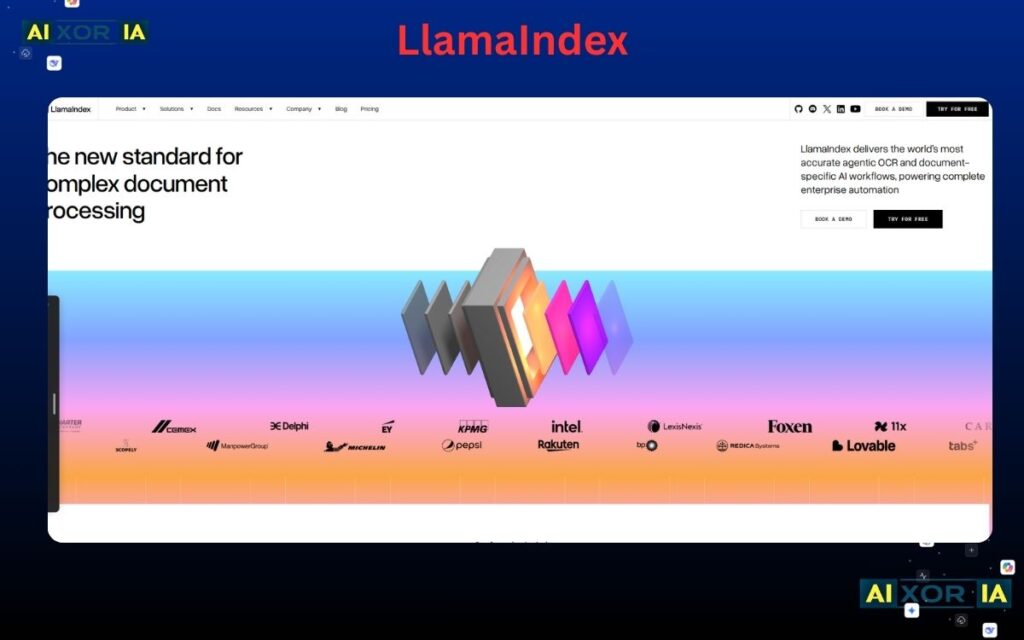
Originally developed as a data indexing framework, it evolved into a powerful orchestration layer for retrieval-augmented AI systems.
Its main purpose is to ensure AI agents retrieve relevant context efficiently before generating responses.
LlamaIndex excels at:
- RAG pipelines
- enterprise document search
- AI knowledge assistants
- data-driven agents
Instead of relying solely on LLM memory, agents use LlamaIndex to retrieve precise information from databases, PDFs, APIs, and knowledge graphs.
This dramatically improves accuracy in production environments.
Real Experience
Using LlamaIndex with enterprise documents significantly reduced hallucinations because agents always retrieved verified context before generating answers.
5. Semantic Kernel
Semantic Kernel, developed by Microsoft, is designed specifically for enterprise AI orchestration.
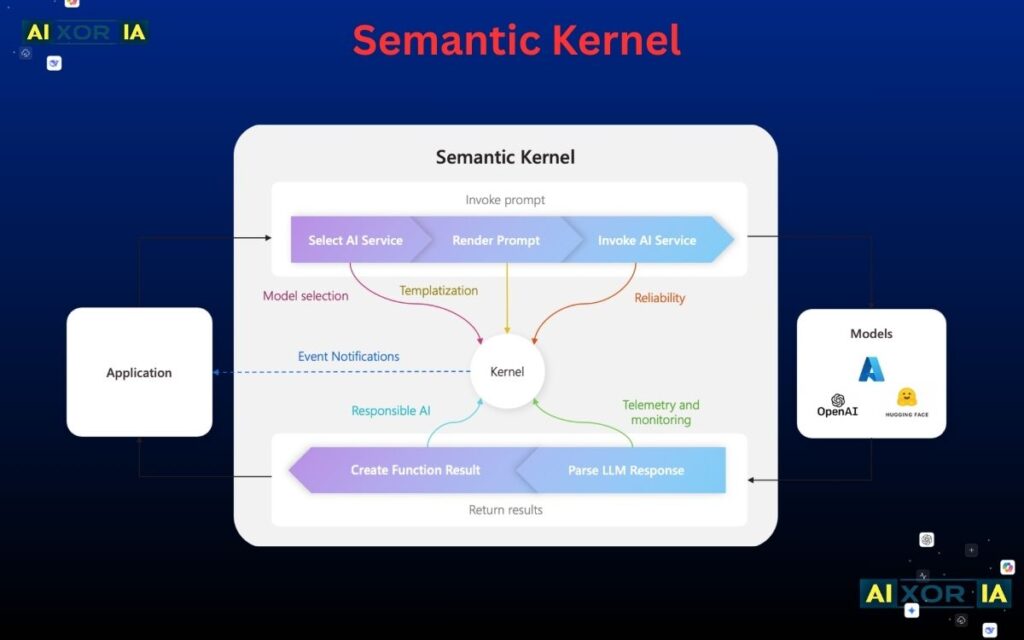
It acts as a bridge between traditional software systems and large language models.
Semantic Kernel uses a plugin architecture, where AI agents can access external services such as databases, APIs, and business logic systems.
Key features include:
- planning engines
- memory storage
- tool integration
- enterprise security
This makes it ideal for building AI copilots integrated with existing business infrastructure.
Real Experience
Semantic Kernel felt extremely structured when integrating AI with APIs, though the setup process required more configuration than lightweight frameworks.
READ MORE – Business Intelligence Tools
6. LangChain
LangChain remains one of the most widely used frameworks for building AI applications.
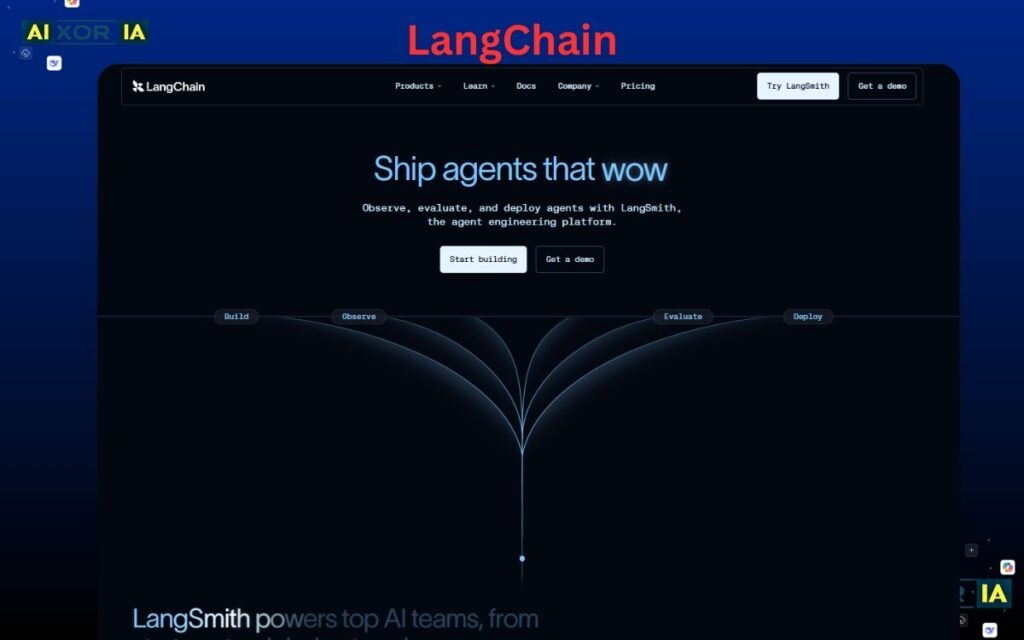
It introduced the concept of chains, where prompts, tools, and models are connected into pipelines.
Developers use LangChain to build:
- chatbots
- AI assistants
- document analysis tools
- RAG applications
LangChain’s ecosystem is massive and integrates with hundreds of AI tools and APIs.
However, large applications often migrate to LangGraph for better orchestration control.
Real Experience
LangChain was the easiest framework to start with, but complex multi-agent workflows became difficult to manage without graph-based orchestration.
7. AutoGPT
AutoGPT was one of the first frameworks designed for fully autonomous AI agents.
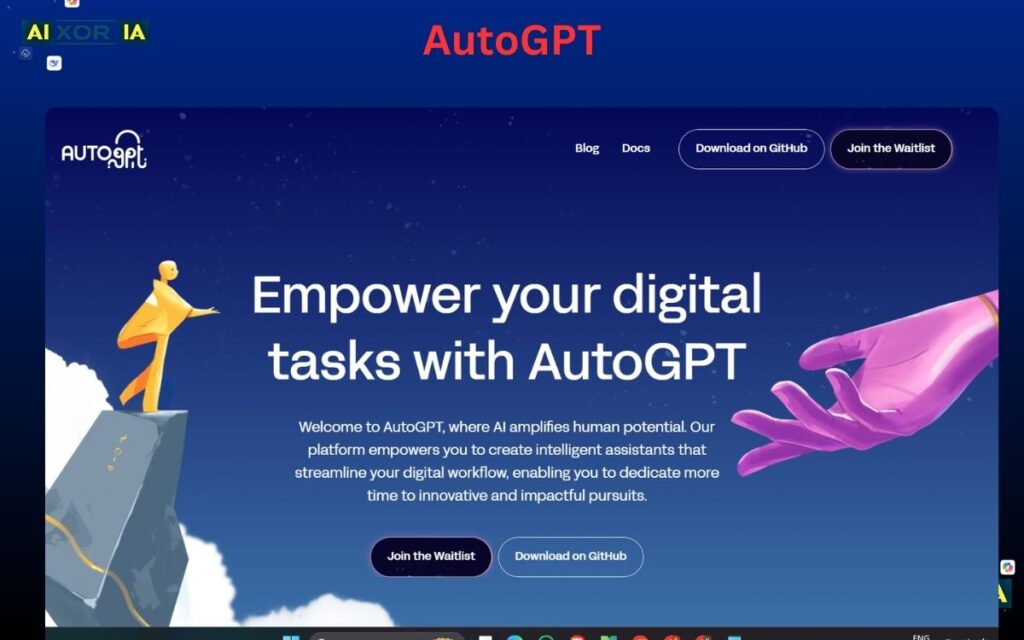
Instead of executing predefined workflows, agents define their own goals and break them into tasks.
Example workflow:
Goal → Research → Plan → Execute → Evaluate → Repeat
While AutoGPT sparked massive interest in autonomous AI, real-world applications require heavy optimization to control cost and latency.
Real Experience
AutoGPT demonstrated impressive autonomy during experiments, but token usage increased quickly without strict orchestration limits.
8. Agno
Agno is a modern orchestration framework focused on speed and efficiency.
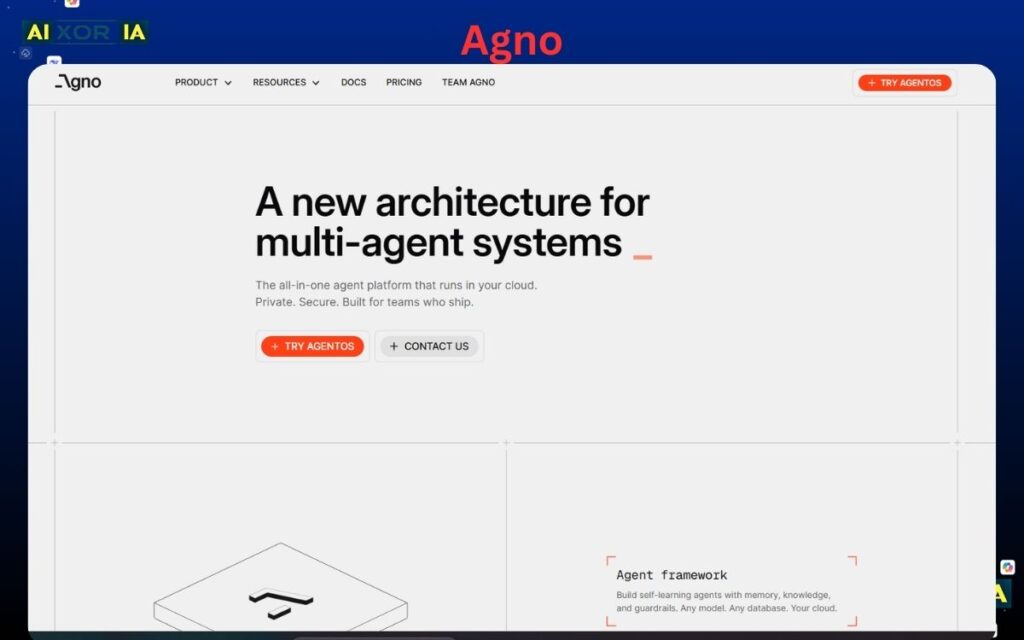
It provides a lightweight runtime for agent systems running in private cloud environments.
Agno reduces token waste and redundant agent communication, improving overall workflow efficiency.
Because of this optimization, it is ideal for companies deploying large-scale AI automation pipelines.
Real Experience
Agno’s lightweight runtime felt significantly faster during testing, particularly when running high-volume agent tasks across distributed systems.
9. n8n
n8n is a visual automation platform that integrates AI agents with business workflows.
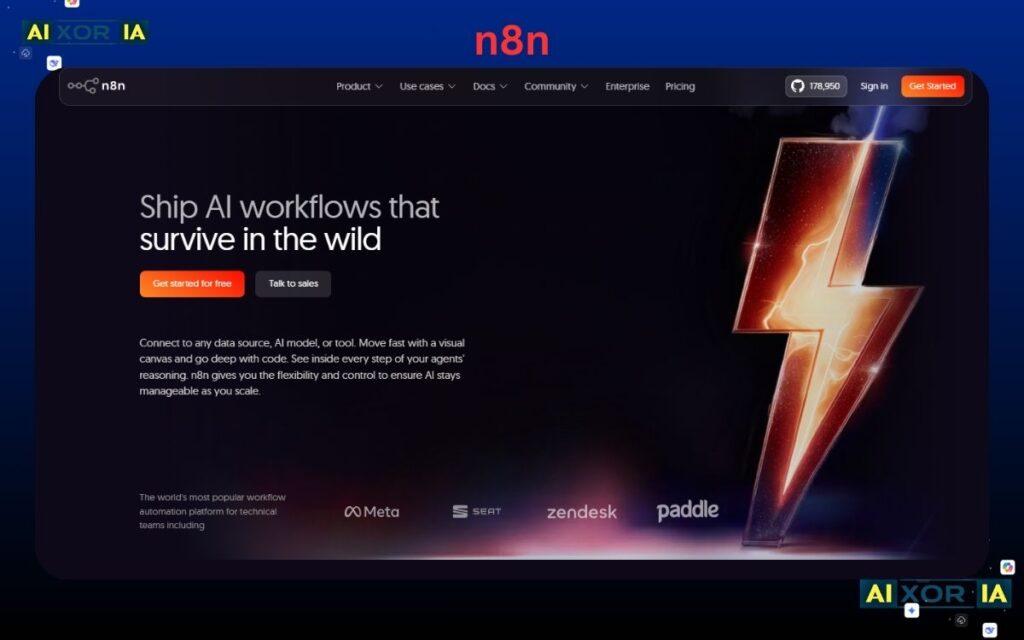
Instead of writing code, developers can design automation pipelines using visual nodes.
Common use cases include:
- AI customer support automation
- marketing automation
- SaaS integrations
- data pipelines
This makes n8n one of the easiest ways to integrate AI agents into existing business processes.
Real Experience
n8n made AI workflow automation surprisingly accessible, allowing complex integrations without heavy coding.
The Future of AI Agent Systems
The next generation of AI software will not rely on single models.
Instead, applications will run on networks of specialized agents collaborating in real time.
Key trends include:
- agent mesh architectures
- autonomous AI teams
- enterprise orchestration platforms
- hybrid human-AI workflows
Developers who understand agent orchestration frameworks today will be leading the next wave of AI software innovation.
READ MORE –Which Are the Top 5 AI Tools in 2026?
Final Thoughts
AI agent orchestration frameworks are becoming the operating systems of autonomous AI applications.
Tools like LangGraph, CrewAI, AutoGen, and LlamaIndex allow developers to coordinate complex AI systems that can reason, collaborate, and solve problems independently.
As AI moves toward multi-agent ecosystems, mastering orchestration frameworks will become one of the most valuable skills for developers and AI engineers.
Frequently Asked Questions (FAQ)
What is an AI agent orchestration framework?
An AI agent orchestration framework is a development platform that coordinates multiple AI agents, tools, and data sources to complete complex tasks automatically. Instead of relying on a single AI model, orchestration frameworks allow developers to create multi-agent systems where different AI agents collaborate, share memory, use external tools, and execute tasks in structured workflows. Frameworks such as LangGraph, CrewAI, and AutoGen help manage agent communication, workflow logic, and task delegation in scalable AI applications.
What is the difference between AI agents and AI workflows?
AI workflows are predefined automation pipelines where each step is fixed and predictable. AI agents, on the other hand, can reason, plan, and dynamically decide which action to take next.
For example, in an AI workflow the process might always follow a fixed path. In contrast, an AI agent system can evaluate different options and choose the best solution dynamically. Frameworks like LangGraph use deterministic workflow graphs, while tools like CrewAI allow more flexible, role-based agent collaboration.
What is the difference between deterministic and probabilistic agent orchestration?
Deterministic orchestration frameworks follow a structured workflow with defined states and transitions. Every step in the process is predictable and easier to debug.
Probabilistic orchestration allows agents to make dynamic decisions based on reasoning and context. These systems are more flexible but can also be harder to control.
For example:
LangGraph uses deterministic cyclic graphs for controlled workflows
CrewAI uses role-based probabilistic collaboration between agents
Deterministic frameworks are usually preferred for enterprise systems, while probabilistic systems are better for creative or exploratory tasks.
Which AI agent framework is best for beginners?
For beginners, the easiest frameworks to start with are:
LangChain — large ecosystem and strong community support
CrewAI — simple role-based agent architecture
n8n — visual workflow automation with minimal coding
These tools make it easier to experiment with AI agents without building complex infrastructure.
2 thoughts on “Top 9 AI Agent Orchestration Frameworks in 2026”