Modern enterprises are no longer experimenting with AI — they are operationalizing it. The shift from basic automation to AI agents capable of reasoning, planning, and executing tasks autonomously is transforming how organizations handle data, customer support, internal workflows, and decision-making.
However, building reliable enterprise AI agents is far more complex than building a simple chatbot. Enterprises must consider security, compliance requirements, scalability, and integration with internal systems such as CRMs, databases, and cloud infrastructure.
In this guide, we explore the top tools enterprises use to build AI agents, along with practical insights into developer experience, enterprise security considerations, and performance optimization strategies.
Direct Answer: Best Tools for Enterprise AI Agents
In 2026, the most widely adopted tools for building enterprise AI agents are LangChain for customizable agent workflows, Microsoft Semantic Kernel for enterprise integration with cloud infrastructure, and CrewAI for collaborative multi-agent systems.
Additional platforms like Haystack and AutoGPT are commonly used for knowledge retrieval systems and experimental autonomous agents.
These frameworks help organizations bridge the gap between large language models and internal enterprise logic while maintaining scalability and security.
READ MORE – Top AI Cloud Business Management Platform Tools
Why Enterprises Are Investing in AI Agents
AI agents go beyond traditional automation by performing goal-oriented tasks with contextual reasoning. Instead of following rigid scripts, they can analyze data, make decisions, and coordinate multiple tools.
Enterprise use cases include:
- AI research assistants for analysts
- automated data reporting agents
- internal knowledge retrieval systems
- DevOps monitoring assistants
- AI customer support agents
The challenge for enterprises is choosing a platform that balances power, scalability, and security.
Enterprise Agent Tool Comparison Matrix (2026)
| Tool | Primary Use Case | Security Level | Learning Curve |
|---|---|---|---|
| LangChain | Custom AI Agent Workflows | High (Modular security architecture) | Steep |
| Semantic Kernel | Enterprise AI on Azure | Enterprise Grade | Moderate |
| CrewAI | Multi-Agent Collaboration | Medium | Easy |
| Haystack | Knowledge Retrieval & RAG Agents | High | Moderate |
| AutoGPT | Autonomous Experimental Agents | Low | Easy |
This comparison highlights a key truth: the best tool depends on the enterprise use case, not just popularity.
Measuring AI Agent ROI in Enterprise Environments
Enterprise CTOs rarely choose technology based on hype alone. Instead, they evaluate platforms based on operational efficiency, cost, and scalability.
A simple model often used internally by engineering teams to evaluate agent frameworks is the Agent Productivity Index.
Agent Productivity Index
APi=Token Cost+Inference Latency(Task Completion Rate×Context Window Size)
Where:
- Task Completion Rate represents how reliably the agent completes assigned tasks
- Context Window Size measures how much information the agent can process
- Token Cost represents the cost of processing prompts
- Inference Latency measures response speed
Frameworks such as Haystack and Microsoft Semantic Kernel often score highly on this metric because they optimize data retrieval and model orchestration.
Enterprises using optimized architectures report up to 30% lower operational costs when deploying AI agents across internal workflows.
Top 5 Tools for Building Enterprise AI Agents
1. LangChain
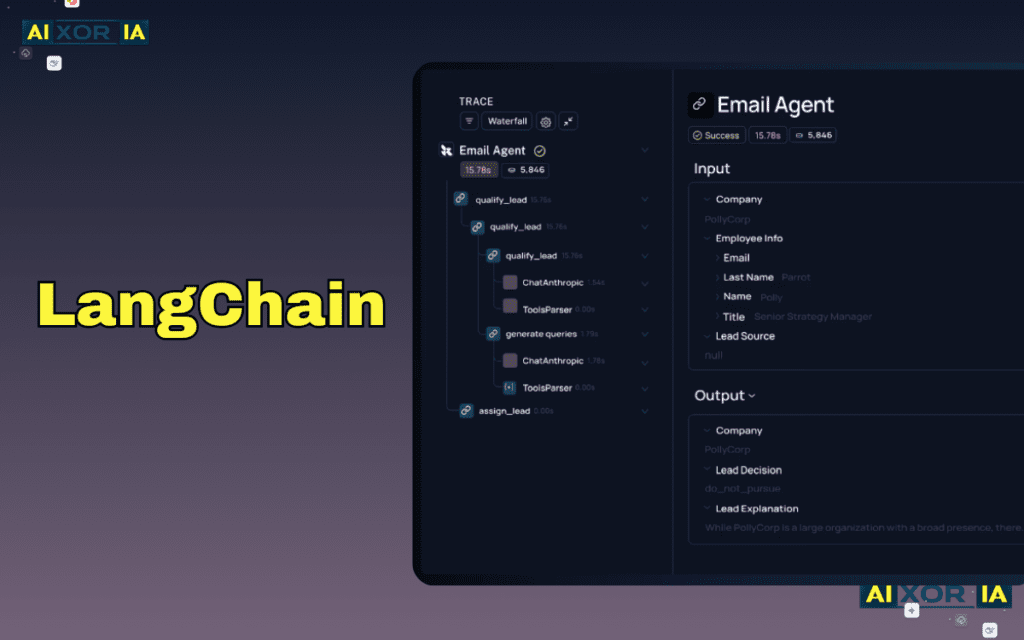
LangChain has become one of the most influential frameworks for building AI agents. It provides a modular system for connecting large language models with external tools, APIs, and enterprise data sources.
Instead of writing complex orchestration logic from scratch, developers can create structured chains of reasoning steps, allowing AI agents to interact with databases, perform calculations, and access APIs.
Enterprise Security and Scalability
For enterprise use, LangChain supports secure integrations with:
- encrypted API connections
- enterprise authentication layers
- modular architecture that can integrate with SSO systems
- cloud deployment environments
These capabilities allow enterprises to maintain secure communication between AI agents and internal systems.
Real Developer Experience
From practical experience building prototype AI research assistants, LangChain feels incredibly powerful but also complex for beginners.
The framework offers huge flexibility, but understanding chains, tools, memory, and agents requires time. Many developers report that the first working agent takes hours to configure, but once the system is understood, it becomes extremely powerful.
When Enterprises Use LangChain
LangChain works best when companies need:
- custom AI agent workflows
- integration with multiple APIs
- highly customizable reasoning pipelines
For organizations building complex internal AI assistants, LangChain remains one of the most flexible frameworks available.
2. Microsoft Semantic Kernel
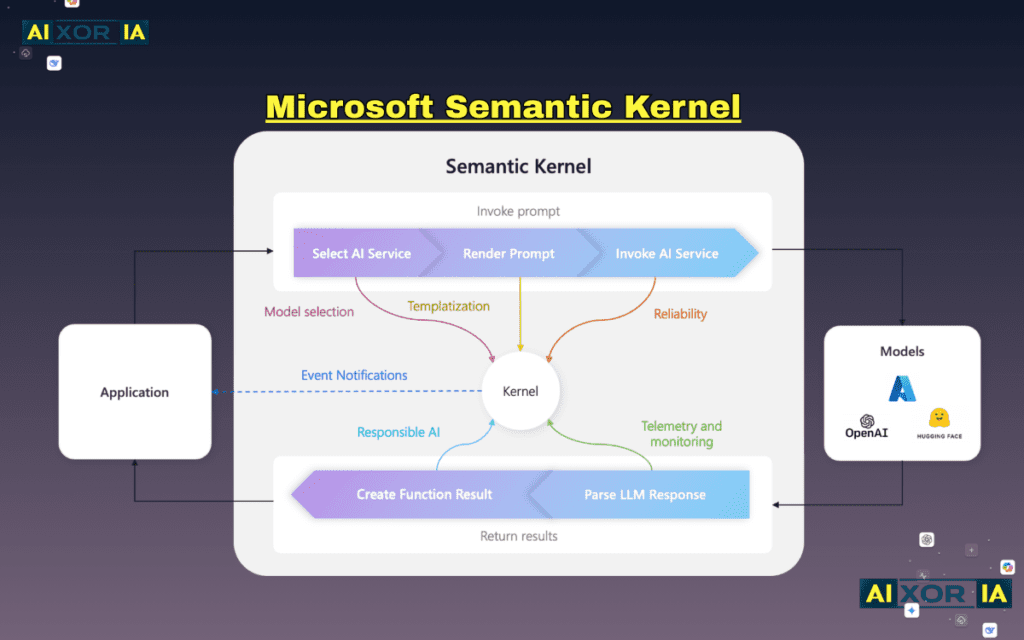
Semantic Kernel is an enterprise-focused AI orchestration framework developed by Microsoft. It combines traditional programming logic with AI reasoning systems.
This makes it particularly appealing to enterprise teams already using cloud infrastructure such as Azure.
Enterprise Security and Compliance
Semantic Kernel is designed with enterprise environments in mind and supports:
- enterprise identity management
- secure API access
- encrypted communication pipelines
- compliance-friendly architecture for regulated industries
Organizations operating in industries that require SOC2, GDPR, or enterprise security policies often prefer frameworks that integrate easily with their cloud infrastructure.
Real Developer Experience
Compared to LangChain, Semantic Kernel feels more structured and enterprise-friendly.
Developers can mix AI prompts with traditional code logic, making it easier to control workflows and maintain predictable behavior.
In practice, many enterprise developers find it easier to integrate with existing business logic systems than purely experimental AI frameworks.
When Enterprises Use Semantic Kernel
This framework is ideal for organizations that want:
- strong enterprise architecture
- secure integration with cloud services
- predictable AI workflows
Large enterprises building internal productivity tools often choose Semantic Kernel because it fits naturally into existing enterprise software architecture.
3. CrewAI
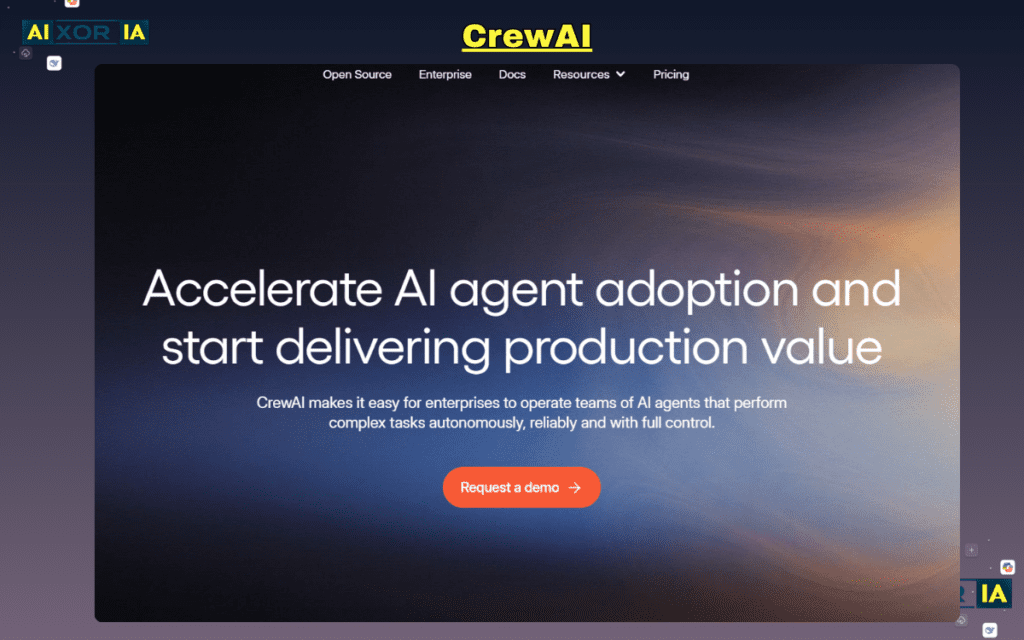
CrewAI focuses on a powerful concept: multiple AI agents working together like a team.
Instead of a single AI assistant performing all tasks, CrewAI allows organizations to create specialized agents with different roles.
For example:
- a research agent gathers data
- an analysis agent interprets results
- a reporting agent generates summaries
Enterprise Security Considerations
CrewAI supports enterprise deployment environments where organizations can implement:
- encrypted API communication
- role-based system architecture
- integration with internal services
Because agents can be isolated by roles, enterprises can also maintain data separation across different business units.
Real Developer Experience
From hands-on testing, CrewAI is surprisingly easy to understand compared to other frameworks.
The idea of assigning agents specific roles makes the system feel intuitive. Developers often describe it as building an AI team instead of coding an AI system.
For many teams experimenting with multi-agent systems, CrewAI becomes the fastest way to prototype collaborative AI workflows.
When Enterprises Use CrewAI
CrewAI is ideal for organizations building:
- collaborative AI research systems
- automated workflow pipelines
- AI project management assistants
The framework shines when multiple agents need to coordinate tasks across different data sources.
4. Haystack
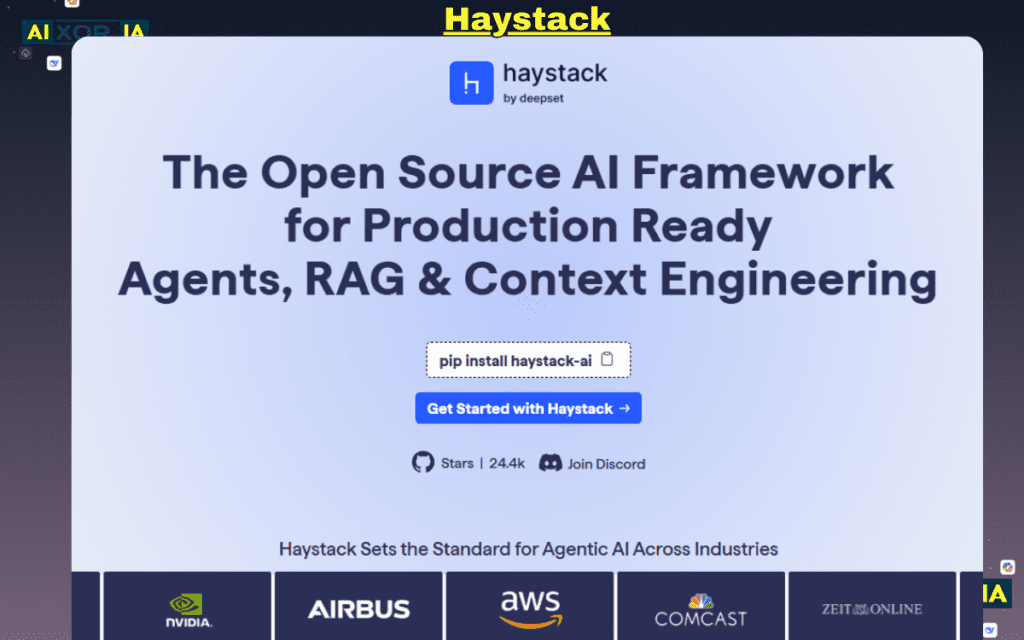
Haystack is a powerful framework designed for AI-powered search systems and knowledge retrieval agents.
Many enterprises struggle with knowledge fragmentation — information stored across documents, databases, and internal tools. Haystack solves this by enabling retrieval-augmented generation systems.
Enterprise Security and Compliance
Because Haystack is frequently deployed in enterprise environments, organizations can configure:
- encrypted document storage
- secure API gateways
- access-controlled knowledge indexes
- private document databases
This makes it suitable for companies that need AI agents capable of querying internal documents securely.
Real Developer Experience
Working with Haystack feels more like building a search engine combined with an AI assistant.
Compared to other frameworks, the learning curve is moderate. However, once the retrieval pipeline is configured correctly, the performance can be extremely impressive.
Developers often find that document search accuracy improves dramatically when using properly structured knowledge pipelines.
When Enterprises Use Haystack
Haystack is ideal for building:
- enterprise knowledge assistants
- document search agents
- AI support agents for internal teams
Companies with large internal document systems often use Haystack to transform static knowledge bases into intelligent assistants.
5. AutoGPT
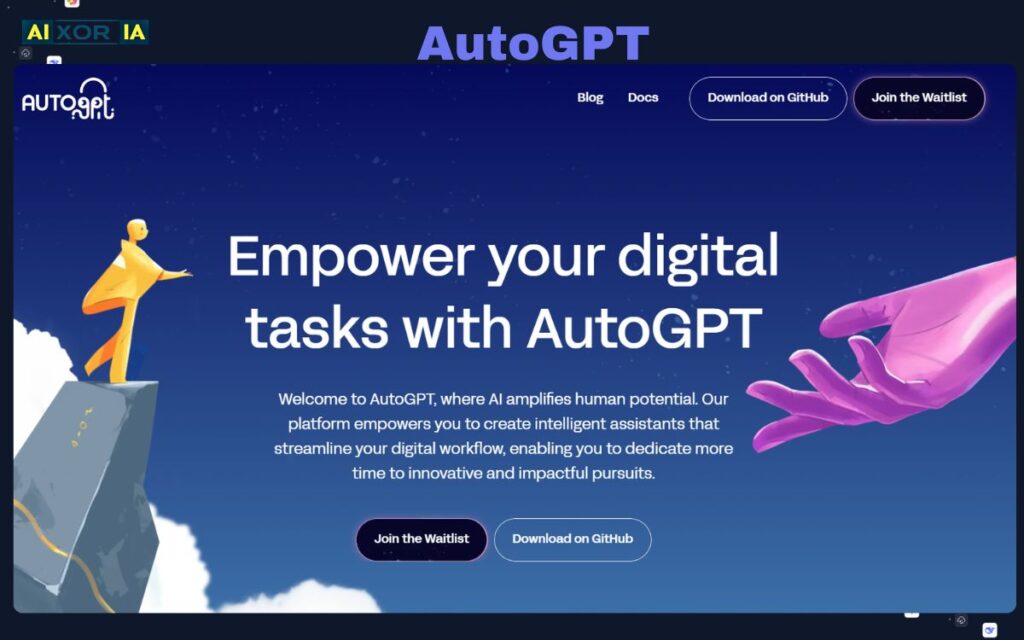
AutoGPT became popular for demonstrating the potential of fully autonomous AI agents capable of executing tasks without constant human prompts.
While still experimental, it introduced the concept of agents that can:
- set goals
- break tasks into subtasks
- iterate on results
Enterprise Security Considerations
Because AutoGPT is still evolving, enterprises typically run it in controlled environments where security policies can be enforced.
Organizations often implement:
- restricted API access
- sandboxed execution environments
- encrypted communication channels
This helps reduce risks associated with autonomous systems.
Real Developer Experience
AutoGPT is fascinating to experiment with but less predictable in production environments.
Many developers report that it can generate creative solutions but sometimes struggles with long task chains.
Because of this, enterprises usually treat AutoGPT as a research tool rather than a mission-critical system.
When Enterprises Use AutoGPT
Organizations experiment with AutoGPT for:
- market research automation
- AI-generated reports
- workflow experimentation
While still evolving, it continues to inspire new approaches to autonomous AI systems.
Developer Experience (DX) Score
One factor often ignored in technical comparisons is developer experience.
Some tools are powerful but difficult to learn, while others are easier but less flexible.
| Tool | DX Score | Insight |
|---|---|---|
| LangChain | 7/10 | Extremely powerful but complex |
| Semantic Kernel | 8/10 | Enterprise-friendly architecture |
| CrewAI | 9/10 | Easy to learn multi-agent system |
| Haystack | 8/10 | Excellent for knowledge agents |
| AutoGPT | 6/10 | Experimental and unpredictable |
This perspective helps teams choose a tool not just for capability but for real-world developer productivity.
The Future of Enterprise AI Agents
Enterprise AI agents are evolving rapidly. Over the next few years we will likely see:
- AI agents integrated deeply into enterprise workflows
- autonomous systems coordinating complex tasks
- improved security models for enterprise deployments
- hybrid AI architectures combining multiple agents
The most successful organizations will be those that combine strong technical architecture with practical AI experimentation.
Conclusion
Enterprise AI agents are transforming how organizations interact with data, automate processes, and scale decision-making.
Frameworks such as LangChain, Microsoft Semantic Kernel, and CrewAI provide powerful foundations for building intelligent systems that integrate with business infrastructure.
At the same time, tools like Haystack and AutoGPT expand what is possible with knowledge retrieval and autonomous reasoning.
As enterprise AI continues to evolve, these platforms will play a major role in shaping the next generation of intelligent business systems.
FAQ
What is an AI agent?
An AI agent is a software system that can perform tasks autonomously using artificial intelligence, often interacting with users, data, and external tools.
Are AI agents used in enterprises?
Yes. Many enterprises use AI agents for automation, customer support, data analysis, and internal productivity tools.
What programming language is used to build AI agents?
Most AI agent frameworks support Python, which is the most common language for AI development.
1 thought on “Top 5 Tools for Building AI Agents for Enterprise in 2026”