Email marketing remains one of the highest-ROI channels for online stores. But in 2026, it is no longer just about sending newsletters. Modern platforms combine automation, customer data, and AI to personalize campaigns, recover abandoned carts, and drive repeat purchases at scale.
For eCommerce businesses, the challenge is not whether to use email marketing—but which platform can handle growth, integrate with your store, and automate customer journeys effectively.
This guide breaks down the best email marketing tools for online stores, with a focus on real use cases, automation depth, AI capabilities, and scalability for U.S.-based businesses.
Table of Contents
What Makes an Email Marketing Tool “Best” for Online Stores?
Not all email tools are built for eCommerce. The best platforms for online stores typically excel in the following areas:
1. Deep eCommerce Integration
A strong tool connects directly with platforms like Shopify, WooCommerce, or BigCommerce. This allows you to track customer behavior, purchase history, and product interactions.
2. Automation Capabilities
Look for tools that support:
- Abandoned cart recovery
- Post-purchase follow-ups
- Customer re-engagement flows
- Upsell and cross-sell sequences
3. AI-Powered Personalization
Modern tools use AI to:
- Recommend products
- Optimize send times
- Generate subject lines and content
- Predict customer behavior
4. Segmentation and Targeting
Advanced segmentation lets you target:
- High-value customers
- First-time buyers
- Inactive subscribers
- Behavior-based audiences
5. Deliverability and Compliance
For U.S. audiences, compliance with CAN-SPAM and strong deliverability infrastructure is critical.
READ MORE – Best AI Tools for Ecommerce in 2026
The 7 Best Email Marketing Tools for Online Stores
1. Klaviyo — Best Overall for eCommerce Automation
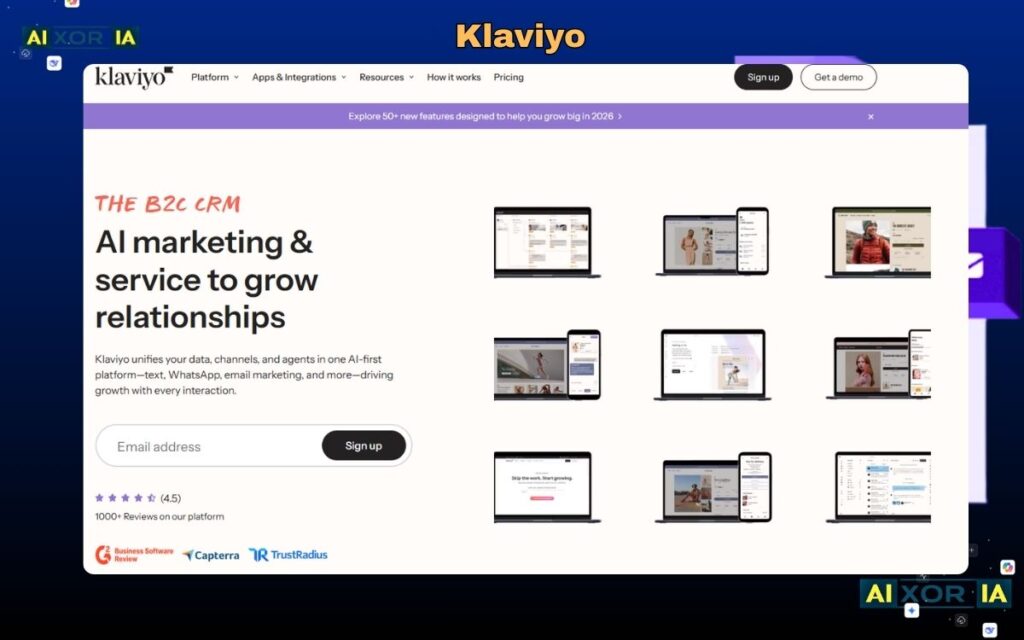
Klaviyo is widely considered the standard for email marketing in eCommerce. It is built specifically for online stores and offers deep integrations with Shopify and other platforms.
Key Features:
- Advanced segmentation based on real-time data
- Pre-built flows for abandoned carts, welcome series, and post-purchase
- AI-driven product recommendations
- Predictive analytics (customer lifetime value, churn risk)
AI Capabilities:
Klaviyo uses AI to optimize send times, personalize product recommendations, and predict customer behavior. This allows store owners to automate highly targeted campaigns without manual segmentation.
Best For:
Growing and scaling online stores that need data-driven marketing.
Limitations:
- Can become expensive as your list grows
- Learning curve for beginners
2. Mailchimp — Best for Beginners and Small Stores
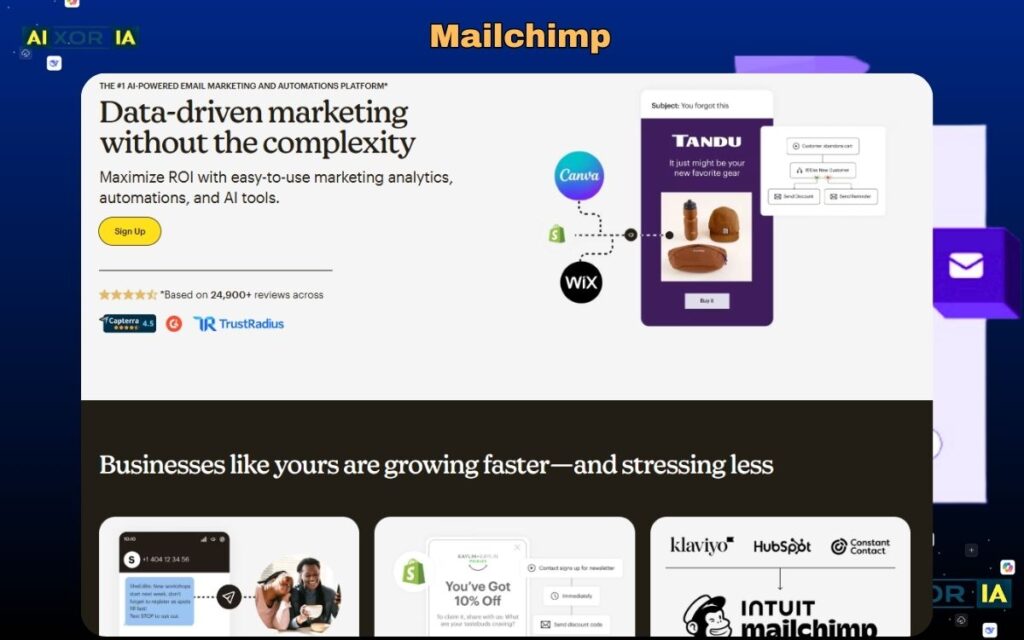
Mailchimp is one of the most widely used email platforms and offers a simple entry point for small eCommerce businesses.
Key Features:
- Drag-and-drop email builder
- Basic automation workflows
- Audience segmentation
- Built-in CRM features
AI Capabilities:
Mailchimp includes AI-powered content suggestions, subject line optimization, and send-time optimization.
Best For:
Small online stores or beginners who need an easy-to-use platform.
Limitations:
- Limited advanced automation compared to eCommerce-focused tools
- Less powerful segmentation
3. Omnisend — Best for Omnichannel Marketing
Omnisend is designed specifically for eCommerce and combines email, SMS, and push notifications into a single platform.
Key Features:
- Pre-built automation workflows for eCommerce
- SMS + email campaigns in one dashboard
- Product picker for easy email creation
- Cart abandonment and browse abandonment automation
AI Capabilities:
Omnisend uses AI to optimize campaign timing and improve personalization across channels.
Best For:
Online stores that want to combine email and SMS marketing.
Limitations:
- Fewer advanced analytics compared to enterprise tools
- Limited customization in lower plans
4. HubSpot — Best for CRM-Driven Marketing
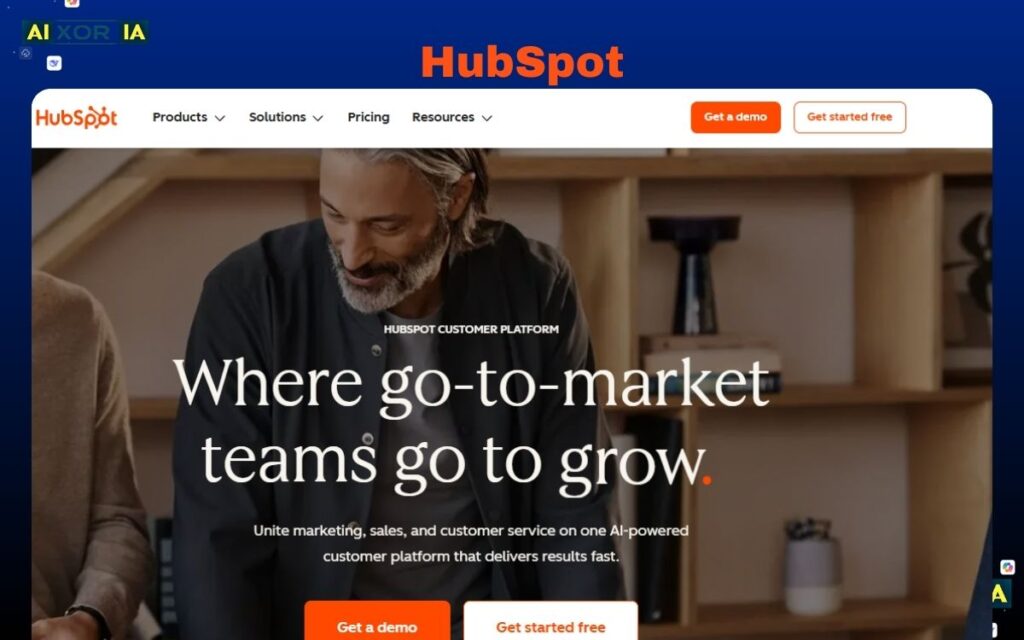
HubSpot is more than an email marketing tool—it is a full customer platform that includes CRM, marketing automation, and sales tools.
Key Features:
- Advanced workflow automation
- CRM-based segmentation
- Lead nurturing and lifecycle tracking
- Integration with eCommerce platforms
AI Capabilities:
HubSpot uses AI for email content generation, workflow recommendations, and predictive lead scoring.
Best For:
Businesses that want to manage customer relationships and marketing in one system.
Limitations:
- Expensive at scale
- Overkill for small stores
READ MORE – Which Are the Top 5 AI Tools in 2026?
5. ActiveCampaign — Best for Advanced Automation
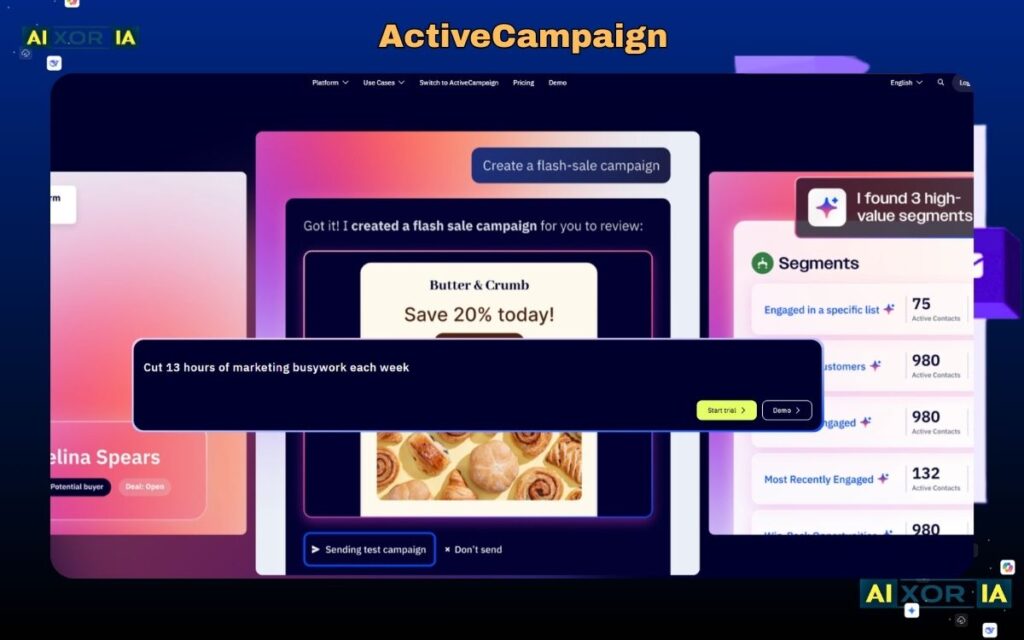
ActiveCampaign is known for its powerful automation engine and flexibility.
Key Features:
- Complex automation workflows
- Behavioral tracking
- Dynamic content personalization
- CRM integration
AI Capabilities:
ActiveCampaign offers predictive sending, win probability, and automated content suggestions.
Best For:
Advanced marketers who want full control over automation.
Limitations:
- Steeper learning curve
- Interface can feel complex
6. Drip — Best for Direct-to-Consumer Brands
Drip focuses specifically on DTC (direct-to-consumer) brands and eCommerce personalization.
Key Features:
- Visual workflow builder
- Deep Shopify integration
- Revenue attribution tracking
- Customer journey mapping
AI Capabilities:
Drip uses AI to improve segmentation and personalize messaging based on user behavior.
Best For:
DTC brands focused on customer experience and retention.
Limitations:
- Limited outside eCommerce use cases
- Pricing can increase with growth
7. Brevo (formerly Sendinblue) — Best Budget-Friendly Option
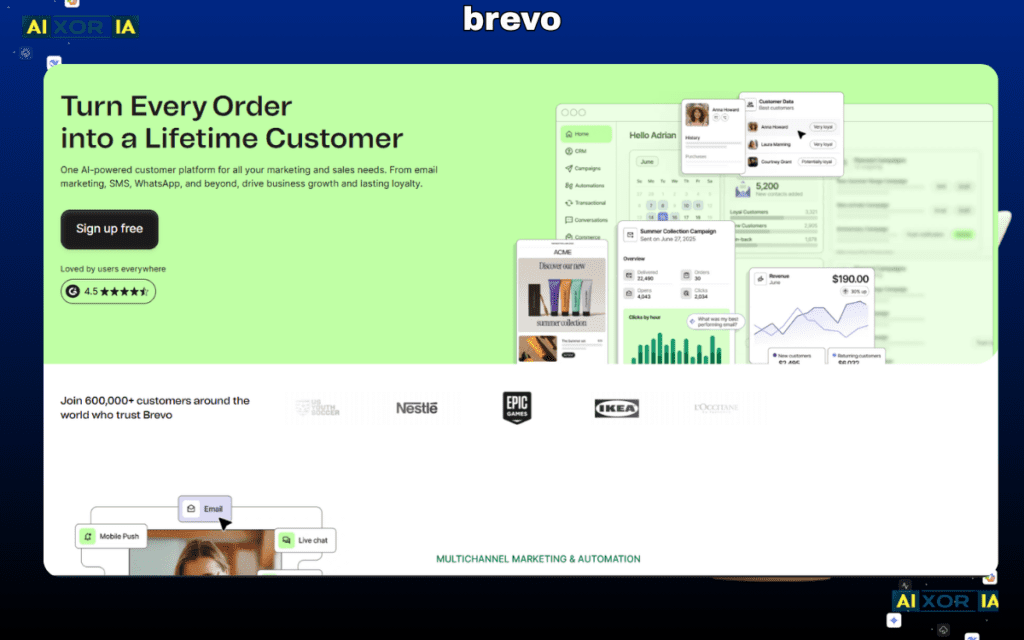
Brevo offers a cost-effective solution with solid features for small to mid-sized stores.
Key Features:
- Email and SMS marketing
- Automation workflows
- Transactional emails
- CRM features
AI Capabilities:
Brevo includes AI-based send-time optimization and basic personalization tools.
Best For:
Budget-conscious businesses.
Limitations:
- Less advanced automation compared to premium tools
- Limited AI depth
READ MORE – Best AI Tools for Entrepreneurs in 2026
How to Choose the Right Tool for Your Store
The best email marketing tool depends on your business stage and needs:
- Beginner: Mailchimp or Brevo
- Growing store: Omnisend or Klaviyo
- Advanced automation: ActiveCampaign or Drip
- All-in-one platform: HubSpot
If your store relies heavily on personalization and automation, tools like Klaviyo or ActiveCampaign offer the most flexibility.
AI in Email Marketing for eCommerce (Why It Matters in 2026)
AI is no longer optional in email marketing. It directly impacts:
- Conversion rates
- Customer retention
- Campaign performance
Key AI Use Cases:
- Predicting what customers will buy next
- Automatically segmenting audiences
- Generating email copy and subject lines
- Optimizing send times for each user
Stores that leverage AI-driven automation consistently outperform those using manual campaigns.
Final Verdict: Which Tool Is Best?
There is no single “best” tool for every online store.
- If you want the most powerful eCommerce-focused platform, Klaviyo stands out.
- If you need simplicity, Mailchimp is a solid starting point.
- If you want advanced automation, ActiveCampaign is hard to beat.
Many successful online stores use a combination of tools depending on their marketing stack and growth stage.
Conclusion
Email marketing remains one of the most reliable growth channels for online stores, but the tools have evolved significantly. The best platforms in 2026 combine automation, AI, and deep integrations to help businesses scale efficiently.
Choosing the right tool is less about features and more about fit—your workflows, your audience, and your growth goals.
Evaluate your needs, test a platform, and build automated systems that turn visitors into repeat customers.
FAQs
What is the best email marketing tool for Shopify stores?
Klaviyo and Omnisend are widely considered the best options due to their deep Shopify integrations and automation features.
Are free email marketing tools enough for online stores?
Free tools can work for beginners, but growing stores usually need advanced automation and segmentation.
How important is automation in email marketing?
Automation is essential. It allows you to scale campaigns, recover lost sales, and engage customers without manual effort.
Do I need AI in email marketing?
Yes. AI improves targeting, personalization, and overall campaign performance, making it a key factor in modern email marketing success.
1 thought on “The 7 Best Email Marketing Tools for Online Stores in 2026”