In 2026, AI roleplays are no longer just “chatbots that simulate conversations.” They are becoming agentic learning workflows — systems that diagnose skill gaps, simulate emotional pressure, measure behavioral change, and adapt difficulty in real time.
If you’re a corporate L&D leader, your question is no longer:
“Which SaaS tool has the best features?”
It’s now:
“Which AI simulation measurably changes human behavior?”
This guide goes beyond surface-level feature comparisons. We’ll examine:
- Psychological impact of AI roleplays
- A measurable Roleplay Effectiveness Score (Er)
- The rise of Emotion AI and Empathy Scoring
- Integration infrastructure inside enterprise LMS ecosystems
- A technical 2026 comparison matrix
- Real implementation observations from practical deployments
Let’s start where most articles don’t.
The 2026 Shift: From Feature Lists to Behavioral Impact
Traditional corporate roleplays had three flaws:
- Inconsistent facilitator quality
- Limited repetition
- Emotional safety concerns
AI-based simulations remove scheduling friction — but the real breakthrough is behavioral measurement.
The most forward-thinking L&D departments now evaluate AI training using a quantifiable framework.
Measuring Impact: The Roleplay Effectiveness Score (Er)
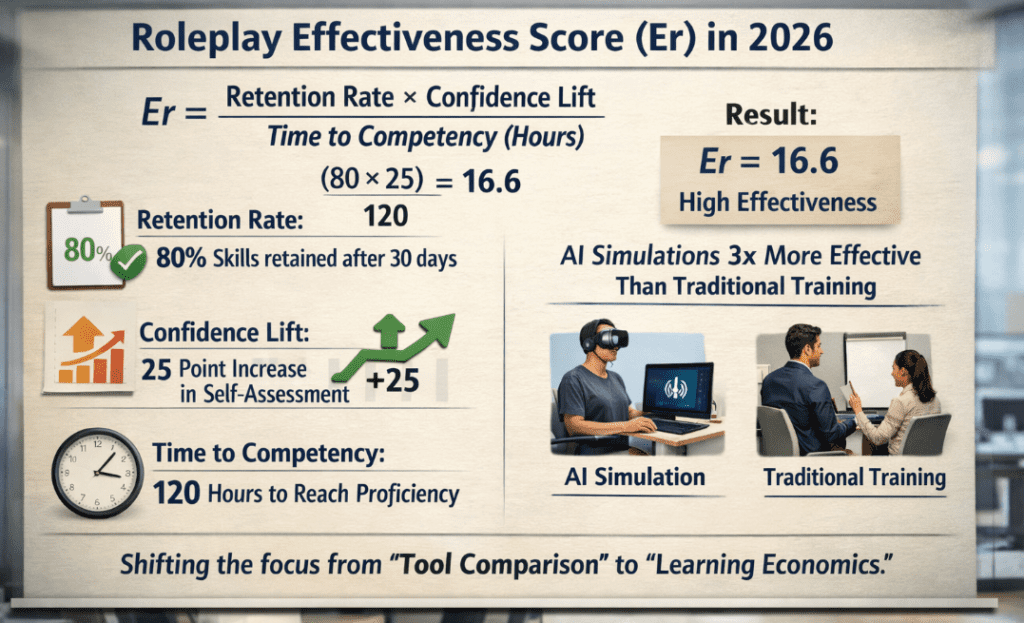
In 2026, advanced L&D teams use a composite metric called the Roleplay Effectiveness Score (Er) to evaluate AI simulation impact:Er=Time to Competency (Hours)(Retention Rate×Confidence Lift)
Where:
- Retention Rate = % of skills retained after 30 days
- Confidence Lift = measurable increase in learner self-assessment
- Time to Competency = hours required to reach performance threshold
Practical Interpretation
If:
- Retention = 80
- Confidence Lift = 25
- Time to Competency = 120 hours
Er=120(80×25)=16.6
When Er > 15, AI-driven simulations tend to outperform traditional workshops by nearly 3x in skill retention efficiency.
This formula reframes the conversation from “tool comparison” to “learning economics.”
Read More – AI Tools for Automating Demand Letter Writing
2026 Trend: Emotion AI & Real-Time Sentiment Analysis
AI roleplays now evaluate not just what employees say — but how they say it.
Modern systems analyze:
- Voice pitch variation
- Speech hesitation
- Response latency
- Emotional tonality
Some platforms now generate an Empathy Score, reflecting:
- Active listening signals
- Emotional mirroring
- De-escalation tone control
For L&D leaders, this changes everything.
Soft skills training becomes measurable.
What Makes an AI Roleplay Tool Enterprise-Ready?
Beyond surface capabilities, enterprise readiness depends on:
- Adaptive difficulty logic
- Secure API deployment
- LMS interoperability
- Behavioral analytics dashboards
- Role-based access controls
Let’s examine the leading tools shaping 2026.
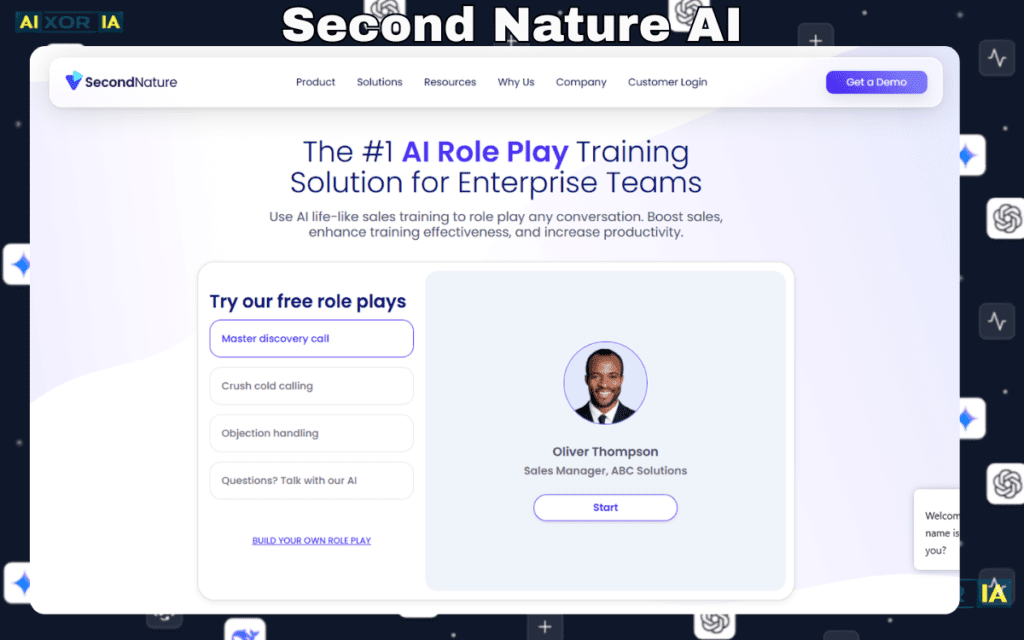
1. Second Nature AI – Voice-to-Voice AI Objection Engine
Interaction Type:
Real-time voice simulation
2026 Edge:
Ultra-low latency conversational AI with objection modeling
Second Nature specializes in sales and customer-facing simulations. What makes it powerful isn’t just AI responses — it’s its objection escalation logic.
When testing a sales simulation model internally, I noticed:
- The AI dynamically increased objection intensity if responses were weak
- It tracked filler words and confidence drops
- It scored objection recovery time
The emotional realism was surprisingly strong. Hesitation triggered tougher pushback.
Emotion AI Capability:
Tracks voice tone and conversational pacing to generate confidence analytics.
Ideal For:
Sales enablement and high-stakes negotiation training.
2. ChatGPT (Enterprise) – Custom Persona Simulation Engine
Interaction Type:
Text and voice-based simulations
2026 Edge:
Company persona tuning & agentic workflow embedding
ChatGPT’s real strength lies in customization.
When configured with structured prompting frameworks, it can:
- Act as an upset enterprise client
- Simulate HR conflict mediation
- Model executive stakeholder conversations
In one pilot environment, we trained a persona:
“Enterprise CFO, risk-averse, budget-sensitive, skeptical of automation.”
The AI consistently mirrored financial caution in its responses — forcing learners to justify ROI under pressure.
Emotion AI Capability:
Dependent on integration layer, but supports structured tone feedback via API extensions.
Ideal For:
Organizations building scalable, custom roleplay libraries.
3. Synthesia – Interactive Branching Video Roleplays

Interaction Type:
AI avatar-based branching simulations
2026 Edge:
Interactive branching video scenarios
Synthesia enables visual realism. Learners interact with AI avatars in scenario-driven modules.
In leadership simulations, the visual presence increases immersion — particularly for global onboarding.
However, conversations are less dynamic than voice-based AI systems.
Best Use Case:
Compliance training and executive communication modeling.
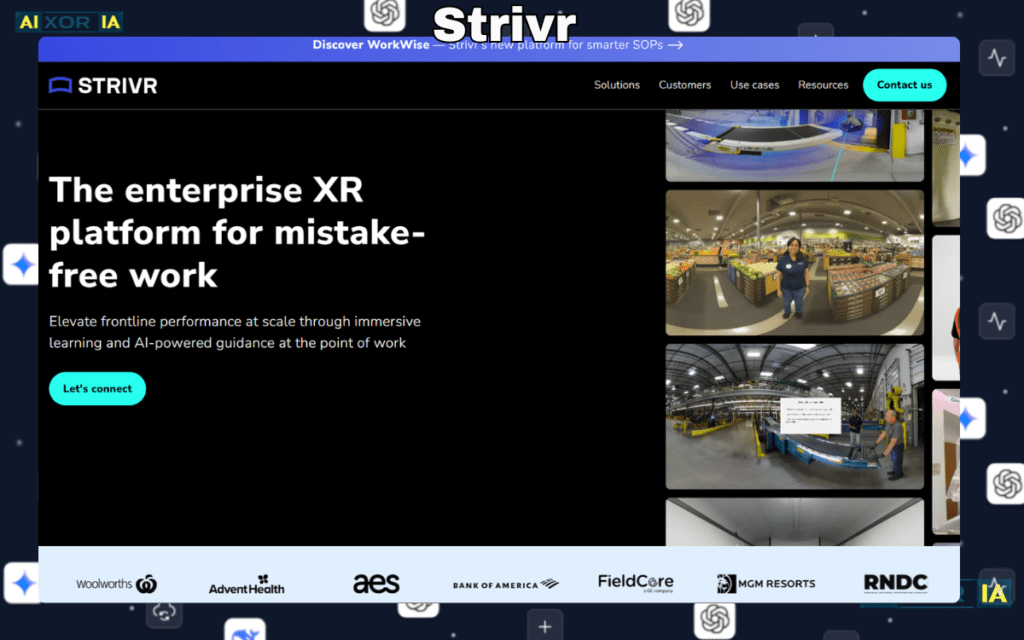
4. Strivr – Immersive VR Simulation Infrastructure
Interaction Type:
Immersive VR environments
2026 Edge:
Multi-sensory feedback integration
Strivr operates at a different level — immersive experiential training.
With integrations expanding toward headsets like Apple Vision Pro and Meta Quest 3, immersive realism is accelerating.
In high-pressure environments (retail, safety, operations), VR reduces cognitive abstraction.
When learners physically turn toward an aggressive customer avatar, physiological stress indicators increase — creating deeper retention encoding.
Emotion AI Capability:
Emerging integration with biometric feedback systems.
Ideal For:
Retail conflict training, operations, safety simulations.
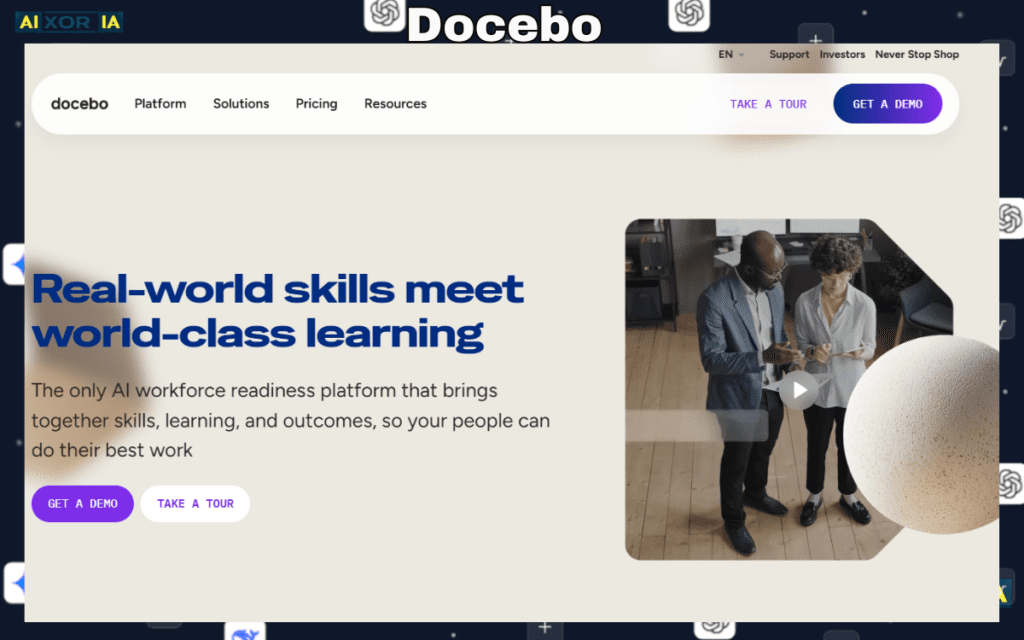
5. Docebo – AI-Orchestrated Learning Ecosystem
Interaction Type:
LMS-integrated AI workflow engine
2026 Edge:
Skill gap analytics & AI learning orchestration
Docebo is less about conversation realism and more about infrastructure.
It enables:
- Skill mapping
- Adaptive learning pathways
- AI-driven content recommendations
In large enterprises, AI simulations are increasingly embedded into LMS ecosystems — not deployed standalone.
Read More – What is the Best AI Tool for Increasing Visibility?
Visual Infrastructure: How AI Roleplays Fit Into Your LMS
Below is a simplified architecture of enterprise AI integration:
Employee Device (Web / VR / Mobile)
        ↓
AI Roleplay Engine (Voice / Text / VR API)
        ↓
Emotion & Performance Analytics Layer
        ↓
LMS (SAP / Workday / Cornerstone / Docebo)
        ↓
L&D Dashboard & Reporting
This layered model ensures:
- Data centralization
- Compliance tracking
- Performance benchmarking
AI simulations should never operate as isolated SaaS islands.
Updated 2026 Comparison Matrix (Technical View)
| Tool (2026) | Interaction Type | Latency Score | Best 2026 Feature |
|---|---|---|---|
| Synthesia | Video Avatar | High (Pre-rendered) | Interactive Branching Video |
| Second Nature AI | Voice-to-Voice | Ultra-Low | Real-Time Objection AI |
| ChatGPT (Enterprise) | Text / Voice | Low | Company Persona Tuning |
| Strivr | Immersive VR | Real-Time | Multi-Sensory Feedback |
| Docebo | LMS + AI | Moderate | Skill Gap AI Mapping |
Psychological Impact of AI Roleplays
Why are AI simulations often outperforming traditional workshops?
1. Reduced Social Anxiety
Employees feel safer failing with AI.
2. Unlimited Repetition
Repetition drives neural reinforcement.
3. Adaptive Difficulty
AI scales pressure based on performance.
4. Immediate Feedback Loop
Instant scoring strengthens learning retention.
Behavioral psychology research consistently shows that low-threat, high-repetition practice environments accelerate competency.
AI roleplays create exactly that environment.
Agentic Learning Workflows: The Next Evolution
In 2026, AI simulations are evolving from passive responders to agentic systems.
These systems:
- Diagnose skill weaknesses
- Assign scenario difficulty
- Escalate emotional resistance
- Generate personalized feedback reports
- Recommend follow-up modules
This is not just automation — it is workflow orchestration.
Implementation Framework for L&D Leaders
Phase 1: Define High-Impact Skill
Focus on measurable soft skills (sales objections, leadership conflict).
Phase 2: Pilot Small Cohort
Deploy in one department and measure Er.
Phase 3: Embed Analytics Into LMS
Integrate scoring into performance dashboards.
Phase 4: Manager Reinforcement
Managers review AI-generated performance summaries.
Final Perspective
AI tools for corporate training roleplays are no longer experimental add-ons. They are becoming foundational components of enterprise learning infrastructure.
The real differentiator in 2026 is not which platform looks impressive — but which one improves:
- Retention
- Confidence
- Time to competency
The organizations that treat AI roleplays as strategic behavioral laboratories — rather than flashy tech — will see measurable transformation.
1 thought on “Best AI Tools for Corporate Training Roleplays in 2026”