Email marketing remains one of the highest ROI channels for e-commerce businesses. But in 2026, it’s no longer just about sending newsletters. Modern platforms combine automation, customer data, and AI to drive personalized experiences across the entire customer lifecycle—from first visit to repeat purchase.
For e-commerce brands in the US, the challenge isn’t whether to use email marketing—it’s choosing the right platform that can scale, integrate with your store, and automate revenue-driving workflows.
This guide breaks down the best email marketing tools for e-commerce, including their strengths, limitations, AI capabilities, and ideal use cases.
Table of Contents
What Makes a Great Email Marketing Tool for E-commerce?
Not all email platforms are built for online stores. The best tools for e-commerce go beyond campaigns and offer full lifecycle marketing capabilities.
1. Deep E-commerce Integrations
The platform should connect seamlessly with Shopify, WooCommerce, BigCommerce, or custom stacks. This allows access to real-time data like:
- Purchase history
- Cart activity
- Product views
- Customer lifetime value
2. Automation and Customer Journeys
Look for tools that support:
- Abandoned cart recovery
- Post-purchase follow-ups
- Win-back campaigns
- Browse abandonment emails
3. AI and Personalization
AI is now a core feature. Leading tools offer:
- Predictive send times
- Product recommendations
- Automated segmentation
- AI-generated email content
4. Segmentation and Targeting
Advanced segmentation helps you target:
- High-value customers
- First-time buyers
- Inactive users
- Frequent shoppers
5. Deliverability and Compliance
For US audiences, tools must support:
- CAN-SPAM compliance
- High deliverability rates
- Domain authentication (SPF, DKIM)
REAAD MORE – Best AI Tools for Ecommerce
The 7 Best Email Marketing Tools for E-commerce
1. Klaviyo — Best for Advanced E-commerce Automation and AI
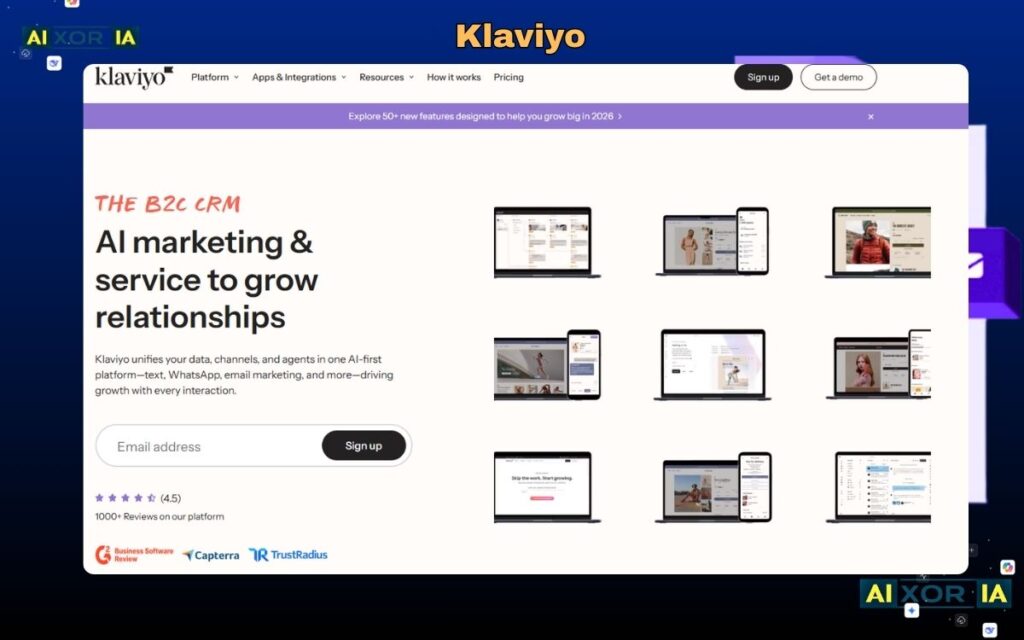
Klaviyo is one of the most powerful platforms built specifically for e-commerce brands. It combines customer data, automation, and AI into a single system.
Key features:
- Real-time data sync with Shopify and WooCommerce
- Advanced segmentation based on behavior and purchase history
- Pre-built flows for abandoned cart, welcome series, and retention
- AI-powered product recommendations and predictive analytics
AI capabilities:
Klaviyo uses AI to predict customer lifetime value, churn risk, and next purchase behavior. It also helps generate subject lines and optimize send times.
Pros:
- Extremely powerful segmentation
- Built specifically for e-commerce
- Strong automation workflows
Cons:
- Can become expensive as your list grows
- Learning curve for beginners
Best for:
Mid to large e-commerce brands that want deep data-driven automation.
2. Omnisend — Best for Omnichannel E-commerce Marketing

Omnisend focuses on combining email with SMS, push notifications, and automation into a unified platform.
Key features:
- Pre-built automation workflows for e-commerce
- Email + SMS campaigns in one dashboard
- Drag-and-drop email builder
- Built-in templates for promotions and seasonal campaigns
AI capabilities:
Omnisend offers AI-based product recommendations and campaign optimization, helping improve conversions without manual segmentation.
Pros:
- Easy to use
- Strong omnichannel capabilities
- Good value for small to mid-sized stores
Cons:
- Limited advanced customization compared to enterprise tools
Best for:
Growing e-commerce stores that want email + SMS marketing together.
3. Mailchimp — Best for Beginners and Small E-commerce Stores
Mailchimp is one of the most widely used email marketing platforms, offering a balance between ease of use and functionality.
Key features:
- Simple automation builder
- Pre-designed email templates
- Basic e-commerce integrations
- Audience segmentation tools
AI capabilities:
Mailchimp includes AI-powered content suggestions, subject line optimization, and send-time recommendations.
Pros:
- Beginner-friendly interface
- Free plan available
- Strong brand recognition
Cons:
- Limited advanced automation
- Pricing increases quickly with scale
Best for:
Small e-commerce businesses starting with email marketing.
4. Drip — Best for Customer Journey Automation
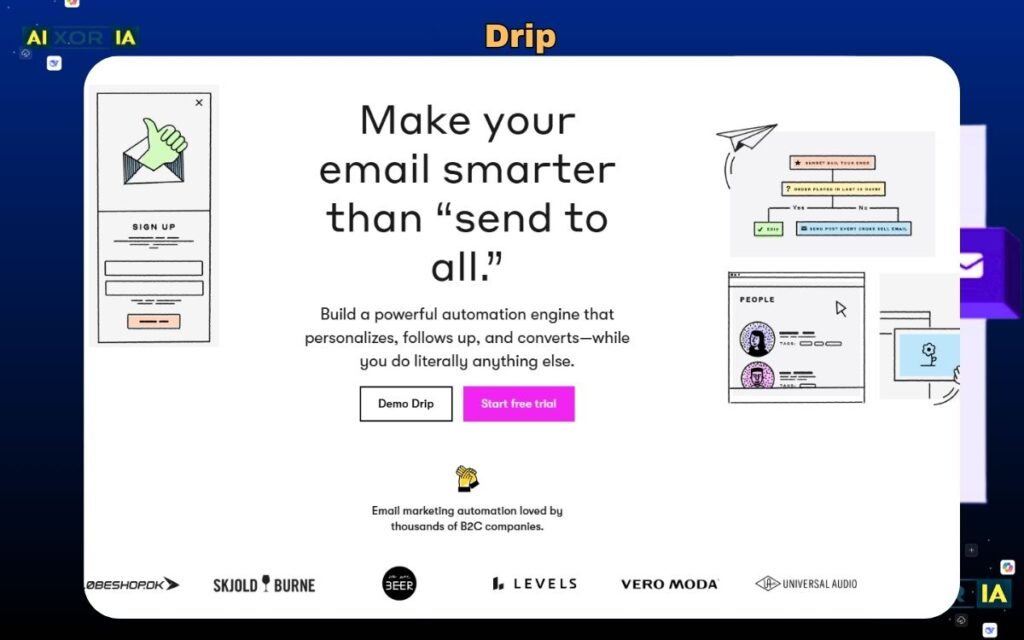
Drip is designed specifically for e-commerce lifecycle marketing and focuses heavily on customer journeys.
Key features:
- Visual workflow builder
- Behavioral tracking and segmentation
- Revenue attribution tracking
- Multi-step automation flows
AI capabilities:
Drip uses automation intelligence to optimize workflows and improve engagement based on customer behavior patterns.
Pros:
- Strong automation focus
- Built for e-commerce use cases
- Clean and intuitive interface
Cons:
- Fewer integrations than some competitors
- No free plan
Best for:
Brands that want to build detailed, behavior-based customer journeys.
READ MORE – What Is the Best Email Drip Campaign Software?
5. ActiveCampaign — Best for Advanced Automation and CRM Integration
ActiveCampaign combines email marketing with CRM and advanced automation.
Key features:
- Powerful automation builder
- CRM integration
- Dynamic content personalization
- Lead scoring and tagging
AI capabilities:
Includes predictive sending, win probability scoring, and AI-based email optimization.
Pros:
- Highly flexible automation
- Strong CRM capabilities
- Good segmentation tools
Cons:
- Slightly complex for beginners
- Requires setup time
Best for:
E-commerce brands that need both marketing automation and CRM in one system.
6. ConvertKit — Best for Creator-Led E-commerce Brands
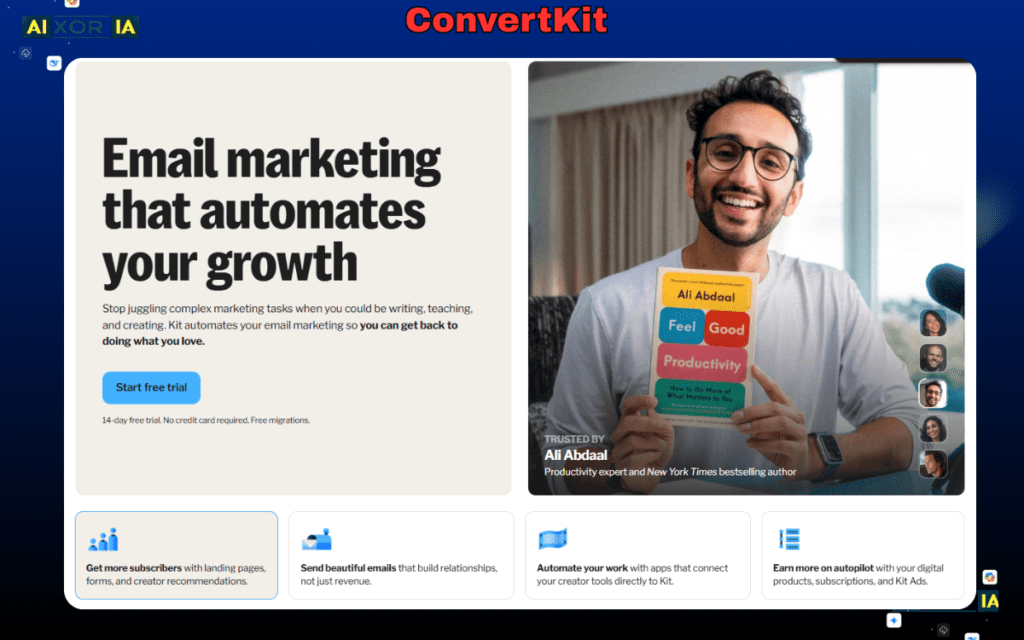
ConvertKit is ideal for creators, influencers, and personal brands selling digital or physical products.
Key features:
- Simple automation workflows
- Landing pages and forms
- Subscriber tagging and segmentation
- Email sequences
AI capabilities:
Provides AI-assisted email writing and content suggestions.
Pros:
- Easy to use
- Great for content-driven brands
- Clean interface
Cons:
- Limited e-commerce-specific features
- Not ideal for large stores
Best for:
Creators and small brands selling products through content and email.
7. HubSpot — Best for Full Marketing and Sales Ecosystem
HubSpot is more than an email tool—it’s a complete customer platform.
Key features:
- CRM + email marketing
- Marketing automation workflows
- Customer segmentation
- Multi-channel campaigns
AI capabilities:
Includes AI content generation, automation suggestions, and predictive analytics.
Pros:
- All-in-one platform
- Strong analytics and reporting
- Scalable for large teams
Cons:
- Expensive at higher tiers
- Overkill for small stores
Best for:
Enterprise e-commerce businesses needing a full marketing ecosystem.
READ MORE – The 7 Best Email Marketing Tools for Online Stores
How to Choose the Right Tool
The best email marketing tool depends on your business stage and goals.
- If you want deep data and automation: Klaviyo
- If you want omnichannel marketing: Omnisend
- If you are a beginner: Mailchimp
- If you want lifecycle automation: Drip
- If you need CRM + automation: ActiveCampaign
- If you are a creator: ConvertKit
- If you need full enterprise marketing: HubSpot
Final Thoughts
There is no single “best” email marketing tool for e-commerce. The right choice depends on your store size, tech stack, and how advanced your marketing strategy is.
For most growing e-commerce brands, the shift toward AI-powered automation and personalized customer journeys is no longer optional—it’s essential for staying competitive.
Start by identifying your most important workflows—such as abandoned cart recovery or customer retention—and choose a platform that can automate and optimize those processes at scale.
2 thoughts on “7 Best Email Marketing Tools for E-commerce in 2026”